Labels We Love

How Can Anybody Not Hear What’s Wrong with Old Records Like These?

beatlrubbeoriginalRecord Collecting – A Guide to the Fundamentals

It is our strongly held belief that if your equipment (regardless of cost) or your critical listening skills do not allow you to hear the kinds of sonic differences among pressings we describe, then whether you are just getting started in audio or are a self-identified audio expert writing for the most prestigious magazines and websites, you still have a very long way to go in this hobby.

Purveyors of the old paradigms — original is better, money buys good sound — may eventually find their approach to records and equipment unsatisfactory (when it isn’t just plain wrong), but they will only do so if they start to rely more on empirical findings and less on convenient theories and received wisdom.

A reviewer we know all too well is clearly stuck in the old, mistaken paradigm, illustrated perfectly by this comment:

It’s not my pleasure to be so negative but since I have a clean UK original (signed for me by George Martin!) I’ll not be playing this one again. Yes, there are some panning mistakes and whatever else Martin “cleaned up” but really, sometimes it’s best to leave well-enough (and this album was well-enough!) alone.

We can’t imagine how anyone can have a system in this day and age that can obscure the flaws of the original Parlophone pressings of Rubber Soul (or any other Yellow and Black label Parlophone pressing for that matter, other than Yellow Submarine and Oldies but Goldies).


UPDATE 2022

Here is another exception to that “rule.”


This reviewer apparently does (as do some of our customers, truth be told), but we have something very different indeed. One might even consider it the opposite of such a system.

Our system is designed to relentlessly and ruthlessly expose the flaws of every record we play.

Only the best of the best can survive that level of scrutiny. Our system (comprising equipment, setup, tweaks, room treatments, electricity) operates at the highest level of fidelity we have been able to achieve to date. We are constantly making improvements to our playback system in search of even better sound.

Real Progress

But wait a minute, who are we to talk about being fooled? Bear in mind that as recently as 2000 or so we were still recommending DCC and other Heavy Vinyl pressings. These are records that, with few exceptions, I would have a hard time sitting through nowadays.

My system couldn’t show me how colored and lifeless they were then, but it sure can now.

It’s amazing how far you can get in 10 years [now 20] if you’re obsessive enough and driven enough, and are also willing to devote huge amounts of your time and effort to the pursuit of better audio. This will be especially true if you are perfectly happy to let your ears, not your brain, inform your understanding of the sound of the records you play.

If we thought like most audiophiles, that money buys good sound and original pressings are usually the best, there would be no such thing as Hot Stampers. Old thinking and wrong thinking can really slow down your progress.

(more…)

Simon & Garfunkel – Bridge Over Troubled Water

More Simon and Garfunkel

Reviews and Commentaries for Bridge Over Troubled Water

  • This pressing of Simon & Garfunkel’s classic boasts a KILLER Shootout Winning Triple Plus (A+++) side one mated to a seriously good Double Plus (A++) side two
  • There’s a reason you see this title on our site so infrequently – we have a devil of a time finding lightly-played 360s without significant marks or surface noise, especially on the title track
  • The sound is big, lively, and clear, with the kind of Tubey Magical richness that only the best 360 pressings can offer
  • Surely this is by far the toughest album of theirs to find with top quality sound and decent surfaces
  • This Magnum Opus ended the duo’s collaboration with a ginormous over-the-top production, which taxed the recording technology of the day and is sure to tax any system that attempts to reproduce it
  • 5 stars: “Perhaps the most delicately textured album to close out the 1960s from any major rock act… the songs matched the standard of craftsmanship that had been established on the duo’s two prior albums”
  • We’ve auditioned many pressings of BOTW, including the Mobile Fidelity from 1984, the CBS Half-Speed from 1980, and the Classic Records Heavy Vinyl pressing from 1999. There have been many more remastered since these came out, but we don’t see any reason to expect them to be any better than the consistently second- and third-rate records currently being made these days of other titles, so we haven’t auditioned any of the newer pressings and have no plans to at this time. If any of the labels currently making records start to make good ones, please let us know.

(more…)

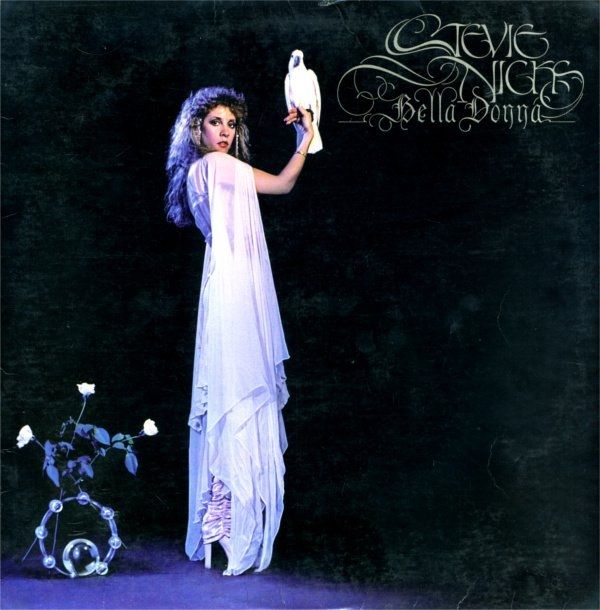
Stevie Nicks – Bella Donna

Albums with Stevie Nicks Performing

More Fleetwood Mac

  • With KILLER Shootout Winning Triple Plus (A+++) sound or close to it throughout, this vintage pressing could not be beat – fairly quiet vinyl too
  • Both of these sides are punchy, big and clear, with plenty of hard rockin’ energy – exactly what you would expect from the team of Shelly Yakus and Jimmy Iovine
  • Two of her biggest hits are here (and they still hold up): “Stop Draggin’ My Heart Around” and “Leather and Lace”
  • 4 1/2 stars: “Equally engaging are less exposed tracks like the haunting “After the Glitter Fades.” Hit producer Jimmy Iovine wisely avoids over-producing, and keeps things sounding organic on this striking debut.”
  • If you’re a Stevie Nicks or post-1974 Fleetwood Mac fan, this title from 1981 is surely a Must Own
  • We think this is the Stevie’s best sounding album. Roughly 150 other listings for the Best Sounding Album by an Artist or Group can be found here.

It’s easy to hear what the good pressings are doing. They’re big and rich, never thin nor harsh. They open up on the top end and go down deeper on the bottom. They’re smooth and full-bodied in the midrange. Stevie’s vocals are breathy and present. The energy of her performance drives the music the way you want it to.

In short, the better copies demonstrate the sound one could expect on a good Tom Petty album. Nothing surprising there; this album, like Petty’s, was produced and engineered by the same team, Jimmy Iovine and Shelly Yakus. They’ve made some great records together, Damn the Torpedoes being the best of the bunch for sonics.

Bella Donna may not reach those exalted heights, but it’s still quite good, especially for 1981. As the decade wore on things went south very quickly, sonically and musically, so we must be thankful that this record came out early in the decade and not much later.

(more…)

Spirit in ’68 – One of the Most Phenomenal Debuts of All Time

More of the Music of Spirit

Hot Stamper Pressings of Psych Rock Albums Available Now

Want a glimpse into the kind of energy the band was generating in the studio? Drop the needle on the opening track, Fresh Garbage, and you will hear this band come alive in a way you probably never imagined you’d experience.

It’s positively startling how immediate and lively the sound is here.

This is the band at their best, fired up and ready to show the world that The Doors are not the only SoCal rock band who have innovative ideas about rock music and the performing chops to pull them off, not to mention the studio wizards who managed to get it all down on tape with State-of-the-Art ’60s Rock sound quality.

The venerable jazz arranger Marty Paich was brought in to lend his talents to the project, something I never knew until I glanced at the liner notes during a shootout many years ago. No wonder the arrangements, especially the string arrangements, are so innovative and interesting. I can think of no Psych record outside of The Beatles’ with better strings.

Spirit’s first album checks off a few of our favorite boxes:

The Doors Vs. Spirit

If I had to choose between The Doors’ first album and Spirit’s, say for a nice drive up the coast with the top down, no contest, Spirit would get the nod (not to take anything away from The Doors mind you). I had the album on 8 Track back in high school and played it to death. Doing this shootout, hearing the album sound so good after so many years, was nothing less than a THRILL. (I went right up to Amazon and bought a CD for the car. Might just take a drive up the coast.)

If you like Surrealistic Pillow and Revolver/Sgt. Pepper-era Beatles and early Doors albums, and you don’t know the album well, you are really in for a treat. It’s a classic of its day that still holds up forty-plus years later.

I simply cannot recommend any current album on the site more highly.

This Demo Disc Quality recording should be part of any serious Rock Collection. Others that belong in that category can be found here.

(more…)

Burt Bacharach – Make It Easy On Yourself

More Burt Bacharach

More Pure Pop Recordings

  • Boasting INSANELY GOOD Shootout Winning Triple Plus (A+++) grades from top to bottom, this vintage A&M pressing is the BEST we have ever heard
  • The sound is big, tubey, balanced and above all, natural, with brass that is rich and full with the right amount of bite, not to mention lively and dynamic
  • With engineering by the legendary Phil Ramone, this is an exceptionally well-recorded album, as this pressing makes clear
  • “‘I’ll Never Fall in Love Again,’ and ‘Do You Know the Way to San Jose?’ are great songs that solidify Bacharach as a master of quirk.”

If you’re a fan of the Casino Royale soundtrack, you should definitely check out this crazy album. The best material on here is loads of fun, and when you get a great copy like this one the sound is wonderful.

This pressing is Tubey Magical — what A&M pressing from 1969 wouldn’t be? — but also highly resolving of subtle musical information, the kind you notice when you play a pile of copies one after another. Listen to the orchestra on “Do You Know The Way To San Jose” — you can really hear the sound of the rosiny bows being pulled across the strings.

(more…)

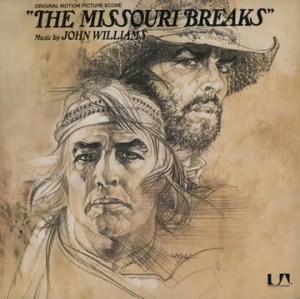
John Williams – The Missouri Breaks (Original Motion Picture Soundtrack)

More of the music of John Williams (1932- )

  • With two solid Double Plus (A++) sides, you’ll have a hard time finding a copy that sounds remotely as good as this original UA pressing
  • This one is doing almost everything right – it’s bigger, bolder, richer and more clean, clear and open than a lot of what we played
  • As one might expect, the sound absolutely jumps out of the speakers on this recording
  • I recall this record being on the TAS List back in the day – it appears to have since dropped off the newer iterations, but we still think of it as a Super Disc
  • “While eschewing the grandiose string arrangements and heroic sweep of the composer’s best-known efforts, it’s nevertheless one of Williams’ most delightful and ambitious scores, applying traditional Western instrumentation like guitar, banjo, and harmonica to melodies rooted in contemporary pop and jazz.”

What typically separates the killer copies from the merely good ones are two qualities that we often look for in the records we play: transparency and lack of smear.

Transparency allows you to hear into the recording, reproducing the ambience and subtle musical cues and details that high-resolution analog is known for.

Note that most Heavy Vinyl pressings being produced these days seem to be rather Transparency Challenged. Lots of important musical information — the kind we hear on even second-rate regular pressings — is simply nowhere to be found.

Lack of smear is also important, especially on a recording with so many plucked instruments. The speed and clarity of the transients, the sense that fingers are pulling on strings, strings that are ringing with tonally correct harmonics, is what makes these records so much fun to play.

The best copies really get that sound right, in the same way that the best copies of Cat Stevens’ records get the sound of stringed instruments right.

(more…)

Keeping the Players Together on Jazz Impressions of Black Orpheus

guarajazzi_wtlf_1406113104

Hot Stamper Pressings of Jazz Recordings Featuring the Piano

Another in our series of listening exercises here discussing the importance of transparency, ambience and resolution.

The arrangement of the players is straightforward, with the bass hard left, drums hard right (with leakage well to the left on the cymbals, but that’s another story), and Guaraldi on piano in the center. (The first track of side two reverses this arrangement; why, I have no idea.)

Here’s the crazy thing about this recording: The best copies really connect up — tie together — the space each of the players is in. I heard it during the shootout, and I can’t recall if it actually happened more than once or twice, but I know I heard it. They are all live, they are all on the same soundstage, but on most copies you would hardly know it.

They sound like they are playing in booths, the ambience never extending very far in any direction. The best copies have so much ambience that one player’s space extends all the way to the edge of the other player’s space. The effect, though rare, is nothing less than magical.

The piano is solid, mostly clear and not hard. Not many copies present the piano this way — correctly in other words. The amazing snare of Colin Bailey in the right channel is LIVELY and fun like you’ve never heard before.

There is no sacrifice in fullness, richness or Tubey Magic in the presentation, and that is the right sound for this music.

No Breakup on the Piano

I would be willing to bet that 90% or more of all the early pressings still in playable condition have some breakup on the piano. The old arms and carts of the day simply could not track the groove the way modern arms and carts can, and ended up damaging the record.

We are happy to report that this copy has no breakup on the piano at all.

The best copies bring out the contribution of the bass player better, the bass being essential to the rhythm of the music. On some, the bass is so tight and note-like you can see right into the soundstage and practically watch Monte Budwig play.


Further Reading

Bennett and Evans – The Tony Bennett / Bill Evans Album

More Tony Bennett

More Bill Evans

  •  early pressing of this classic collaboration, here with solid Double Plus (A++) sound from first note to last and vinyl that is hard to find any quieter
  • When heard on our best Hot Stamper pressings, the album clearly belongs near the top of the All Time Great Male Vocal Recordings
  • Want to hear the Bennett-Evans Magic? Go right to “Waltz for Debby,” the high point of the album for us, and clearly one of Tony’s greatest performances, recorded when he was still at the peak of his powers, and thank goodness for that
  • 4 1/2 stars: “… one of the best albums of either’s career… an excellent jazz-pop hybrid in which both musicians were shown off to advantage.”
  • This is our pick for Tony Bennett’s best sounding album. Roughly 150 other listings for the Best Recording by an Artist or Group can be found here on the blog.
  • It’s yet another Vocal Album that belongs in any audiophile record collection worthy of the name

If you like sophisticated vocal jazz I don’t think you can do much better than this record, especially when it sounds like this. Tony Bennett’s voice sounds wonderfully rich, BREATHY, and above all REAL.

The soundstage is open and spacious, the piano full-bodied and clear, and the vocals have the clarity and fullness missing from most pressings. It’s incredible to hear these two top-notch musicians interacting and responding to each other in this kind of huge, open and natural space.

(more…)

Robert Brook Shoots Out One Flight Up

Hot Stamper Pressings of Blue Note Albums Available Now

We have never heard the Tone Poets pressing that Robert played against the Van Gelder cutting he discusses in the commentary below.

We have one in stock and are just waiting to do the shootout for the album so that we can compare it to the better pressings we know we will find.


UPDATE 2025

We have now played the Tone Poets pressing for ourselves, and if anything, Robert is being too kind!


You may have read that we were knocked out by a killer copy way back in 2007. We expect to be no less knocked out in 2023.

Robert concludes with his take on the strengths and weaknesses of the two pressings. Here is a excerpt:

Overall, the Tone Poet is closed, distant and frankly boring to listen to. Where is the energy of the music? Where is the presence of these musicians? Where is the studio space?

He goes on in much more detail, but this is exactly the kind of sound we hear on one Heavy Vinyl pressing after another. For some reason, none of these shortcomings appears to bother the fans of the label. I get why this guy is missing the boat: he actually thinks a system with five inch woofers can play jazz. What possible excuses could these other people have? [1]

The complete review can be found below. If you are considering following the crowd and buying some of this label’s albums, you might want to take it slow. (Those of you with five inch woofers can charge right ahead. The sonic problems with the Tone Poets releases Robert Brook describes would barely be audible on such a system, so get while the gettin’s good. Just make sure you are never tempted to upgrade to big speakers. You could find yourself in the unfortunate position of needing a new record collection to go along with them. Unlike Tone Poets releases, good records ain’t cheap.)

Dexter Gordon’s ONE FLIGHT UP: One of the Better TONE POETS?

[1] This is rhetorical question. These other folks have no excuses. They have exactly the sound quality they have earned by underutilizing the two most important audio resources they have at their disposal: time and money.

If they have failed to put in enough of either one or both, they have only themselves to blame for letting themselves be fooled by the chalatans currently marketing one meretricious [2] Heavy Vinyl pressing after another.

If they decide to remedy this sad state of affairs, we are more than happy to guide them in the new and exciting direction we’ve pioneered over the course of the last twenty years or so. The advice we give in this commentary would be a good place to start: first get good sound – then you can recognize and acquire good records

For another 60+ pieces of record collecting advice, more than enough to keep anyone busy for months, perhaps years, please click here.

[2] To save you the trouble of looking it up, Merrian-Webster defines meretricious as apparently attractive but having in reality no value or integrity. Used to suggest pretense, insincerity, and cheap or tawdry ornamentation.

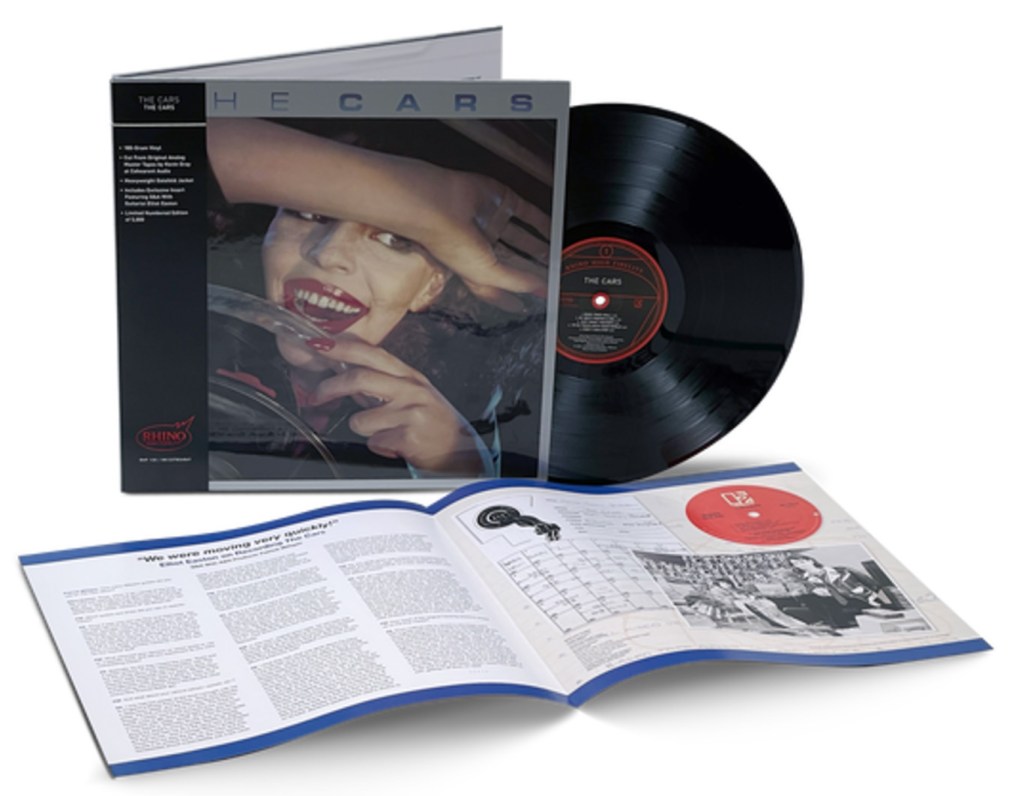
For a deeply meretricious release of recent vintage (OBI strip!, custom booklet!, premium heavy vinyl!, fold-open cover!), see The Cars on Rhino. The only thing left out of the package was a good sounding LP.


Further Reading

(more…)

Is the Heavy Vinyl from 2012 the Best Sounding Sgt. Pepper?

beatlessgtHot Stamper Pressings of Sgt. Peppers Available Now

You might agree with some reviewers that EMI’s engineers did a pretty good job with the new stereo pressing of Sgt. Pepper mastered by Sean Magee from the 2009 digitally remastered tapes.

In the March 2013 issue of Stereophile Art Dudley weighed in, finding little to fault on this title but being less impressed with most of the others in the new box set. His reference disc? The MoFi UHQR! Oh, and he also has some old mono pressings and a domestic Let It Be.

Now there’s a man who knows his Beatles. Fanatical? Of course he is! We’re talkin’ The Beatles for Chrissakes.

When I read the reviews by writers such as these, I often get the sense that I must’ve fallen through some sort of Audio Time Warp and landed back in 1982. How is it that our so-called experts evince so little understanding of how records are made, how variable the pressings can be, and, more importantly, how absolutely crucial it is to understand and implement rigorous protocols when attempting to carry out comparisons among pressings.

Critically comparing LPs is difficult and time-consuming. It requires highly developed listening skills. I didn’t know how to do it in 1982. I see no evidence that the audiophile reviewers of today are much better at it now than I was in 1982.

Just to take one example: They all seem to be operating under the same evidence-free conceit: that the original is the benchmark against which other pressings must be compared.

To those of us who have played Beatles pressings by the hundreds, this is patent nonsense. To cite just one instance, a recent Hot Stamper listing notes [inaccurately as it turns out, see below]:

We defy any original to step into the ring with it. One thing we can tell you, it would not be a fair fight. The cutting equipment to make a record of this quality did not exist in 1967, not at EMI anyway.

We had the opportunity not long ago to audition a very clean original early pressing of the album and were frankly taken aback by how AWFUL it was in virtually every respect. No top end above 8k or so, flabby bass, murky mids — this was as far from Hot Stamper sound as one could imagine. If it were a Heavy Vinyl or Audiophile pressing we would surely have graded it F and put it in our Hall of Shame.

To be fair we have played exactly one early copy of the record on our current system. (Played a copy or two long ago but on much different equipment, so any judgments we might have made must be considered highly suspect.) Perhaps there are good ones. We have no way of knowing whether there are, and we are certainly not motivated to find out given the price that original Sgt. Pepper’s are fetching these days.

We can tell you this much: no original British pressing of any Beatles album up through Pepper has ever impressed us sonically. We’ve played plenty and have yet to hear one that’s not congested, crude, distorted, bandwidth-limited and full of tube smear. (The monos suffer from all of these problems and more of course, which is only natural; they too are made with the Old School cutting equipment of the day.)

If that’s your sound more power to you. It’s definitely not ours. The hotter the stamper, the less congested, crude, distorted, bandwidth-limited and smeary it will be. (Or your money back.)


UPDATE 2023

There is a copy of a Beatles album on the original label that was competitive with our best 70s pressings, this one. We explained why it’s not a problem to admit we were wrong about the album in question, For Sale, this way:

This finding about For Sale is precisely why live and learn is our motto.

We don’t know it all, and we’ve never claimed that we did. We constantly learn things about pressings in our daily shootouts. That should not be too surprising, as record shootouts are the only way to learn anything about the sound of records that’s actually worth knowing.

Start doing your own experiments and your record knowledge might just take off the way ours has. 99% of what we think we know about the sound of records we’ve learned in shootouts over the course of the last twenty years.

Here is our advice on getting started.

Before this, the only Beatles record we would sell on the Yellow and Black Parlophone label was A Collection of Oldies… But Goldies. That title does have the best sound on the early label. In numerous shootouts, no Black and Silver label pressing from the ’70s was competitive with the best stereo copies made in the ’60s.

Until now, it was clearly the exception to our rule. From With the Beatles up through Yellow Submarine, the best sounding Beatles pressings would always be found on the 70s reissue label.


The Best Pepper Pressings

How did we come to find the best Sgt. Peppers pressings? Our recent commentary about a wonderful Benny Carter record on the original Contemporary Black Label may serve to shed some light on the process.

(more…)