Chris Thomas, Producer-Engineer – Reviews and Commentaries

Pitchfork’s Review of the 2012 Roxy Music CD Box Set

More of the Music of Roxy Music

Reviews and Commentaries for the Music of Roxy Music

Tom Ewing has written a beautiful piece here about one of my favorite bands of all time.

This career-spanning box set to mark Roxy Music’s 40th anniversary is often startling, usually wonderful, and more affecting than expected. It’s also fascinating as the story of a gradual hardening of an elegant, enigmatic persona, of Bryan Ferry’s transformation from art-school pop star to self-made sphinx.  

In their 1970s heyday, Roxy Music enjoyed enormous critical and commercial success, but even so, they and their art-school rock were admired more than trusted. American critics snipped at leader Bryan Ferry’s arch romanticism, while the Brit press considered the models Ferry squired and the suits he doffed and dubbed him “Byron Ferrari”. Almost everyone affirmed that the band were great, while disagreeing as to when, exactly. For some, the great achievement was 1982’s farewell, Avalon– impeccably designed pop for weary grown-ups. Others went a decade further back, to the early, playfully experimental albums Roxy released when Brian Eno was in the band, playing androgyne peacock to Ferry’s tailored lothario. Whether you see their development between those points as progress or cautionary tale, it’s easy to let this contrast define the band.

This box set of remasters to celebrate the band’s 40th anniversary– not lavish, but thorough and reasonably priced– is an opportunity to break free of narrative and see what sets every phase of Roxy Music apart. The answer is Bryan Ferry, one of rock’s great, sustained acts of self-definition. In classic 70s style, like Bowie or Bolan, Ferry invented a pop star. A sybarite with a plummy, awkward croon, gliding through his own songs like they were parties he’d forgotten arriving at. A flying Dutchman of the jet set, doomed to find love but never satisfaction. Having worked his way into character over an album or two, he simply never left it, becoming more Bryan Ferry with every record and every year, whether performing or not.

(more…)

Too Low For Zero – The Last in a Great Run

Hot Stamper Pressings of the Music of Elton John Available Now

Much of the production — the smooth, sweet harmony vocals, the rich, grungy guitars, the solid, warm piano — reminds me of Goodbye Yellow Brick Road, one of the classics from back in the day when Gus Dudgeon was running the show.

Caribou (1974) and Captain Fantastic and the Brown Dirt Cowboy (1975) have a similarly glossy, perfectionist approach to production as well, of course.

It was 1975’s Rock of the Westies that went off in another direction.

The next six albums, from Blue Moves to Jump Up, at least to these ears, don’t sound good enough or have enough consistently good material compared to the six albums recorded from 1970 to 1973.

Four of those are in our Top 100 Rock and Pop album list, and all four are Must Owns in my book. Pop music just doesn’t get any better.

So if Too Low For Zero reminds us in any way of those albums, especially in the songwriting department now that Bernie Taupin has rejoined team Elton after a too-long hiatus, that is all to the good.

(more…)

Expanding Space Itself on The Dark Side of the Moon

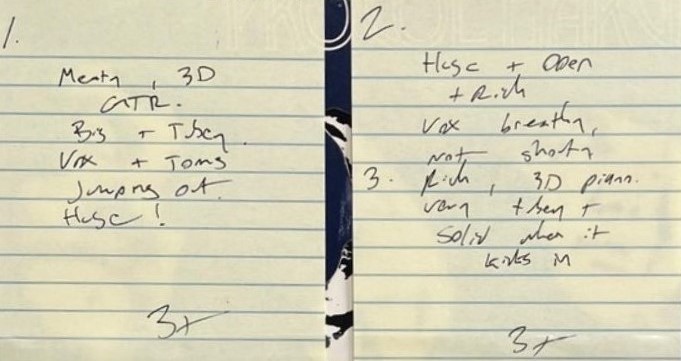
Many years ago, right around 2015 I believe, we played a copy with all the presence, all the richness, all the size and all the energy we could have ever hoped to hear on a pressing of Dark Side of the Moon.

It did it all and then some.

The raging guitar solos (there are three of them) on Money seemed to somehow expand the system itself, making it bigger and more powerful than I had ever heard.

Even our best copies of Blood Sweat and Tears have never managed to create such a huge space with that kind of raw power. This copy broke through all the barriers, taking the stereo system to an entirely new level of sound.

Listen to the clocks on Time. There are whirring mechanisms that can be heard deep in the soundstage on this copy that I’ve never heard as clearly before. On most copies you can’t even tell they are there.

Talk about transparency — I bet you’ve never heard so many chimes so clearly and cleanly, with such little distortion on this track.

One thing that separates the best copies from the merely good ones is super-low-distortion, extended high frequencies. How some copies manage to correctly capture the overtones of all the clocks, while others, often with the same stamper numbers, do no more than hint at them, is something no one can explain. But the records do not lie. Believe your own two ears. If you hear it, it’s there. When you don’t — the reason we do shootouts in a nutshell — it’s not.

The best sounding parts of this record are nothing less than ASTONISHING. Money is the best example I can think of for side two. When you hear the sax player rip into his solo as Money gets rockin’, it’s almost SCARY! He’s blowin’ his brains out in a way that has never, in my experience anyway, been captured on a piece of plastic. After hearing this copy, I remembered exactly why we felt this album must rank as one of the five best Rock Demo Discs to demonstrate the superiority of analog. There is no CD, and there will never be a CD, that sounds like this.

In fact, when you play the other “good sounding” copies, you realize that the sound you hear is what would naturally be considered as good as this album could get. But now we know better. This pressing took Dark Side to places we never imagined it could go.

(more…)

Our Top Copy of Broken Barricades Was Amazing Sounding

Hot Stamper Pressings of Art Rock Albums Available Now

Our recent Shootout Winning early UK pressing was described this way:

Looking for some proggy music that falls somewhere between Jethro Tull and Supertramp, with sonic credentials to match the recordings of those two very well-recorded bands? Well, look no further.

This early UK press is full of the Tubey Magic and studio space that makes the band’s recordings the joy they are to play on a heavily-tweaked audiophile rig.

If you’re a Prog Rock or Art Rock fan, this is a classic from 1971 that belongs in your collection. This also just happens to be our pick for the best sounding recording by the band. Others of similar stature can be found here.

And here are the notes that back up everything we had to say about the copy that knocked us out.

We LOVED playing this album, both for the music and the sound. These guys don’t get the respect they deserve among audiophiles, but we’re doing our best to try to change that.

Side one kicks off with the hit track Simple Sister, and you won’t believe how hard it rocks. Some copies are overly clean — they have the kind of clarity you might hope to find, but lacked the richness and fullness that makes ’70s analog so involving. Those “clean” copies simply do not earn very high grades from us. We leave that sound to the Heavy Vinyl and CD crowd; they seem to like it.

Punter and Thomas

John Punter engineered and Chris Thomas produced. They have worked on many of our favorite — and best-sounding – albums by British artists.

(more…)

Letter of the Week – “I am blown away with the White Album you sent.”

Hot Stamper Pressings of The White Album Available Now

One of our good customers had this to say about some a Hot Stamper pressing of The White Album he purchased quite a while back:

Hey Tom, 

I am completely stunned. I am blown away with the White Album you sent. It is as if I am there in the studio. The music has so much more shading, tone, and phrasing that gives it much more meaning and enjoyment — which has been lost on me for 40 years.

I can now hear it and I get it. Wow! You guys never cease to amaze with what you find. Thanks as usual.

Mike H.

Mike,

Glad you liked our Hot Stamper pressing of The White Album. It’s amazing how good it sounds once you know which pressings are the good ones and which ones should be avoided.

Hint: it’s the originals that are to be avoided, but don’t tell that to the average record collecting audiophile. They will think you have lost your mind.

(more…)

For Your Pleasure Is That and a Lot More

Robert Brook runs a blog called The Broken Record, with a subtitle explaining that the aim of his blog is to serve as:

A GUIDE FOR THE DEDICATED ANALOG AUDIOPHILE

FOR YOUR PLEASURE is THAT and MORE

In 1975, after reading a rave review for Siren, their fifth album in Rolling Stone, I took the plunge, bought a copy at my local Tower Records and instantly fell in love with it. I was 21 at the time and that album completely knocked me out. I had never heard anything like it. I knew nothing about the band or their style of music, now known as Art Rock, but it quickly became my favorite genre, and still is.

Naturally I proceeded to work my way through their earlier catalog, which was quite an adventure. It takes scores of plays to understand where the band is coming from on the early albums and what it is they’re trying to accomplish. I spent years trying to get into For Your Pleasure (the lesser of the two albums with Eno in the band), but eventually I wrapped my head around it and learned to enjoy what it has to offer.

The first three albums are by far the band’s best sounding.

Now I listen to each of the first five releases on a regular basis, as well as Avalon, Viva! Roxy Music, a few later albums and many of the Ferry solo releases. It’s probably true that I play Roxy Music and Roxy Music-adjacent albums more than those of any other band. That might have something to do with the fact that even after more than fifty years, this band’s music never seems to get old.

Robert is correct when he points out that Roxy’s early work does not seem to find much favor with the record buying public these days, not even with audiophiles who, one would think, would be attracted to the phenomenal recording quality of the early albums.

As a lifelong fan I have put Better Records’ substantial resources to work in order to find, clean and play as many Roxy Music albums as we can find willing buyers for. There turn out to be fewer buyers than I would have liked, to be sure, but enough to keep their albums on the site and potentially create some new fans, which should be a lot easier now that we know which are the best sounding pressings for all their albums.

(more…)

Siren on Import Vinyl? Not So Fast

Hot Stamper Pressings of the Music of Roxy Music Available Now

Siren is one of our favorite Roxy albums, right up there with the first album and well ahead of the commercially appealing Avalon.

After reading a rave review in Rolling Stone of the album back in 1975, I took the plunge, bought a copy at my local Tower Records and instantly fell in love with it.

As is my wont, I then proceeded to work my way through their earlier catalog, which was quite an adventure. It takes scores of plays to understand where the band is coming from on the early albums and what it is they’re trying to do. Now I listen to each of the first five releases on a regular basis.

Somehow they never seem to get old, even after more than forty years.

Of all the Roxy albums (with the exception of Avalon) this is probably the best way “in” to the band’s music. The earlier albums are more raucous, the later ones more rhythmically driven — Siren catches them at their peak, with, as other reviewers have noted, all good songs and no bad ones.

Imports? Not So Fast

The British and German copies of Siren are clearly made from dub tapes and sound smeary, small and lifeless.

To be fair, Siren has never impressed us as an exceptionally good sounding recording. Like other middle period Roxy, records such as Country Life and Manifesto (the albums just before and after), it simply does not have Demo Disc analog sound the way Avalon, Stranded or the Self-Titled albums do (the latter two clearly being the best sounding in their catalog).

One would be tempted to assume that the import pressings of Siren would be better sounding, the way the imports of the first four Roxy albums are clearly better sounding. (There has never been a domestic Hot Stamper pressing of any of those titles and, since we never buy them or play them, there probably never will be.)

But in the case of Siren it’s the imports that are made from dubs. It may be a British band, recorded in British studios with a British producer, but the British pressed LPs are clearly made from sub-generation tapes, whereas the domestic copies sound like they’re made from the real masters.

Go Figure. And another thing: when it comes to records, never assume anything.

The typical domestic pressing is flat, bass-shy and opaque, sounding more like compressed cardboard than analog vinyl.

Unsurprisingly, the CD, whether imported or produced domestically, is clean and clear and tonally correct but lacks the warmth and richness of the better vinyl pressings.

(more…)

We Was Wrong About The Beatles Magical Mystery Tour (Circa 1985-90)

Hot Stamper Pressings of the Music of The Beatles Available Now

This is a very old and somewhat embarrassing commentary about how ridiculously wrong we were about which are the best sounding German pressings of the Magical Mystery Tour.

Today we would never consider selling a record that sounds as phony as this version of the album does, but we did back in the 90s and probably as late as the 2000s.

Bad sounding records I once liked are common enough on the blog to have their own category, with 76 entries to date. If we had the time to make listings for them, there would surely be hundreds of others. If you’ve been in the audio game for as long as we have, you should have plenty of records that fit that bill. All those old records sitting on the shelves that you haven’t played in years might not sound they way you remember them, but the only way to know that is to pull them out and play them. If you’ve been making regular audio progress, most of them should sound better than ever, but there have to be plenty that won’t. You just don’t know which are which as long as they sit on the shelf.


This German pressing has sound that is dramatically different from that found on other Hot Stamper pressings of MMT we’ve had on the site. I used to be convinced that its sound was clearly superior to the regular German MMT LPs.

Back in the late 80s and into the 90s this was the pressing that I was certain blew them all out of the water.

We know better now. We call this version the “Too Hot” Stamper pressing — the upper mids and top end are much too boosted to be enjoyable on top quality equipment.

It does have some positive qualities though. It has substantially deeper bass than any other version; in fact, it has some of the deepest bass you will ever hear on a pop recording. It can literally rattle the room when Paul goes down deep on Baby You’re A Rich Man.

It also uses a slightly different mix on some tracks and is mastered differently in terms of levels. The level change is most obvious at the beginning of Strawberry Fields, where it starts out very quietly and gets louder after a short while, unlike all other versions which start out pretty much at the same level.

The effect is pleasing, you might even say powerful, but probably not what The Beatles intended, as no other copy I’ve ever heard makes use of the same quiet opening. An unknown mastering engineer made the choice, he created a new sound for the song, probably because he didn’t like all the tape hiss at the opening, during which few instruments were playing loud enough to mask it.

With this mix the record is now more of a Hi-Fi spectacular — great for waking up sleepy stereo systems but not the last word in natural sound.

Records that are boosted on the top and bottom suffer from what we like to call the smile curve. This pressing, as well as lots of records remastered to appeal to audiophiles, have a bad case of it.

(more…)

The First Two Roxy Music Albums Are the Band’s Best Sounding

Hot Stamper Pressings of the Music of Roxy Music Available Now

For Your Pleasure is a Masterpiece of Art Rock, Glam Rock and Bent Rock all rolled into one. AMG calls Roxy Music the “most adventurous rock band of the early ’70s” and I’m inclined to agree with them.

Spacious, dynamic, present, with HUGE MEATY BASS and tons of energy, the sound is every bit as good as the music. (At least on the best copies it is. That’s precisely what Hot Stampers are all about.)

Strictly in terms of recording quality, For Your Pleasure is on the same plane as the other best sounding record the band ever made, their first.

Siren, Avalon and Country Life are all musically sublime, but the first album and Pleasure are the only two with the kind of dynamic, energetic, POWERFUL sound that Roxy’s other records simply cannot show us (with the exception of Country Life, was is powerful but a bit too aggressive).

The super-tubey keyboards that anchor practically every song on the first two albums are only found there. If you want to know what Tubey Magic sounds like in 1972-73, play one of our better Hot Stamper Roxy albums. Roxy and their engineers and producers manage to capture a keyboard sound on their first two albums that few bands in the history of the world can lay claim to.

I love the band’s later albums, but none of them sound like these two. The closest one can get is Stranded, their third, but it’s still a bit of a step down.

Chris Thomas and John Punter

With all the latest technological advances in playback, I can tell you that these records sound a whole lot better than I ever thought they could.

For Your Pleasure is an amazing recording. Chris Thomas produced side one; he produced the rest of their albums (and engineered The Beatles and Badfinger and mixed Dark Side of the Moon and on and on).

The album has many of his trademark qualities: an enormous, 3-dimensional soundstage; tons of bass; tremendous dynamics; and energy to rival anything around.

John Punter‘s engineering is superb in all respects — virtually faultless.

Big Rock Records with Big Rock Sound

Both of these albums are the very definition of big speaker albums. The better pressings have the kind of ENERGY in their grooves that are sure to have most audiophile systems begging for mercy.

This is The Audio Challenge that awaits you. If you don’t have a system designed to play records with this kind of SONIC POWER, don’t expect to hear them the way the band and those involved in their productions wanted you to.

This album wants to rock your world, and that’s exactly what our Hot Stamper pressings are especially good at doing.

Roxy Music is one of the most influential and important artists/bands in my growth as a music lover and audiophile, joining the ranks of Steely Dan, 10cc, Ambrosia, Yes, Bowie, Supertramp, Eno, Talking Heads, Jethro Tull, Elton John, The Beatles, Crosby, Stills and Nash, The Cars, Led Zeppelin, Cat Stevens and countless others, musicians and bands who dedicated themselves to making the highest quality recordings they could, recordings that could only come alive in the homes of those with the most advanced audio equipment.

My system was forced to evolve in order to reproduce the scores of challenging recordings issued by these groups in the 70s.

It’s clear that these albums informed not only my taste in music, but the actual stereo I play that music on. It’s what progress in audio is all about. I created the system I have in order to play demanding recordings such as these, the music I fell in love with all those years ago.


Want to find your own killer copies?

Consider taking our moderately helpful advice concerning the pressings that have been winning our Hot Stamper shootouts for years. For Your Pleasure and the first album only really come alive:

Of course it needs to be played loud. What Roxy Music album doesn’t?

Furthermore, the better copies sound their best:

(more…)

Magical Mystery Touring – Our View from the Nineties

beatlmagic_depth_1176424879

Hot Stamper Pressings of the Music of The Beatles Available Now

We discuss in detail what we’re listening for and what the best copies seem to do well that the run-of-the-mill copies simply do not.

If you own a copy of the German MMT, play yours and listen for what we’re listening for. It’s all laid out in the track commentary below.

Side One

Magical Mystery Tour

The fact that this is a key track should be obvious to anyone who has ever played the album. If you don’t have a good copy of the MMT this song will take your head off. Only the German pressings have any real hope of getting it right — the MOFI, British, Japanese, domestic, etc. are uniformly awful in my experience: aggressive and irritating, the worst being the MOFI I would guess.

The German ones break down into three groups – too smooth; just right; and a bit bright or thin. Now remember, almost every copy of this record I played had the exact same stamper numbers. You can’t tell one from another except by dropping the needle on them. There is no visual clue on the record to associate with the sound, no possibility of bias. What comes out of the speakers is all I had to go by.

And it’s easy to confuse the overly smooth ones with the best ones, because on the song MMT smooth is a good thing . But when is smooth too smooth? That’s where track two comes in.

The Fool On The Hill

This song is full of airy flutes, woodwinds and the like. They should sound harmonically extended, delicate and sweet. We talked about the sound of the flutes on another record recently, Blood, Sweat & Tears. It’s as a good a test for this album as it is for that one.

Having said that, what separates the killer copies from the merely excellent ones is the quality of the flute sound. When you can hear the air going through the flute, and follow the playing throughout the song, you have a superbly transparent copy with all the presence and texture of the best. If the flute sounds right Katz’s voice will too. The sound will be Demonstration Quality of the highest order. Want to shoot out two different copies of this album on side one? Easy. Just play this track and see which one gets the flute right.

On the best copies Paul’s voice is amazingly present. You should feel as though you could reach out and touch him. Which means there are two basic elements to listen for in this song, both of which must be proportional and balanced. First, the flutes must sound open and airy. Then, Paul’s voice must retain its lower-midrange body and warmth without sounding veiled or thick in any way, yet have excellent presence. Not too many copies, maybe one out of ten, can really pull it off. It’s amazing when they do though!

If the first track is alive but not aggressive, and Fool sounds the way I describe it above, the only thing left is The Walrus Test. Feel free to skip to the last track if you like.

(more…)