shootout-malpractice

An Overview of Beatles Oldies But Goldies

Hot Stamper Pressings of the Music of The Beatles Available Now

This is a Beatles album we think we know well.

We’ve done a number of shootouts for A Collection of Beatles Oldies over the last ten years or so, and our experimental approach using many dozens of copies provides us with strong evidence to support the following conclusions regarding the sound of the originals vis-a-vis the reissues:

  1. The best of the early pressings always win our shootouts. No reissue has ever earned our top grade of A+++ and it is unlikely any reissue ever will.
  2. The reissues can be quite good however. The best of them have earned grades of Double Plus (A++).
  3. The worst of the early pressings also earned grades of Double Plus (A++).
  4. Conclusion: if you have a bad original and a good reissue, you might be fooled into thinking the sound quality was comparable.

(more…)

Let Us Help You Back Up Your Claims

How to Become a Better Listener

UPDATE 2026

We wrote this commentary a couple of years back and now, having played some of the Tone Poets pressings we thought would have bad sound, have updated it with all the latest information on that sorry label.

Credibility is at the heart of our many disagreements with the online audiophile community, so we felt we needed to offer a way for audiophiles to do a better job of giving some context to their opinions.


When we run experiments that include modern remastered Heavy Vinyl records, comparing them to the vintage vinyl pressings we have on hand for our shootouts, the one thing we can say about them is that they are almost certain to be inferior. (Well, almost, but not quite.)

Some are a great deal worse than others, to be sure, but they are all inferior to one degree or another.

On another blog we were taken to task — by those who felt their systems were more than adequate to judge the sound quality of the real Blue Notes compared to the new releases — for predicting that Joe Harley’s Tone Poets releases, once we finally got around to playing them, would be just as awful as all the other records he has had a hand in producing

For the thirty years since these Heavy Vinyl pressings have come along, it has seemed to us that all the evidence pointed in the same direction — namely that audiophile systems are rarely capable of showing their owners the strengths and weaknesses of the records they play.

We discussed that very issue here in some depth. Curiously, the audiophile systems of reviewers has seemed to fail them every bit as badly.

If you, speaking as an audiophile, want to make the case for the superior quality of the records put out on the Tone Poets label, we are happy to entertain the possibility. Having played Heavy Vinyl pressings by the hundreds over the past three decades, the chances of their records having sound we would find acceptable are vanishingly small, but we can’t say the chances are zero.

Repeating the tiresome truism (aren’t they all?) that because reviews are subjective, your review is as credible as any other, simply will not do.

When we wrote the above we had yet to play a Tone Poets reissue in one of our shootouts. (We’d dropped the needle on a couple, but to get deep into the sound we really needed to do a shootout with a good-sized pile of cleaned Blue Note pressings, with special emphasis on those mastered by RVG. They’re the ones that most often win shootouts.)

We actively started to search out real Blue Note pressings, on various labels from various eras, for a couple of titles. After about two years we were able to do the shootouts and report our findings.


UPDATE 2026

We have now played a couple of the Tone Poets releases, for two of the very best sounding Blue Note recordings we’ve had the pleasure to play: Dexter Gordon’s One Flight Up and Lee Morgan’s Cornbread.

To read our reviews, click on the respective links for either or both of them: One Flight Up and Cornbread.

(more…)

A Collection of Beatles Oldies on Video – Expert Advice?

The LOST Beatles Album | Cancelled By Apple – Should It Be Re-released?

Click on the link above to see an interesting and informative video that we think is well worth watching.

Allow me to make a few points:

As to the question posed above, my vote would of course be no. The new Beatles albums are awful sounding. Here are a few of rour eviews detailing their many shortcomings:

After playing those three, we gave up on the idea of playing the rest of the set.

The Mono Box (in analog!) was even worse. We played one record, heard truly awful sound, and that was all she wrote.

Mushy Sound Quality

Andrew Milton, the Parlogram Auctions guy, offers opinions about the sound quality of the various pressings he reviews. Naturally we are skeptical of reviewers’ opinions for reasons that should be clear to readers of this blog.

We have no idea how he cleans his records or how carefully he plays his records, or even what he listens for.

Frankly, even if we knew all those things it wouldn’t mean much to us. So many reviewers like so many bad sounding modern records that we’ve learned not to take anything they say seriously.

The comment about the 1G stampers being “mushy” that Andrew makes about 19 minutes in is one we take exception to. Part of the problem with his comment is that we can’t really be sure what he means by “mushy.” If it means smeary or thick, that has not been our experience with the best cleaned originals.

Since the later pressings tend to be thinner and less Tubey Magical, they are probably even less “mushy,” assuming I have the definition of the term right.

My guess is that he has a system with problems like those we had thirty years ago.

Our playback systems from the 80s and 90s were tubier, tonally darker and dramatically less revealing, which strongly worked to the advantage of leaner, brighter, less Tubey Magical pressings such as the reissues of A Collection of Beatles Oldies…

But to say that the 1G stampers were used for both the originals as well as the reissues with the Black and Silver labels and that therefore the sound is the same is definitely a sign that Andrew’s understanding of stampers and pressings is hopelessly incomplete.

What We Think We Know

We have done a number of shootouts for the album over the last ten years or so, and our experimental approach using many dozens of copies provides us with strong evidence to support the following conclusions regarding the originals versus the reissues:

(more…)

How Not to Conduct a Proper Shootout for Aqualung

UPDATE 2023

This commentary was probably written in 2010 or thereabouts, since that’s the date on Fremer’s Aqualung review, which, for those with much more tolerance for audiophile BS than I am able to muster, can be found here. I’ve made a few changes to the commentary below, but most of the original text is intact.


We recently put up a Hot Stamper Aqualung that just BLEW THE DOORS OFF the CLASSIC 200g pressing. Michael Fremer may think the new reissue is the ultimate pressing, but we sure don’t. 

The Aqualung shootout on his site is priceless. He has so many silly things to say about it, let’s not waste any more time and get right to them.

His Shootout Begins

He says he “… compared Classic’s new 200g reissue with: 1) an original UK Chrysalis 2) an original American Chrysalis/Warner Brothers, 3) an original French Pink Label Island, 4) The Mobile Fidelity ½ speed mastered edition and 5) DCC’s 180g issue mastered by the team of Hoffman and Gray.”

How many of each? One, right? (All the articles in front of the nouns are singular. Assuming MF is using good grammar, how many could there be?)

Mikey, that’s your first mistake.

When it comes to the domestic release, one is a wholly inadequate sample size for pressings that were pumped out by the millions and therefore mastered multiple times. Go to Discogs if you want to see just how many different stamper numbers can be found in the original Reprise pressings. Hint: it’s a lot. Some of them are known to us to be awful, some fall into the middle of the pack, and some we like. Figuring out which are which has taken us a lifetime of work and is well beyond the ability of any single person to decode for more than a few dozen records.

Maybe you got hold of a bad sounding “original American Chrysalis/Warner Brothers,” did you ever think of that? The record bins are full of them.

If you did get hold of a bad one — and all the evidence points in that direction — the time and effort you put into your shootout just went flying out the window, defenestrated as they say.

Shootouts using only a small number of pressings have very little value. Anybody who claims to know anything about records ought to know that.

This next line just floors me.

Now rather than make value judgments, let’s just compare without prejudice.

This guy may not be good for much, but he sure is good for a laugh.

Does he really expect us to believe that the comments that follow are not biased in any way, that they are The Truth, that he is able to measure “intimacy and warmth” and tell us precisely how much of each there is on any given pressing? Who in his right mind thinks like that?  (At this rate he may end up wandering about a park with snot running down his nose, greasy fingers smearing shabby clothes, but let’s hope it doesn’t come to that. Help is available; perhaps Stereophile has a mental health plan under which he could be covered.)

Soon enough he goes on to give his opinion as to the merits of each of the pressings noted above. I’m sorry, did I say opinion? I meant comparisons without prejudice. Sorry, my bad.

The Big Truth

And of course he is more than welcome to make any and all the comparisons he deems fit, each from that lovely sample size of one. And if he wants to add another sample (size = 1) to the mix by playing the DCC gold CD, he’s welcome to do that too, which he did. I’m guessing that his CD player is every bit as accurate as his front end (comprising turntable/ arm/ cartridge/ phono stage/ cables), which, if he were to ascribe a percentage to the accuracy of all the pieces that make up this chain, would have to be in the range of 100% or thereabouts. Or as the late John McLaughlin might say, on a scale of one to ten: ten, meaning Metaphysically Accurate.

No colorations. No imperfections. Pure Truth, and nothing but.

(more…)

Hot Stamper Sharing Can’t Get Off the Ground, How Come?

Basic Concepts and Record Realities Explained 

The above link takes you to our blog. Normally such a link would take you to our in-stock Hot Stamper pressings on the site for the band in question, but we rarely have any Traffic albums to sell these days, which is the case as of this writing.

Finding just the right Traffic pressings, with audiophile-quality vinyl no less, requires effort and resources that we just haven’t been committing to lately. We hope to do better in 2025.

In 2014 somebody on the Hoffman forum tried to get a Hot Stamper thread going under this heading: cheap Hot Stampers revealed.

The thread:

“If you have a “hot stamper” record – one that smokes and takes no prisoners, I mean a BADASS pressing, show it here with matrix info, label or other identifying features so we can all hunt with a bit of a head-start.

“I know these records are out there, just looking for a place to show off their analog glory.

“Here is a recent find that fits the bill and then some:

“Traffic: Best Of Traffic UK.

“Matrix # ILPS 9112 A-1/B-1”

OK, let’s talk about this Island reissue. We know the record well. If it sounds the way the copies we played over the years have sounded, we would say it can be good, not great, and if it qualified for Hot Stamper status, it might — might — earn a plus and a half at best. (1.5+.)

We don’t even bother to pick them up at any price these days, if that tells you anything.
He got very little support in his endeavor. The thread closed after a while with practically nothing in it.

Could it be that the folks on the Hoffman forum have a poor grasp of the amount of effort, time and money it takes to find Hot Stampers?

And, having committed to neither the effort, the time nor the money, find that they have nothing of any value to contribute to such a list?  

Yes, that could be. That definitely could be. Thank god it doesn’t keep them from criticizing those of us who, working in concert with a staff of ten or so, have devoted ourselves to the task and found them by the thousands.

By the way, we know that Traffic title very well. The Pink Label original is by far the best pressing in our experience. No copy we have ever heard on the label promoted by this poster would qualify as much more than a bargain Hot Stamper in comparison to the Pink Label and Pink Rim label pressings that we sell, although of course, not having heard his copy, we can’t say it’s not fabulous. 

It’s just not very likely to be fabulous. 

(more…)

How Can Sound This Bad Possibly Earn a 10?

Hot Stamper Pressings of the Music of Bob Dylan Available Now

Maybe if the scale goes from 1 to 100, sure, I could see it. Yeah, 10 out of 100 sounds about right.

But the scale goes to 11, which makes a grade of 10 risible to anyone who has played this seriously flawed pressing. Here is how we described its sound many years ago:

We found this mono reissue to be flat as a pancake and dead as a doornail, like most of the Sundazed records we’ve played, starting way back in the early 2000s. No, they never got any better.

In our experience, Sundazed is one of the worst record labels of all time. This pressing is just more evidence to back up our low opinion of them.

Obviously we may have a low opinion of them, but a famous audiophile reviewer seemed to find the sound to his liking. He wrote:

Sundazed’s reissue gives the original a run for the money and remains true to the original, though it suffers in the bass, which while deep and reasonably well defined, is not as tightly drawn or focused. The upper mids on the original also bloom in a way that the reissue’s don’t, giving the reissue a slightly darker, recessed sound, but there’s still sufficient energy up there since Dylan’s close-miked vocals pack an upper midrange punch. If the vocals or harmonica sound spitty and unpleasantly harsh, it’s your system, not the record [!] – though there’s plenty of grit up there. On the plus side, the overall clarity and transparency of the reissue beats the original. [!] A really fine remastering job.

Of course we find every word of this review arrant nonsense, except the discussion of the qualities he praises in the original relative to the reissue. It’s been twenty years since this remastered pressing came out, does anybody still like the sound of it? Anybody? Let’s hope not.

The intro to his review boldly declares a respect for Sundazed (and Classic Records and Analogue Productions) that we find puzzling after playing so many of their rarely-better-than-awful-sounding records. (Here is a commentary from 2007 that puts our antipathy in perspective. And no, modern records have no improved since then, if the releases from 2024 are any indication.)

Sundazed’s decision to issue Blonde on Blonde using the much sought after mono mix is indicative both of the company’s dedication to doing what’s musically correct, and of the vinyl marketplace’s newfound maturity. There was a time a few years ago when no “audiophile” vinyl label would dare issue a mono recording; audiophiles wouldn’t stand for it was the conventional wisdom. Perhaps back then it was even true. Today, with Sundazed, Classic, Analogue Productions and others issuing monophonic LPs on a regular basis (and one has to assume selling them as well) listeners are appreciating the music for music’s sake, and equally importantly, for the wonderful qualities of monophonic sound reproduction.

My grade might be 2 out of 11. No audiophile should be fooled by the crap sound of this pressing, and no audiophile should believe a word of this review.

Reviewer incompetence? We’ve been writing about it for more than 25 years. From the start we knew we could never begin to do much more than scratch the surface of preposterous record reviews in need of rebuttal. The audiophile world is drowning in this sh*t.

(more…)

Sgt. Peppers on Heavy Vinyl – The Reviewers from 1982 Blow It Again

beatlessgtHot Stamper Pressings of Sgt. Peppers Available Now

You might agree with some reviewers that EMI’s engineers did a pretty good job with the new Pepper.

In the March 2013 issue of Stereophile, Art Dudley weighed in, finding little to fault on this title but being less impressed with most of the others in the new box set.

His reference disc? The MoFi UHQR. Gadzooks!

Oh, and he also has some old mono pressings and a domestic Let It Be. Now there’s a man who knows his Beatles. Fanatical? Who can blame him? We’re talkin’ The Beatles for Chrissake!

When I read the reviews by writers such as these I often get the sense that I must’ve fallen through some sort of Audio Time Warp and landed back in 1982.

How is it that our so-called experts evince so little understanding of how records are made, how variable the pressings can be, and, more importantly, how absolutely crucial it is to understand and implement rigorous protocols when attempting to carry out comparisons among pressings.

Critically comparing LPs is difficult and time-consuming.

It requires highly developed listening skills that I could not possibly have had because I had no clue as to what they were or how to go about acquiring them.

I see no evidence that the audiophile reviewers of today are better at it than I was in 1982, and I was terrible.

What does one well-known reviewer have to say, keeping in mind that he’s using his original British pressing for comparison? I quote at length — without prejudice so to speak — so there can be no misunderstanding. (Emphasis added.)

(more…)

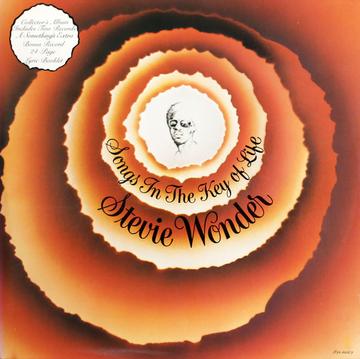
Songs in the Key of Life – Is This a Well-Engineered Album?

Hot Stamper Pressings of the Music of Stevie Wonder Available Now

Full disclosure: This commentary was written more than ten years ago and probably updated a bit here and there since then.


I’ve just gone to this reviewer’s website to make sure the quote below is accurate, and everything you need to see is still up and as misguided as ever.

Some audiophiles never learn, and a great deal of this blog is devoted to helping audiophiles avoid the errors this reviewer and others like him have been making for decades. In the mid-90s I wrote my first commentary about the awful audiophile records this person had raved about in his review in one of the audiophile rags.

In the years since it seems that nothing has changed. Bad sounding audiophile pressings make up the bulk of this person’s favorable reviews to this day. Here are 157 of them.

How it is possible to spend so much time doing something, yet learn so little in the process? It is frankly beyond me.

I put the question to you again:

Is this a well-engineered album?

The first question that comes to mind is:

How on Earth could anyone possibly know such a thing?

Some background. Years ago our first Hot Stamper shootout for Songs in the Key of Life had us enthusiastically singing its praises:

Hot Stampers discovered for one of the funkiest and most consistent double albums of all time! It’s beyond difficult to find great sounding Stevie Wonder vinyl, but here’s a copy that proves it’s possible if you try hard enough. So many copies are terrible in so many different ways — we should know, we played them. And just to be clear, this copy is far from perfect as well, but it did more things right in more places than we ever expected it would or could. And that means it showed us a great sounding Stevie Wonder record we never knew existed.

But a well known reviewer says it’s a bad recording. Does he know something we don’t?

(more…)

How Can Anybody Not Hear What’s Wrong with Old Records Like These?

beatlrubbeoriginalRecord Collecting – A Guide to the Fundamentals

It is our strongly held belief that if your equipment (regardless of cost) or your critical listening skills do not allow you to hear the kinds of sonic differences among pressings we describe, then whether you are just getting started in audio or are a self-identified audio expert writing for the most prestigious magazines and websites, you still have a very long way to go in this hobby.

Purveyors of the old paradigms — original is better, money buys good sound — may eventually find their approach to records and equipment unsatisfactory (when it isn’t just plain wrong), but they will only do so if they start to rely more on empirical findings and less on convenient theories and received wisdom.

A reviewer we know all too well is clearly stuck in the old, mistaken paradigm, illustrated perfectly by this comment:

It’s not my pleasure to be so negative but since I have a clean UK original (signed for me by George Martin!) I’ll not be playing this one again. Yes, there are some panning mistakes and whatever else Martin “cleaned up” but really, sometimes it’s best to leave well-enough (and this album was well-enough!) alone.

We can’t imagine how anyone can have a system in this day and age that can obscure the flaws of the original Parlophone pressings of Rubber Soul (or any other Yellow and Black label Parlophone pressing for that matter, other than Yellow Submarine and Oldies but Goldies).


UPDATE 2022

Here is another exception to that “rule.”


This reviewer apparently does (as do some of our customers, truth be told), but we have something very different indeed. One might even consider it the opposite of such a system.

Our system is designed to relentlessly and ruthlessly expose the flaws of every record we play.

Only the best of the best can survive that level of scrutiny. Our system (comprising equipment, setup, tweaks, room treatments, electricity) operates at the highest level of fidelity we have been able to achieve to date. We are constantly making improvements to our playback system in search of even better sound.

Real Progress

But wait a minute, who are we to talk about being fooled? Bear in mind that as recently as 2000 or so we were still recommending DCC and other Heavy Vinyl pressings. These are records that, with few exceptions, I would have a hard time sitting through nowadays.

My system couldn’t show me how colored and lifeless they were then, but it sure can now.

It’s amazing how far you can get in 10 years [now 20] if you’re obsessive enough and driven enough, and are also willing to devote huge amounts of your time and effort to the pursuit of better audio. This will be especially true if you are perfectly happy to let your ears, not your brain, inform your understanding of the sound of the records you play.

If we thought like most audiophiles, that money buys good sound and original pressings are usually the best, there would be no such thing as Hot Stampers. Old thinking and wrong thinking can really slow down your progress.

(more…)

If This Guy Isn’t on the Payroll…

Hot Stamper Pressings of the Music of The Cars Available Now

He sure ought to be!

Based on what I’ve just read, if Rhino Records is looking for a cheerleader, they could hardly do better than Mr. Youman.

I stumbled upon this fellow’s review of The Cars first album on Positive Feedback just a few days ago.

Not sure I would even call it a review. It comes across to me as more of a PR release.

I don’t think Positive Feedback cares either way. They need content, and apparently they consider this content.

The New Rhino High Fidelity Series – The Cars And John Coltrane Kick It Off in Grand Style!

One thing I have noticed about PF is that they do not seem to employ editors of any kind. My friend Robert Pincus writes for them — here is his review of a Dillards album that no one would be likely to buy from us at our prices but is probably worth picking up for the five or ten dollars a record store might charge. There are plenty of typos throughout his reviews and others I have read.

You’re on your own with PF. And they are good with however many exclamation marks you may want to use. Four in one paragraph? Bring it on they say!

The following paragraph from Youman’s review contains a ridiculous mistake that any knowledgeable editor should have noticed. Can you spot it? If so, email me at tom@better-records.com

Mastered by George Marino, the 1978 original would seem hard to beat, as the level of detail and attack is quite impressive. It absolutely rocks, and I would be very happy if this was my one and only copy. The 1980 Nautilus, which was half speed mastered by Jack Hunt, is surprisingly very much like the original with some minimal improvement in transparency and dynamic punch. Most would be hard pressed to hear the difference. Of course, the super quiet Japanese vinyl might be contributing to this. We also have the 2009 Mofi, which was half speed mastered by Shawn Britton. In my system, I found it to be dark and somewhat veiled. Bass was just too prominent to my ears. It was almost impossible to sit through the entire Mofi after hearing the OG and the Nautilus. I am a huge Mofi fan, so this was very disappointing.

When someone as clearly lacking in critical listening skills as this fellow has the temerity to compare “the” original and the Nautilus remaster (reviewed here) and declare “Most would be hard pressed to hear the difference,” it rubs me the wrong way.

I want to sit such a person down and say that it’s unlikely that anyone with two working ears and a halfway-decent stereo would not hear the difference.

You can hardly hear it, that seems clear, but why insult others of a Cars-loving persuasion?

The reference to Giant Steps below is yet more evidence of this fellow’s inability to recognize a bad record when he hears it:

Let’s return to that Rhino catalog and all that it could possibly offer to the audiophile enthusiast. We need to send our wish lists and raise our hands if not bring out the megaphones!  Of course we have the Led Zeppelin catalog, but that has been debated ad nauseum on several internet websites and forums. It seems that those in control will not allow it. Can you imagine a Kevin Gray mastering for Led Zeppelin II? There have been several very good reissues for the Black Sabbath catalog, but the original UK pressings are still the ones to beat based on my own comparisons with various other collectors. Lets [sic] get those original analog UK tapes and hand them over to Kevin!  I also have a copy of the 45 RPM John Coltrane, Giant Steps released by Rhino in 2008. Some argue that this is best pressing ever and by a wide margin! One of the top ten jazz releases of all time as ranked by many jazz experts. Bernie Grundman did a fantastic job on that reissue but there was only a limited production of 2500 copies. Lets [sic] take another shot at those tapes as part of the new Rhino High Fidelity series!

We make the case that Bernie’s recutting of Giant Steps for Rhino is possibly the worst sounding version of the album ever, and perhaps by a wide margin! He already had his shot, the patient did not survive the operation, what good would it do to put another bullet in the corpse?

Jazz experts may rank it one of the top releases of all time — I certainly would — but it is unlikely they have ever heard Rhino’s bloated, thick, dull, lifeless and altogether unsatisfactory pressing of the album. We gave it an a F and felt that we were being too kind. There is some consolation to be had though: The limited production meant that only 2500 people had to suffer through it upon release. (According to Discogs, these days the average price paid for a copy is $225. We may charge a lot for records, but we charge a lot for good sounding records, not bad sounding records, and that should count for something, shouldn’t it?)

And Kevin Gray already ruined the album once for Rhino, so why would anyone want to hand him the tapes to do it again? Is he now a better mastering engineer than he was in the mid-2000s? What evidence to support this proposition could you possibly supply to those of us who question his competence? The shockingly bad sounding records he’s cut recently — Stand Up, Moondance and Rickie Lee Jones are three that spring to mind — make a mockery of the very idea that this guy knows what he is doing.

More comments from the above paragraph of the exploding head variety:

There have been several very good reissues for the Black Sabbath catalog…

Have there? Would someone please name one? We would love to hear it.

but the original UK pressings are still the ones to beat based on my own comparisons with various other collectors.

Then you need to get out more. The UK pressings we have played are not competitive in the least with the best domestic originals. Maybe there are some new reissues that are comparable to the UK pressings, but that is clearly setting the bar much too low. For our last shootout, we noted:

(more…)