Testing Tubey Magical Guitars

The better pressings of the albums listed here boast exceptionally Tubey Magical acoustic guitars reproduction. Their electric guitars should also be Tubey Magical — the two tend to go hand in hand — but the acoustic guitars are where you will hear the kind of sound that is the hallmark of vintage analog.

The phenomenally Tubey Magical harmonic richness of the (oversized) acoustic guitar that opens Where Do the Children Play on Tea For the Tillerman is one that simply cannot be experienced properly without a top quality front end and vintage pressing of the album.

Note that, in our experience, no modern reissue has managed to reproduce that sound on vinyl, and we suspect that no modern reissue ever will. If you listen exclusively to modern remasterings, or CDs, you really have no way of knowing what you are missing.

Listening in Depth to Houses of the Holy

Hot Stamper Pressings of the Music of Led Zeppelin Available Now

You really get an understanding of just how much of a production genius Jimmy Page was when you listen to a copy of Houses on high quality modern equipment, the kind that simply did not exist when the record came out in 1973.

To take just one example, listen to how clearly the multi-tracked guitars can be heard in the different layers and areas of the soundstage. On some songs you will have no trouble picking out three, four and even more guitars playing, each with its own unique character. The clarity of the better copies allows you to recognize — perhaps for the first time — the special contribution each is making to the finished song.

Side One

The Song Remains the Same
The Rain Song

Check out the guitars — the sound should be warm, sweet and delicate. There are some dead quiet passages in this song that are almost always going to have some surface noise. Most copies start out a bit noisy but almost always get quieter as the music goes along.

Over the Hills and Far Away

This is a great test track for side one. It starts with lovely acoustic guitars before the Monster Zep Rock Chords come crashing in. If both parts of the song sound correct and balanced, you more than likely have a winner. And the bigger the dynamic contrast between the parts the better.

Turn your volume up good and high in order to get the full effect, then stand back and let the boys have at it.

The Crunge (more…)

How Did We Know Side Two Lacked Weight and Tubey Magic?

Hearing massive sound coming out of Big Speakers in a Big Soundroom from a Prog Rock blockbuster like this was a thrill our listening panel won’t soon forget. The notes from the listing we put up for ELP’s debut tell the story.

But not the full story, since we rarely mention what was lacking or wrong with the sides that did not earn our top grade of three pluses.

Our notes below will get to that, but first, here is how we described our Shootout Winning UK copy:

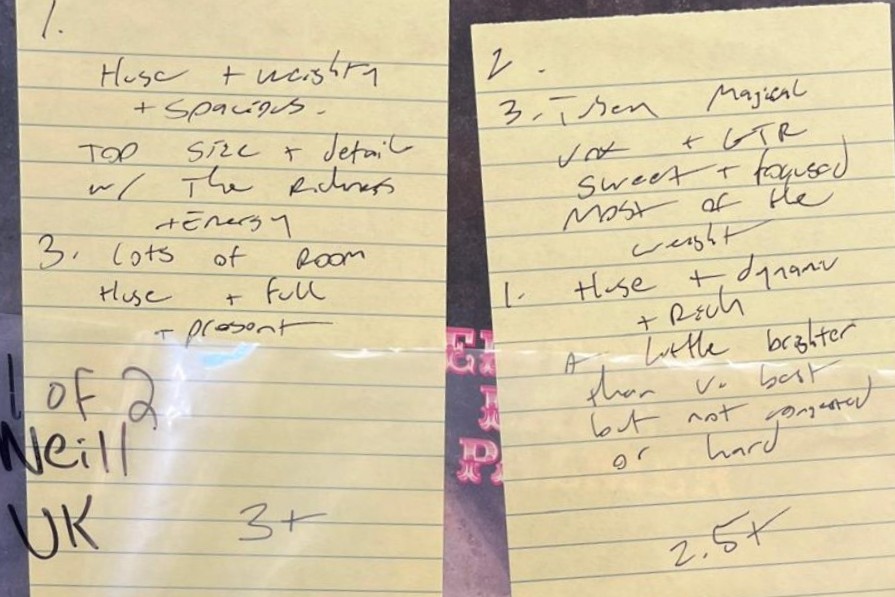
Boasting KILLER Shootout Winning Triple Plus (A+++) sound or close to it throughout, this UK Island Pink Rim pressing makes the case that ELP’s debut is clearly one of the most powerful rock records ever made.

Spacious, rich and dynamic, with big bass and tremendous energy – these are just some of the things we love about Eddie Offord’s engineering work on this band’s albums.

Analog at its Tubey Magical finest – you’ll never play a CD (or any other digitally sourced material) that sounds as good as this record as long as you live.

Side one was awesome in every respect, and the way we know that is we played a bunch of copies and nothing could beat it. This side one took top honors for having exactly the sound we described above.

Side two is another matter. We came across a side two that was slightly better than the side two you see here.

When we played the two best copies back to back, side one of this copy came out on top, earning a grade of 3+. However, the side two of another pressing showed us there was even more weight to be heard in the recording than we’d noticed the first time around. Also, it turns out that this side two was a little bright compared to the very best.

When comparing your own pressings of the album, consider listening for these qualities yourself.

(more…)

Cat Stevens Wants to Know How You Like Your Congas: Light, Medium or Heavy?

Hot Stamper Pressings of the Music of Cat Stevens Available Now

During the shootout for this record a while back [the late 2000s would be my guess], we made a very important discovery, a seemingly obvious one but one that nevertheless had eluded us for the past twenty plus years (so how obvious could it have been?).

It became clear, for the first time, what accounts for the wide disparity in ENERGY and DRIVE from one copy to the next. We can sum it up for you in one five letter word, and that word is conga.

The congas are what drive the high-energy songs, songs like Tuesday’s Dead and Changes IV.

Here is how we stumbled upon their critically important contribution.

We were listening to one of the better copies during a recent shootout. The first track on side one, The Wind, was especially gorgeous; Cat and his acoustic guitar were right there in the room with us. The transparency, tonal neutrality, presence and all the rest were just superb. Then came time to move to the other test track on side one, which is Changes IV, one of the higher energy songs we like to play.

But the energy we expected to hear was nowhere to be found. The powerful rhythmic drive of the best copies of the album just wasn’t happening. The more we listened the more it became clear that the congas were not doing what they normally do. The midbass to lower midrange area of the LP lacked energy, weight and power, and this prevented the song from coming to LIFE the way the truly Hot Stampers can and do.

Now I think I understand why. Big speakers are the only way to reproduce the physical size and powerful energy of the congas (and other drums of course) that play such a big part in driving the rhythmic energy of the song.

(more…)

Listening in Depth to Pretzel Logic

Hot Stamper Pressings of the Music of Steely Dan Available Now

It’s positively criminal how mediocre this amazingly well-recorded album sounds on the average pressing of it. How can you possibly be expected to appreciate the music of Pretzel Logic when it sounds like that?

The reason we audiophiles go through the trouble of owning and tweaking our temperamental equipment is that we know how hard it is to enjoy good music when it doesn’t sound right.

Bad sound is a barrier to deeper understanding and a more intense listening experience, which is why I spent 50 years building a stereo that could play a record like Pretzel Logic right, or at least as right as I could get it to sound. (Speaking of sound, acquiring this preamp only a few years after discovering the music of Steely Dan changed everything for me.)

I also credit Pretzel Logic, probably more than any other album of theirs, with helping me dramatically improve the quality of my playback.

Side One

Rikki Don’t Lose That Number

By far the biggest hit on this album and one of the biggest for the band, it’s also one of the clearest indicators of Hot Stamper Sound. The Horace Silver inspired intro is at its best when you can easily hear the acoustic guitar in the left channel doubling the piano. On most copies it’s blurry and dull, which causes it to get lost in the mix. Transparent copies pull it out in the open where it belongs.

That’s the first test, but the real test for this track is how well the (surprisingly) DYNAMIC chorus is handled. On a properly mastered and pressed copy, Fagen’s singing in the chorus is powerful and very present. He is RIGHT THERE, full of energy and drive, challenging the rest of the band to keep up with him. And they do! The best copies demonstrate what a lively group of musicians he has backing him on this track. (If you know anything about Steely Dan’s recordings, you know the guys in these sessions are the best of the best.)

Check out the big floor tom that gets smacked right before the first chorus. On the best copies the whomp factor is off the scale.

Shocking as it may seem, most copies of this album are DOA on this track. They’re severely compressed — they never come to life, they never get LOUD. The result? Fagen and the band sound bored. And that feeling is contagious.

Of course few audiophiles have any idea how dynamic this recording can be because they’ve never heard an especially good pressing played back on a big speaker system in a big room.

Only a handful of the copies we played had the truly powerful dynamics heard on the best copies. These are Pretzel Logics with far more life than I ever dreamed possible. Who knew?
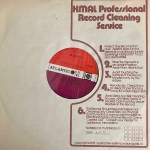
As an aside, back in 1976 I had my fifty favorite albums professionally cleaned on a KMAL record cleaning machine at the stereo store I worked at. They would give you a custom record sleeve along with the cleaning, and sure enough I found my original Pretzel Logic with its KMAL sleeve. My copy was pretty good but no Hot Stamper. So, yes, it really did take us thirty years to find the best copy!

(I took the picture of the KMAL sleeve you see to the left partly because it provides a piece of factual evidence that I really didn’t have a clue about records in 1976. I was proud to be the owner of an original British pressing of Led Zeppelin II — which is absolutely the wrong pressing of the album if you are interested in good sound — but of course I had no way to know that back then.  (more…)

Always wanted to have a Plum and Orange pressing? Here’s your chance!

Hot Stamper Pressings of the Music of Led Zeppelin Available Now

We should have titled this one “here was your chance,” since this pressing sold very quickly.

Over the years most Plum and Orange pressings were disposed by us of on ebay for the benefit of collectors and those audiophiles who might be ill-informed enough to think that early British pressings would have the best sound for Led Zeppelin III.

They do not. They can, however, sound reasonably good in some cases with the proper cleaning.

However, they are not even Double Plus (A++) good, which sounds like something from the novel 1984 but is in fact a Very Good grade and guaranteed to trounce any and all copies of the album you have ever heard.

No, the best Zeppelin album we have played to date with the early label in this case earned a grade of Single Plus to Double Plus, which we describe as “[a] wonderful sounding side with many impressive qualities, notably better than a Single Plus copy. A big step up from the typical pressing.”


UPDATE:

We do not even offer Single Plus copies on the site anymore. Although their faults would be less obvious to anyone who went through the shootout process with the album, such faults are much too bothersome to us precisely because we did go through that process.

Once you know what is right, it’s very easy to spot what is wrong.

This is the foundational principle of Hot Stampers.

(more…)

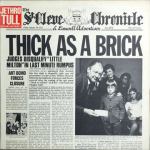
Thick as a Brick Is a Top Test Disc for System Accuracy

Hot Stamper Pressings of the Music of Jethro Tull Available Now

From 2009 to 2010 this was our single go-to record for testing and tweaking our system.

Although we now use an amazing copy of Bob and Ray (the big band version of The Song of the Volga Boatmen located therein has to be one of the toughest tests we know of), we could easily go back to using TAAB.

Artificiality is the single greatest problem that every serious audiophile must guard against with every change and tweak to his stereo. cleaning system, room, electricity and everything else.

Since TAAB is absolutely ruthless at exposing the slightest hint of artificiality in the sound of the system, it is clearly one of the best recordings one can use to test and tune with. Here are just some of the reasons this was one of our favorite test records back in the day:

Dynamics

The better copies are shockingly dynamic. At about the three minute mark the band joins in the fun and really starts rocking. Set your volume for as loud as your system can play that section. The rest of the music, including the very quietest parts, will then play correctly for all of side one. For side two the same volume setting should be fine.

Bass

The recording can have exceptionally solid, deep punchy bass (just check out Barrie “Barriemore” Barlow’s drumming, especially his kick and floor toms. The guy is on fire).

Midrange

The midrange is usually transparent and the top end sweet and extended on the better pressings.

Tubey Magic

The recording was made in 1972, so there’s still plenty of Tubey Magic to be heard on the acoustic guitars and flutes.

(more…)

Our First Big Shootout for Tommy Took Place Way Back in 2008

Hot Stamper Pressings of the Music of The Who Available Now

Our notes from 2008. Much has changed since then!

This British Track Black Label pressing DEMOLISHED our expectations for this album. I don’t think I’ve ever heard The Who sound this good.

Three out of four sides rate our top grade of A+++, and side three ain’t far behind at A++. What do such high grades give you for this album? Tubey magical guitars, silky vocals with lots of texture, unbelievable weight to the bottom end, “you are there” immediacy, BIG drums sound, OFF THE CHARTS rock and roll energy, and shocking clarity and transparency.

This is only the second $1000 Hot Stamper we’ve ever listed on the site. We know there’s always a rise in trash talk on the vinyl message boards when we throw this kind of record on the site, but we can’t worry about that silly business. Our job is to find you guys the best of the best, and here’s a record that we’re very proud to put at the very top of our top shelf.

Story Of The Shootout

We’ve never been able to pull off a full Tommy shootout until now. We had played enough copies to figure out that the Track originals are really the only way to go, but who can find even one clean copy these days, let alone enough to do a shootout?


UPDATE

This is long before Discogs got up and running. You can buy Tommy all day long up there, and on Ebay too. You may end up with lots of noisy copies, but at least you can find them.


This is where you come in, loyal customer. The prices we charge on records like this allow us to spare little expense when it comes to acquiring important LPs. So when we saw a $200 Original British pressing on the wall at Amoeba recently, we were able to splurge on it.

How did it turn out? Well, by the time I invested the labor in it to clean it and evaluate it, we definitely won’t be making a dime on that one. (Of course, keep in mind that it inspired us to finally move on this shootout, so in that sense it was well worth it.)

It’s a nice copy, but a hefty price tag and a prime spot on the wall can’t tell you a thing about how a record sounds. Keep that in mind the next time you see an expensive record at your local store or on Ebay that has you hot and bothered. We may charge a lot for our Hot Stampers, but at least when you buy one you are GUARANTEED good sound.

(more…)

The Strings on Elton John’s Second Album Are a Tough Test

Hot Stamper Pressings of the Music of Elton John Available Now

What’s especially remarkable about this album is the quality of Paul Buckmaster‘s string arrangements. I don’t know of another pop record that uses strings better or has better string tone and texture. Strings are all over this record, not only adding uniquely interesting qualities to the backgrounds of the arrangements but actually taking the foreground on some of the songs, most notably Sixty Years On.

When the strings give in to a lovely Spanish guitar in the left channel (which sounds like a harp!) just before Elton starts singing, the effect is positively glorious. It’s the nexus where amazing Tubey Magical sound meets the best in popular music suffused with brilliant orchestral instrumentation. Who did it better than The Beatles and Elton John? They stand alone.

Correct string tone and texture are key to the best-sounding copies. The arrangements are often subtle, so only the most transparent copies can provide a window into the backgrounds of the songs that reproduce the texture of the strings.

Without extension on the top, the strings can sound shrill and hard, a common problem with many pressings.

Without a good solid bottom end, the rockers (“Take Me to the Pilot”) don’t work either of course, but you can even hear problems in the lower strings when the bass is lightweight.

String tone on a pop record is a tough nut to crack, even more so on a record like this where the strings play such a prominent role. It’s the rare copy that allows you to forget the recording and let you just enjoy the music.

For that you really need a Hot Stamper.

These Are Some of the Qualities We’re Listening For on Elton’s Albums

There are probably closer to a dozen, but some of the more important ones would be these:

(more…)

Listening in Depth to Rubber Soul

Hot Stamper Pressings of the Music of The Beatles Available Now

After playing so many copies of this record over the last few years, all of us here at Better Records have come to appreciate just how wonderful an album Rubber Soul really is. It has 14 fairly compact, well-structured, well-arranged pop songs, each of which is a gem in its own right.

It reminds me a bit of the second album (With The Beatles) in that respect — short and to the point, get in and get out. (Having listened to With the Beatles regularly for more than twenty years, I find it to be the weakest of all the studio albums. Unlike most Beatles albums, it would not be coming to my desert island.)

But the second album does not feature acoustic guitars the way Rubber Soul does. From an audiophile point of view, the strumming of those amazingly Tubey Magical acoustic guitars is in large part what makes Rubber Soul such a special recording. (For more records that are good for testing how much Tubey Magic their acoustic guitars have, click here.)

But what we’ve noticed only recently [recently as in about 15 years ago] is how much the tambourine is used. It’s all over this album, and the good news is that most of the time it sounds great. There are other high frequency percussion instruments — shakers and the like — and between the tambourine and all the rest there’s just a lot of percussive energy on most of the songs that really carries them along.

As far as I am concerned, this could be called The Tambourine Album. No other Beatles album features that instrument so boldly in the mix and builds so many songs around it.

Side One

Drive My Car

Mobile Fidelity made a mess of this song on their Half-Speed Mastered release. They took out far too much upper midrange and top end.

What drives the energy of the song are the cow bell, the drums and other percussion. Instead of a scalpel Mobile Fidelity took a hatchet to this slightly bright track, leaving a dull, lifeless, boring mess. Some Parlophone copies may be a little bright and lack bass, but they still manage to convey the energy of the song. The purple label Capitols can also be quite good. A bit harsher and spittier, yes, but in spite of these shortcomings they communicates the music.

As much as I might like some of the MoFi Beatle records, and even what MoFi did with some of the other tracks on Rubber Soul, they sure sucked the life out of Drive My Car. We all remember how much fun that song was when it would come on the radio. Playing it on a very high quality stereo should make it more fun, not less. If you’ve got a Rubber Soul with a Drive My Car that’s no fun, it’s time to get another one.

(more…)

Detail on Crosby, Stills and Nash – Holy Grail or Audio Trap?

Hot Stamper Pressings of the Music of Crosby, Stills, Nash and (Sometimes) Young

Detail may be the Holy Grail to some audiophiles, but listening for the details in a recording can be a trap we too easily fall into unless we are on our guard.

Tonal balance is the key.

Without correct tonal balance, no judgments about the details of the recording have any real value. 

A case in point: As good as the Classic Heavy Vinyl pressing is, the guitar at the opening of Helplessly Hoping tells you everything you need to know about what’s missing. The guitar on the better Hot Stamper domestic copies has a transparency and harmonic integrity that cannot be found on Classic’s version.

The Classic Records pressing gets the tonal balance right, but their guitar lacks the subtlety and harmonic resolution of the real thing.

I’m laboring here to avoid the word “detail,” since many audiophiles like bright, phony sounding records because of all their wonderful detail. Patricia Barber’s albums come to mind, along with scores of audiophile pressings. 

The MoFi guys and the CD guys are constantly falling into the trap of being impressed by the phony detail in some recordings.

The solution is to get the sound tonally balanced first, then see how much detail you have left.

Detail is not the end-all and be-all of audio. Those who think it is have systems that are sure to fall apart at louder levels. If the sound of your system on your best pressings doesn’t get better as it gets louder, you are failing one of the most important tests in all of audio, the turn up your volume test.

(more…)