Overview of the Greats – Orchestral

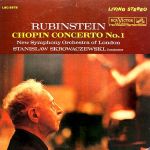
For Concerto No. 1, This Is the Way the Piano Should Sound

Hot Stamper Living Stereo Classical and Orchestral Titles Available Now

We love the huge, solid and powerful sound of the piano on this recording. This piano has weight and heft. As a result, it sounds like a real piano.

For some reason, a great many Rubinstein recordings are not capable of reproducing those all-important qualities in the sound of the piano.

Those are, as I hope everyone understands by now, the ones we don’t sell. If the piano in a piano concerto recording doesn’t sound solid and powerful, what is the point of playing such a record?

Or, to be more accurate, what is the point of an audiophile playing such a record? (Those of you who would like to avoid bad sounding vintage classical and orchestra records have come to the right place. We’ve compiled a very long list of them precisely for that purpose, and we’ve been adding to it regularly.)

No doubt Kenneth Wilkinson made sure the recording captured the weight of the piano he was listening to as it played all those years ago in the wonderful acoustics of Kingsway Hall.

The strings have lovely Living Stereo (Decca-engineered) texture as well.

As befits a Wilkinson recording from 1961, there is no shortage of clarity to balance out the Tubey Magical warmth and richness.

When you add in the tremendous hall space, weight and energy, this becomes a Demo Disc orchestral recording by any standard.


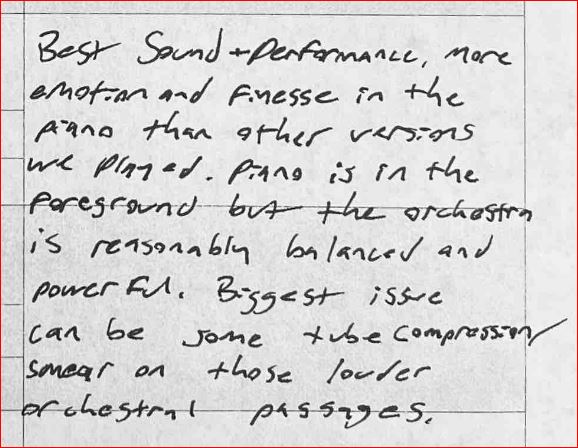
Notes from a 2024 Shootout

Our notes above point out that:

(more…)

Pictures at an Exhibition – An Overview

Hot Stamper Pressings of the Music of Mussorgsky Available Now

There is a slightly multi-miked quality to this recording. If you’ve been playing true Golden Age records all day you will notice that the instruments are more naturally and correctly spaced and sized on those recordings.

But, this is still a KNOCKOUT record which is guaranteed to bring any stereo to its knees. The dynamics, the deep bass and the sheer power of the orchestra have to be heard to be believed.

What does the typical EMI pressing of this album sound like?

Not good. Sour brass, smeary or shrill strings, lacking in bass — mid-hall dead-as-a-doornail sound is fairly typical.

Almost all the copies I’ve played are spacious, but so what?

The sound of the instruments is often wrong and in my book that trumps any benefits concerning soundstaging or depth.

But the best Hot Stamper pressings give you the presence and immediacy you need to get involved in the work.

The strings on the better copies have rosiny texture.

The brass has weight — not the full measure of an RCA or London recording, but at least you get the impression that those instruments are trying to sound correct.

And the bass drum really goes deep, unlike many of the Golden Age recordings I’ve heard.

(more…)

Select Commentaries and Letters for The Planets

Hot Stamper Pressings of Orchestral Spectaculars Available Now

Below you will find a number of the more popular commentaries we’ve written about the various recordings of this wonderful piece of music.

Included here is also a letter from a customer who spent some time with a Hot Stamper pressing of our favorite recording of The Planets.

We’ve been actively auditioning recordings of Holst’s Masterpiece since the 70s. We finally landed on the one we think offers the audiophile connoisseur the best combination of sound and performance, Andre Previn’s with The London Symphony in 1974.

(There are about 150 other orchestral recordings we think offer the best performances with the highest quality sound.  Check them out when you have time.)

This Recording of The Planets Has “Blockbuster Sound,” For Better and For Worse

The Planets – MoFi and UHQR Reviewed


(more…)

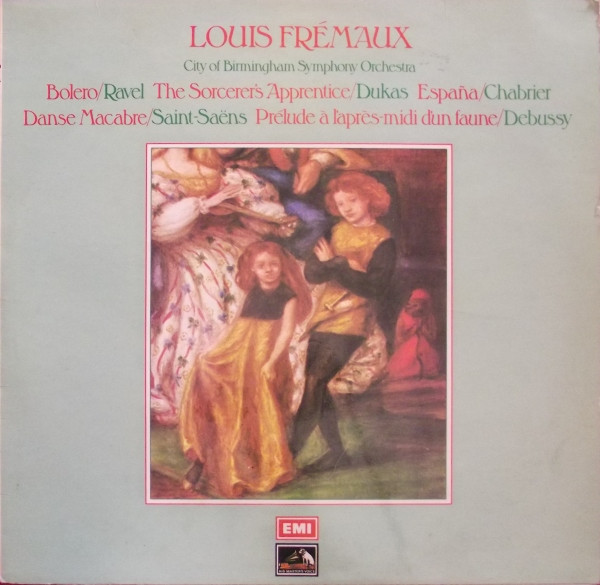
The Best Danse Macabre on Record

Hot Stamper Pressings of the Music of Saint-Saens Available Now

Saint-Saens’ symphonic poem, Danse Macabre, the second piece on the second side, is the heart of the album and its raison d’être for us. This is where the real fireworks can be found, although that’s not really fair as there are fireworks aplenty on both sides.

What we have here is the best Danse Macabre we have ever played.

We have always been fans of Gibson’s performance on the legendary Witches’ Brew. As good as that recording may be, this one is clearly superior in practically every way — it’s bigger, clearer, richer, more resolving, more spacious, more real and, to my surprise, more EXCITING and involving.

If you own a copy of LSC 2225, hopefully not the awful Classic Records Heavy Vinyl pressing, you need to hear what Fremaux and the City of Birmingham Symphony Orchestra have accomplished on this wonderful 70s EMI.

Audiophiles (especially those of us with large dynamic speakers) have always been drawn to the biggest and most exciting orchestral spectaculars, and we have plenty on the site at all times to satisfy the need to hear these kinds of records at their properly-mastered, properly-pressed best.

Why spend money on another underperforming modern reissue that you will end up rarely playing when much more powerful and involving sound can be found on our site, sound so good it has the potential to change your life.

Four Exceptional Orchestral Showpieces

The Sorcerer’s Apprentice (Dukas)

This piece opens the side. There is depth and richness to beat the band, as well as clarity and tonal correctness that let you forget the recording and just enjoy the music.

A superb performance as well, as good as any we know of. And the sound is the equal of the best recordings we’ve played.

Espana. Rhapsody For Orchestra (Chabrier)

As good as Fremaux is, I think the Ansermet (CS 6438) might still have the edge, but both are so good that it might just come down to a matter of taste. You cannot go wrong with either.


UPDATE 2023

And now we actually prefer the famous Argenta recording for Decca that’s on the TAS List, CS 6006.


(more…)

Suite Espanola – How Do the Remastered Pressings Sound?

Decca and London Hot Stamper Pressings Available Now

In 2011 we made the (usually pointless) effort to compare a London pressing to the 180 gram Speakers Corner reissue which we were carrying at the time. We noted simply that the Heavy Vinyl pressing “was a joke next to this copy.”

I wish I could tell you in what way it was a joke — we try to be specific about the shortcomings of these records, which is why we publish our notes for some of them — but the old notes are long gone.

Naturally, we don’t have the reissue to play this time around. Still, we are confident that the results of any comparison would be the same.

Mark Lehman in the Absolute Sound gave the ORG Heavy Vinyl remastering Five Stars, having this to say about the sound:

ORG’s 45rpm remastering is terrific (as indeed are all of the ORG vinyl reissues I’ve heard). Comparison with the late- 60s London LP on which the Suite first appeared reveals sharpened and clarified attacks and articulations, more tightly focused individual strands, fuller and warmer string choirs, more resonant brass, more pillowy air around flutes, clarinets, and oboes, and more nuance and opulence in the orchestral blends.

The total effect is to make Albeniz’s composition even more sweeping, rhapsodic, richly hued, evocative, and involving—and that’s saying something, considering how good the sonics are on this recording’s first incarnation.

If only any of this were true!

We readily admit we have never played the ORG pressing and have no plans to, but when has a Heavy Vinyl pressing ever had any of the qualities described above, let alone in such abundance?

Never in our experience, and our experience extends to more than four hundred of them.

Enough Already

Enough about records we’ve never played. Let’s discuss some of the pressings of this very recording that we actually have played, it being a favorite of ours for which we have done a number of shootouts.

The Super Analogue remaster from the 90s was awful. I would give it an F if I were grading it today.

The Speakers Corner pressing earned a B grade from us, which makes it one of the better releases on that label. I would guess that one or two out of ten would rate a B. I don’t know of any record of theirs that rates a grade higher than B.

Using letter grades, our grading system of White Hot, Super Hot and Hot would translate to something like A Plus, A and A Minus.

Which means that there is no Heavy Vinyl pressing, from any era, on any label, that should be able to beat any Hot Stamper pressing on our site, and we back that up with a 100% money back guarantee.


UPDATE 2024

Stop the presses and hold your horses.

As of 2024 we actually know of more than one Shootout Winning title pressed on modern Heavy Vinyl. You can read about one of them here.

There is another one as well and we will be writing about that one soon.

We now return you to our old commentary.

(more…)

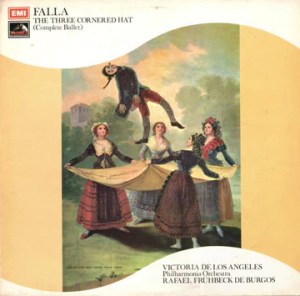
Our Pines of Rome Shootout Was Twenty Years in the Making

Hot Stamper Pressings of Classical and Orchestral Music Available Now

We did a monster shootout for this music in 2021, one we had been planning for more than twenty years. On hand were quite a few copies of the Reiner on RCA; the Ansermet on London; the Maazel on Decca and London (the Decca being on the TAS List), the Kempe on Readers Digest, and quite a few others we felt had at least the potential to sound good.

Allow me to back up a bit.

When I first started paying attention to the TAS Super Disc list in the late-70s,  I read about the famous Pines of Rome RCA pressing with 1S stampers that was so dynamic that it had to be recut so that it would play on all turntables. I could never find one, and the Shaded Dogs and Red Seals that I did find never sounded all that good to me.

I know now that I did not have the stereo system back then (equipment, room, etc.) that could reproduce a recording of such difficulty.

In the 80s, the Mobile Fidelity pressing of the Pines of Rome came out, and it never sounded right to me either. This was true of all their classical releases, without exception. To me they epitomized the kind of bright, phony, “audiophile” sound commonly found in audio showrooms but rarely if ever heard in concert halls.

The Classic Records release from 1995 of the Reiner Pines was no better. That record was just too harsh sounding, with the shrill strings that Bernie Grundman was cutting on practically every title put out by that awful label.

I fell for some of them — I actually raved about Witches’ Brew on Classic back then, an endorsement that mortifies me to this day — but most of their classical records were junk that I was selling for cheap to the audiophiles who bought into the reviews written about them in the audio mags.

(more…)

Also Sprach Zarathustra – Comparing 1954 to 1962

Hot Stamper Pressings of the Music of Richard Strauss Available Now

In 2023, we did a very large shootout for LSC 1806 and LSC 2609. LSC 1806 was recorded in 1954 but not released until 1960. It has been on the TAS Super Disc list for a very long time, if not actually from the very beginning. It’s long been considered the definitive recording by TAS Heads for sound and possibly for performance.

LSC 2609 came out in 1962. We prefer it over 1806, as the notes for our shootout make clear:

Initially, I thought I preferred LSC 1806. The amount of space and silky texture in the top end is hard to match. After a few comparisons, though, I began to miss the richer and more realistic midrange of LSC 2609. If anyone strongly prefers 1806 to 2609, they probably have a darker system or a smeary 2609.

The best copy of 1806 in our shootout earned the same Triple Plus grade on side one as our best 2609, slightly less on side two as it had somewhat steely strings.

Still, both are superb recordings. Head to head on big speakers in a custom room and all the rest, we know which recording we prefer.

Most audiophiles, including most of our customers, do not have a big-speaker system playing in a dedicated room, custom built and carefully treated in order to produce sound reproduction of the highest quality. They may prefer the original recording depending on how it sounds on the equipment they are using.

(more…)

Ravel and Ansermet Produce The Best Bolero on Vinyl

Hot Stamper Pressings of the Music of Maurice Ravel Available Now

Here are some comments from a Hot Stamper listing we did years ago.

The sound is clear, with wonderful depth to the stage.

As a rule, the classic ’50s and ’60s recordings of Ansermet and the Suisse Romande in Victoria Hall are as big and rich as any you may have ever heard.

These recordings may just be the ideal blend of clarity and richness, with depth and spaciousness that will put to shame 98% of the classical recordings ever made.

Side One

Bolero (Ravel)

Tubey and clear, with both the snare and the flute coming from so far back in the hall. OUTSTANDING energy and dynamic power.

Turn it up and it really comes to life like LIVE MUSIC. It’s big, wide and believable. We loved it.

Side Two

The Sorcerer’s Apprentice (Dukas)

ZERO compression. ZERO distortion when loud. Which means it has ZERO compressor distortion, something not five out of a hundred Golden Age recordings can claim. Nice extended top too.

There is depth and richness to beat the band, as well as clarity and tonal correctness that let you forget the recording and just enjoy the music. This piece is not quite as transparent as the Ravel, but still has earned every one of its Three Pluses.

The timbre of the brass is right on the money. As we have noted before, the brass of the Suisse Romande is some of the best to have ever been committed to analog tape.

Again, this side had OUTSTANDING energy and dynamic power the likes of which we think you may never have heard.

La Valse (Ravel)

Boasting some of the best sound of the three works we played on this copy. Again, with that wondrously huge hall adding a sense of space that will allow your speakers to disappear. The performers are not too close, which is very much in keeping with live music.

In his tribute to Ravel after the composer’s death in 1937, Paul Landormy described the work as follows:

“….the most unexpected of the compositions of Ravel, revealing to us heretofore unexpected depths of Romanticism, power, vigor, and rapture in this musician whose expression is usually limited to the manifestations of an essentially classical genius.”

Sibelius / Symphony No. 2 – An Overview

More of the Music of Jean Sibelius

A truly extraordinary recording mastered beautifully but pressed on vinyl that has never been known for its quiescence (if I can get by with that ten cent word).

The strings are clear and textured, yet rich and full-bodied. The bottom is big and weighty. The horns are tubey and full-bodied and never screech through even the most difficult passages.

My notes mention that it’s

  • rich and tubey but clear and lively;
  • big, with great energy;
  • superbly spacious and
  • never harsh or shrill.

(It can be a bit dark in places; as you know this is much preferable to the alternative.)

About as close to live music as I think this piece can sound in my listening room.

This shootout has been many years in the making. Some time around 2014 we surveyed the recordings of the work we had on hand, close to a dozen I would think, and found them all wanting, save two: this one and the 1964 reading by Ansermet for Decca (CS 6391).

So many recordings failed to capture the size, weight and power of the orchestra. Too much multi-miking was ruinous to some; screechy strings and horns to others.

Most recordings we played were profoundly unnatural, lacking transparency and the relaxed sense of involvement that eases one’s ability to be tricked into thinking “you (really) are there.”

(more…)