Advice-WTLF, Jazz

Jazz records with advice on what to listen for, in order to help you separate the best pressings from the also-rans and improve the quality of your collection.

A Warm, Rich Piano and Smooth Horns Make All the Difference on Straight, No Chaser

Hot Stamper Pressings of the Music of Thelonious Monk Available Now

UPDATE 2026

Our previous shootout was in 2020. The copy from the shootout described below sounded amazing, so we took the time to point out a few of the special qualities that lifted it up above the others we played.


What a recording! If you want to hear just how good Monk’s great big rich piano sounds, look no further. 

Rudy Van Gelder, eat your heart out. Straight, No Chaser has the piano sound Rudy never quite managed.

Some say it’s the crappy workhorse piano he had set up in his studio.  Others say it was just poorly miked.

Rather than speculating on something we know little about (good pianos and the their miking) let’s just say that Columbia had the piano, the room and the mics to do it right as you can easily hear on this very record.

Side Two

Listen to Monk vocalizing — this copy is so resolving you can hear him clearly, yet the overall sound is warm, rich and smooth in the best Columbia tradition.

Speaking of warm, rich and smooth, this is important to the horn sound too. Most copies could not make the sax as full-bodied and free of honk as we would have liked. This one did, earning lots of points in the process. Hard to fault and definitely hard to beat.

Side One

Very clear but as we said above, finding all the fullness is the toughest job in the mastering and pressing of this album. Still, quite good and better than most.

(more…)

Bad Benson and Bad Audio – It’s a Match

Hot Stamper Pressings of the Music of George Benson Available Now

UPDATE 2026

Some notes about this shootout from years back may be instructive.


White Hot Stamper sound on side two, which means this copy has the power to show you just how well-recorded the album really is, and how much energy and drive there is to both the sound and the music.

No other side of any copy earned the full Three Plus White Hot grade, so this is a very special side indeed. [Now that we are much better at our jobs — see the advice at the end of this review — this happens only a few times a year.]

We didn’t run into any awful CTI originals the way we do with the typical rock record from the 70s, but it’s the rare copy that has a real top end, or much in the way of transparency, or freedom from smear. This copy has all three, without any sacrifice in richness or Tubey Magic.

Rich, full-bodied sound is not hard to find on Bad Benson; most copies had the goods in the bass and lower midrange.

Your Old Stereo (If You Had One in the Seventies)

On the other hand, clarity, top end, transparency and freedom from smear were hard to come by on all but a few copies. Most copies sound pretty much like your old ’70s stereo system — you know, the one you had with the three-way box speakers sitting on concrete blocks.

(more…)

Listening in Depth to Romantic Warrior

Hot Stamper Pressings of the Music of Return to Forever Available Now

Romantic Warrior is my favorite Jazz/Rock Fusion album of all time. As good as the music is, the sound is even better.

This is the Jazz/Rock Demo Disc that stands head and shoulders above the rest. In my experience, no record of this kind is more dynamic or has better bass. Not one.

Demo Disc doesn’t begin to do this kind of sound justice.

Simply put, not only is this one of the greatest musical statements of all time, it’s one of the great recording achievements. Few albums in the history of the world can lay claim to this kind of sonic power and energy.

But the Super Sound has a purpose, a raison d’etre. This is the kind of music that requires it; better yet, demands it. In truth, the sound is not only up to the challenge of expressing the life of the music on this album, it positively enhances it.

Just to take one example: Those monster Lenny White drum rolls that run across the soundstage from wall to wall may be a recording studio trick, but they’re there to draw your attention to his amazing powers, and it works! The drums are everywhere on this album, constantly jumping out of the soundfield and taking the music into the stratosphere where it belongs.

Side One

Medieval Overture

The grandiose opening of this record serves as an important sonic checkpoint, as well as a tipoff for the pyrotechnics to come. On the better copies Corea’s multi-layered, swirling synths occupy their own space, clearly separated from each other, not blurred and inarticulate as they are on the poorer pressings.

Also notice how much attack Lenny White’s drums have, especially in the more exposed sections. The transients are breathtakingly immediate. Run-of-the-mill copies tend to flatten Mr White, making his acrobatic playing seem two-dimensional and less-than-inspired. The best copies prove that nothing could be further from the truth.

(more…)

Listen for the Room Around this Drum Kit

Hot Stamper Pressings of the Music of Barney Kessel Available Now

We highly recommend you make every effort to find yourself a copy of this album and use it to test your system. The right pressing can be both a great Demo Disc and a great Test Disc.

The best Hot Stamper early pressings have the Tubey Magic we’ve come to expect from Contemporary circa 1958, with that warm, rich, full-bodied sound that RVG often struggles to get on tape. (But when he’s good he too is hard to beat.)

However, some pressings in our shootout managed to give us an extra level of transparency and ambience that most of the original pressings we played could not.

(more…)

The Biggest “If” in All of Audio

Hot Stamper Pressings of Large Group Jazz Recordings Available Now

The best of the best vintage recordings are truly amazing if you can play them right.

That’s a big if.  In fact, it may just be the biggest if in all of audio.

But that is not our story for today. Our story today concerns the relationship between more accurate timbre and higher fidelity.

What do we love about vintage pressings like the Ted Heath disc you see pictured above?

The timbre of the instruments is reproduced with wonderful fidelity.

The unique sound of every instrument in this very large ensemble has been recorded accurately. Every instrument sounds the way it would sound if you were hearing it live. Every instrument sounds real.

That’s what we mean by Hi-Fi, not the kind of “Audiophile Sound” (sneer quotes are very much called for whenever the word “audiophile” is used to describe sound quality, mostly because there is so little in the way of quality to be described ) that passes for Hi-Fidelity on some records.

Some of the worst offenders along those lines can be found here.

(more…)

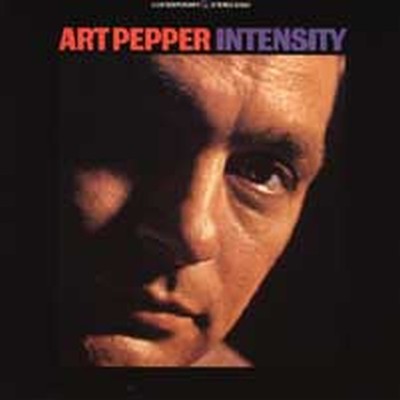
Thoughts on One of the Most Dynamic Contemporary Recordings

Hot Stamper Pressings of the Music of Art Pepper Available Now

This commentary was written in 2008.


Intensity is right — this is some SERIOUSLY GOOD SOUNDING alto saxophone led quartet jazz. AMG was right to give this one 4 1/2 stars — the musicianship is top notch and Pepper’s playing is INSPIRED throughout. 

The real surprise was how well recorded this album from 1963 is. I can’t recall a more DYNAMIC Contemporary. Pepper’s sax gets seriously LOUD in some passages. This is very much a good thing. Not only is he totally committed to the music, but the engineers are getting that energy onto the record so that we at home can feel the moment to moment raw power of his playing.

(Pepper was famous for saying that his playing is best when he just plays whatever he feels in the moment, and this record is the best kind of evidence for the truth of that claim.)

Of course, since this is a Roy Dunann recording, all the tubey magical richness and sweetness are here as well, but what is surprising is how transparent, spacious and clear the sound is. Some of Roy’s recordings can sound a bit dead (recording in your stockroom is not always the best for spaciousness) and sometimes are a bit thick as well. Not so here. But it should be pointed out that we liked what we heard from a previous shootout too.

Last time around we wrote:

This record has superb sound: you can actually hear the keys clacking on the man’s alto. And that sort of detail does not come at the expense of phony brightness as it would with your typical audiophile recording. The tonality of the sax, drums, and bass are right on the money, exactly the way we expect Roy DuNann’s recording to be.

This time around we got more extension out of the cymbals. Either these copies are better, were cleaned better, or were helped quite a bit by our new Townshend SuperTweeters. (Probably the last two more than the first one.) (more…)

On First Light Listen for a Smeary Trumpet

Hot Stamper Pressings of the Music of Freddie Hubbard Available Now

UPDATE 2026

A shootout for First Light from way back in 2011 taught us a thing or two about trumpet smear.


This Hot Stamper original CTI pressing from our shootout in 2011 has a truly SUPERB side two that put to shame most of what we played.

Smeary, blurry trumpet blasts? Not here. Nope, the transient bite and energy of the trumpet is as REAL as it gets. 

Side Two

This Super Hot side earned a grade of A++ with its exceptional high end (although it doesn’t extend quite all the way, just most of the way) and its amazing transparency. It’s so clear! You really hear into this one, in the way that the best of the classic jazz recordings allow you to do, recordings such as Kind of Blue and the better Contemporaries.

And no smear. Trumpet records with no smear, by Freddie Hubbard or anyone else, or hard to come by. A bit more richness and this one would have been in White Hot Stamper territory. It is awfully close to the best we heard.

Side One

Earning a grade of A Plus, this is the side where some of that smear we discussed earlier can clearly be heard. The sound is rich, richer than side two even, with a huge stage and correctly sized instruments. It’s just that the midrange is a bit veiled and smeary, and the midrange is where the trumpet is.

Digging Creed Taylor Inc. and RVG

We’ve been really digging Creed Taylor‘s productions for years now. On the better albums such as this one, the players tend to sound carefree and loose — you can tell they’re enjoying the hell out of these songs. Don’t get me wrong — we still love the Blue Note and Contemporary label stuff for our more “hard core” jazz needs, but it’s a kick to hear top jazz musicians laying down these grooves and not taking themselves so seriously…especially when it sounds as good as this copy does.

Rudy Van Gelder gets one hell of a lively trumpet sound in this period of his career. If you have a good pressing of one of his early 70s jazz recordings, the sound can be positively explosive, with what feels like the power of live music.

(more…)

Pros and Cons of this Copy of Swings in High Stereo

Hot Stamper Pressings of Large Group Jazz Recordings Available Now

Side One

Big and spacious, yet clear, dynamic and energetic. The brass is never “blary” the way it can be on so many Big Band or Dance Band records from the 50s and 60s. (Basie’s Roulette records tend to have a bad case of blary brass as a rule.)

Sharp transients and mostly correct tonality and timbres, powerful brass — practically everything you want in a Hot Stamper is here!

The stage is exceptionally wide on this copy.

Listen to the top end on track two — man, that is some natural sound!

This side could use a bit more weight so we feel a grade of Super Hot (A++) gets it right.

(more…)

Bashin’ Is a Good Test for Setup, Tweaks, Room Treatments, etc.

Hot Stamper Pressings of Large Group Jazz Recordings Available Now

On side one of Smith’s (and Oliver Nelson’s) Masterpiece, Bashin’, the bell tree in the right channel on track one is a great test for top end extension, resolution of harmonic complexity, overall clarity and freedom from smear.

Get all the top end you can from whatever turntable adjustment, tweak or room treatment you’re messing around with, then check to make sure that all the brass instruments still sound right. If they do, you are probably good to go.

Blary, smeary, leading-edge-challenged horns are the kiss of death on this album, as are grainy, gritty, transistory ones.

When the horns have clarity, correct tonality, plenty of space around them and a solid, full-bodied sound, probably every other instrument in the soundscape will too. Other records with brass instruments that are good for testing can be found here.

(more…)

The Yellow Label Reissues Can Sound Very Good, But Great? Not a Chance

Hot Stamper Pressings of Contemporary Jazz Albums Available Now

The earlier pressing on the site as of this writing is an amazingly well recorded album with many fine qualities:

Boasting seriously good grades from top to bottom, this vintage Contemporary pressing is doing just about everything right.

These sides are bigger and more open, with more bass and energy, than most others we played – the saxes and trumpets are immediate and lively.

Mr. Earl Hines himself showed up, a man who knows this music like nobody’s business – Leroy Vinnegar and Shelly Manne round out the quartet.

“Great musicians produce great results, and most of the LP’s tracks were done in one or two takes. The result is ‘a spontaneous, swinging record of what happened’ when Carter met Hines ‘for the first time. . . .'”

Our notes for the Yellow Label reissues point out that they are always more compressed, with some added upper midrange. The intro benefits from this but the peaks can get congested.

The earlier pressings, especially the originals on the Black Label, are the most likely to sound right, but they are tough to find in audiophile playing condition.

If you see a copy on the site with these grades — less than 2+ on both sides — it will proabably have a Yellow Label and some of the shortcomings we mention above.

Correct, In This Case

Some people like to search for relationships between the sound of the pressing and the label it has, but in our experience that is more often than not a fool’s errand once confirmation biases and other kinds of mistaken audiophile thinking are taken into account.

When the conventional wisdom turns out to be correct — in other words, when it comports with reality, at least for the six copies of this album that we played — we are happy to temporarily put aside our skepticism and learn the lessons playing a stack of copies of this title has taught us.

Why? Because the experimental evidence supports it.

(more…)