Robin Black, Engineer – Reviews and Commentaries

Why Own a Turntable if You’re Going to Play Mediocrities Like These?

Hot Stamper Pressings of Aja Available Now

Hot Stamper Pressings of Blue Available Now

Hot Stamper Pressings of Aqualung Available Now

This commentary was posted in 2007 and amended later with the statement that we would no longer be ordering new Heavy Vinyl titles. The thrill was gone and there was no sign of it ever coming back. It took a while to sell off the inventory, but by 2011 we had eliminated them completely from our site.

As it happens, 2007 turned out to be a milestone year for us here at Better Records.

If you bought any Heavy Vinyl pressing from us, ever, please accept our apologies.

Now is the perfect time to find out just how much a Hot Stamper pressing can do for your musical enjoyment. (You might consider taking the enthusiastic advice of these customers regarding that subject.)
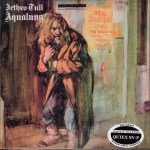

Three of the Top Five sellers this week (8/22/07) at Acoustic Sounds are records we found hard to like: Aja, Aqualung and Blue. Can you really defend the expense and hassle of analog LP playback with records that sound as mediocre as the Rhino pressing of Blue?

Why own a turntable if you’re going to play records like these? I have boxes of CDs that sound more musically involving and I don’t even bother to play those. Why would I take the time to throw on some 180 gram record that sounds worse than a good CD?

If I ever found myself in the position of having to sell mediocrities like the ones you see pictured in order to make a living, I’d be looking for another line of work. The vast majority of these newly-remastered pressings are just not very good.

We Aren’t Walmart and We Definitely Don’t Want to Be Walmart

We leave that distinction to our colleagues at Acoustic Sounds, Elusive Disc and Music Direct (Walmart, Target and Sears perhaps?)

[Yes, Sears existed when I wrote this screed! Time flies.]

They sell anything and everything that some hapless audiophile might wander onto their site and find momentarily attractive, like shiny trinkets dangling from a tree, glittering as brightly as fool’s gold. They know their market and they know where the real money is.

(Hint: it ain’t records, dear reader, it’s equipment. If you haven’t seen one of their thick full-color catalogs lately, count how many pages of equipment you have to wade through at the front before you get to the “recommended recordings.”)


UPDATE

I would amend that to say that it probably is records now. Since 2007 they have become much more popular and profitable. Apparently you can cut the same title 16 different times and audiophiles will just keep buying it. Look at what is happening with reissues of The Beatles’ catalog.


The Hall of Shame

We had no business selling Neil Young’s Greatest Hits — the typical dead-as-a-doornail remastering job we’ve come to expect from Classic over the years — and now it can be found in our audiophile hall of shame, where it should have been from the start.

Which, by the way, has a new member: In Through the Out Door. We were doing a shootout in time for the mailer this week and decided to crack the Classic open to give it another listen, since my review was about five years old at this point, a lifetime in the world of audio. (My world of audio, anyway, and hopefully yours.)

Well, it turned out to be nothing but an absolute piece of crap. Tonally wrong from top to bottom, compressed, lacking presence, life, energy — an unmitigated disaster, joining the Classic pressings of II, III and Houses, three of the other worst sounding Zeppelin records I have ever had the misfortune to play. It’s a perfect we was wrong entry — watch for it soon — and we owe an apology to anyone who bought one from us. So sorry!


Further Reading

Today’s Bad Heavy Vinyl Pressing Is… Aqualung!

Hot Stamper Pressings of the Music of Jethro Tull Available Now

An audiophile hall of shame pressing and another Classic Records rock LP badly mastered for the benefit of audiophiles looking for easy answers and quick fixes.

By the time the guitars at the end of the title track fade out you will be ready to take your heavy vinyl Classic Record pressing and ceremoniously drop it in a trashcan. (Actually, the best use for it is to demonstrate to your skeptical audiophile friends that no heavy vinyl pressing can begin to compete with a Hot Stamper from Better Records. Not in a million years.)

We Was Wrong on All Counts

Over the course of the last 25 years we was wrong three ways from Sunday about our down-and-out friend Aqualung here.

We originally liked the MoFi from the early 80s. Wrong. Proof positive that in the early 80s I didn’t have good reproduction or know much about records — but I sure thought I did!

When the DCC 180g came along in 1997 we liked that one better. Wrong again. It didn’t have MoFi’s usual midrange suckout and sloppy bass, but it was bad in so many other ways that it is hard for me to believe I ever liked it. But I did, to some degree anyway.

Back then I was a DCC believer, a mistake I would come to recognize once a few more years had passed. See here and here.

And a few years back I was briefly enamored with some original British imports. Wrong for the third time.

After playing more than two dozen pressings of Aqualung in our recent [circa 2010] shootout, it’s pretty clear that the right early Reprise pressings KILL any and all contenders. Forget all the Green Label Chrysalis pressings. Forget the reissues. Forget the imports. It’s original domestic Reprise or nothing when it comes to Aqualung.
(more…)

Letter of the Week – “I have to tell you that I was floored at the sound of the Hot Stamper Aqualung I just bought.”

This testimonial letter comes from our good customer Roger, who was blown away by the Hot Stamper pressing of Aqualung we sent him [many, many years ago].

Roger, as expected, did a thorough shootout of his own, comparing of our Hot Stamper against the audiophile usual suspects. The result? Another knockout for our Hot Stamper pressing.

Note that a well known audiophile reviewer did his own shootout for the album years ago, failing miserably, unlike our good customer Roger, who succeeded admirably.

Hi Tom,

I have to tell you that I was floored at the sound of the hot stamper Jethro Tull Aqualung I just bought. Darn you again and your hot stampers.

To give you some idea of how many times I have heard this album, backtrack to 1971 when it came out. On a Boy Scout trip a friend of mine had a portable 8-track tape player and this one tape, Aqualung. I remember sleeping on one of the seats in a car with the Aqualung tape on infinite repeat all night. In high school I had the 8-track and listened to this record hundreds of times.

Through the years after becoming an audiophile I bought many different copies looking for the ultimate-sounding LP, finally settling on the MFSL version, which I bought when it came out.

So I had a good time comparing 4 copies:

    1. the MFSL half-speed,
    2. the DCC version,
    3. the 25th anniversary digitally remastered copy,
    4. and the Hot Stamper.

First I tried the 25th anniversary and it was just as I remembered it — it sounds digital, like a CD. Lots of detail, but hard, hyped, edgy, flat soundstage, compressed dynamics. As digital usually sounds, guitars were harsh and jumped unnaturally out of the mix.

(more…)

Paul McCartney’s Must Own Masterpiece

Hot Stamper Pressings of the Music of Paul McCartney Available Now

The best tracks on McCartney’s first album have the quality of LIVE MUSIC in a way that not one out of a hundred rock records do. It sounds like it’s recorded live in the studio, but of course that’s impossible, because Paul plays practically all the instruments himself.

It just goes to show how good a multi-track studio recording can sound when it’s done well.

The recording also has an unprocessed quality which we’ve always found attractive, with some songs sounding more like demos than finished takes, about as far from Abbey Road as it would be possible to get.

In our experience, the real McCartney Magic is only found on the best domestic Apple pressings. We’ve never heard an import that did much for us, and the later CBS issues are hardly worth the vinyl they’re pressed on.

This album, like Unplugged and Band on the Run (and not a whole lot else) is SUPERB from start to finish. At the end of side two you want MORE. I wish I could say that about the rest of his discography.

(more…)

Listening in Depth to McCartney

Hot Stamper Pressings of the Music of Paul McCartney Available Now

The best tracks here have the quality of LIVE MUSIC in a way that not one out of a hundred rock records do. The music jumps right out of the speakers and fills up the room.

The album sounds like it’s recorded live in the studio, but of course that’s impossible, because Paul plays practically all the instruments himself! It just goes to show how good a multi-track studio recording can sound when done well. (More rock and pop recordings with live in the studio sound can be found here.)

Side Two

Oo You

The distorted guitar in a huge and reverberant room that leads off this side is one of my favorite “sounds” on any McCartney album. The bigger, richer and grungier the guitar sounds, the better.

Momma Miss America
Teddy Boy

This is a very tough track to get right. There is processing on Paul’s voice that some copies make a mess of, adding a kind of unpleasant resonance, which of course the better copies do not.

It’s a fairly simple arrangement: acoustic guitar, bass, voice and Linda’s backing vocals. When all of these things are in balance, the sound will be lovely. Paul’s voice, because of the processing I mentioned, doesn’t sound as natural as it does on other tracks, but it shouldn’t be irritating or disagreeable.

Singalong Junk
Maybe I’m Amazed

Another exceptionally hard track to get right. On a top copy the guitar solo will JUMP right out of your speakers. It should have the energy of LIVE MUSIC

Kreen-Akrore

(more…)

Thick As a Brick on MoFi

Hot Stamper Pressings of the Music of Jethro Tull Available Now

Sonic Grade: D

Here you will find the same problems as the MoFi Meddle, released the previous year, 1984. Here is what we had to say about it back in the day when we were selling this kind of crap.

The MoFi is TRANSPARENT and OPEN, and the top end will be lush and extended. If you prize clarity, this is the one.

But if you prize clarity at the expense of everything else, you are seriously missing the boat on Meddle (and of course Thick As A Brick too).

The MoFi is all mids and highs with almost nothing going on below.

This is a rock record, but without bass and dynamics the MoFi pressing doesn’t rock, so why would anyone want to own it or play it?

The one thing these pressings have going for them is that they tend to be transparent in the midrange.

It sounds like someone messed with the sound, and of course someone did. That’s how they get those audiophile records to sound the way they do.

For some reason, some audiophiles like their records to sound pretty and lifeless with blurry bass.

The whomp factor on this pressing is Zero. Since whomp is critical to the sound of this album, it’s Game Over for us.

That is not our sound here at Better Records. We don’t offer records with shortcomings like these and we don’t think audiophiles should have to put up with records that sound the way this one does.

(more…)

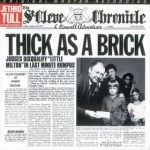
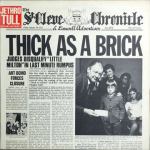
Thick as a Brick Marked a Milestone in 2007

jethrthick_1410_3_1192056381

Hot Stamper Pressings of the Music of Jethro Tull Available Now

Until about 2007, Thick as a Brick was the undiscovered gem (by me anyway) in the Tull catalog. The pressings we’d heard up until then were nothing special, and of course the average pressing of this album is exactly that: no great shakes.

With the advent of better record cleaning fluids and much better tables, phono stages, room treatments and the like — taking full advantage of the remarkable number of revolutions in audio that have occurred over the last two or three decades –some copies of Thick As A Brick have shown themselves to be truly amazing sounding. Even the All Music Guide could hear how well-engineered the album was.

Marking Two Milestones from the Past

The 2007 commentary you see below discusses the pros and cons of both the British and Domestic original pressings. With continuing improvements to the system, room, etc., it would not be long before we realized that the British pressings were simply not competitive with the best domestic ones.

You might say this record helped us mark two important milestones in the developing history of Better Records.

The first, around 2007, was recognized by the fact that we had improved our playback to a very high level, one high enough to reproduce the album with all the clarity, size and energy we were shocked to hear at the time.

The second milestone would result from the audio changes we continued to make for the next couple of years, from 2007 to 2010, which allowed us to recognize that the best British pressings, as good as they might be, were not in the same league as the best domestic ones. We broke down in detail exactly what we were listening for and what were hearing in this commentary, and the Brits were clearly not cutting it at the highest levels by 2010.

If you find yourself with one of more British copies of the album that you think have superior sound — any copies of the album, really — we would love to send you one of our Hot Stampers so you can hear what you are missing.

(more…)

Thick as a Brick Is a Top Test Disc for System Accuracy

Hot Stamper Pressings of the Music of Jethro Tull Available Now

From 2009 to 2010 this was our single go-to record for testing and tweaking our system.

Although we now use an amazing copy of Bob and Ray (the big band version of The Song of the Volga Boatmen located therein has to be one of the toughest tests we know of), we could easily go back to using TAAB.

Artificiality is the single greatest problem that every serious audiophile must guard against with every change and tweak to his stereo. cleaning system, room, electricity and everything else.

Since TAAB is absolutely ruthless at exposing the slightest hint of artificiality in the sound of the system, it is clearly one of the best recordings one can use to test and tune with. Here are just some of the reasons this was one of our favorite test records back in the day:

Dynamics

The better copies are shockingly dynamic. At about the three minute mark the band joins in the fun and really starts rocking. Set your volume for as loud as your system can play that section. The rest of the music, including the very quietest parts, will then play correctly for all of side one. For side two the same volume setting should be fine.

Bass

The recording can have exceptionally solid, deep punchy bass (just check out Barrie “Barriemore” Barlow’s drumming, especially his kick and floor toms. The guy is on fire).

Midrange

The midrange is usually transparent and the top end sweet and extended on the better pressings.

Tubey Magic

The recording was made in 1972, so there’s still plenty of Tubey Magic to be heard on the acoustic guitars and flutes.

(more…)

How Not to Conduct a Proper Shootout for Aqualung

UPDATE 2023

This commentary was probably written circa 2010 since that’s the date on Fremer’s Aqualung review, which, for those with much more tolerance for audiophile BS than I am able to muster can be found here. I’ve made a few changes to the commentary below, but most of the original text is intact.


We recently put up a Hot Stamper Aqualung that just BLEW THE DOORS OFF the CLASSIC 200g pressing. Michael Fremer may think the new reissue is the ultimate pressing, but we sure don’t. 

The Aqualung shootout on his site is priceless. He has so many silly things to say about it, let’s not waste any more time and get right to them.

His Shootout Begins

He says he “… compared Classic’s new 200g reissue with: 1) an original UK Chrysalis 2) an original American Chrysalis/Warner Brothers, 3) an original French Pink Label Island, 4) The Mobile Fidelity ½ speed mastered edition and 5) DCC’s 180g issue mastered by the team of Hoffman and Gray.”

How many of each? One, right? (All the articles in front of the nouns are singular. Assuming MF is using good grammar, how many could there be?)

Mikey, that’s your first mistake.

When it comes to the domestic release, one is a wholly inadequate sample size for pressings that were pumped out by the millions and therefore mastered multiple times. Go to Discogs if you want to see just how many different stamper numbers can be found in the original Reprise pressings. Hint: it’s a lot. Some of them are known to us to be awful, some fall into the middle of the pack, and some we like. Figuring out which are which has taken us a lifetime of work and is well beyond the ability of any single person to decode for more than a few dozen records.

(more…)

Years Ago We Badly Misjudged the Recording Quality of Tull’s Debut

Hot Stamper Pressings of the Music of Jethro Tull Available Now

A clear case of live and learn.

We listed a White Hot copy of This Was in 2008 on the Island pink label and noted at the time:

Be forewarned: this ain’t Stand Up or Aqualung. I don’t think you’ll be using any copy of This Was to demo your stereo, because the recording has its share of problems. That said, this record sounds wonderful from start to finish and will make any fan of this music a VERY happy person. We guarantee you’ve never heard this album sound better, or your money back.

Now we know a couple of things that we didn’t back in 2008.

1). This album is a lot better sounding than we gave it credit for years ago. It’s not perfect by any means but it is much better than the above comments might lead you to believe.

We chanced upon an exceptional sounding copy of the album in 2017 or so, and that taught us something new about the record:

2). The Pink Label pressings are not the best way to go on this album.

Once we heard the exceptional copy alluded to above, we played it against our best Pink Label copies and it was simply no contest.

In 2008 we still had a lot to learn. We needed to do more research and development, which of course we are doing regularly with Classic Rock records, our bread and butter and the heart of our business.

We do them as often as is practical, considering how difficult it is to find copies with audiophile quality playing surfaces.

Nine years later, we felt we finally had a proper understanding on the various pressings of This Was. It goes like this:

The Pink Label original British pressings can be good, but they will never win a shootout up against copies with these stampers (assuming you have more than one copy — any record can have the right stampers and the wrong sound, we hear it all the time. Beware of small sample sizes).

(more…)