crit-lis

If your equipment (regardless of cost) or your critical listening skills do not allow you to hear the kinds of sonic differences among pressings we describe, then whether you are just getting started in audio or are a self-identified Audio Expert writing for the most prestigious magazines and websites, there is much work to be done to achieve higher quality sound.

Those who follow older audiophile approaches will benefit from a greater reliance on empirical testing and less on conventional thinking and received wisdom.

Baskets of Recordings and Facets of Reproduction

Hot Stamper Pressings of the Music of Rickie Lee Jones Available Now

Ideally you need a basket of roughly five to ten well known recordings with which to test your equipment, tweaks, room, cleaning regimen and the like.

Don’t rely on any single recording to be The Truth. None of them are. (I found this out the hard way when tweaking the setup in our new studio in 2022.)

To illustrate this idea, imagine your stereo as a huge diamond. Every recording you play is showing you a different facet of that diamond, corresponding to a different strength or weakness of your system’s reproduction.

Audiophile X will play a record and say it has bad bass. His bass reproduction is excellent when playing other recordings, so record X, which he thinks has bad bass, is clearly at fault.

If you have been in audio for very long, you should easily recognize the conclusion this person has drawn as a case of mistaken audiophile thinking. 

Audiophile Y plays the same record and says it has good bass. Assuming the record has good bass for a moment, what is in fact happening in Audiophile X’s system is that most facets of his bass are good, but some facet of his bass is bad, and this record is showing him some shortcoming in his bass reproduction that his other records are not capable of showing him. 

If Audiophile X makes some changes to his stereo, and the record in question now has better bass, and, importantly, other records still sound as good or better than they used to, then some measure of success has most likely been achieved, and another step forward has been taken on that very long and often frustrating journey that we are on.

Flaws in the Diamond

The diamond has many flaws. We find them and fix them by regular tweaking and tuning, both of which have the added benefit of improving one’s critical listening skills.

To help you improve your stereo, room, electricity and the like, we have scores of records that are good for testing a great many aspects of audio reproduction.

Rickie Lee Jones’ first album is what we would call a bad test disc, for one very simple reason:

It can sound good on a system with a great many problems. It doesn’t expose sonic flaws as much as it hides them.

Port’s Rule states: If it isn’t easy for your test discs to sound wrong, they are not very good test discs.

If you are looking for tougher test discs, we have you covered there, with more than two dozen ballbusters guaranteed to bring any stereo to its knees. If you like a challenge, and own some of these records, preferably Hot Stamper pressings you bought from us (because we know those have the right sound; we played them), we invite you to have at ’em.

(more…)

I Have to Admit: the Cisco Pressing of Home Again! Had Me Vexed

Reviews and Commentaries for the Music of Doc Watson

Folks, if you made the mistake of buying the Cisco Heavy Vinyl reissue of this album, and you manage to grab one of our Hot Stamper pressings, you are really in for a treat.

I have to confess that when this record came out in 2003 I had a hard time coming to grips with what was wrong with it. I knew I didn’t like it, but I wasn’t sure exactly why. I wasn’t sure exactly what it was doing wrong, if anything. It seemed tonally correct and natural sounding. Why didn’t I like it?

It wasn’t phony up top with sloppy bass like a MoFi.

It wasn’t hard and transistory like so many of the Classic Records pressings back then.

I didn’t know the record at all so I really had nothing to judge it by.

But there was definitely something lacking in the sound that had me confused. Eventually I figured it out. Looking back on it now, the problems with the Cisco I could not identify were these:

  • The Cisco lacks presence. It puts Doc Watson further back than he should be, assuming that he is where he should be on the good vintage pressings, which sound right to me — some better, some worse, of course. Moving him back in the sound field does him no favors.
  • The Cisco lacks intimacy, which is key to the best pressings. The shootout winners remove all the veils and put you in the presence of the living, breathing Doc Watson. The Cisco adds veils and takes the intimacy right out of the record.
  • The Cisco lacks transparency. It frustrates your efforts to hear into the recording.
  • Doc is in a studio, surrounded by the air and ambience that would naturally be found there. The Cisco is airless and ambience-free, with Doc performing in a heavily damped booth of some kind. At least that’s what it sounds like.
  • And the last thing you notice is the lovely guitar harmonics on the originals and early reissues, harmonics that are attenuated and dulled on the Cisco.

As my stereo got better and better, and my critical listening skills improved in tandem, it became more and more obvious to me what was wrong with the Cisco. When we play modern Heavy Vinyl pressings these days, especially albums we know well, it usually doesn’t take us two minutes to hear what they are doing wrong.

(more…)

Please Please Me on MoFi – Another Disgracefully Spitty Half-Speed

Hot Stamper Pressings of the Music of The Beatles Available Now

Sonic Grade: C

If you own the Mobile Fidelity LP, do yourself a favor and buy one of our Hot Stamper pressings. (Actually any good British import pressing will do.)

What’s the first thing you will notice other than correct tonality, better bass and a lot more “life” overall?

No spit!

As we’ve commented elsewhere, because of the wacky cutting system they used, Mobile Fidelity pressings are full of sibilance. 

As I was playing a British pressing of this record many years ago, maybe by about the fifth or sixth song it occurred to me that I hadn’t been hearing the spit that I was used to from my MoFi LP. You don’t notice it when it’s not there.

But your MoFi sure has a bad case of spitty vocals. If you never noticed them before, you will now.

We discuss the sibilance problems of MoFi records all the time. Have you ever read Word One about this problem elsewhere? Of course not.

Audiophiles and audiophile reviewers just seem to put up with these problems, or ignore them, or — even worse — fail to recognize them at all.

Play around with your table setup for a few hours and you will no doubt be able to reduce the severity of the sibilance on your favorite test and demo discs. All your other records will thank you for it too.

Especially your Beatles records. Many Beatles pressings are spitty, and the MoFi Beatles pressings are REALLY spitty. Of course MoFi fans never seem to notice this fact. Critical listening skills and a collection of MoFi pressings are rarely if ever found together. For reasons that should be obvious to anyone spending time on this site, you either have one or the other.

(more…)

Frames of Reference, Carefully Conducted Shootouts and Critical Listening

Hot Stamper Pressings of Decca Recordings Available Now

The sound we were hearing on this pressing of the Beethoven Septet (CS 6132) during a recent shootout was both rich and sweet, with easily recognized, unerringly correct timbres for all seven of the instruments heard in the work.

The legendary 1959 Decca tree microphone setup had worked its magic once again.

And, as good as it was, we were surprised to discover that side two was actually even better!

The sound was more spacious and more transparent. We asked ourselves, how is this even possible?

Hard to believe, but side two had the sound that was TRULY hard to fault.

This is precisely what careful shootouts and critical listening are all about.

Shootouts are the only way to answer the most important question in all of audio: “compared to what?

Without shootouts, how can you begin to know what are the strengths and weaknesses of the copies you own?

The vast majority of our Shootout Winning pressings fall short in one way or another on one side, something we have lately been making more of an effort to highlight on the blog.

Now, if you are a fan in general of modern Heavy Vinyl pressings, what exactly is your frame of reference? How many good early pressings of those same titles could you possibly own, and how were they cleaned?

Without the best pressings around to compare, Heavy Vinyl might sound fine.

It’s only when you have something better to play that its faults come into clearer focus.

And if you have any of these titles and they sound fine to you, this is a situation that requires your immediate attention!

(more…)

Critical Listening Vs. Listening for Enjoyment

Record Collecting for Audiophiles – A Guide to the Fundamentals
In order to do the work we do, our approach to audio has to be fundamentally different from that of the audiophile who listens mostly for enjoyment.

Critical listening and listening for enjoyment go hand in hand, but they are not the same thing.

The first of these — developing and applying your critical listening skills — allows you to achieve good audio and find the best pressings of the music you love.

(Developing critical thinking skills when it comes to records and equipment is important too but that is not the focus of today’s commentary.)

Once you have a good stereo and a good record to play on it, your enjoyment of recorded music should increase dramatically. A great sounding record on a killer system is a thrill.

A Heavy Vinyl mediocrity, played back on what passes for so many audiophile systems these days — regardless of cost — is, to these ears, an insufferable bore. (And, judging by what we’ve played in 2024 and 2025, these remastered releases are sounding as bad as they ever have.)

If this sounds arrogant and elitist, so be it. Heavy Vinyl records are fine for some people, but for the last twenty or so years we’ve managed to set a higher standard for ourselves and our customers. Holding our records to that higher standard allows us to price our Hot Stamper pressings commensurate with their superior sound and please the hell out of the people who buy them.

For those who appreciate the difference, and have resources sufficient to afford them, the cost is reasonable. If it were not, we would have gone out of business long ago.

Hot Stampers are not cheap. If the price could not be justified by the better sound quality and quieter surfaces, who in his right mind would buy them? We can’t really be fooling that many audiophiles, can we?

(more…)

Letter of the Week – “Tom likes forward-sounding records, mastered for FM broadcasts. Steve masters for home stereos.”

Hot Stamper Pressings of the Music of Fleetwood Mac Available Now

One of our good customers played some Hot Stamper pressings for a friend of his and wrote to tell us about  the experience.

Dear Tom,

There’s some fascinating sociology here with how contentious your business model is. It really tweaks people.

I recently made a friend who’s always been a vinyl enthusiast. He’s got a fantastic collection. My friend has worked with Steve Hoffman on a few projects in the past, and holds him in very high regard, both professionally and personally.

We got together over Thanksgiving and I brought along my hot stampers. We listened to them on his gorgeous Linn stereo. One by one, he could appreciate the differences in them, and confirm what I was hearing.

I put my Rumours hot stamper and then his Steve Hoffman remaster. I put my Mahavishnu alongside his first UK pressing. I played my Abraxas Hot Stamper against the MoFi OneStep, which he had heard of, but never actually heard.

We debated the sonic merits of each, noting the different decisions that different mastering engineers had made. In all cases, he heard what there was to like about the hot stampers. Despite the evident sonic differences, which we could both hear and agree to, we disagreed over whether that meant Better Records was really on to something.

My friend’s reasons to resist becoming a customer really had nothing to do with the listening experience we had just shared. “Tom likes forward-sounding records, mastered for FM broadcasts. Steve masters for home stereos.”

Or, “a 1A-1A pressing that’s been well cared for will sound the best by definition because that’s closest to what the artists intended.”

Or, “Tom says there’s variance from one biscuit to the next. That’s clearly absurd.”

All this, despite having heard the records! Now, to my friend’s credit, he did allow that he might have a look at the site and try one out, if a record he really loves pops up at a reasonable price. (As far as I know, he hasn’t done it yet…)

Anyway, I had to agree with him – your business model makes no sense in light of all our preconceptions about how to find great sounding records.

And, even when you hear hot stampers for yourself, the defensive walls still stay up. It’s possible to deny what you’re hearing.

Aaron

Aaron,

A quick note about 1A/1A. There was a time when we might have had 6-8 original pressings of a title, some 1A’s, some 1B’s etc. I would have loved to have let you borrow them and have your friend spot the 1A pressing, since it’s “the best.”

It is of course impossible to do that, but then you just lose friends when you embarrass them that way, and who cares what somebody else likes or doesn’t like, thinks or doesn’t think about records? I sure never did. The records sound the way they sound. Opinions, as you found out for yourself, have been known to vary.

Hoffman’s fans are true believers. Try blindfolding the guys on his forum and playing them a variety of pressings, of his stuff and others. They would not do a good job of knowing which is which by ear, which are the ones you’re supposed to like and which are the ones that shouldn’t sound good, your friend included.

But most audiophiles will never submit to this test because the rug might be pulled out from under them. That is a risk they cannot take. The only tests they are willing to submit to are the ones where they know what the answers are in advance, and, to make matters worse, the only answers they will accept are the ones guaranteed to corroborate their biases and prejudgments.

When Geoff Edgers of The Washington Post wanted to test me with a batch of mystery pressings, I said “Bring it on. I do this for a living, and I’ve been at it for twenty years. I know good sound when I hear it.” He went on to play me two of the best sounding Heavy Vinyl pressings I have ever heard (here’s one of them), as well as some of the worst. (Reviews for those are  coming, but there are only so many hours in a day and finding the motivation to critique mediocre Heavy Vinyl pressings is not easy when there are so many great records to write about.)

(more…)

Bob and Ray Were Not Enough – We Needed the Tillerman Too

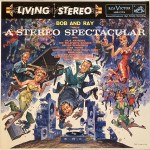
Bob and Ray Throw a Stereo Spectacular is my all time favorite test disc, the one test that every change to the system must pass: by making The Song of the Volga Boatmen sound better.

The danger in making the bulk of your sonic judgments using only one record is that you never want to optimize your system for a single record, only to find out later that it now sounds better but others you play now sound worse.

Here is the story of how I made that mistake long ago (and apparently did not learn my lesson): In 2005, I fell into a exactly this kind of audiophile trap.

The Right Way

So the right way to go about testing and tweaking is to get all your hardest test records out and start playing them, making notes as you tweak and tune your system, setup, room and whatever else you can think of.

This may take a long time, but it is time well spent when you consider that, once you are done, all — or nearly all — of your records will sound better than they did before.

In my review of the 45 RPM Tillerman, I noted the following:

Recently I was able to borrow a copy of the new 45 cutting from a customer who had rather liked it. I would have never spent my own money to hear a record put out on the Analogue Productions label, a label that has an unmitigated string of failures to its name. But for free? Count me in!

The offer of the new 45 could not have been more fortuitous. I had just spent a number of weeks playing a White Hot pink label original UK pressing in an attempt to get our new playback studio sounding right.

We had a lot of problems.

We needed to work on electrical issues.

We needed to work on our room treatments.

We needed to work on speaker placement.

We Repeated Our Mistake

(more…)

An Insult to Aaron Copland on Reference Records

Hot Stamper Pressings of Orchestral Music Available Now

Yet another Reference Record we’ve reviewed and found wanting.

In all the years I was selling audiophile records, one of the labels whose appeal made no sense to me whatsoever (along with their long-forgotten TAS list brethren, American Gramaphone and Telarc) was Reference Records.

Back then, when I would hear one of their orchestral or classical recordings, I was always left thinking, “Why do audiophiles like these records?”

I was confused, because at that time, back in the 80s, I had simply not developed the listening skills that today make it so easy to recognize the faults of their recordings.

I made the mistake of thinking that other audiophiles with more advanced equipment and more refined listening skills must be hearing something I was not.

I had trouble putting my finger on what I didn’t like about them, but now, having worked full time (and then some!) for more than twenty years to develop better critical listening skills, the shortcomings of their records, or, to be more accurate, the shortcomings of this particular copy of this particular title, took no time at all to work out.

My transcribed notes for RR-22:

  • Lean tonality
  • No real weight
  • No Tubey Magic
  • Blurry imaging when loud
  • No real depth
  • Bright tonal balance

Is this the sound you are looking for in an audiophile record?

Shouldn’t you be looking for audiophile quality sound?

Well, you sure won’t find it here.

On our current playback system, this Reference Record is nothing but a joke, a joke played on a much-too-credulous audiophile public by the ridiculously inept and misguided engineers and producers who worked for Reference Records.

This is a reference for something? For what?

As I wrote about another one of their awful releases, if this is your idea of a reference record, you are in real trouble.

It would be hard to imagine that anyone who has ever heard a good vintage classical recording — here are some of our favorites — could ever confuse this piece of audiophile trash with actual hi-fidelity orchestral sound.

(more…)

Crosby Stills & Nash – Critical Listening Exercise

More of the Music of Crosby, Stills and Nash

This very old commentary from an early Hot Stamper listing (2005?) for CSN’s debut makes note of some specific qualities in the recording that are a good test for midrange transparency and naturalness.

Here are some other albums with specific advice on what you should be listening for.

What’s magical about Crosby, Stills, Nash (& Young)? 

Their voices of course. It’s not a trick question. They revolutionized rock music with their genius for harmony. Any good pressing must sound correct on their voices or it has no value whatsoever. A CSN record with bad midrange — like most of them — is a worthless record.

Suite: Judy Blue Eyes

Listen to the section of the song that starts with Stills’ line “Can I tell it like it is,” with Nash and Crosby behind him — it’s clearly a generation of tape down from what came before and what comes after. The voices and the acoustic guitars just seem to lose their immediacy and transient impact for no apparent reason. Wha’ happen?

It’s the mix, folks, and no mastering engineer can fix it. This album is full of parts and pieces of various songs that are occasionally problematical in that way. Recognize them for what they are, little bumps in the road, a road that led ultimately to one of the greatest pop albums ever made.

On the hot copies the best sounding material will sound amazing, and the lesser sounding material (i.e., the more poorly recorded or mixed bits and pieces) will sound as good as they can sound.

That’s the nature of the beast. It is what it is. The more intensely you listen to a record like this — a true Rock Classic from the 60s, and one we listen to very intensely when doing these shootouts — the more you will notice these kinds of recording artifacts. It’s what gives them “character.”

It’s also what allows you to play a record like this on a regular basis and still find something new in it after all these years.

We’ve made some recent improvements to the stereo and room here at Better Records and I can tell you I heard things in this recording I never knew were there.

What could be more fun than that? The music never gets old, and neither does the sound.

You Won’t Learn Much Playing the Same Record on the Same Setup

More on the Subject of Developing Your Critical Listening Skills 

UPDATE 2023

This commentary was written around 2006, about two years after we started to put Hot Stampers on our website. This is one of the early ones that helped to explain what we were up to.


You learn almost nothing from the same record played back on the same system.

What you must do is learn to listen for differences in the sound, and differences only come about as the result of a change.

You have to CHANGE something in the system to develop your critical listening skills.

How about this example: the difference in sound between any two sides of a record.

The only change there involves flipping the record over. No new equipment, no tweaks, no shootouts with dozens of alternate pressings. Just flip the record.

Almost no record has the same sound on both sides, not the records we sell anyway. Where else have you ever read such a thing? Nowhere else, at least to my knowledge. Because not enough audiophiles and almost no record dealers make the effort to listen critically.

If you can’t hear the difference on at least some of your records, it has to be one or both of the following.

Either your system is not good enough to resolve these differences, which is sometimes the case, or, much more likely, you simply haven’t trained your ears to listen for them. Not listening for pleasure. Listening like it’s a job. Critically. Analytically. Try to listen for one quality by itself. Listen for grain, or top end extension, or bass dynamics — anything, the list is endless. Focus in on that single quality, recognize it, appreciate it, then flip the record over and judge that quality for side two.

Although we make plenty of mistakes, we consider ourselves expert when it comes to evaluating the sound of records and stereo equipment. (Experts make mistakes; they just make fewer of them.) 

(more…)