Island – Reviews and Commentaries

Siren on Import Vinyl? Not So Fast

Hot Stamper Pressings of the Music of Roxy Music Available Now

Siren is one of our favorite Roxy albums, right up there with the first album and well ahead of the commercially appealing Avalon.

After reading a rave review in Rolling Stone of the album back in 1975, I took the plunge, bought a copy at my local Tower Records and instantly fell in love with it.

As is my wont, I then proceeded to work my way through their earlier catalog, which was quite an adventure. It takes scores of plays to understand where the band is coming from on the early albums and what it is they’re trying to do. Now I listen to each of the first five releases on a regular basis.

Somehow they never seem to get old, even after more than forty years.

Of all the Roxy albums (with the exception of Avalon) this is probably the best way “in” to the band’s music. The earlier albums are more raucous, the later ones more rhythmically driven — Siren catches them at their peak, with, as other reviewers have noted, all good songs and no bad ones.

Imports? Not So Fast

The British and German copies of Siren are clearly made from dub tapes and sound smeary, small and lifeless.

(more…)

A Truly Awesome Feat of Engineering by Rhett Davies

Hot Stamper Pressings of the Music of Phil Manzanera Available Now

You may recall reading this bit about Rhett Davies‘ superb engineering on Dire Straits’ debut:

“…until something better comes along, this is his Masterpiece.

It has to be one of the best sounding rock records ever made, with Tubey Magical mids, prodigious bass, transparency and freedom from hi-fi-ishness and distortion like few rock recordings you have ever heard.”

Well, something better has now come along, and it’s called Diamond Head.

It has some of the biggest, boldest sound we have ever heard. Diamond Head isn’t known as an audiophile album but it should be — the sound is glorious — wall to wall, floor to ceiling, and as rich and dynamic as it gets.

It’s clearly a big speaker Demo Disc. Play this one as loud as you can. The louder you play it, the better it sounds.

The best copies have room shaking deep bass with the kind of whomp that can drive this music to practically unexplored heights.

(more…)

We Was Wrong about Mr. Fantasy

Hot Stamper Pressings of the Music of Traffic Available Now

UPDATE 2026

For our newest take on the sound of the various labels and stampers for Mr. Fantasy, please click here. Years ago we wrote:


We used to think that The Best of Traffic had better sound, but in a head to head comparison with this very copy, we were proved wrong.

Big, full-bodied and lively, with huge amounts of space and off the charts Tubey Magic, the sound here is Hard to Fault.

This is one of the best sounding Traffic records ever made. Musically it’s hit or miss, but so is every other Traffic record, including my favorite, John Barleycorn. The best songs here are Heaven Is In Your Mind, Dear Mr. Fantasy, and Coloured Rain. The first of these is worth the price of the album alone, in my opinion. It’s a wonderful example of late ’60s British psychedelic rock. (more…)

Letter of the Week – “It murders my Pink Island original UK copies.”

Hot Stamper Pressings of Hippie Folk Rock Albums Available Now

One of our good customers had this to say about some Hot Stampers he had purchased (emphasis added):

Hey Tom,  

I want to say a big THANK YOU for the Hot Stamper’s you sent to me. Two of them are now top ten titles in my collection: Cat Stevens Tea for the Tillerman.

I’m so amazed and lucky – I can’t describe it.

The sound is so natural and beat my expectations in many ways – it sounds out of this world. This copy has sweet, breathy vocals, well-defined bass (!!), stunning clarity, warmth and richness, immediacy, astonishing transparency (it burns direct in your DNA – I’ll never forget!) and loads of ambience and more.

It murders my pink Island original UK copies.

It was a privilege to be able to hear this copy – a HIGHLIGHT event. It’s a Demo Disc of the highest order. And it’s worth the price.

The other big winner is CSN’s first album. This is one of the few LP’s with sound that you won’t soon forget. I live since a week with this good feeling and I can’t hear or rate any other LP at this time (‘til Tillerman arrived).

Erik S. 

Erik,

Thanks for your letter. Both CSN’s first album and Tea for the Tillerman belong in any audiophile’s rock and pop collection worthy of the name.

I’ve made it my life’s work to find the best sounding pressings of both of these classics, and as you can now attest, that work has not been in vain. There can be no denying it: You have the Hot Stamper proof in your hands, on your turntable, or sitting on your record shelves as the case may be.

(more…)

In the Court of the Crimson King – An Overview

Hot Stamper Pressings of Progressive Rock Albums Available Now

If you have the Atlantic pressing, from any era, you have not yet begun to hear this record at its best. The better sounding domestic originals we’ve played are clearly mastered from copy tapes, which results in dubby sound.

In the Court of the Crimson King is such a well recorded album that even the sound quality derived from second-generation tapes is still better than most of what came out in 1969.

(By the way, 1969 was a phenomenal year for audiophile quality recordings – as of 2026 we’ve auditioned and reviewed more than one hundred and twenty titles, and there are undoubtedly a great many more that we’ve yet to play. To make it easier for audiophiles to separate the wheat from the chaff, we’ve also identified more than 25 Rock and Pop albums essential to any audiophile record collection worthy of the name.)

Now on to brass tacks.

UK Polydor Label

Passable, not really worth the labor to put them in a shootout just to have them earn sub-Hot Stamper grades. A1/B5 is a common stamper for these pressings and with those stampes the Polydor is not worth the vinyl it’s pressed on.

Pink Label Island

The same can be said for some of the earliest UK Pink Label Island pressings. None of them has ever won a shootout and probably none of them ever will. (A number of Pink Label Island pressings that never win shootouts can be found here.)

The conventional wisdom which holds that original pressings are superior to reissues in this case turns out to be flat wrong.

The Pink Label pressings can be good, but we rarely buy them, our two best reasons being:

(more…)

Cat Stevens on 2 Heavy Vinyl 45 RPM Discs, Part 1 – Is This the Truest Tillerman of Them All?

About ten years ago we auditioned and reviewed the 2011 edition of Tea for the Tillerman pressed by Analogue Productions, the one that came on a single Heavy Vinyl 33 RPM LP.

I wrote a very long commentary about the sound of that record, taking it to task for its manifold shortcomings, at the end of which I came to the conclusion that the proper sonic grade for such a record is F as in Fail. My exhaustive review asked the not-very-subtle question, this is your idea of analog?

Our intro gave this short overview:

Yes, we know, the folks over at Acoustic Sounds, in consultation with the late George Marino at Sterling Sound, supposedly with the real master tape in hand, and supposedly with access to the best mastering equipment money can buy, labored mightily, doing their level best to master and press the Definitive Audiophile Tea for the Tillerman of All Time.

It just didn’t come out very well, no matter what anybody tells you.

Recently I was able to borrow a copy of the new 45 cutting from a customer who had rather liked it. I would never have shelled out my own money to hear a record put out on the Analogue Productions label, a label that has an unmitigated string of failures to its name. But for free? Count me in!

The offer of the new 45 could not have been more fortuitous. I had just spent a number of weeks playing a White Hot Stamper Pink Label original UK pressing in an attempt to get our new Playback Studio sounding right.

We had a lot of problems. We needed to work on electrical issues. We needed to work on our room treatments. We needed to work on speaker placement.

We initially thought the room was doing everything right, because our Go To setup disc, Bob and Ray, sounded super spacious and clear, bigger and more lively than we’d ever heard it. That’s what a 12 foot high ceiling can do for a large group of musicians playing live in a huge studio, in 1959, on an All Tube Chain Living Stereo recording. The sound just soared.

But Cat Stevens wasn’t sounding right, and if Cat Stevens isn’t sounding right, we knew we had a Very Big Problem. Some stereos play some kinds of records well and others not so well. Our stereo has to play every kind of record well because we sell every kind of record there is. You name the kind of music, we probably sell it. And if we offer it for sale, we had to have played it and liked the sound, because no record makes it to our site without being auditioned and found to have excellent sound.

But I Might Die Tonight

The one song we played over and over again, easily a hundred times or more, was But I Might Die Tonight, the leadoff track for side two. It’s short, less than two minutes long, but a lot happens in those two minutes. More importantly, getting everything that happens in those two minutes to sound not just right, but as good as you have ever heard it, turned out to be a tall order indeed.

(more…)

We Don’t Offer Domestic Pressings of Pour Down Like Silver for One Very Simple Reason

Hot Stamper Pressings of the Music of Richard Thompson Available Now

In spite of the fact that the domestic pressings of this Richard and Linda Thompson classic from 1974 were mastered by the likes of Kendun and Sterling — two of the greatest mastering houses of all time, — they have never impressed us with their sound quality.

The biggest problems with this record would be obvious to even the casual listener: gritty, spitty vocals; lack of richness; bright tonality; lack of bass; no real space or transparency, etc.

The domestic Island pressings did not do nearly as well in our shootout as the best Island imports, no surprise there as the early UK records were mastered by one of our favorite engineers.

Avoid the Carthage pressings mastered by Sterling. They came in last in our shootout.

The domestic breakdown follows:

Black Island Domestic #1

  • Tubey but hot and spitty.

Black Island Domestic #2

  • Flat, dry and hot (glary or bright)

Carthage Domestic recut from 1983, Sterling on both sides

  • So sandy and lean! They really wanted to add some top end (!)

Defending the Indefensible

(more…)

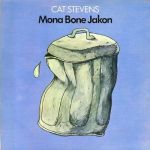
Mona Bone Jakon – Live and Learn (about Killer Import Pressings)

Hot Stamper Pressings of the Music of Cat Stevens Available Now

UPDATE 2026

Scroll down to check out our two updates, one from 2024 and one from 2025.

Live and learn? It never ends!

Assuming you love music enough to put in the work. (More on that subject here.)


When we said Mona Bone Jakon was not the sonic equal of Teaser and the Firecat or Tea for the Tillerman, boy, we was wrong and then some. Read all about it in this review for a White Hot Stamper copy from many years ago.

It’s been about a year since we last found Hot Stampers of this album, and having made a number of improvements to the stereo over that time, I’m here to report that this album got a WHOLE LOT BETTER, better than I ever imagined it could get. Mona Bone Jakon now ranks as a DEMO DISC of the highest order, every bit the equal of Teaser and Tea.

To think that all three of these records came out in one fifteen-month period is astonishing. The only other artists to have produced music of this caliber in so short a time would have to be The Beatles, and it took four of them to do it.

Which is not what we used to think, as evidenced by this paragraph from a previous Hot Stamper listing.

This album is one of Cat’s top four titles both musically and sonically. Tea and Teaser are obviously in a league of their own, but this album and Catch Bull At Four are close behind. The music is WONDERFUL — the best tracks (including I Wish I Wish and I Think I See The Light) rank right up there with anything from his catalog. Sonically it’s not an epic recording on the scale of Tea or Teaser, but with Paul Samwell-Smith at the helm, you can be sure it’s an excellent sounding album — on the right pressing.

That last line is dead wrong. It IS an epic recording on the scale of Tea and Teaser. This copy proves it! Now that we know just how good this record can sound, I hope you will allow me to borrow some commentary from another classic Cat Stevens album listing, to wit:

(more…)

Cat Stevens Part 2 – Is This the Truest Tillerman of Them All?

If you haven’t read Part 1 of this story, please click here.

Back to our real story. I listened to my good original pressing. I call it White Hot at least!

Then I put the new pressing on the table, set the SDS for 45 RPM, and got the volume just right. I proceeded to carefully adjust the VTA by ear, going up and down with the arm until the sound was right, which is simply standard operating procedure for every record we audition.

These are my actual notes for But I Might Die Tonight.

This is what I heard as the song worked its way through the various sections, in real time.  The first thing I heard at the start was Zero Tubey Magic for the first verse. One of the last things I heard at the end was No Real Space. Space is what you hear at the end for the big piano and drums finish.

Let’s take it line by line. First up:

Zero Tubey Magic

I didn’t hear much Tubey Magic on the new pressing. The best early pressings — domestic A&M Browns, Pink or Sunray UK Islands — often have simply phenomenal amounts of the stuff. It’s a hallmark of the recording.

If a new pressing comes along without it, that’s a problem. I guess that George Marino‘s cutting system at Sterling could probably do some things well, but it sure doesn’t seem to be able get the sound of tubes right. His 33 RPM cutting had no Tubey Magic, and this one has no Tubey Magic. If I had hired him to cut a record for me and it came out sounding like this, I would find somebody else to cut records for me.

He’s dead now, rest in peace. I would doubt that anyone at Sterling has a better cutting system, and therefore no one should expect any records that have been mastered there to sound very good.

Vocal Is Clear, Clean and Dry

This is the sound you sometimes get with modern, super-clean transistor cutting equipment. It’s low distortion, like a CD is low distortion. We don’t think we should have to put up with dry vocals on records when the good pressings we have been playing all our lives have noticeably richer vocals.

Not rich like Dream With Dean, nothing is that rich, but rich and full-bodied the way the good pressings of this album always make them sound.

(more…)

Listening in Depth to Emerson, Lake & Palmer

Hot Stamper Pressings of the Music of Emerson, Lake and Palmer Available Now

If you’ve got the system to play this one loud enough, with the low end weight and energy it requires, you are in for a treat with Emerson, Lake and Palmer’s debut.

The organ that opens side two will rattle the foundation of your house if you’re not careful. This music really needs that kind of megawatt reproduction to make sense. This is bombastic prog that wants desperately to rock your world. At moderate levels it just sounds overblown and silly. At loud levels, it actually will rock your world.

To play this record right, you should have, at a minimum:

  • Big dynamic speakers, and they should be pulled out well into the room to create a three-dimensional presentation, in this case of a live rock concert. If the speakers are too big for the room, or stuck in the corners, you haven’t got a chance with a recording as powerful as this one.
  • A large room. (Our new studio has a 12 foot ceiling, a big help with a blockbuster recording such as this one.)
  • Strong walls with no windows, and, if possible, a concrete floor to keep the bass from leaving the room.
  • Seating for a single listener far from any boundary, especially the back wall (a common problem with small-ish rooms).
  • Extensive room treatments to deal with the loud levels this music requires.
  • Enough amplifier power driving speakers with big enough woofers to move all the air in the listening room with authority.
  • And, finally, high quality electricity, a heavily tweaked front end and all the rest of the audio stuff we discuss endlessly on this blog.

Without all of these things, it’s hard for us to imagine anyone could hear this record sound the way the artists and engineers wanted it to. Playing a record like this in a small room at moderate levels practically guarantees that the listener will not be able to hear what makes the best copies of this album so special.

(more…)