Roy Halee, Engineer – Reviews and Commentaries

Letter of the Week – “I have heard this music a zillion times but it never ever once sounded like this.”

Hot Stamper Pressings of Five Star Albums Available Now

One of our good customers had this to say about a Hot Stamper pressing he purchased many years ago:

Hey Tom, 

I just listened to Bridge over Troubled Water that arrived while I was on my trip to India. It was really spectacular. I have heard this music a zillion times over the last 40 years but it never ever once sounded like this. Amazing. I have to get Bookends and PSRT also. 

John R.

John,

We love it when customers tell us that our Hot Stamper pressings are a revelation. At these prices they’d better be!

This album has been remastered many times, but as far as we know you just cannot beat the right 360 Label pressings, which is why those are mostly the ones we sell, with an occasional Red Label pressing rarely, and barely, making the grade.

We’ve auditioned many pressings of the album, including the Mobile Fidelity from 1984, the CBS Half-Speed from 1980, and the Classic Records Heavy Vinyl pressing from 1999.

No doubt there have been many more remastered since those three came out, but we don’t see any reason to expect them to be any better than the consistently second- and third-rate records currently being made these days, so we haven’t bothered to audition any of the newer pressings and have no plans to at this time. If one comes our way, naturally we would love to hear it.

Would we pay good money for whatever crap pressing they’re stocking the bins with these days? Not a chance. If any of the labels currently making records start to make some that sound as good as the ones we sell, please drop us a line with the titles that impressed you.

(more…)

How Paul and Judy Finally Turned Me Against DCC

Hot Stamper Pressings of the Music of Paul Simon Available Now

When I finally got around to comparing the two, I remember being taken aback by how much better my original Artisan pressing sounded than the supposedly superior DCC, the one pressed at high quality Heavy Vinyl at RTI to the most exacting standards possible, yada, yada, yada.

What finally turned me completely against DCC were the awful Paul Simon solo albums they remastered.  Two were released, two I had as unreleased test pressings, and all of them were clearly and markedly inferior to the good original pressings I had owned.

So much for believing in DCC.

Since that time we have learned that placing your faith in any record label or cutting operation is a mistake.

You have to play the records to know how they sound.

Nothing else works, and nothing else can work.

(more…)

The Turn Up Your Volume Test – Blood Sweat and Tears

Hot Stamper Pressings of the Music of Blood, Sweat and Tears Available Now

UPDATE 2025

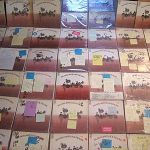
This commentary was written about twenty years ago, back in the days when I could find clean 360 Label pressings of this album actually sitting in the bins of used record stores. The picture at the bottom says it all — I think we had more than forty copies to work through for our first shootout, pressings of the album that I had been buying (many from Robert Pincus, he was the B,S&T expert back then) since the late-80s. Blood, Sweat and Tears and I go way back.

You may notice that we rarely write about the album these days, and that’s simply because we are not able to find clean, early label pressings to play anymore. (The Red Label pressings can be good but they don’t come close to winning shootouts. Without at least some potential Shootout Winning copies, it makes no sense to do the shootout. The winners are the ones that pay for the losers, naturally, with some profit left over if things go as planned.)

Speaking of which: Our last shootout was quite a few years ago. If we somehow managed to luck into a few copies locally, it’s possible we could do the shootout tomorrow, but buying this title on Discogs and Ebay has been a nightmare, with upwards of 90% of the copies we buy ending up marked return to sender.

The cost in labor (and frustration) we incurred to pursue the album long ago forced us to move on, after plenty of swearing and licking of wounds of course. How is it that record sellers can be so oblivious to the scratches and wear on their consistently noisy vinyl offerings is beyond me.

For those of you who can’t devote the resources to finding a good copy on the Columbia 360 Label, the Gold CD put out long ago by Mobile Fidelity is excellent and well worth whatever you have to pay for it. And I mean that sincerely.


Our Old Commentary

In my opinion this is the BEST SOUNDING rock record ever made. I may be biased because I like the music so much, but played on a Big Speaker System a Hot Stamper pressing is nothing less than ASTOUNDING, the ultimate Demo Disc. It has the power of LIVE MUSIC.

You don’t find that on a record too often, practically never in fact. I put this record at the top of The Best Sounding Rock Records of All Time link (seen on the left) and said it was in a class of its own for good reason — IT IS IN A CLASS OF ITS OWN.

As I’ve noted before, this record is a milestone in the history of popular music. Not only is it The Most Successful Fusion of Rock and Jazz Ever. It’s also One of the Finest Recordings of Popular Music Ever.

The sound is nothing short of amazing. Just the drums alone are enough to win awards: the kick drum has real kick, the snare may actually be the best rock snare ever recorded, the cymbals shimmer like real cymbals; almost everything is right with this record. Especially the music.

Good Demo Disc, Good Test Disc Too

This is the kind of record that doesn’t fall into the good Demo Disc, bad test disc trap. It’s both a good Demo Disc and a good test disc; not too many records can make that claim. (Especially the kinds of records audiophiles tend to like.)

The good copies of this album sound good on almost any system. But the better systems reveal qualities to this recording that you are very unlikely to have ever heard on another record. That’s the Demo side.

On the test side, no matter what level your system is at, any change you make will be instantly obvious on this recording, for good or bad. Nothing can fool it. It’s too tough a test, the toughest I know of bar none. For this record to sound right, truly right, every aspect of its reproduction has to be at the highest level. Any shortcoming will be glaringly obvious. The record may still sound good, but it won’t really sound right. (Knowing what “right” means in this context makes all the difference in the world of course.)

One reason the turn up your volume test is such a great test — the louder the problem, the harder it is to ignore.

(more…)
Graceland, Where Clarity Is King

Hot Stamper Pressings of the Music of Paul Simon Available Now

We regularly do shootouts for Graceland. Having played so many copies over the years we’re become quite familiar with the range of sound on the album, what constitutes good, better and best, and we understand precisely what qualities the premier copy must have in order to win one of our shootouts. 

Above all the thing Graceland has going for it sonically is CLARITY. It has many other good qualities as well: It can be open and spacious, tonally correct, with punchy, tight bass and present, breathy vocals.

The better copies have all these qualities to some degree, but the one thing a good copy must have is clarity, because that’s what’s especially good about the sound of Graceland. (more…)

Save the Life of My Child Is One Tough Test

Hot Stamper Pressings of the Music of Simon and Garfunkel Available Now

The big production songs on Bookends have a tendency to get congested on even the best pressings, which is not uncommon for four track recordings from the 60s.

Those of you with properly set up high-dollar front ends should have less of a problem than those of you without them. $3000 cartridges can usually deal with this kind of complex information better than $300 ones.

But not always. Expensive does not always mean better, since painstaking and exacting setup is so essential to proper playback.

Save the Life of My Child — A Tough Test

I used to think this track would never sound good enough to use as an evaluation track. It’s a huge production that I had heretofore found all but impossible to get to sound right on even the best original copies of the album. Even as recently as ten years ago I had basically given up on reproducing it right.

Thankfully things have changed. Nowadays, with carefully cleaned top copies at our disposal and a system that is really cooking, virtually all of the harmonic distortion in the big chorus near the opening has disappeared. It takes a very special pressing and a very special stereo to play this song. That’s precisely what makes it a good test!

America — Another Tough Test

America is another one of the toughest tracks to get right. The big ending with its powerful orchestral elements is positively stunning on the rare copies that have little or no congestion in the loudest passages.

On virtually every copy you will ever hear the voices on this track are a little sibilant. Modern records are made with what is known as a de-essing limiter. This limiter recognizes sibilance and keeps it under control, because once the cutter head sees that kind of high frequency information, which is already boosted for the RIAA curve, it will try to cut it onto the record and the result will be this kind of spitty distortion.

(more…)

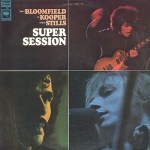
Super Session Is the Poster Boy for Gritty, Spitty Vocals

Hot Stamper Pressings of the Music of Al Kooper Available Now

Man’s Temptation, track 3 on side one, has got some seriously bright EQ happening (reminiscent of the first BS&T album, Child Is Father to the Man), so if that song even sounds tolerable in the midrange you are doing better than expected.

Bright, gritty, spitty, edgy, harsh, upper-midrangy vocals can be a real problem on this album.

The Red Labels tend to have more problems of this kind, but plenty of original 360 pressings are gritty and bright too. Let’s face it, if the vocals are wrong, the music on this album — like any rock and pop album — pretty much falls apart.

Most copies are far too bright and phony sounding to turn up loud; the distortion and grit are just too much at higher volumes.

On the better copies, the ones with more correct tonality and an overall freedom from distortion, you can crank the volume and let Super Session rock.

Testing with Super Session

This record, along with the others linked below, is good for testing the following qualities.

  1. Grit and grain
  2. Midrange tonality
  3. Sibilance (it’s a bitch) 
  4. Upper midrange brightness

Playing so many records day in and day out means that we wear out our Dynavector 17DX cartridges often, three or four times a year.

Which requires us to regularly mount a new cartridge in our Triplanar arm.

Once a new cartridge is broken in (50 hours minimum), we then proceed to carry out the fine setup work required to get it sounding its best. We do that by adjusting the VTA, azimuth and tracking weight for maximum fidelity using recordings we have been playing for decades and think we know well.

(more…)

1A, or Is 1B Better on Parsley, Sage, Rosemary and Thyme? Your Guess Is As Good As Mine

Hot Stamper Pressings of the Music of Simon and Garfunkel Available Now

UPDATE 2024

Speaking of 1A and 1B, the evidence is in. We have now confirmed that one of these sets of stampers (one for each side) can win shootouts. Which of the two it is we will leave to you to discover, as we make it a point never to give out the shootout winning stampers except under the rarest of circumstances. We give out plenty of stamper information, just not the stampers of the winners.


We now return to our commentary from many years ago:

Before we go any further, I have one question:

Why are we guessing?

I received an email recently from a customer who had gone to great pains to do his own shootout for a record; in the end he came up short, with not a lot to show for his time and effort. It had this bit tucked in toward the end:

Some of [Better Records’] Hot Stampers are very dear in price and most often due to the fact that there are so few copies in near mint condition. I hate to think of all the great Hot Stampers that have ended up in piles on the floor night after night with beer, Coke, and seeds being ground into them.

Can you imagine all the 1A 1B or even 2A 2B masters that ended up this way or were just played to death with a stylus that would be better used as a nail than to play a record!

To be clear, it’s extremely unlikely than any Hot Stampers have ever ended up in piles on the floor. Hot Stampers are not just originals or good sounding records.

They are pressings that have been cleaned, gone through the shootout process and found to be superior to their competition. Until they prove themselves, records like the ones whose unfortunate fate this reviewer fantasizes about are just old records that had the potential to sound good but never got the chance to demonstrate they had better sound than other pressings.

As it so happens, shortly thereafter I found myself on Michael Fremer’s old website of all places, where I saw something eerily similar in his review for the (no doubt awful) Sundazed vinyl. I quote below the relevant paragraphs.

(more…)

What to Think When a New Version of Graceland Is Completely Unrecognizable?

Hot Stamper Pressings of the Music of Paul Simon Available Now

Where did this thick, dull, bloated, opaque turd come from?

Having played at least 50-75 copies of the album over the last ten years, I can honestly say I have never heard one that sounded like this new version (maybe some record club copy we picked up by accident did, can’t say it never happened).

Can that possibly be a good thing?

Well, in favor of that proposition, I guess you could say it sounds less like a CD now.

On the other side of the ledger, it now sounds a great deal more like a bad LP.

We listen to piles of pressings of Graceland regularly. We know what the album generally sounds like, the range from bad to good, and we know what qualities the very best copies must have in order to win one of our shootouts.

Above all the one thing Graceland has going for it sonically is CLARITY. It can be open and spacious, tonally correct, with punchy, tight bass and present, breathy vocals. The best of the best copies have all these qualities, but the one quality any good copy must have is clarity, because that’s what’s good about the sound of the record. Without clarity the music doesn’t even work.

The new version has been “fixed.” It got rid of all that pesky grit and grain and CD-like sound from the original digital mix by simply equalizing them away.

Cut the top, cut the upper mids, boost the lower mids and upper bass and voila – now it’s what Graceland would have sounded like had it been all analog from the start, AAA baby!

Or at least analog for those who don’t know what good analog sounds like.

But it never was all analog, and trying to make it sound that way just ruins the one quality that it actually had going for it — clarity.

VTA

You can adjust your VTA and other table settings until you’re blue in the face, you’ll never get this pressing to sound right, and you’ll certainly never get it to sound very much like any Sterling original pressing I’ve ever heard.

The digital spit and grit is still there, under the darker EQ. And now it’s even worse — Simon’s voice has a thick, dull blanket over it, but you can still hear the spit underneath it.

You could probably take the CD and equalize it to sound like this record. But what would be the point?

The Bright Side

Well, perhaps there is a point to this equalization madness.

The CD already exists. It has a sound.

The original record has a sound too, and it’s a fairly common LP in the used bins. You could buy two or three for not that much money and try to find one you like better than the vinyl version you probably already own.

(more…)

On Super Session, Tonally Correct Vocals Are Key

More Music Produced or Performed by Al Kooper

Most copies have bright, gritty, spitty, edgy, harsh, upper-midrangy vocals.

The Red Labels tend to have more problems of this kind, but plenty of original 360 pressings are gritty and bright too. Let’s face it, if the vocals are wrong, this album pretty much falls apart.

Most copies are far too bright and phony sounding to turn up loud. At higher volumes the distortion and grit are just too much.

On the better copies, the one with more correct tonality and an overall freedom from distortion, you can turn the volume up and let Super Session rock.

Man’s Temptation, track 3 on side one, has got some seriously bright EQ happening (reminiscent of the first BS&T album), so if that song even sounds tolerable in the midrange, you are doing better than expected.

We’re Big Fans

Super Session is an album we think we know well, one that checks off a number of boxes for us here at Better Records:

(more…)

What’s the Average Record Worth?

More Letters from Customers and Critics Alike

What follows is an excerpt from a very old letter (circa 2005) in which the writer attempted to make the case that spending lots of money on records is foolish when a dollar buys a perfectly good record at a thrift store and provides the listener with exactly the same music and decent enough sound.

We think this is silly and, with a few rough calculations, along with a heavy dose of self-promotion and not a little bullying, we set out to prove that the average record is practically worthless. Prepare to confront our exercise in sophistry.

(Yes, we are well aware that our reasoning is specious, but it’s no more specious than anybody else’s reasoning about records if I may say so.)

Jason, our letter writer, points out this fact:

Your records are a poor value in terms of investment. Until you convince the whole LP community that your HOT-STAMPER choices are the pinnacle of sound a buyer will never be able to re-sell B S & T for $300. Even if they swear it is the best sounding copy in the world.

We replied as follows:

If records are about money, then buying them at a thrift store for a buck apiece and getting something halfway decent makes perfect sense. As the Brits say, “that’s value for money.” If we sell you a Hot Stamper for, say, $500, can it really be five hundred times better?

The Math

I would argue that here the math is actually on our side. The average pressing is so close to worthless sonically that I would say that it isn’t even worth the one dollar Jason might pay for it in a thrift store. I might value it somewhere in the vicinity of a penny or two. Really? Yes indeed.

Assuming it’s a record I know well, I probably know just how wonderful the record can really sound, and what that wonderful sound does to communicate the most important thing of all: the musical value.

A copy that doesn’t do that — allow the music to come alive — has almost no value. It’s not zero, but it’s close to zero. Let’s assign it a nominal value. We’ll call it a penny.

What Have You Got to Lose?

You see, when I play a mediocre copy, I know what I’ve lost.

Jason can’t know that. All he knows is what he hears coming from his mediocre equipment as his mediocre LP is playing. To him it sounds fine. To me it sounds like hell. (Hell is in fact the place where they make you listen to bad sounding records all day.)

(more…)