Decca/London/Argo – Reviews, Commentaries, Letters, etc.

This Pressing of Carmen Had Dry Strings on One Side, Rich Strings on the Other

Hot Stamper Pressings on Decca and London Available Now

My notes for side two on a copy we recently auditioned read:

Could use more tubes.

Strings could be a bit smoother.

Needs a bit more weight down low.

My notes for side one:

Side one had all of this and more!

Some Common Issues with Londons and Deccas

Many London and Decca pressings lack weight down low, which thins out the sound, easily heard in the lower strings, which sound washed out.

On some sides of some copies the strings are dry, lacking Tubey Magic. This is decidedly not our sound, although it can easily be heard on many London pressings, the kind we’ve played by the hundreds over the years.

If you have a rich sounding cartridge, perhaps with that little dip in the upper midrange that so many moving coils have these days, you will not notice this tonality issue nearly as much as we do.

Our 17Dx is ruler flat and quite unforgiving in this regard. It makes our shootouts much easier, but brings out the flaws in all but the best pressings, exactly the job we require it to do.

Here are some other records that are good for testing string tone and texture.

(more…)

Shootout Winning Stampers for The Planets Revealed

Hot Stamper Pressings of the Music of Holst Available Now

You may have noticed that on the few occasions when we actually do give out the stampers for the top copies of an album, we are loathe to identify the title of the record that has those Shootout Winning stampers.

As you can imagine, our huge investments in research and development make up a substantial share of the costs we bear, costs that sometimes accrue over the course of many years, decades even. Eventually these costs are passed on to our customers, accounting for some of the admittedly high prices you see on our site.

But this title is going to be an exception, with many more to follow. We are officially giving out stamper information for this London, information that took us more than a decade to acquire. Maybe even two decades.

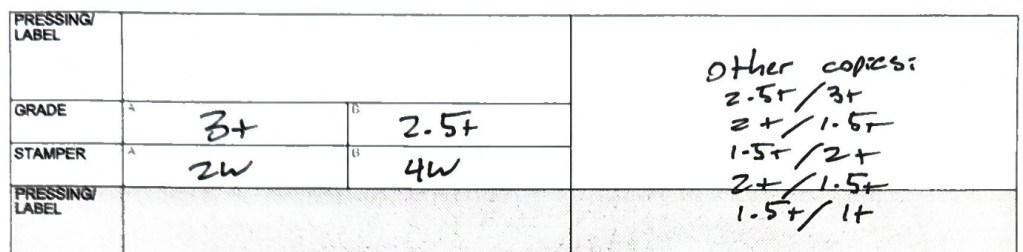
The right 2W/4W pressings of CS 6734, the Decca recording of Holst’s The Planets conducted by Zubin Mehta, are the best we have ever played. Based on our experience over the years, these are the only stampers that have any chance of winning a shootout.

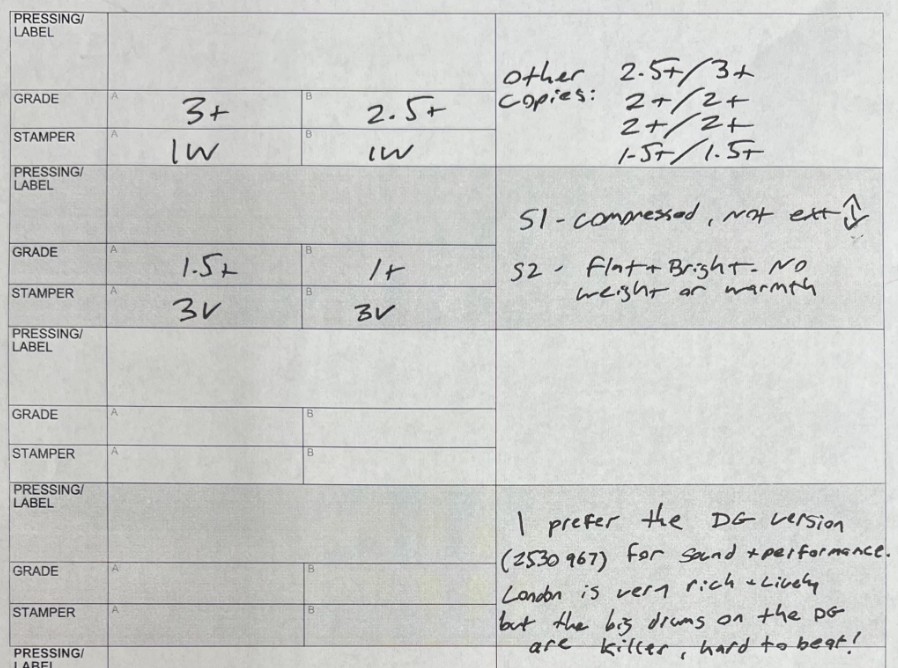
Below you will find the grades for all the top copies from our most recent efforts, as well as the also-rans with those same stampers that we played.

Only two pressings earned a top grade, and each of them managed to do so on only one side. This is by far the most common result of a shootout. 3+/3+ copies are the exception, not the rule.

Whatever caused the amazing sides of the best pressings to come out differently from the not-nearly-as-good sides of the other pressings must have happened in the plating and pressing stages of manufacturing, an area that was of course not under the control of the mastering engineer who cut the record in the UK for Decca, Harry Fisher.

(more…)

Comparing Witches’ Brew on RCA with Danse Macabre on Decca

danseHot Stamper Pressings of the Music of Saint-Saens Available Now

UPDATE 2026

The review below was written a very long time ago, around 2010 I think. Our understanding of  Witches’ Brew has changed radically over the last fifteen years, as you can see from our most recent Hot Stamper offering of the album.

In 2010 we would have struggled mightily to reproduce the Shaded Dog pressings of Witches’ Brew. We had yet to make many of the most important improvements to our system that difficult to reproduce records require in order to sound their best.


Our 2010 Review

The Decca reissue above just happens to have the material found on one of the most famous and sought-after Shaded Dog pressings in the world, Witches’ Brew (shown below), along with one track added, The Sorcerer’s Apprentice, conducted by Ansermet. (As a budget reissue, they felt they needed to give you more music in order to get you to buy performances that were no longer current.)

The Decca pressing is tonally much more natural from top to bottom. I used to think that it was the best way to hear the music on Witches’ Brew. Like so much of what happens in the world of records, it is and it isn’t.

Huh?, you say. Okay, here is what I mean. We played a handful of Witches’ Brews over the last year or two, and most of them left a lot to be desired. More than that — most of them were just plain awful. One, and only one, lived up to the hype that surrounds the record.

It was so big and so powerful that I would have had no trouble ranking it with the five best sounding classical recordings I’ve ever heard.

It was a real WOW moment when the needle hit the groove on that one.

This later Decca pressing is made from a copy tape, but it’s CORRECTLY mastered from that tape and therefore sounds worlds better than most originals and all the heavy vinyl reissues. This record I can play and enjoy. Those I cannot.

(A great deal more on the Classic Records repress of LSC 2225 can be found here and here.)

(more…)

The Best Espana on Record?

Hot Stamper Pressings of the Music of Chabrier Available Now

UPDATE 2026

The part down below about Londons numbered from 6400 to 6500 being superior is not something we would agree with any longer.


UPDATE 2021

Ansermet’s performance of Espana is still our favorite — nothing in our experience can touch it, musically or sonically.

As of 2022 we slightly prefer the famous Argenta recording for Decca that’s on the TAS List, CS 6006.

Both are wonderful and both belong in any serious audiophile collection of orchestral music.


We created a special section for recordings of this quality. Classical and orchestral records that we’ve auditioned and found to have the best performances with the highest quality sound can be found here.

This has been a favorite recording of ours here at Better Records for a very long time, since at least the mid-’90s or thereabouts. We’ve mentioned how much we like the sound of Londons with catalog numbers ranging from about 6400 to 6500 or so (which are simply Decca recordings from the mid-’60s), and this one (CS 6438) is one of the best reasons to hold that view.

(more…)

London Records Takes You on A Journey Into (Potentially Very Good) Stereo Sound

Decca and London Hot Stamper Pressings Available Now

UPDATE 2025

This was written a very long time ago!

1958 just happens to be one of the All Time Great Years for Analog Recordings, as can be seen from this amazing group of albums, all recorded or released that year.


INSANELY GOOD vintage Decca sound from 1958 — bigger, richer and more Tubey Magical than 9 out of 10 (or more!) records we’ve ever played from the pre-’60s early stereo Golden Age. How they got this one so right is beyond me.

We were sorely tempted to grade it White Hot, but chose instead to err on the side of modesty and call it A++ to A+++ or better (which is practically White Hot when you think about it).

Can it be that THIS was the first stereophonic sound music lovers of the world were exposed to on LP? (Stereo tapes may have existed in 1954, but they had to wait until 1958 to be transferred to vinyl.)

Could we possibly have fallen so far in only fifty years?

(more…)

Don’t Let the Cover Fool You

Hot Stamper Pressings of the Music of Mendelssohn Available Now

UPDATE 2026

After years of putting it off, we eventually got around to doing a shootout for the album, the results of which you can find here.

Many years ago we had played the record, liked it, and then completely forgotten about it.


Demo disc quality. This record has the same kind of amazing sound as the Chabrier disc on London, but it’s much more rare, perhaps because the cover did not do much to sell the album.

I don’t think I’ve ever heard a better Mendelssohn 4th. 

We admit we foolishly did not expect much from a mid-60s London with a cover this plain.

It’s hard to get excited about an album with such a generic cover, but hearing the recording we were forced to confront our silly prejudices and recognize the greatness of James Lock‘s work for Decca in 1965.

It even beats the famous Solti on Blueback, which has a cover to die for (shown below). However, like many of the Londons and Deccas we’ve played over the years, the sound of that pressing is awful.

(more…)

Falla / Three-Cornered Hat – We Changed Our Minds

Hot Stamper Pressings of the Music of Falla Available Now

In our review from 2010, we wrote:

Falla’s Three Cornered Hat is positively WONDERFUL on this copy (A++), and the Sinfonia Sevillana by Turina on side two is every bit as good. The second suite on side one is particularly lovely — check out how rich and full the sound is.

Side two has a HUGE soundstage, as wide as they come. The sound is very rich and full of audiophile colors — this is the kind of record that you’re going to love playing for your audio pals!  

Argenta brings the authentic Spanish flavor out in these works. Like so many audiophile reviewers have over the years, you may find these performances definitive.

The strings on the first side are a bit dry to start, like the sound many of you will recognize from Mercury’s classical records. Still, there’s much to like about the sound and you’ll have a very hard time finding a copy that’s any better. Most pressings do not have such an extended top end, and that quality here really brings this music to life.


UPDATE 2025

We played a copy of CS 6050 not long ago and were not at all pleased with the sound. You can read more about it here.

An orchestral record with dry strings? Not our idea of good sound.

But who else reviewing records these days even notices these kinds of things?

The De Burgos performance for EMI in 1964 and the Ansermet for Decca from 1961 (CS 6224) are both better recordings and our two current favorites, with the Ansermet getting the nod due to its wonderful energy and exciting performance.

There are about 150 orchestral recordings we think offer the best performances with the highest quality sound. Both are  deserving of a place on that list.

(more…)

Mozart’s Quintet / Trio Is a Great VTA Test Disc

Hot Stamper Pressings of the Music of Mozart Available Now

CS 6109 is a handy record for VTA adjustment.

Listen for fullness and solidity, especially in the piano, although a rich, full sounding clarinet is a joy here as well. 

Some of the copies we played in our shootout lacked the weight and solidity to balance out the qualities of transparency and clarity.

The resulting sound is less natural, with the kind of forced detail that CDs do so well, and live music never does. There is a balance to be found.

The right VTA will be critical in this regard. When you have all the space; the clearest, most extended harmonics; AND good weight and richness in the lower registers of the piano, you are where you need to be (keeping in mind that it can always get better if you have the patience and drive to tweak further).

(more…)

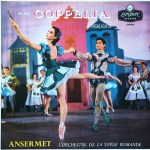
Delibes / Coppelia / Ansermet

Hot Stamper Pressings of Recordings by Decca Available Now

Many years ago we wrote:

Very good sound for the Coppelia Ballet Highlights from the Master Ballet Conductor, with only a few slightly bright passages marring an otherwise wonderful recording.


UPDATE 2020

I doubt we would have any trouble with the bright passages these days. Better cleaning and better playback would have solved that problem, probably. Of course, this copy is long gone, so no one can ever really know if it was bright or not. I’m guessing, not.


Ernst Ansermet conducted some of the best sounding records ever made — here are some of the ones we’ve reviewed.

(more…)

Which Is More Important – The Label or the Stamper Numbers?

Hot Stamper Pressings Featuring the Violin Available Now

In this case, since the label is different but the stampers are the same, it’s the label that tells you how good your pressing may — heavy accent on the may — sound.

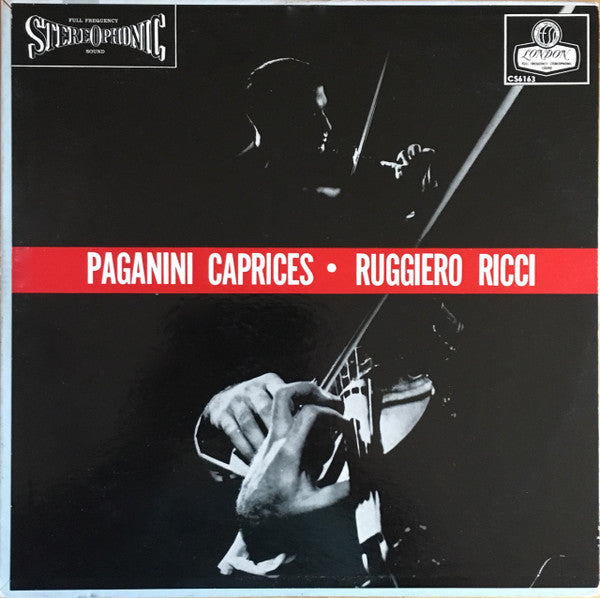
Lately we’ve been having exceptionally good luck with the early label pressings of many of the London violin concerto records we’ve done shootouts for, especially those performed by Ruggiero Ricci.

However, the notes you see below do not belong to the wonderful Sibelius record pictured here.

They belong to another London record. We give out lots of bad stampers on this blog, but almost never do we give out the good ones. (When we do give out the best stampers, we usually keep the title a mystery, as is the case of the record here. To see the other titles whose Shootout Winning stampers have been revealed, please click here. The list to date is short but not to worry, more are on their way.)

The amazingly good sounding pressing on the early label took the recording to another level. Our shootout notes read:

  • Amazing violin sound and performance.
  • Very dynamic and realistic.
  • So much subtlety.

Scroll down to see out Key Takeaways from this shootout.

(more…)