ensemble

Keeping the players together is key to the best jazz recordings.

Relax, Stare into the Middle Distance and Listen to the Players as a Group

Hot Stamper Direct-to-Discs Available Now

Reviews and Commentaries for More Direct to Disc Recordings

Many years ago we had discussed the polarity issues associated with this record:

According to the liner notes, this album has its polarity reversed. They tell you straight out to reverse the positive and negative at the speaker terminals for the best “transient response and spatial clarity.”

That out of phase quality is as plain as the nose on your face when you know what to listen for. There’s an unpleasant hardness and hollowness to the midrange, a lack of depth, and an off-putting opaque quality to the sound. The top gets dull and the bass gets weird and wonky.

With our EAR 324p phono stage, the click of a button reverses the polarity. I can’t tell you how handy it is to have such a tool at your disposal. Checking the polarity for Discovered Again couldn’t have been easier.

But get this: most side ones are NOT out of polarity. How about them apples! We could not have been more shocked. Here is the most famous reversed polarity audiophile recording in the history of the world — or maybe just the history of our world — and it turns out most copies are not reversed on side one at all.

Findings from a Few Years Back

I did not do the shootout for the album, but I wanted to check on the polarity just to hear it for myself. I must admit I had to go back and forth a number of times, using my favorite song on the album and an old Demo track from back in my earliest days in audio, the mid- to late-70s: Keep Your Eye On The Sparrow.

Harvey Mason’s super-punchy drum playing catches your attention right off the back. A tambourine comes along in the left channel at some point. Lots of bass. Rit’s guitar in the right channel and Grusin’s keyboards in the center fill out the soundstage. The ensemble is on fire.

Evaluating the sonic differences of the individual instruments in and out of polarity had me confused. A typical conundrum: Should the tambourine be smoother with more body, or brighter with more harmonic overtones? Which is right? Who can say definitively?

Experiments Provide Answers

It was only after about fifteen minutes of switching the polarity back and forth that the penny dropped.

Focussed on an individual instrument, I could hear it just fine both ways. But then I noticed that with the polarity reversed the group got vague.

The images seemed blurrier, less defined. If I relaxed and just stared into the middle distance and let the music flow, the band seemed to be more jumbled up and messy.

That was the key. The obvious change when the polarity was wrong was a loss of image specificity. Flipping the record over to side two and using my new “lens” to hear the difference with the polarity changed, it was obvious when the polarity was right or wrong.

I have experimented with polarity on scores of records.

Certain effects on certain records are unmistakable. But these effects seem to vary a great deal from title to title.

Grusin’s brilliant direct to disc recording initially had me at a loss. With a little experimentation, the improvement in the sound with the correct polarity became evident over time, as it always seems to do. Thank god I didn’t have to change speaker leads the way I used to in the old days. (more…)

Keeping the Players Together on Jazz Impressions of Black Orpheus

guarajazzi_wtlf_1406113104

Hot Stamper Pressings of Jazz Recordings Featuring the Piano

Another in our series of listening exercises here discussing the importance of transparency, ambience and resolution.

The arrangement of the players is straightforward, with the bass hard left, drums hard right (with leakage well to the left on the cymbals, but that’s another story), and Guaraldi on piano in the center. (The first track of side two reverses this arrangement; why, I have no idea.)

Here’s the crazy thing about this recording: The best copies really connect up — tie together — the space each of the players is in. I heard it during the shootout, and I can’t recall if it actually happened more than once or twice, but I know I heard it. They are all live, they are all on the same soundstage, but on most copies you would hardly know it.

They sound like they are playing in booths, the ambience never extending very far in any direction. The best copies have so much ambience that one player’s space extends all the way to the edge of the other player’s space. The effect, though rare, is nothing less than magical.

The piano is solid, mostly clear and not hard. Not many copies present the piano this way — correctly in other words. The amazing snare of Colin Bailey in the right channel is LIVELY and fun like you’ve never heard before.

There is no sacrifice in fullness, richness or Tubey Magic in the presentation, and that is the right sound for this music.

No Breakup on the Piano

I would be willing to bet that 90% or more of all the early pressings still in playable condition have some breakup on the piano. The old arms and carts of the day simply could not track the groove the way modern arms and carts can, and ended up damaging the record.

We are happy to report that this copy has no breakup on the piano at all.

The best copies bring out the contribution of the bass player better, the bass being essential to the rhythm of the music. On some, the bass is so tight and note-like you can see right into the soundstage and practically watch Monte Budwig play.


Further Reading

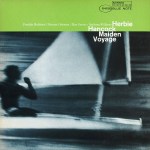
Connecting the Players on Maiden Voyage

More of the Music of Herbie Hancock

More Jazz Recordings Featuring the Piano

Freddie Hubbard on this album is nothing short of astonishing. I remember playing around with the stereo one day, listening for different effects as I made minor changes to the tracking weight, the VTA, adjustments to the Hallographs and the like, and at one point I noticed that the ensemble seemed to be more coherently connected, with each of the players more properly balanced with the others. 

It was a striking effect and it made me realize that musical values can often be overlooked while chasing after audiophile effects of one kind or another.

Hearing the ensemble come together made me appreciate this album even more.

Tony Williams on the drums here deserves a special nod. His cymbal work on the first track is original and spontaneous in the best tradition of jazz improvisation. (more…)