This is a very old commentary about a favorite record of ours here at Better Records, one I have been selling since the late 80s, first as a sealed, in-print title for about ten bucks, and later, after learning to how to clean records and do shootouts, as Hot Stampers.
After hearing nothing that could compete with the right OJC pressing for more than a decade, we recently discovered an even better sounding pressing of the same music.
Live and learn, we say. It’s what makes record collecting fun. The future is not yet written.
George Horn was doing brilliant work for Fantasy all through the ’80s. This album is proof that his sound is the right sound for this music.
The DCC Gold CD of the album is also excellent. As with many of the better DCC CDs, it’s proof that Steve Hoffman’s sound is also the right sound for this music. I recommended that Steve consider doing the title on Gold CD — you can see my credit below — and I am glad he found it to his liking. In general, I much prefer the sound of the DCC Gold CDs to the sound of the records they released.
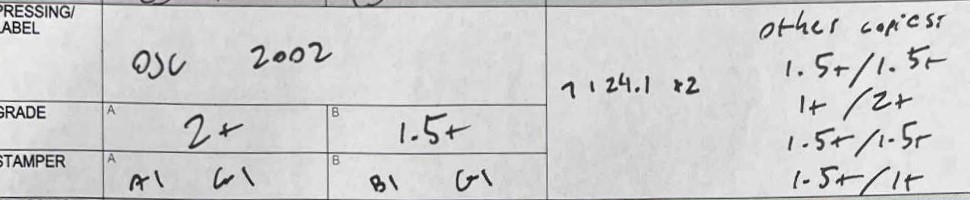
During our most recent shootout for Waltz for Debby, we took the opportunity to play the early OJC that first came out in the 80s. We found the OJC pressings with the stampers identified below had good, not great sound.
I remember playing the Analogue Productions version from 1992, mastered by Doug Sax, and being shocked at how overly rich, murky, thick and unnatural it sounded. I knew the AP Way Out West was bad. Was every title that Analogue Productions remastered going to sound like it was being played by 50’s JBL speakers powered by Mac 30s?
This was the sound audiophiles had always wanted? This was the sound that made them think they were listening to the master tape? (To prove that bad ideas never die — that sooner or later they return in a different guise — there is a Mr. Hutchison who makes records that sound very similar to those Chad was making in the early 90s. The more things change…)
Back to the OJC of Waltz for Debby. A local fellow who had requested my 1990s catalog, the one in which I say the OJCs just kill the new AP Heavy Vinyl pressings, came over and bought some OJCs, the ones I thought sounded very good, which were the only ones we carried. They were all of ten bucks each.
He promptly went home, played them and called me to tell me just how awful his AP vinyl of the album sounded and how much better his OJC was in comparison, at less than half the price. I’m sure I said something along the lines of “Tell me something I don’t know!” My credibility established beyond all doubt, he and I soon became fast friends.
I never reviewed the Waltz for Debby on AP, but I wrote reviews for three other AP titles: Way Out West, Chet, and Jazz Giant. Spoiler alert: I thought all three were unbelievably awful.
The G1A/B1 OJC pressing we played suffered these problems:
This is a very old review. The last time we sat down to play some OJC copies of this recording we were underwhelmed. There may be some great sounding pressings out there, but we did not have any on hand and don’t want to commit the resources that would be needed to find them.
Our old commentary follows.
Outstanding sound throughout with both sides rating a solid Double Plus (A++) or close to it
The sound here is, above all, natural – the tonality is correct, and the recording sounds right for Riverside circa 1961
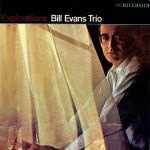
4 1/2 stars: “Explorations proves that the artist was worth waiting for no matter what else was going on out there. Evans, with Paul Motian and Scott LaFaro, was onto something as a trio, exploring the undersides of melodic and rhythmic constructions that had never been considered by most… an extraordinary example of the reach and breadth of this trio at its peak.”
For a Hot Stamper pressing we put up recently, we noted:
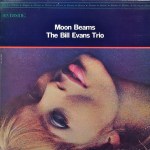
Moon Beams is one of the best sounding Bill Evans records we’ve ever played. You can see why we chose it to be the first OJC Hot Stamper of his work to hit the site back in 2015. Play “It Might As Well Be Spring” for the kind of sublime musical experience you only find on 20th century analog recordings.
All of that is true for the best of the 20th century pressings we played. (Which, by the way, does not include any originals as those are consistently inferior to the later pressings we’ve auditioned.)
As for the 21st century, the sound of the best 2002 pressings on OJC are somewhat opaque and dry compared to the best that came before. This is something we rarely point out in the listings we have on sale on the site. You generally have to come to the blog to get a fuller picture of the specific shortcomings we might have of some of our Hot Stamper pressings.
We know both dry sound and opaque sound well, having played hundreds of pressings that suffer from such conditions.
The sound may be decent on most of these 2002 pressings, and fairly good on the best of them, but that’s not really what we were hoping to find. We spent a lot of money and we spent a lot of time, to quote a famous line by a famous rock band, but the six 2002 pressings we cleaned and played nevertheless came up a bit short. That’s just how it goes sometimes. (And sometimes it goes completely off the tracks.)
The way we approach a shootout such as this typically involves playing a copy or two some pressing, the 2002 OJC in this case, and hearing sound good enough to make us think it might have the potential for greatness. As you can see by the marks we gave out, the average copy earned a grade of 1.5+, which is a good, not great Hot Stamper grade. Greatness was just not in the cards.
Both sides here are Tubey Magical, rich, open, spacious and tonally correct. We’ve never heard the record sound better than in our most recent shootout, and that’s coming from someone who’s been playing the album since it was first reissued in the 80s.
I used to sell these very records in the 90s — we retailed them for ten bucks back then — but we had no clue just how good they could be back in those days. We couldn’t clean them right, or even play them right, and it would never have occurred to us to listen to a big pile of them one after another in order to pick out the best sounding copies.
This is a wonderful Chet Baker record that doesn’t seem to be getting the respect it deserves in the wider jazz world. You may just like it every bit as much as the Chet album, and that is one helluva record to compare any album to. In our estimation it’s about as good as it get.
This commentary was written in 2010 or thereabouts.
There is new information about the album as of 2024, which can be found here.
We’d wanted to do Art Pepper Today for more than a decade, but the original Galaxy pressings were just too thick and dark to earn anything approaching a top sonic grade. Thirty years ago on a very different system I had one and liked it a lot, but there was no way I could get past the opaque sound I was now hearing on the more than half-dozen originals piled in front of me.
So, almost in desperation we tried an OJC reissue from the ’90s. You know, the ones that all the audiophiles on the web will tell you to steer clear of because it has been mastered by Phil DeLancie and might be sourced from digital tapes.
Or digitally remastered, or somehow was infected with something digital somehow.
Well, immediately the sound opened up dramatically, with presence, space, clarity and top end extension we simply could not hear on the originals. Moreover, the good news was that the richness and solidity of the originals was every bit as good. Some of the originals were less murky and veiled than others, so we culled the worst of them for trade and put the rest into the shootout with all the OJCs we could get our hands on.
Now, it’s indisputable that Phil DeLancie is credited on the jacket, but I see George Horn‘s writing in the dead wax of the actual record, so I really have no way of knowing whether in fact Mr Delancie had anything to do with the copies I was auditioning. They don’t sound digital to me, they’re just like other good George Horn-mastered records I’ve heard from this period.
And of course we here at Better Records never put much stock in what record jackets say; in our experience, the commentary on the jackets rarely has much to do with the sound of the records inside them.
And, one more surprise awaited us as we were plowing through our pile of copies.
When we got to side two we found that the sound of the Galaxy originals was often competitive with the best of the OJCs. Which means that there’s a good probability that some of the original pressings I tossed for having bad sound on side one had very good, perhaps even shootout winning sound, on side two.
This is a lesson I hope to take to heart in the future. I know very well that the sound of side one is independent of side two, but somehow in this case I let my prejudice against the first side color my thinking about the second.
Steve Westman invited me to appear again on his youtube channel chat with the Audiophile Roundtable.
At about the 39 minute mark, we discuss my picks for what I would rate as the Five Best Sounding Records I know of.
I wanted to go with more variety, so I picked two rock records, two jazz records and one classical album.
A rough transcription with corrections and additions follows:
Before I did my top five, I wanted to say something along the lines of, if you want to know where somebody’s coming from in audio, you don’t ask them what their stereo is, you don’t ask them what their room is like, and how their electricity is done, and what their history with audio is, because they’re not going to tell you, and they just don’t want to go down that road.
But you can ask them about music, and that will tell you a lot about where they’re coming from, so here are my questions for people if I wanted to know more about their understanding of records (and, by implication, audio):
One: what are the five best sounding records you’ve ever heard?
Two: what are your five favorite records of all time?
Three: what five famous recordings never sounded good to you?
Four: name five recordings that are much better than most of your friends or audiophiles in general think?
In my world, you would have to tell me what pressing you’re listening to. If you said “I love the new Rhino Cars album,” I think we would be done, but if you told me that you love the original, then I would say yes, I love that record too. I bought it in 1978 and I’ve played it about 5000 times. Never tired of hearing it.
At about the 48 minute mark I reveal the best stampers for Ry Cooder’s Jazz album.
At about the 50 minute mark someone asks about my system. This would be my answer:
All that information is on the blog., I actually do a thing about my stereo where I take it all the way from 1976 to the present, which I’m sure bores people to death, but you know, there was a lot to talk about there.
There were a lot of changes that I went through and I even talk about how my old stereo from the 90s, which I had put together after having been an audiophile for 25 years, was dark and unrevealing compared to the one I have now, so all my opinions from 25 years ago are suspect, and rightly so.
I feel the same thing is going on in the world of audiophiles when you have systems that aren’t very revealing and aren’t tonally accurate, yet are very musical and enjoyable the way Geoff would like, but they’re not good for really knowing what your records sound like because your system is doing all sorts of things to the record that you’re playing in order to keep the bad stuff from bothering you.
All the bad stuff just jumps out of the speakers, and that’s why these heavy vinyl records don’t appeal to us anymore, because we hear all the bad stuff and we don’t like it.
At 1:03 I’m asked if I like any modern mastering engineers, and the only one I can think of is Chris Bellman, because he masterered one of the few Heavy Vinyl pressing I know of that sounds any good, Brothers in Arms, released in 2021. I played it when Edgers brought it by the studio when he first visited me in preparation for his article.
My best copy was clearly better in some important ways, but Bellman’s mostly sounds right, and that surprised me because most of these modern records sound funny and weird and rarely do they sound right.
(Geoff brought over three records that day: Brothers in Arms, the remastered Zep II, and a ridiculously bad sounding Craft pressing of Lush Life, which was mastered by Bernie Grundman, and one which I have not had time to review yet. It was my introduction to the Craft series (in this case the small batch, limited to 1000), and let’s just say we got off on the wrong foot. I told Geoff it sounded like a bad CD, and that’s pretty much all I remember of it. The average price for that pressing on Discogs is roughly $210 these days. The CD is cheaper and there is very little doubt in my mind that it would be better sounding to boot.)
At 1:04 I mention the biggest snake oil salesman in the history of vinyl, the man behind The Electric Recording Company.
Patrick mentions an ERC Love record which he likes, but we played one that sounded about as bad as a bad record could sound. That Love record will never get any love from us. He says he’ll never buy another ERC pressing, but that doesn’t sound like the kind of thing someone who really likes a record would say, does it? I suppose you can ask him in the comments section why that would be.
At some point I talk about the studio we play records in, not exactly spouse-friendly but good for hearing what’s really in the grooves of the records we play:
The reason the sound room is the way it is is because you’re not there to be reading magazines and looking at your phone. You’re just in there to sit in a single chair in front of two speakers, not talking. Nobody else is in there. They have no business being in there. It’s just you and the music and that’s the way I like it.
This next section has been fleshed out quite a bit. I took the question posed and ran with it:
As you may have guessed by now, remastered is a bit of a dirty word around these parts.
Most remastered records we play, from The Beatles to John Coltrane to ZZ Top, sound to us like pale imitations of the real thing, whether the real thing is an original or a vintage reissue from back in the day.
But only a fool could fail to appreciate how correct and lively the best copies of this remastered record sound, and we’re no fools here at Better Records. We judge records by one and only one criterion: the quality of their sound.
We pay no mind to labels, record thicknesses, playback speeds, mastering speeds or anything else you can read about on audiophile websites.
We’re looking for the best sound. We don’t care where it comes from.
On that basis we’re awarding side two of this recent shootout winning copy the award for the best sound on Standard Coltrane.
No other pressing of the album could do what this side two was doing. And the good news is that side one was nearly as good, making this the best copy to ever hit the site.
Side One
So dynamic, present and lively, with a rich sax and clear, solid piano. Great energy.
Side Two
Even better, with tighter, bigger bass.
Let’s give RVG a hand, the tonality on this side is HTF: Hard To Fault.
Only a small percentage of the many remastered records we’ve played over the years can make that claim in our experience.
It has finally come to pass. A modern pressing has won a shootout.
Having auditioned more than a dozen modern (post-2000) OJC pressings and having had them fall far short of the mark again and again — when they weren’t just plain awful — we have now discovered one that can win a shootout.
As you imagine, this came as quite a shock.
We weren’t sure precisely which of the many OJC pressings our shootout winner was until we looked up the stamper numbers on Discogs. To our surprise, it had clearly been made sometime in the the 21st century.
That Never Happens
This has never happened before. No record made since 2000 has ever won a shootout against a vintage pressing of the same title.
Modern records range from awful to very good, but one quality they have never had is the ability to be the best of the best.
 Hot Stamper Pressings of the Music of Bill Evans Available Now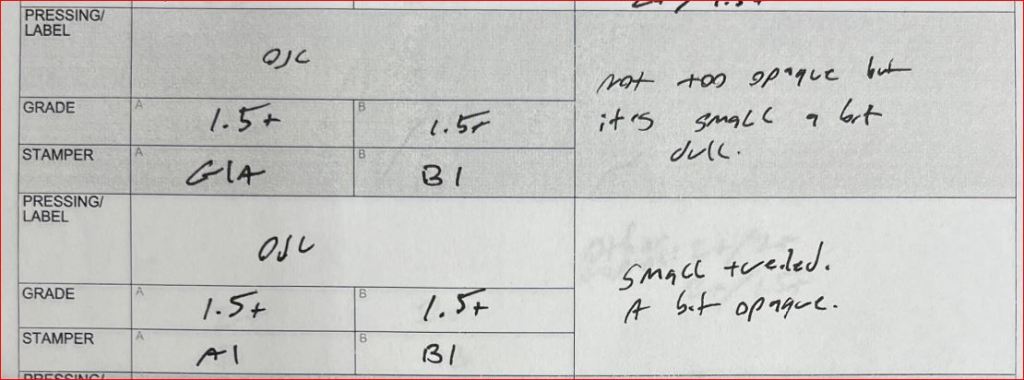
 Hot Stamper Pressings of Contemporary Jazz Available Now
 Hot Stamper Pressings of the Music of Bill Evans Available Now