boxes

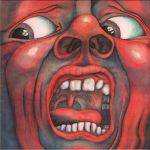
In the Court of the Crimson King – An Overview

Hot Stamper Pressings of Progressive Rock Albums Available Now

If you have the Atlantic pressing, from any era, you have not yet begun to hear this record at its best. The better sounding domestic originals we’ve played are clearly mastered from copy tapes, which results in dubby sound.

In the Court of the Crimson King is such a well recorded album that even the sound quality derived from second-generation tapes is still better than most of what came out in 1969.

(By the way, 1969 was a phenomenal year for audiophile quality recordings – as of 2026 we’ve auditioned and reviewed more than one hundred and twenty titles, and there are undoubtedly a great many more that we’ve yet to play. To make it easier for audiophiles to separate the wheat from the chaff, we’ve also identified more than 25 Rock and Pop albums essential to any audiophile record collection worthy of the name.)

Now on to brass tacks.

UK Polydor Label

Passable, not really worth the labor to put them in a shootout just to have them earn sub-Hot Stamper grades. A1/B5 is a common stamper for these pressings and with those stampes the Polydor is not worth the vinyl it’s pressed on.

Pink Label Island

The same can be said for some of the earliest UK Pink Label Island pressings. None of them has ever won a shootout and probably none of them ever will. (A number of Pink Label Island pressings that never win shootouts can be found here.)

The conventional wisdom which holds that original pressings are superior to reissues in this case turns out to be flat wrong.

The Pink Label pressings can be good, but we rarely buy them, our two best reasons being:

(more…)

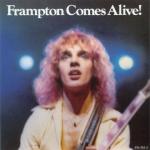
Some Speakers Don’t Let Frampton Come Alive

Hot Stamper Pressings of the Music of Peter Frampton Available Now

When I was first getting serious about audio in the mid-70s, electrostatic and screen-type speakers were quite common in audio showrooms. Classical music aficionados in particular seemed to prefer them to other designs. They were more often than not big, open and clear, and never boxy or sour.

Another quality they had going for them was that they were exceptionally transparent.

Alas, they were inadequate or wrong in almost every way a speaker can be, but transparency was their strong suit and everybody could hear it. All of the qualities noted above — big, open, clear — worked together to fool a great many audiophiles into thinking that theirs was the right approach to reproducing music.

(Circa the Pretzel Logic era, Becker and Fagen of Steely Dan fame were apparently big fans of Magnepan speakers, to the consternation of everyone else in the band — especially the engineers, one imagines — who thought they were overly-smooth, incapable of reproducing the frequency extremes high and low, soft, and lacking in their ability to reproduce many of the most important aspects of music, energy especially. Count me among their harshest critics.)

It was my good fortune at the time that I liked to play my rock music good and loud, so screens, panels and full-range electrostats were never going to cut it for me.

I once heard the giant Magnaplanar 1D system — a series of ten panels that stretched all the way across the long wall of the audio showroom I frequented at the time, standing about 7 feet tall to boot — try to reproduce a favorite Peter Frampton record of mine. (It was Wind of Change, a Desert Island Disc I still play regularly to this day.)

(more…)

Neil Young and His Crazy Pals LIVE in the Studio

Hot Stamper Pressings of the Music of Neil Young Available Now

Hot Stampers are all about finding those rare and very special pressings that manage to represent the master tape at its best.

Notice I did not say ACCURATELY represent the master tape, because the master tape may have faults that need to be corrected, and the only way to do that is in the mastering phase.

I can tell you without fear of contradiction that absolute fidelity to the master tape should never be — and more importantly, rarely is — the goal of the engineer mastering a record.

Which, as a practical matter, means two things:

  1. Flat transfers are most often a mistake.
  2. Talking about the fidelity you think a record has to its master tape, a tape you have never heard, is completely pointless.

Whether we like or dislike the presentation of any given recording is of course a matter of taste. When listening we constantly make judgments about the way we think the recording at any moment ought to sound, based on what we like or don’t like about the sound of recordings in general and how our stereos deal with them.

(more…)

Listening in Depth to Heavy Weather

Hot Stamper Pressings of the Music of Weather Report Available Now

Heavy Weather has some of the biggest, boldest sound we’ve ever heard.

It’s clearly a big speaker Demo Disc. Play this one as loud as you can. The louder you play it, the better it will sound.

The commentary below contains track-by-track advice on what to listen for when auditioning the album.

Side One

Birdland

Not an easy track to get right; there’s so much upper midrange and high frequency information to deal with. If the synthesizers and horns are too much, the effect is exciting but won’t wear well. Too much 6k is the problem on most copies, along with not enough above 10. That is a deadly combination.

A Remark You Made

Such an original composition. This is the band at their unconventional, uncommercial best.

(more…)

Cat Stevens Wants to Know How You Like Your Congas: Light, Medium or Heavy?

Hot Stamper Pressings of the Music of Cat Stevens Available Now

During the shootout for this record a while back [the late 2000s would be my guess], we made a very important discovery, a seemingly obvious one but one that nevertheless had eluded us for the past twenty plus years (so how obvious could it have been?).

It became clear, for the first time, what accounts for the wide disparity in ENERGY and DRIVE from one copy to the next. We can sum it up for you in one five letter word, and that word is conga.

The congas are what drive the high-energy songs, songs like Tuesday’s Dead and Changes IV.

Here is how we stumbled upon their critically important contribution.

We were listening to one of the better copies during a recent shootout. The first track on side one, The Wind, was especially gorgeous; Cat and his acoustic guitar were right there in the room with us. The transparency, tonal neutrality, presence and all the rest were just superb. Then came time to move to the other test track on side one, which is Changes IV, one of the higher energy songs we like to play.

But the energy we expected to hear was nowhere to be found. The powerful rhythmic drive of the best copies of the album just wasn’t happening. The more we listened the more it became clear that the congas were not doing what they normally do. The midbass to lower midrange area of the LP lacked energy, weight and power, and this prevented the song from coming to LIFE the way the truly Hot Stampers can and do.

Now I think I understand why. Big speakers are the only way to reproduce the physical size and powerful energy of the congas (and other drums of course) that play such a big part in driving the rhythmic energy of the song.

(more…)

Botnick and Levine Knocked Equinox Out of the Park

Hot Stamper Pressings of the Music of Sergio Mendes Available Now

The music is of course wonderful, but what separates Sergio from practically all of his ’60s contemporaries is the AMAZING SOUND of his recordings. Like their debut, this one was engineered by the team of Bruce Botnick and Larry Levine.

Botnick is of course the man behind the superb recordings of The Doors, Love and others too numerous to mention. 

Levine is no slouch either, having engineered one of the best sounding albums on the planet, Sergio Mendes’ Stillness.

Just play the group’s amazing versions of Watch What Happens, Night and Day, or Jobim’s Wave to hear the kind of Mendes Magic that makes us swoon. For audiophiles it just doesn’t get any better. (Well, almost. Stillness is still the Ultimate, on the level of a Dark Side of the Moon or Tea for the Tillerman, but Equinox is right up there with it.)

Only the best copies are sufficiently transparent to let the listener hear all the elements laid out clearly, with each occupying a real three-dimensional space within the soundfield. When you hear one of those copies, you have to give Botnick and Levine their due. These guys knew what they were doing like few that have come along since.

(more…)

Room Treatments Bring Out The Big Speaker Whomp Factor

Hot Stamper Pressings of the Music of Sergio Mendes Available Now

UPDATE 2025

The first Sergio Mendes and Brasil ’66 album is one of those records that helped us dramatically improve the quality of our playback.


Only the best copies are sufficiently transparent to grant the listener the privilege of hearing all the elements laid out clearly, each occupying a real three-dimensional space within the soundfield. 

With recent changes to some of our room treatments, we now have even more transparency in the mids and highs, while improving the whomp factor (the formula goes like this: deep bass + mid bass + speed + dynamics + energy = whomp) at the listening position.

There’s always tons of bass being produced when you have three 12′ woofers firing away, but getting the bass out of the corners and into the center of the room is one of the toughest tricks in audio.

For a while we were quite enamored with some later pressings of this album — they were cut super clean, with extended highs and amazing transparency, with virtually none of the congestion in the loud parts you hear on practically every copy.

But that clarity comes at a price, and it’s a steep one. The best early pressings have whomp down below only hinted at by the “cleaner” reissues. It’s the same way super transparent half-speeds fool most audiophiles. For some reason audiophiles rarely seem to notice the lack of weight and solidity down below that they’ve sacrificed for this improved clarity. (Probably because it’s the rare audiophile speaker that can really move enough air to produce the whomp we are talking about here.)

But hey, look who’s talking! I was fooled too. You have to get huge amounts of garbage out of your system (and your room) before the trade-offs become obvious.

When you find that special early pressing, one with all the magic in the midrange and top without any loss of power down below, then my friend you have one of those “I Can’t Believe It’s A Record” records. We call them Hot Stampers here at Better Records, and they’re guaranteed to blow your mind. (more…)

The Last Consistently Good Elvis Costello Album

Some reviewers think that this sprawling album with widely diverse musical styles lacks focus, but that’s precisely what makes it a work of genius.

On Spike, Elvis Costello tries his hand at every style of pop music he can think of and succeeds brilliantly with each and every one of them. This is one of the few compelling albums of the ’80s. I still play mine regularly on CD in the car.

Any King’s Shilling on side two with its authentic Irish instrumentation (fiddle, uilleann pipes, Irish harp, bodhran) has Demo Disc Quality sound of the highest order.

Another song on side two with top audiophile recording quality was Satellite. (For those of you who know Jellyfish, this has to be where they found some of the sound they would put to such good use on Bellybutton and Spilt Milk a few years later.

One side one God’s Comic is Demo Quality — so rich and natural. Where has this kind of sound gone? The way of the Dodo, baby, and it ain’t coming back. Mitchell Froom, the man who gave Crowded House such a polished pop sound, plays some wonderful keyboards here and elsewhere on the album. He’s joined by a slough of notables.

Elvis searched far and wide for this group and managed to find top players for every position on his team. The musicianship is top drawer all the way. Elvis clearly knows talent when he hears it.

(more…)

Turned Up Good and Loud, Carnavalito Is Glorious

Records that Must Be Turned Up Good and Loud to Sound Their Best

UPDATE 2024

The commentary about Carnavalito you see below was written in 2016. With the 12 foot high ceiling in our new, bigger and quite a bit more spacious studio, I’ll bet this album sounds even more mind-blowing than it did back then.

Ken Perry mastered all the best early pressings — accept no substitutes.

Here in 2024 we’ve just done the shootout again, our first since 2016.

Sky Islands is not an easy record to find as it didn’t sell particularly well, but those of you who treasure the music of Weather Report or Return to Forever or The Mahavishnu Orchestra the way we do here at Better Record (or, to be clear, some of us do) will find much to like here.

Finding customers for music most audiophiles have never heard of, let alone heard, has always been the trick with well recorded, mostly unknown releases such as Sky Islands.

Which means that this is a woefully underrated album that should be more popular with audiophiles.

It’s also one of those difficult-to-reproduce records that I credit with helping me make real progress in audio (along with a great many others.).


Carnavalito is a track that really comes alive when you crank up the volume. I played it full blast on two different occasions for audiophile friends of mine just to show them what happens when a big speaker system meets a recording with absolutely amazing audiophile quality sound — big and bold, wall to wall and then some!

It’s my favorite track not only for the album as a whole but for the band’s entire recorded output. It just doesn’t get any better than this if you have the system for it.

Hearing the megawatt energy in the section when the soprano saxophonist jumps in, right into an ongoing orgy of wild percussion, who then proceeds to blow his brains out — now that is a thrill beyond belief. Played REALLY LOUD it’s about the closest to The Real Thing, the Live Event, that you will ever hear in your living room. (Unless you have a very large living room and lots of latin jazz musician friends.)

Even a year ago there was no way I could get that music to play that LOUD, that CLEANLY, and that CORRECTLY in terms of tonality, from the deepest bass to the highest highs, with the wild swings in dynamics that the recording captures so well.

The audio revolution is alive and well. It’s never too late to join in the fun.

(more…)

Our Four Plus Abbey Road Shootout Winner

Hot Stamper Pressings of Abbey Road Available Now

UPDATE 2026

This listing is from many years ago, possibly as early as 2010.

  • Our lengthy commentary entitled outliers and out-of-this-world sound talks about how rare these kinds of pressings are and how we go about finding them.
  • We no longer give Four Pluses out as a matter of policy, but that doesn’t mean we don’t come across records that deserve them from time to time.
  • Nowadays we most often place them under the general heading of breakthrough pressings. These are records that, out of nowhere, to the surprise of the listening panel, revealed to us sound of such high quality that it fundamentally changed our appreciation of the recording itself.
  • Breakthroughs often come about because the conventional wisdom we had been relying on up to that time turned out to be wrong. Regardless of how many original UK pressings of Abbey Road we might have cleaned and played, we would never have found one that sounds as good as this pressing does, simply because none of the originals ever came close to winning a shootout, and it’s very unlikely that one ever would.

An exceptional copy of The Beatles’ last and arguably greatest album with THE BEST SIDE TWO WE HAVE EVER HEARD — QUADRUPLE PLUS (A++++)!

If you’ve heard the disastrous new pressing, then you know how important it is to play a real, vintage, analog pressing. A copy this good might just give you a new appreciation for one of the Greatest Rock Albums of All Time.  A permanent member of the Better Records Top 100, and a Desert Island Disc if ever there was one.

Abbey Road checks off a number of important boxes for us here at Better Records. Here are three for starters:

The blog you are on now as well as our website are both devoted to very special records such as these.

Abbey Road is the very definition of a big speaker album. The better pressings have the kind of ENERGY in their grooves that are sure to leave most audiophile systems begging for mercy.

This is one of the The Beatles’ many audio challenges that await you. If you don’t have a system designed to play records with this kind of sonic power, don’t expect to hear them the way the band, Geoff Emerick, George Martin and everyone else involved in the production wanted you to.

It’s clear that The Beatles albums informed not only my taste in music, but the actual stereo I play that music on. It’s what progress in audio is all about. I’ve had large scale dynamic speakers for close to five decades, precisely in order to play demanding recordings such as Abbey Road, an album I fell in love with “all those years ago.”

(more…)