Focus-Vocals

These are pop and jazz vocal albums we think we know well.

Getting the Balance Right on Mean to Me

Hot Stamper Pressings of Pop and Jazz Vocals Available Now

Mean to Me is a favorite test track for side one, with real Demo Disc quality sound. We credit it with helping us dramatically improve our playback.

Roy DuNann at Contemporary was able to get all his brass players together in one room, sounding right as a group as well as individual voices.

The piano, bass, and drums that accompany them are perfectly woven into the fabric of the arrangement.

What makes this song so good is that when the brass really starts to let loose later in the song, with the right equipment and the right room, you can get the kind of sound that’s so powerful you could practically swear it’s live.

Helen was recorded in a booth for this album, and her voice is slightly veiled relative to the other musicians playing in the much larger room that of course would be required for so many players.

When you get the brass correct, the trick is to get her voice to become as transparent and palpable as possible without screwing up the tonality of the brass instruments.

The natural inclination is to brighten up the sound to make her voice more clear.

But you will quickly be made painfully aware that brighter is not better when the brass gets too “hot” and starts to tear your head off.

The balance between voice and brass is key to the proper reproduction of this album.

Once you have achieved that balance, tweak for transparency while guarding against too much upper midrange or top end. Which also means watch out for audiophile wires that may have fooled you into thinking they were more resolving when actually they were just peakier in some portion of the frequency range.

(more…)

1962 Tubes and The Sound That’s Been Lost for Fifty Years

Hot Stamper Pressings of Pop and Jazz Vocal Albums Available Now

UPDATE 2025

This review was written many years ago, circa 2010 I would guess, right about the time we first started doing shootouts for the album. (Here is what we have to say about I Left My Heart in San Francisco these days, suspiciously similar to what we had to say in 2010. As the song says, ‘”The fundamental things apply…”)


Everything that’s good about All Tube vocal recordings from the 50s and 60s is precisely what’s good about the sound of this record.

The huge studio the music was recorded in is captured faithfully on this pressing. The height, width and depth of the staging are extraordinary, a true Demo Disc in that regard.

We are not big soundstage guys here at Better Records, but we can’t deny the appeal of the space to be found on a record that sounds as good as this one does.

Transparency and Tubey Magic are key to the sound of the orchestra and you will find both in abundance on these two sides.

(Other records that are good for testing those two qualities can be found here and here.)

Albums such as this live and die by the quality of their vocal reproduction. On this record Mr. Tony Bennett himself will appear to be standing right in your listening room, along with the 38 other musicians from the session. (Actually, come to think of it, they’re probably sitting.)

On the best pressings, the space of your stereo room will seem to expand in all directions to accommodate them — an illusion of course, but nevertheless a remarkably convincing one.

(more…)

Another 30th Street Studio Knockout – This One’s from Tony Bennett

Hot Stamper Pressings of the Music of Tony Bennett Available Now

UPDATE 2018

This review was written many years ago, circa 2010 I would guess, right about the time we first started doing shootouts for the album. (Here is what we have to say about I Left My Heart in San Francisco these days, suspiciously similar to what we had to say in 2010. As the song says, ‘”The fundamental things apply…”)


Everything that’s good about All Tube vocal recordings from the 50s and 60s is precisely what’s good about the sound of this record.

The huge studio the music was recorded in is captured faithfully on this pressing. The height, width and depth of the staging are extraordinary, a true Demo Disc in that regard.

We are not big soundstage guys here at Better Records, but we can’t deny the appeal of the space to be found on a record that sounds as good as this one does.

Transparency and Tubey Magic are key to the sound of the orchestra and you will find both in abundance on these two sides.

(Other records that are good for testing those two qualities can be found here and here.)

Albums such as this live and die by the quality of their vocal reproduction. On this record Mr. Tony Bennett himself will appear to be standing right in your listening room, along with the 38 other musicians from the session. (Actually, come to think of it, they’re probably sitting.)

On the best pressings, the space of your stereo room will seem to expand in all directions to accommodate them — an illusion of course, but nevertheless a remarkably convincing one.

(more…)

Roy Orbison – Mono? Original? What’s the Best Way to Go?

Records that Sound Their Best on the Right Reissue

Hot Stamper Pressings that Sound Their Best on the Right Reissue

If you think that buying original pressings of an album like this one is the way to find the best sound, you are sorely mistaken. The originals and most reissues on the Monument label are rarely any better than dreadful sounding.

The monos sound bad and the originals sound bad, which means that all the conventional wisdom of record collectors and audiophiles alike has failed to produce the desired result: a good sounding pressing of the album.

What’s a mother to do? 

Well, you could do what we did: try them all! If you keep at it long enough eventually you will run into the right pressing, and then you can focus on getting a large enough batch which will allow you to find one that sounds great and plays quietly.

(more…)

John Coltrane and Johnny Hartman – What a Record!

Hot Stamper Pressings of the Music of John Coltrane Available Now

I defy you to find a Male Vocal record produced in the last forty years that can hold a candle to this one, sonically or musically.

A wonderful collaboration between a horn player and a singer, perhaps the greatest of all time.

We’ve recently compiled a list of records we think every audiophile should get to know better, along the lines of “the 1001 records you need to hear before you die,” with an accent on the joy these amazing audiophile-quality recordings can bring to your life. John Coltrane and Johnny Hartman is a good example of a record many audiophiles may not know well but would be well advised to get to know better.

This could very well be the greatest collaboration between a horn player and a singer in the history of music.

I honestly cannot think of another to rank with it. Ella and Louis has the same feel — two giants who work together so sympathetically it’s close to magic, producing definitive performances of enduring standards that have not been equaled in the fifty plus years since they were recorded. And, on the better copies, or should we say the better sides of the better copies, RVG’s sound is stunning. (His mastering, not so much.) (more…)

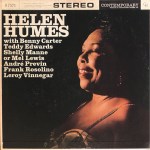
Helen Humes – ’Tain’t Nobody’s Biz-ness If I Do

Hot Stamper Pressings of Pop and Jazz Vocals Available Now

This EXCEPTIONALLY QUIET Contemporary Recording has wonderful sound on both sides. It’s got SHOCKINGLY DYNAMIC VOCALS — just listen to Miss Humes really belting it out on a great reading of Stardust! The sound is really rich and full with a BIG punchy bottom end. The clarity and transparency are superb, and you can really hear the leading edge transients on the various horns (Carter on trumpet, Rosolino on trombone).

You Can Depend On Me, the opening track, has an exceptionally weighty piano; it’s as if Andre Previn himself were pounding on a baby grand right there in your living room.

We don’t imagine that you are ever going to find a copy that sounds as good as this one.

All the usual suspects are here from the Contemporary corral: Benny Carter, Andre Previn, Leroy Vinnegar, Shelly Manne — providing big band back up for the lovely Miss Humes. We’re even bigger fans of Songs I Like To Sing, but the best moments here are every bit as wonderful.  

This is yet another stellar piece of wax from the best sounding jazz label of all time, Contemporary Records. Dynamic, rich, tonally correct, full of ambience — this record has it all.

Side One

You Can Depend on Me 
Trouble in Mind 
Among My Souvenirs 
Ain’t Misbehavin’ 
Stardust 
Bill Bailey

Side Two

When I Grow Too Old to Dream 
A Good Man Is Hard to Find 
Bill 
‘Tain’t Nobody’s Bizness If I Do 
I Got It Bad (And That Ain’t Good) 
When the Saints Go Marching In

AMG Review

Humes, 45 at the time, was at the peak of her powers, although she never really made a bad record. Accompanied by Benny Carter (on trumpet), trombonist Frank Rosolino, tenor saxophonist Teddy Edwards, pianist Andrew Previn, bassist Leroy Vinnegar, and either Shelly Manne or Mel Lewis on drums, the singer is typically enthusiastic, exuberant, and highly appealing on such numbers as “You Can Depend on Me,” “When I Grow Too Old to Dream,” and “”Tain’t Nobody’s Bizness If I Do.”

Looks familiar.

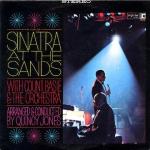
Sinatra at the Sands – What to Listen For

There is some edge on Sinatra’s voice on every side of every copy; it’s so common it’s got to be on the tape. Those copies with less edge and grit on the vocals which are not overly smooth or dull tend to do very well in our shootouts.
Also, richness is very important. We look for a combination of rich, Tubey Magical sound that still maintains a fair amount of space, clarity, transparency and freedom from smear.

The original label pressings (always in stereo; the monos are really a joke) are richer and thicker as a rule.

The pressings with the orange two-tone labels tend to be thinner and clearer. A high percentage of them are much too modern sounding, bright and gritty, and when they are we throw them right in the trade-in pile.

Finding the copy with “best of both worlds” sound is the trick. Pressings on both labels have won shootouts in the past. With this album we do what we always do. We play the record without looking at the label and simply grade the quality of the sound coming out of the speakers. Any other approach is liable to fall prey to unconscious biases. As we like to say, record shootouts may not be rocket science, but they’re a science of a kind, one with strict protocols developed over the course of many years to insure that the results we arrive at are as accurate as we can possibly make them.

(more…)

Love Is The Thing – The Breakthrough We Were Waiting For

Hot Stamper Pressings of Our Favorite Vocal Albums Available Now

Reviews and Commentaries for the Music of Nat “King” Cole

Love Is The Thing has long been one of the best sounding Nat “King” Cole recordings we had auditioned over the years. With a large variety of copies to play, including some interesting “finds” among them, we now know it actually is The Best. We have never heard the man sound better than he does on the hottest copies of this very album.

Of course we’re always on the lookout for Nat King Cole albums with good sound. In our experience that is not nearly as easy as one might expect. Far too many of his recordings are drenched in bad reverb and can’t be taken seriously. At least one we know of has his voice out of phase with the orchestra on most of the copies we played, putting a quick end to that shootout. 

If anything the sound on his albums gets even worse in the ’60s. Many of Nat’s albums from that decade are over-produced, bright, thin and shrill.

We assume most audiophiles got turned on to his music from the records that Steve Hoffman remixed and remastered for DCC back in the mid-’90s, For those of you who were customers of ours back then, you know that I count myself among that group. I even went so far as to nominate the DCC of Nat’s Greatest Hits as the best album DCC ever made. (I know now, as I expect you do, that that’s really not saying much, but at the time I thought it was a pretty bold statement.)

Devoting the Resources

Naturally, having long ago given up on Heavy Vinyl LPs by DCC and others of their persuasion, these days we are in a much better position to devote our resources to playing every Nat King Cole album on every pressing we can get our hands on, trying to figure out what are the copies — from what era, on what label, with what stampers, cut by whom, stereo or mono, import or domestic — that potentially have the Hot Stamper sound, the very Raison d’être of our business.

What we discovered with the more than dozen copies we’d pulled together for our shootout was that different pressings from different eras on different labels can all have the right sound. In fact, while listening to one copy after another, all without the benefit of knowing anything about the specific record on the table, it was simply impossible to predict from the sound alone which label the record was printed on.

Some of the earliest pressings were rich and tubey, but so were some of the later ones. Same with copies that were lean, hard or transistory — they could be on a label from any era with that sound.

(more…)

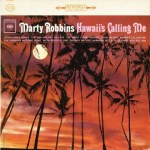
What to Listen For on Hawaii’s Calling Me

More Vintage Columbia Pressings 

The Analog sound of this pressing makes a mockery of even the most advanced digital playback systems, including the ones that haven’t been invented yet. I’d love to play this for Neil Young so he can see what he’s up against. Good Luck, Neil, you’re going to need it.

We’ve been through dozens of Columbia albums from the ’60s since we discovered how good the Marty Robbins titles on Columbia can sound. Most of the popular vocal and country albums we play have an overall distorted sound, are swimming in reverb, and come with hard, edgy, smeary vocals to boot.

To find an album with freakishly good sound such as this involves a healthy dose of pure luck. You will need to dig through an awfully big pile of vinyl to uncover a gem of this beauty.

Vocals Are Key

Like any good Elvis or Nat “King” Cole record, the one quality that is far and away the most important is that the vocals must be full-bodied, rich and smooth. Without that sound, you might as well be playing a CD. This is precisely what both sides here give you – Tubey Magical richness in spades.

Note that the heavy reverb not only sounds right for this music and this era but actually sounds great, the very opposite of the hard, sour, metallic digital reverb that replaced it decades later.

Skip the Mono

Stick with stereo on this title; the monos aren’t worth anybody’s time (scratch that: any audiophile’s time). If you see one for a buck at a garage sale, pick it up for the music, and then be on the lookout for a nice stereo original to enjoy for the sound.

(more…)

How Do the Early Pressings of All or Nothing at All Sound?

More Billie Holiday

More Titles that Sound Best in Mono

I expected our amazing sounding original seen below to win the shootout, but it didn’t!

Also, the reprocessed fake stereo copy shown here is to be avoided at all costs.

It sounds as bad as any fake stereo record I can remember playing. What were they thinking?

Naturally, the highest quality vocal reproduction has to be the main focus on a Hot Stamper pressing for any Billie Holiday record we would offer. Her voice should be rich and tubey, yet clear, breathy and present.

In addition to being tonally correct and natural, the pressings we offer must also be highly resolving. With the right room and the right equipment, properly set-up and adjusted of course, you will hear everything that these vintage recordings have to offer, including the three-dimensional space of the studios in which the various sessions were recorded, under the auspices of Norman Granz.

The Sound of the Original

The original Trumpet Player Verve mono we had on hand to play suffered from an EQ problem we run into frequently in our shootouts for vintage vocal albums. Actually, to be clear, there were two main problems in the case of All or Nothing At All: a boosted midrange and occasional sibilance issues. (more…)