8-2023

Getting the Wife On Board Is Key to Audiophile Happiness

More of the Music of The Rolling Stones

One of our good customers had this to say about some Hot Stampers he purchased recently:

Hi Tom,

My wife and I had a sort of meditative / semi-religious experience the other night when we were a bit woozy just from a long day and we sat and listened to Can’t You Hear Me Knocking. It was almost transcendent.

I was playing her the record for the first time to show her the money wasn’t wasted. That convinced her.

Andrew

Dear Andrew,

A very good strategy. You have to hear the record to know what the value of it is. I Got the Blues would have been my first choice, but being woozy is a big help too no matter what track you play.

Best, TP

Andrew had earlier noted to my main man Fred (who runs the business now) how bad the MoFi Sticky Fingers sounded.

Anyway, I told [Fred] how worthwhile it was to finally have a good copy of Sticky Fingers. I have three other copies, including the MFSL (it’s embarrassing they even released the record to begin with.)

I was checking out the MFSL copy again and I think the thing that really caught my ears in the past was the bass on Can’t You Hear My Knocking during the last three minutes when they do the Santana breakdown. Then you kinda notice it as a dull thud on other songs also. But I think that was the worst offender, especially since everything drops out.

I was rereading the articles about your business to see what I could glean about how you clean the vinyl. I still can’t believe the criticism since A) they’ve never actually heard one of your records and B) you offer a no questions asked money back guarantee. That just screams legitimacy. A con man who offers a 100% refund. I don’t think so.

I think these remasters and half speed remasters are bullshit and cashing in. That’s the con. Those people wouldn’t be so pissed off if you didn’t win people over who actually take the time to listen. To me it’s like hearing the perfect balance and placement of a great remastered CD but with all the depth of vinyl.

You are a good arbiter of what’s a good pressing by most any definition, at least from the two albums I have. And the Sticky Fingers really impressed me as I have 3 other copies.

They did a really nice job of remastering Joni Mitchell’s 70’s albums on CD and if you have a good CD player with good D to A conversion, it sounds pretty damn good. But it will never have the depth and 3-D space of a record. Not even close.

You capture the best of both worlds is how I think of it. Spending $200-$400 for some of these records is a no brainer. And Sticky Fingers was well worth the money. It’s kind of amazing people calling you out without listening.

Andrew,

It is indeed shocking how bad the bass is on MoFi’s records, and yet it is the rare audiophile that seems to notice. I cannot for the life of me understand it.

I appreciate the fact that you took the time to do your own shootout. That’s when a record like MoFi’s Sticky Fingers really shows just how awful it is.

As for our records being judged by people who have never heard them, to paraphrase Jonathan Swift, we’ve given up reasoning those folks out of a position they didn’t reason themselves into.

Of course that doesn’t keep us from writing about it.

If you are able to judge records by their sound, not whatever hype may surround them, you are well on your way to putting together an audiophile quality record collection, a subject we discuss in a commentary entitled:

If, however, you believe you are able to judge the sound of records you’ve never played, then it’s more than likely that things will not work out well for you, as was probably the case for this gentleman:

We have a number of commentary sections devoted to thinking about records critically, the best of which is probably this one:

(more…)

How Can Anybody Not Hear What’s Wrong with Old Records Like These?

beatlrubbeoriginalRecord Collecting – A Guide to the Fundamentals

It is our strongly held belief that if your equipment (regardless of cost) or your critical listening skills do not allow you to hear the kinds of sonic differences among pressings we describe, then whether you are just getting started in audio or are a self-identified audio expert writing for the most prestigious magazines and websites, you still have a very long way to go in this hobby.

Purveyors of the old paradigms — original is better, money buys good sound — may eventually find their approach to records and equipment unsatisfactory (when it isn’t just plain wrong), but they will only do so if they start to rely more on empirical findings and less on convenient theories and received wisdom.

A reviewer we know all too well is clearly stuck in the old, mistaken paradigm, illustrated perfectly by this comment:

It’s not my pleasure to be so negative but since I have a clean UK original (signed for me by George Martin!) I’ll not be playing this one again. Yes, there are some panning mistakes and whatever else Martin “cleaned up” but really, sometimes it’s best to leave well-enough (and this album was well-enough!) alone.

We can’t imagine how anyone can have a system in this day and age that can obscure the flaws of the original Parlophone pressings of Rubber Soul (or any other Yellow and Black label Parlophone pressing for that matter, other than Yellow Submarine and Oldies but Goldies).


UPDATE 2022

Here is another exception to that “rule.”


This reviewer apparently does (as do some of our customers, truth be told), but we have something very different indeed. One might even consider it the opposite of such a system.

Our system is designed to relentlessly and ruthlessly expose the flaws of every record we play.

Only the best of the best can survive that level of scrutiny. Our system (comprising equipment, setup, tweaks, room treatments, electricity) operates at the highest level of fidelity we have been able to achieve to date. We are constantly making improvements to our playback system in search of even better sound.

Real Progress

But wait a minute, who are we to talk about being fooled? Bear in mind that as recently as 2000 or so we were still recommending DCC and other Heavy Vinyl pressings. These are records that, with few exceptions, I would have a hard time sitting through nowadays.

My system couldn’t show me how colored and lifeless they were then, but it sure can now.

It’s amazing how far you can get in 10 years [now 20] if you’re obsessive enough and driven enough, and are also willing to devote huge amounts of your time and effort to the pursuit of better audio. This will be especially true if you are perfectly happy to let your ears, not your brain, inform your understanding of the sound of the records you play.

If we thought like most audiophiles, that money buys good sound and original pressings are usually the best, there would be no such thing as Hot Stampers. Old thinking and wrong thinking can really slow down your progress.

(more…)

Did Carlos Santana want to make music or produce fireworks?

Hot Stamper Pressings of the Music of Santana Available Now

Our good customer Aaron has lately been putting a great deal of time and money into the pursuit of perfect sound. His progress in audio since he discovered Hot Stampers and the kind of high quality vintage equipment we’ve recommended he use to play them has been remarkable.

In 2022 he wrote to tell us that the Super Hot Stamper Abraxas we had sent him and the Mofi One-Step he already owned were comparable in sound quality. Knowing what an awful label Mobile Fidelity is, and what a foolish idea Half-Speed Mastering is, you can imagine that we might have been a wee bit skeptical of this estimation, and we asked him to clarify his position.

Aaron also has made many improvements to his system since then. He carefully listened to both versions of Abraxas again and reported his findings. We believe that there is much to be learned from the kind of shootout that Aaron did for the album.

Hey Tom,

Oh, it’s a fascinating comparison! Here’s some data points, with the final one being the most relevant to your question.

I did another series of shootouts yesterday with my new vintage amp and speakers, and I included Abraxas in it. The bass on the onestep is monstrous and unreal. Sometimes the cymbals and chimes leap out of the speakers. I understand why people go gaga for this record. If you listen for sound, it doesn’t get any better than this.

Then I put on the hot stamper. The bass was back under control. Driving, but not dominating. The overall character was lighter and less ponderous. It was more listenable, more musical, and overall it was a relief to be less distracted by the fireworks. The vocals are back in front where they belong, and more palpable.

But, the hot stamper simply doesn’t grab ahold of you the way the one-step does.

When you describe the sound of the MoFi One-Step of Abraxas, with bass that’s “monstrous and unreal. Sometimes the cymbals and chimes leap out of the speakers,” all I hear in my head is a classic case of smile curve equalization, the kind MoFi has been using since the day they produced their first rock record in 1978, Crime of the Century. Years ago we noted:

We get these MoFis in on a regular basis, and they usually sound as phony and wrong as can be. They’re the perfect example of a hyped-up audiophile record that appeals to people with lifeless stereos, the kind that need amped-up records to get them to come to life.

I’ve been telling people for years that the MoFi was junk, and that they should get rid of their copy and replace it with a tonally correct version, easily done since there is a very good sounding Speakers Corner 180g reissue currently in print which does not suffer from the ridiculously boosted top end and bloated bass that characterizes the typical MoFi COTC pressing. [Of course, we no longer recommend anyone buy Crime of the Century on Speakers Corner. The better our system gets, the less we like them.]

That’s the sound of MoFi all right. The Hot Stampers we offer would never have those “qualities,” if you care to call them that.

Leaping cymbals and chimes? Are they supposed to do that?

Also, the bass on our early pressing would have to be “back under control” or we wouldn’t have sold it to you as a Hot Stamper.

Unsurprisingly, without all that extra added bass, the sound is “lighter and less ponderous.” Saints be praised.

Smile Curve Redux

With the smile curve adding to the top and the bottom, what suffers the most? The midrange. There’s less of it relative to the  now-boosted frequency extremes. We described the effect here:

The Doors first album they released was yet another obvious example of MoFi’s predilection for sucked-out mids. Scooping out the middle of the midrange has the effect of creating an artificial sense of depth where none belongs. Play any original Bruce Botnick engineered album by Love or The Doors and you will notice immediately that the vocals are front and center.

The midrange suckout effect is easily reproducible in your very own listening room. Pull your speakers farther out into the room and farther apart and you can get that MoFi sound on every record you own. I’ve been hearing it in the various audiophile systems I’ve been exposed to for more than 40 years.

Nowadays I would place it under the general heading of My-Fi, not Hi-Fi. Our one goal for every tweak and upgrade we make is to increase the latter and reduce the former.

Or as Aaron might have phrased it, “The vocals are back in front where they belong, and more palpable.” You sure got that right.

Musicality

Aaron was impressed with how much more musical our pressing is, noting: “It was more listenable, more musical, and overall it was a relief to be less distracted by the fireworks.”

Then he concludes with this, sending my head into a spin: “But, the hot stamper simply doesn’t grab ahold of you the way the onestep does.”

(more…)

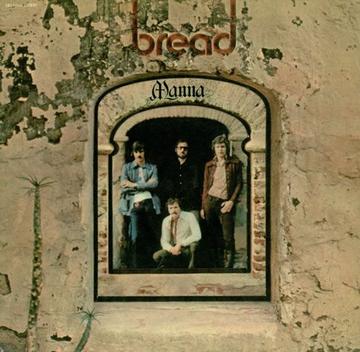
Manna – Super Hot Versus White Hot

Hot Stamper Pressings of Great Sounding Pop Albums Available Now

Back in the mid- to late-2000s, we felt we owed our Hot Stamper customers a more complete picture of the good and bad qualities we heard in our shootout for practically every record we played.

The idea was that the buyer could listen along for what the record was doing well and what it might not be doing so well. If you noticed that the top end was a little soft, well, that’s what we might have heard too. We would put that shortcoming, and any others we thought worth mentioning, right there in the listing.

Over the years, in order to avoid having to write every listing from scratch, we streamlined the process and dropped the criticisms.

Below you can see a typical example of an older listing. This is how we used to recognize when a record was Super Hot as opposed to White Hot.

This commentary on the famous recording of The Firebird with Dorati discusses the same issues in more depth.

Side One

A++, with good balance and lots of rockin’ energy. It’s transparent — just listen to how clear the drums are on the first track. It’s a bit dry and doesn’t have all the top end extension of the best, so Super Hot is a fair grade we think.

(more…)

If This Guy Isn’t on the Payroll…

Hot Stamper Pressings of the Music of The Cars Available Now

He sure ought to be!

Based on what I’ve just read, if Rhino Records is looking for a cheerleader, they could hardly do better than Mr. Youman.

I stumbled upon this fellow’s review of The Cars first album on Positive Feedback just a few days ago.

Not sure I would even call it a review. It comes across to me as more of a PR release.

I don’t think Positive Feedback cares either way. They need content, and apparently they consider this content.

The New Rhino High Fidelity Series – The Cars And John Coltrane Kick It Off in Grand Style!

One thing I have noticed about PF is that they do not seem to employ editors of any kind. My friend Robert Pincus writes for them — here is his review of a Dillards album that no one would be likely to buy from us at our prices but is probably worth picking up for the five or ten dollars a record store might charge. There are plenty of typos throughout his reviews and others I have read.

You’re on your own with PF. And they are good with however many exclamation marks you may want to use. Four in one paragraph? Bring it on they say!

The following paragraph from Youman’s review contains a ridiculous mistake that any knowledgeable editor should have noticed. Can you spot it? If so, email me at tom@better-records.com

Mastered by George Marino, the 1978 original would seem hard to beat, as the level of detail and attack is quite impressive. It absolutely rocks, and I would be very happy if this was my one and only copy. The 1980 Nautilus, which was half speed mastered by Jack Hunt, is surprisingly very much like the original with some minimal improvement in transparency and dynamic punch. Most would be hard pressed to hear the difference. Of course, the super quiet Japanese vinyl might be contributing to this. We also have the 2009 Mofi, which was half speed mastered by Shawn Britton. In my system, I found it to be dark and somewhat veiled. Bass was just too prominent to my ears. It was almost impossible to sit through the entire Mofi after hearing the OG and the Nautilus. I am a huge Mofi fan, so this was very disappointing.

When someone as clearly lacking in critical listening skills as this fellow has the temerity to compare “the” original and the Nautilus remaster (reviewed here) and declare “Most would be hard pressed to hear the difference,” it rubs me the wrong way.

I want to sit such a person down and say that it’s unlikely that anyone with two working ears and a halfway-decent stereo would not hear the difference.

You can hardly hear it, that seems clear, but why insult others of a Cars-loving persuasion?

The reference to Giant Steps below is yet more evidence of this fellow’s inability to recognize a bad record when he hears it:

Let’s return to that Rhino catalog and all that it could possibly offer to the audiophile enthusiast. We need to send our wish lists and raise our hands if not bring out the megaphones!  Of course we have the Led Zeppelin catalog, but that has been debated ad nauseum on several internet websites and forums. It seems that those in control will not allow it. Can you imagine a Kevin Gray mastering for Led Zeppelin II? There have been several very good reissues for the Black Sabbath catalog, but the original UK pressings are still the ones to beat based on my own comparisons with various other collectors. Lets [sic] get those original analog UK tapes and hand them over to Kevin!  I also have a copy of the 45 RPM John Coltrane, Giant Steps released by Rhino in 2008. Some argue that this is best pressing ever and by a wide margin! One of the top ten jazz releases of all time as ranked by many jazz experts. Bernie Grundman did a fantastic job on that reissue but there was only a limited production of 2500 copies. Lets [sic] take another shot at those tapes as part of the new Rhino High Fidelity series!

We make the case that Bernie’s recutting of Giant Steps for Rhino is possibly the worst sounding version of the album ever, and perhaps by a wide margin! He already had his shot, the patient did not survive the operation, what good would it do to put another bullet in the corpse?

Jazz experts may rank it one of the top releases of all time — I certainly would — but it is unlikely they have ever heard Rhino’s bloated, thick, dull, lifeless and altogether unsatisfactory pressing of the album. We gave it an a F and felt that we were being too kind. There is some consolation to be had though: The limited production meant that only 2500 people had to suffer through it upon release. (According to Discogs, these days the average price paid for a copy is $225. We may charge a lot for records, but we charge a lot for good sounding records, not bad sounding records, and that should count for something, shouldn’t it?)

And Kevin Gray already ruined the album once for Rhino, so why would anyone want to hand him the tapes to do it again? Is he now a better mastering engineer than he was in the mid-2000s? What evidence to support this proposition could you possibly supply to those of us who question his competence? The shockingly bad sounding records he’s cut recently — Stand Up, Moondance and Rickie Lee Jones are three that spring to mind — make a mockery of the very idea that this guy knows what he is doing.

More comments from the above paragraph of the exploding head variety:

There have been several very good reissues for the Black Sabbath catalog…

Have there? Would someone please name one? We would love to hear it.

but the original UK pressings are still the ones to beat based on my own comparisons with various other collectors.

Then you need to get out more. The UK pressings we have played are not competitive in the least with the best domestic originals. Maybe there are some new reissues that are comparable to the UK pressings, but that is clearly setting the bar much too low. For our last shootout, we noted:

(more…)

Two Minutes that Shook My World – “But I Might Die Tonight”

After building our new studio a few years ago, we soon found out we had a whole host of problems.

We needed to work on electrical issues. We needed to work on our room treatments. We needed to work on speaker placement.

We initially thought the room was doing everything right, because our Go To setup disc, Bob and Ray, sounded super spacious and clear, bigger and more lively than we’d ever heard it. That’s what a 12 foot high ceiling can do for a large group of musicians playing live in a huge studio, in 1959, on an All Tube Chain Living Stereo recording. The sound just soared.

But Cat Stevens wasn’t sounding right, and if Cat Stevens isn’t sounding right, we knew we had a huge problem.

Some stereos play some kinds of records well and others not so well. Our stereo has to play every kind of record well because we sell every kind of record there is. You name the kind of music, we probably sell it.

And if we offer it for sale, we had to have played it and liked the sound, because no record makes it to our site without being auditioned and found to have excellent sound.

But I Might Die Tonight

The one song we played over and over again, easily a hundred times or more, was But I Might Die Tonight, the leadoff track for side two. It’s short, less than two minutes long, but a lot happens in those two minutes. More importantly, getting everything that happens in those two minutes to sound not just right, but as good as you have ever heard it, turned out to be a tall order indeed.

I could write for days about what to listen for in the song, but for now let me just point the reader to one of the most difficult parts to reproduce.

At about 50 seconds into the track, Cat repeats the first verse:

I don’t want to work away
Doing just what they all say
Work hard boy and you’ll find
One day you’ll have a job like mine, job like mine, a job like mine

Only this time he now has a multi-tracked harmony vocal singing along with him, his own of course, and he himself is also singing the lead part louder and more passionately. Getting the regular vocal, call it the “lower part,” to be in balance with the multi-tracked backing vocal, call it the “higher part,” turned out to be the key to getting the bottom, middle and top of the midrange right.

When doing this kind of critical listening we play our records very loud. Live Performance level loud. As loud as Cat could sing, that’s how loud it should be when he is singing his loudest toward the end of the song for the final “But I might die tonight!” If he is going to sing loudly, I want my stereo to be able to reproduce him singing as loud as he is actually singing on the record.

No compression.

No distortion.

All the energy.

Yes, that’s the way I want to hear it!

The last fifteen seconds or so of the song has the pianist (Cat himself) banging out some heavy chords on the piano. If you have your levels right it should sound like there is a real piano at the back of the room and that someone is really banging on it, a powerful coda perfectly fitting for such an emotionally stirring song.

(more…)

Finding Good Companies to Invest In Is a Lot Like Finding Good Sounding Records to Play

Important Lessons We Learned from Record Experiments

Which of the copies pictured below sound good and which ones don’t?

If you turn over enough of these “rocks,” you — and you alone — will know.

There are some amazing sounding winners in this pile. If you conduct your shootouts following the  tried and true methods we lay out here on the blog, you will be able to hear One Man Dog and every other album you love sound better than you ever dreamed possible.

Pictured below are just a small fraction of the rocks we’ve turned over in the 20 years since we began doing shootouts.

(more…)

Steppenwolf Gold – Their Great (But Awful Sounding) Hits

Record Collecting for Audiophiles – A Guide to the Fundamentals

There is an interesting story behind how I got my mitts on this particular Heavy Vinyl pressing.

Months ago [now years], a fellow contacted us to buy some of our Hot Stamper pressings.  We sent him one or two, and he soon wrote back to say he was not happy with the sound. We exchanged emails with him for a while, trying to rectify the situation in the hopes that we could get him some records that he would be happy with.

In the middle of all this back and forth, we thought it would be worthwhile knowing what this gentleman thought was a good sounding record, seeing as how ours were not meeting his standards. Our discussion soon crossed over into Heavy Vinyl territory. We asked, “Were there any that he liked the sound of?”  Why yes, there were.

You guessed it. The above-pictured album from Analogue Productions is one he recommended. (There was another he also said we should try, but after playing this one we decided against buying any more records he recommended, for reasons that will soon be evident.)

So we bought a copy. Soon enough we found ourselves playing our newly remastered Heavy Vinyl LP.

Right from the get-go, thick, murky, compressed, lifeless, ambience-free, dead-as-a-doornail sound was now coming out of my speakers. Like sludge from a sewer you might say. The stereo had sounded fine moments before. What the hell was happening?

I quickly grabbed a Super Hot copy of the album off the shelf and put it on the table.

Here was the energy, clarity, presence, space and more that had been missing mere moments ago while the Heavy Vinyl pressing played. Now, coming out my speakers was everything that makes a good vintage pressing such a joy to listen to.

I felt like turning it up and rocking out. The first song is Born to Be Wild. Who doesn’t love to blast Born to Be Wild?

What a difference. Night and Day. Maybe more!

If this Steppenwolf LP isn’t the perfect example of a Pass/Not-Yet record, I can’t imagine what would be.

As I was thinking about the turgid, compressed, veiled, overly smooth but not tonally incorrect sound coming out of my speakers, I thought back about the kinds of stereo systems that can produce that sound on command. They often look like the one you see below.

(more…)

Turntable Set Up Guide Part 1: Why You Need to Do It Yourself

More from Robert Brook

One of our good customers has a blog which he calls

A GUIDE FOR THE DEDICATED ANALOG AUDIOPHILE

Below you will find a link to an article about turntable setup in which I am quoted on the subject. I would have loved to write something along these lines myself, but just never found the time to do so.

Robert Brook took the job upon himself and has explained it well, so if you would like to learn more about turntable setup, I encourage you to visit his blog and read more about it.

Turntable Setup Guide Part 1: You NEED to DO IT Yourself!


Further Reading

(more…)

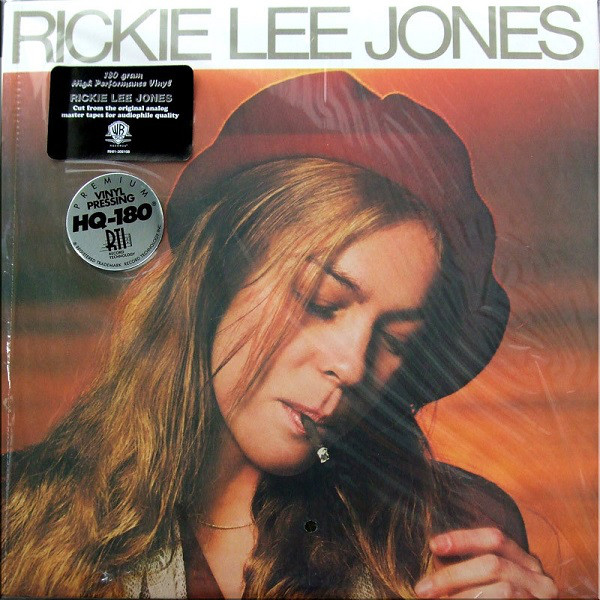
Rickie Lee Jones on Rhino Records – Not Our Idea of Good Sound, and We Hope Not Yours

Hot Stamper Pressings of the Music of Rickie Lee Jones Available Now

We were fairly unimpressed with the Rickie Lee Jones on Warners that came out a few years back [2008 in fact, time flies!].

It has that same phony modern mastering we find so unappealing on the Heavy Vinyl reissue of Blue. (We seem to be pretty much alone in not liking that one, and we’re proud to say we still don’t like it. We encourage you to play The Blue Game and maybe you’ll see why we feel the way we do.)

We liked the new Sweet Baby James Hoffman and Gray cut. We note in our review that:

Hoffman and Gray can take pride in this Sweet Baby James. It’s some of the best work I’ve heard from them to date. If more DCC and Heavy Vinyl reissues sounded like this, we wouldn’t be so critical of them. Unfortunately they don’t, and there are scores of pages of commentary on the site to back up that statement for those of you interested in the subject.

We went on to say

The amazing transparency and dynamic energy of the best originals will probably never be equaled by an audiophile pressing like this. (It hasn’t happened yet and we remain skeptical of the possibility.) Considering that this pressing is sure to beat most reissues, imports and other such like, we have no problem heartily recommending it to our customers, especially at the price.

So, What’s Wrong With Rickie Lee?

Simple. They took a somewhat artificial, hi-fi-ish, close-miked, heavy-on-the-reverb recording and made it sound even more artificial, phony and hi-fi-ish (but less-heavy-on-the-reverb; there is always a noticeable loss of resolution in these modern mastering jobs).

What were they thinking?

The best copies have warmth, richness and sweetness to balance out the more unnatural elements in the recording. Copies with these qualities are not that common, but we’ve run across plenty of them in our shootouts and proudly offered them for sale, where of course they sold quickly for lots of money. Major league audiophile appeal, this one. In its day it was heavily demo’ed in every stereo store in town, and for good reason — the sound positively jumps out of the speakers.

It’s a Trap

The average copy of this album is a sonic disaster, akin to the average copy of Famous Blue Raincoat or — gulp, even worse — Graceland. If you’re a detail freak, this Rhino pressing may be just what you are looking for. It’s got detail all right.

But all that phony detail obscures what is wrong with the sound. Overly detailed sound is a trap that is all too easy to fall into.

Plenty of recordings designed to appeal to audiophiles strike us as being phony in this way. Stan Ricker cut a lot of overly-detailed records for Mobile Fidelity in the 70s and 80s, records that may have sounded fine on the lo-rez stereos of that era (like the one I owned), but are positively painful to play on the top quality equipment that is available (but rare) today. [1]

I would hope that the audiophile community would have developed their listening skills to a level sufficient to recognize what this pressing doesn’t have — warmth, richness and sweetness — but I get the feeling I will be proved wrong yet again in that regard.

This Performance Is High?

Rhino Records has really made a mockery of the analog medium. Rhino bills their releases as pressed on “180 gram High Performance Vinyl.” However, if they are using performance to refer to sound quality, we have found the performance of their vinyl to be quite low, lower than the average copy one might stumble upon in the used record bins.

The CD versions of most of the LP titles they released early on are far better sounding than the lifeless, flat, pinched, so-called audiophile pressings they released starting around 2000. The mastering engineer for this garbage actually has the nerve to feature his name in the ads for the records. He should be run out of town, not promoted as a keeper of the faith and defender of the virtues of “vinyl.”

If this is what vinyl sounds like I would switch to CD fast enough to make your head spin.

And the amazing thing is, as bad as these records are, there are people who like them. I’ve read postings on the internet from people who say the sound on these records is just fine.

Their Grateful Dead titles sound worse than the cheapest Super Saver reissue copies I have ever heard.

The Yes Album sounds like a cassette, a mere ghost of the real thing.

(more…)