*Playback Advice

Shootout Winning Stampers for La Boutique Fantasque Revealed

Hot Stamper Pressings of the Music of Rossini Available Now

UPDATE 2026

Our current favorite recording of La Boutique Fantasque is the one Solti recorded for Decca in 1957.

It belongs to that very special group of roughly 150 orchestral recordings which have the potential to offer the discriminating (and well-heeled) audiophile the best performances of major works with by far the highest quality sound.

Modern remastered pressings simply compete with the best pressings of these landmark recordings.

The Fiedler (LSC 2084) is still a very good record, but we no longer see much reason to carry it when the Solti is better in almost every way (and quieter as a rule to boot).

Below we have reproduced our full stamper sheet, including the Shootout Winning stampers, which happen to be 3S/4S for this album.

(more…)

Letter of the Week – John Wesley Harding Has Playback Issues

Hot Stamper Pressings of the Music of Bob Dylan Available Now

One of our good customers had this to say about a Hot Stamper pressing of John Wesley Harding he purchased a while back:

Hey Tom,   

So many great records in this batch, but some solid misses too — details coming. John Wesley Harding for example sounds great but has some serious distortion through much of side two; a bit ’too vintage’, in spite of the sound it seems once to have had.

Dear Sir,

Definitely check your front end setup on this one, there is no actual distortion on the record, just sound that may be hard to reproduce.

My advice would be to make sure you have replaced your cartridge recently.

Carts that get old have a problem with records like these. We know, we replace our cartridge every three months when hard-to-play records start to sound strained or congested and gritty.

The sheen of massed strings, a sound critical to the orchestral recordings we play, are impossible to reproduce correctly with an older-than-it-should-be unit. A fresh cartridge can make all the difference in the sound of  difficult to reproduce records.

Keeping a cartridge installed for too long is a mistake made by 100% of the audiophiles I have ever known.

The other explanation could be that our microfine tip is playing deeper in the groove and missing whatever damage is encoded above it, damage which may have been caused by the older cartridges of the day that were used to play the record by the previous owner or owners. We can’t say it doesn’t happen.

We can say that if you bring this record back, the next person to buy it has a roughly 98% chance of keeping it. Maybe one out of five hundred or so ever come back a second time. At least that’s how it has worked out over the last twenty-five years.

(more…)

VTA – A Few Moments of Experimentation Can Really Pay Off

Basic Audio Advice — These Are the Fundamentals of Good Sound

Here we discuss what to listen for as you critically adjust your VTA.

While experimenting with the VTA for this record, we found a precise point where it all came together, far beyond whatever expectations we might have had for the sound at the time.

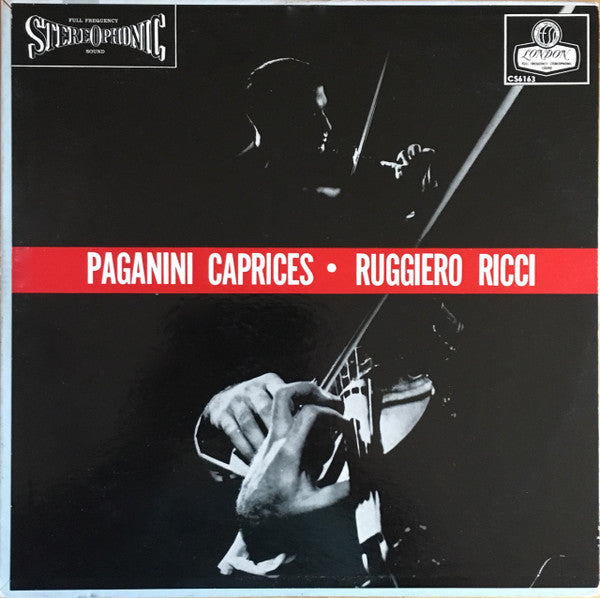
Practically out of nowhere we heard a solid, full-bodied, palpable violin that appeared to be floating between the speakers, an effect that, speaking for myself as a lifelong, obsessive audiophile — I fully appreciated for the magic trick that it is.

The sound of the wood of the instrument became so clear, the harmonic textures so natural, it was quite a shock to hear a good record somehow become an amazing one.

And all it took was a few moments of experimentation.

With the right VTA setting we immediately heard more harmonic detail, achieved, as is often not the case, with no sacrifice in richness.

That’s the clearest sign that your setup is right, or very close to it.

By the way, Robert Brook can get your front end tuned up and working right. We highly recommend his new service. It might just put you on the path to achieving the next level in audio. (You will definitely struggle to get there with a table, arm and cartridge that aren’t set up with a high degree of precision by a person who knows what they are doing, and Robert has been doing this work for years now.)
(more…)

Get the Phono Finish!

Robert Brook runs a blog called The Broken Record, with a subtitle explaining that his blog is:

A GUIDE FOR THE DEDICATED ANALOG AUDIOPHILE

We know of none better, outside of our own humble attempt to enlighten that portion of the audiophile community who love hearing music reproduced with the highest fidelity and are willing to go the extra mile to make that happen.

Get the PHONO FINISH!

Robert’s Approach

Robert has methodically and carefully — one might even say scientifically — approached the various problems he’s encountered in this hobby by doing the following:

(more…)

A Better Way to Get Rid of Grit and Grain on Jumpin’ Jive

More Records that Are Good for Testing Grit and Grain

Jumpin’ Jive is one of the clearest examples of an album where it is critically important to make sure your stereo is running on good electricity before you make any attempt to play it. This is the kind of recording — bright, full of energy — that will bring most stereo systems to their knees. Of course, when you play a good copy and it really sounds good, it’s a record that rewards all the time and effort you’ve put into your system.

So much of the aggressiveness, grit and grain that we hear in immediate, high-energy recordings such as this are really the fault of the electricity feeding the stereo, not the fault primarily of the record or even the equipment used to play it.

Now it should be noted that this recording has a ton of high frequency information that will be difficult to reproduce on most systems. If you leave a lot of appliances and electronic devices plugged in around the house when you listen to your stereo, you can forget ever hearing this record right. The grit and grunge caused by polluted electricity will make this record practically unlistenable, at the levels we listen at anyway. (At lower levels most of the garbage is masked, one reason no doubt that audiophiles rarely turn their stereos up to anything approaching live levels.) 

So do as we do: unplug everything you can get your hands on before you sit down to listen. Make sure your tubes (if you have tube equipment) are nice and warm too.

(more…)

Amazing Grace – A Bit of VTA Experimentation Can Really Pay Off

More Setup Advice for Turntables and Cartridges

UPDATE 2026

Although we liked it well enough, this title unfortunately did not get much love from our customers.

Years ago it was tagged here as a never again title, which simply means we would stop doing shootouts for it because they were no longer profitable. (It’s possible we could do it again, expecially if we were to get hold of an amazing sounding pressing or two, but at this point that does not seem to be in the cards, if for no other reason than we have stopped buying them altogether. Cheap records are a thing of the past and have been for quite a while now.)

We encourage you to find a nice copy for yourself. Stick with the early label. If you don’t hear the sound we describe below, you might consider buying more copies until you do, assuming you like the music.


Amazing Grace is a handy record for VTA setup, a subject we discuss below.

On the better copies Aretha’s vocals are as dynamic as any you will ever hear, and unlike all the records she did with Tom Dowd, her voice never breaks up on this record. If you have big speakers that can play at loud levels, with the right volume level you can really get Aretha to belt it out like nothing you have ever heard on record. 

Like most modern churches, the kind that have upholstered pews and lots of carpeting, the natural reverberation of the sound isn’t as pronounced as it would be were the recording taking place in a 16th century cathedral.

Note also that the recording is from 1972, not 1962, so the Tubey Magic that would have been on a recording such as this ten years earlier is not going to be as great either.

When we play a big stack of copies of a record like this, the limitations of the recording have to be taken into account.

The best copies will do what the best copies do; we can’t ask them to sound like something they were never designed to sound like.

The best copies of the album clearly sound quite a bit better than the average copy we played, but they still sound like the same recording, just bigger, richer, clearer and more alive.

To set your VTA right, don’t try to make Aretha too smooth — she should sound a bit “hot” when the spirit fills her and she shouts her loudest. If you get her to sound correct you lose a lot of space and ambience. What space and ambience there is on the tape need to be there for the recording to sound “real.”

(more…)

Port’s Rule and The Song of the Volga Boatman

More Records that Helped Me Make Progress in Audio

The track that started us down the road to our first Sauter-Finegan shootout is, to this very day, our Number One Test Track of All Time, a little ditty known as the Song of the Volga Boatman.

We first heard it back in the 90s on Bob and Ray Throw a Stereo Spectacular, which is still the version we test with, but this album of forward-looking big band contains that track  as well as 10 others, all with truly amazing sound.

Why is the Song of the Volga Boatman our ultimate test track?

The simplest way to understand it is that all the instruments are being played live in the studio, and all of them in the huge soundfield are real and acoustic — string bass, drums, horns of every size and type, woodwinds, percussion, tubular bells, etc.

In addition, the arrangements given to this roomful of players is so complex and lively that if anything sounds “funny,” to use the precise audiophile nomenclature, it really calls attention to itself.

Port’s Rule states: If it isn’t easy for your Test Discs to sound wrong, they are not very good Test Discs.

Wrong is the natural order of things.

Getting it right is where the work comes in to play.

And it should seem more like play than work or you are unlikely to get very far with it. (That’s another one of Port’s Rules, sometimes referred to as music does the driving.)

When the stereo is right from top to bottom, this song is right from top to bottom, and every other record we know the sound of will have the sound it’s supposed to have.

It seems simple and in some ways it is.

We’ve been getting the Song of the Volga Boatman to sound bigger and better now for years, through scores and scores of changes. At our current stage of audio evolution, at the very loud levels we play it at, it’s shocking how big, powerful and real it seems. It has more of the “live music” qualities we prize than almost any other studio recording I can think of.

(more…)

Getting the Electricity Right Made All the Difference in Our New Studio

Hot Stamper Pressings of the Music of Cat Stevens Available Now

In response to a customer’s letter, I wrote the following a few years back:

The vast majority of audiophiles never get to the higher levels of audio because of the compromises they make at every step in their rooms, speakers, wires and practically everything else.

For example:

  • Speakers too small,
  • Shoved up against a wall,
  • In an untreated room that
  • The family uses to watch TV in?

You can’t get very far that way.

Some of the worst off of these folks end up with a collection of crap Heavy Vinyl because their systems simply will not let them hear how much better their vintage pressings sound.

Better Electricity Made All the Difference

When we moved the business into an industrial park a few years ago, I took the opportunity to build the largest playback studio I could fit on the premises. It was 17 by 22 with a 12 foot high ceiling, with a concrete slab floor and six inch thick double drywall for walls, as well as a complicated system of dedicated electrical circuitry.

It took a surprising amount of work carried out over months to get it to sound right. Day after day we ran experiments. Most of the time it was just me. I actually like working alone. It’s not hard for me to stay focussed.

Oddly enough, what made the biggest difference was getting the electricity right: computers and cleaning machines on isolation transformers, stuff unplugged, stuff left plugged in that made the sound better, lights hooked up to batteries rather than plugged in to the main circuits, etc. 

Over the course of about two months, the sound became night and day better.

More on unplugging here.

Also, Robert Brook has done a great deal of work along these same lines, which he explains in detail here.

This kind of work is not hard for me. We’ve been doing it for decades, but we have a very big advantage over everyone else: we have good sounding records to test with.

We have Hot Stampers! The records are correct. If they sound wrong, it’s not their fault. They are almost never the problem.

I used But I Might Die Tonight from Tea for the Tillerman for weeks and weeks. It was very difficult to get all the parts right, but in the end it was more glorious than I had ever heard it. I wrote an extensive commentary on the experience I went through which you can read all about here.

(more…)

Better Front Ends Actually Reduce Surface Noise

Hot Stamper Pressings of the Music of Tchaikovsky Available Now

This record has no marks that play appreciably, but that RCA vinyl is up to its old tricks again.

Mint Minus Minus with constant light surface noise underneath the music in the quieter sections is the rule. The first half inch of side two is where you will notice it the most.

We are of the opinion that good sound and good music allow you to pretty much ignore surfaces such as these (scratches being another thing entirely of course). 

Better Front Ends

I would make the further point that the better your front end is, the less likely you are to have a problem with vinyl like this, which is the opposite of what many audiophiles perceive to be the case. In other words, some of the cheaper tables and carts seem to make the surface noise more objectionable, not less. (They also tend to collapse completely under the weight of a mighty recordings.)

On the other hand, some pricey cartridges — the Benz line comes to mind — are consistently noisier than those by Dynavector, Lyra and others, in our experience anyway.

Vintage Vinyl

As long as vintage vinyl is the only vinyl with sound worth pursuing, as is surely the case these days and will be the case for the forseeable future — we have ample evidence to support this statement for this who are interested in that lamentable reality — a quiet cartridge and a very high quality arm are essential to your being able to recognize good records and reproduce them properly.

Our Dynavector 17Dx gets down deep into the groove, where vintage used records have the least number of problems created by their previous owners.

And we run it nude for even better sound. I discovered this possibility more than a decade ago — so long ago that I cannot remember where I came by the information — but the sound was immediately so much better that all questions were answered moments after dropping the needle.

Not a lot of things are obvious, but that sure was.

(more…)

For a Better Approach to Finding Higher Quality Pressings, Sweat the Details

Please Consider Taking Some of Our Audio Advice

When it comes to doing shootouts, half the battle is just being able to play the record right.

Our approach is simple enough. We precisely adjust the arm and cartridge for every title by ear, then compare the various pressings — properly cleaned of course — under carefully controlled, blinded conditions, with as much scientific rigor as we can bring to the proceedings.

In some ways it may in fact be analogous to rocket science, which we would define as the process of discovering all the details that need to be sweated and then sweating the hell out of them.

It’s the opposite of theoretical physics. One doesn’t need to be a novel thinker or have big ideas to do audio well.

Obsessively working through the basics of table setup, tweaks, room treatments and electrical quality will take your system to levels beyond those you have ever imagined.

And, you sure don’t need a bloody microscope to check your stylus rake angle, unlike some audiophile reviewers who insist that such devices are essential.

Your ears, if they are any good at all, will do the job just fine, and probably much better.

(more…)