Fantasy – Reviews and Commentaries

Guilty as Charged: We Used to Blame CCR’s Records for the Bad Sound We Heard Too

Hot Stamper Pressings of the Music of Creedence Clearwater Revival Available Now

Another entry that falls under the heading of

What’s the big idea?

Before 2008 or so we had regularly been frustrated with this band’s recordings. There were plenty of  customers for their albums, but even our best Hot Stampers fell well short of the standards we set for top quality sound.

We assumed the recordings themselves were at fault.

Things started to turn around after that, judging from this bit of boilerplate at the bottom of a listing for Green River from around 2010 or so:

Many copies were gritty, some were congested in the louder sections, some never got big, some were thin and lacking the lovely analog richness of the best — we heard plenty of copies whose faults were obvious when played against two top sides such as these.

The best copies no longer to seem to have the problems we used to hear all the time.

Of course the reason I hadn’t heard the congestion and grittiness in the recording is that two things changed. (1) We found better copies of the record to play — probably, can’t say for sure, but let’s assume we did — and (2) we’ve made lots of improvements to the stereo since the last time we did the shootout.

You have to get around to doing regular shootouts for any given record in order to find out how far you’ve come, or if you’ve come any distance at all. Fortunately for us the improvements, regardless of what they might comprise or when they might have occurred, were incontrovertible. The album was now playing at a much, much higher level.

It’s yet more evidence supporting the possibility, indeed the importance, of taking full advantage of the revolutions in audio of the last ten or twenty years. [Make that thirty by now.]

Live and Learn

When Creedence’s records started to sound good, we stopped blaming those albums for being badly recorded.

It’s amazing how many records that used to sound bad — or least problematical — now sound pretty darn good. 

Every one of them is proof that comments about recordings are of limited value.

The recordings don’t change. Our ability — and yours — to find, clean and play the pressings made from them does, and that’s what Hot Stampers are all about.

(more…)

Letter of the Week – “…it was like there was a blanket taken off the speakers.”

Hot Stamper Pressings of the Music of Creedence Clearwater Revival Available Now

One of our good customers had this to say about some Hot Stampers he purchased recently:

Hey Tom,   

Just some comments on the records purchased in July. Some of these records were a night and day experience for me. [For more tales of night and day experiences, we refer to them as “revelations,” please click here.]

I bought ten years after a space in time and nilsson son of shmilsson from the columbia record club back in the early seventies. I’ve taken good care of them and thought they sounded very good so I didn’t need to upgrade. You mentioned that we’ve never heard these records sound like this, so I thought I’d take a chance.

WOW! Space in time, son of schmillson, eat a peach, it was like there was a blanket taken off the speakers. Everything sounded sooo much better, more involving, the sound jumped out at me. And not that in-your-face shrill “run for the volume control” sound which was so prevalent in the late 80’s and into the 90’s. 

CCR cosmo’s factory, I’ve got an original mofi copy which sounded really good (I must have lucked out, 90% of the mofi’s I bought didn’t have a problem with sibilance. The ones that did have that problem and the dead as a doorknob presentation — anadisc 200 — are all gone.)

The super hot stamper of Cosmos factory on side 1 completely smoked the mofi, side 2 they were comparable. The super hot stamper had more depth to it. You could hear into the recording, making the experience more lifelike.

Thanks, Shane

Shane,

Thanks for writing. We love to hear from our satisfied customers!

Comparing the sound of the pressings you owned — including audiophile LPs in this case — versus the Hot Stamper pressings we sent you will allow you to recognize some fairly consistent differences. We’ve listed them below for handy reference and further study.

We hope these links will help you avoid other records with these same problems. As a general rule, the average pressing — of any kind — will fall short in some or all of the following areas when played head to head against the Hot Stamper pressings we offer:

(more…)

Keeping the Players Together on Jazz Impressions of Black Orpheus

guarajazzi_wtlf_1406113104

Hot Stamper Pressings of Jazz Recordings Featuring the Piano

Another in our series of listening exercises here discussing the importance of transparency, ambience and resolution.

The arrangement of the players is straightforward, with the bass hard left, drums hard right (with leakage well to the left on the cymbals, but that’s another story), and Guaraldi on piano in the center. (The first track of side two reverses this arrangement; why, I have no idea.)

Here’s the crazy thing about this recording: The best copies really connect up — tie together — the space each of the players is in. I heard it during the shootout, and I can’t recall if it actually happened more than once or twice, but I know I heard it. They are all live, they are all on the same soundstage, but on most copies you would hardly know it.

They sound like they are playing in booths, the ambience never extending very far in any direction. The best copies have so much ambience that one player’s space extends all the way to the edge of the other player’s space. The effect, though rare, is nothing less than magical.

The piano is solid, mostly clear and not hard. Not many copies present the piano this way — correctly in other words. The amazing snare of Colin Bailey in the right channel is LIVELY and fun like you’ve never heard before.

There is no sacrifice in fullness, richness or Tubey Magic in the presentation, and that is the right sound for this music.

No Breakup on the Piano

I would be willing to bet that 90% or more of all the early pressings still in playable condition have some breakup on the piano. The old arms and carts of the day simply could not track the groove the way modern arms and carts can, and ended up damaging the record.

We are happy to report that this copy has no breakup on the piano at all.

The best copies bring out the contribution of the bass player better, the bass being essential to the rhythm of the music. On some, the bass is so tight and note-like you can see right into the soundstage and practically watch Monte Budwig play.


Further Reading

Letter of the Week – “I would appreciate the opportunity to speak to someone about the factors that make this a “White Hot Pressing.””

A customer recently contacted us after making his first purchase and being disappointed with the White Hot Stamper pressing we had sent him.

Hi,

Wondered who I can talk to about this record that I purchased. I’ve listened to it numerous times and it just does not have that sound stage I was expecting.

I am not looking for a refund. In fact, I refuse a refund. However, I would appreciate the opportunity to speak to someone about the factors that make this a “White Hot Pressing.”

I’m sure you need to understand what amplifier, speakers, setting, etc. I am using. Without going into the details, I have a McIntosh amplifier and Focal 936 speakers. I know how much of a difference equipment makes in the sound of a record.

I love to hear amazing records, some of which I have in original pressings I purchased when they were released and can truly feel it when there is something special about the record. This one does not seem to have it to me, but I am interested in finding and purchasing one from you that gives that amazing feeling.

Please let me know if there is someone I can speak to about finding that record.

Thank you,
S.

I replied with an overwhelming amount of information (and opinions!) designed to help Mr. S understand more about records, as follows:

Dear Sir,

Tom here. Let me see if I can help.

The first thing I would need to know is what version of the album do you have that you think sounds better, or, if not better, comparable?

[He had no other pressing, not surprising as our White Hot copies are practically impossible to beat.]

Assuming you don’t have a better copy — we would be very surprised if you did — we would say that it’s likely there are two factors at play:

White Hot does not mean amazing Demo Disc sound.

It means the best sound we can find for this recording, relative to the others we play. In other words, the best there is within the limitations of the recording.

We can’t fix the recording, we can only find you the best available pressing. If you were expecting more, something along the lines of Dark Side of the Moon, then I understand your disappointment.

(more…)

Bayou Country – Our Shootout Winner from 2012

More of the Music of Creedence Clearwater Revival

This is the first White Hot Stamper copy of Bayou Country to ever hit the site. We were shocked at how good this one sounds — on both sides — compared to the copies we’ve heard over the years.

Man, the average copy of this album is an unmitigated disaster. Let’s start with the vocals. I’m not sure who’s idea it was to have John Fogerty’s vocals sound as if they were recorded via telephone, but every copy we played had an edgy quality to Fogerty’s voice.

Furthermore, most copies are badly congested and far from transparent. After dropping the needle on the first few copies and hearing the muddy music and gritty vocals, we nearly gave up, but I’m glad we stuck to it long enough to find a few copies that did a good job conveying this classic music.

Keep On Chooglin’

After playing a handful of copies we started to identify what qualities we could hope for in a Hot Stamper pressing. It was only then that we decided to take John Fogerty’s advice and, uh, keep on chooglin.’

We realized that the vocals are never going to sound amazing, but they don’t need to sound irritating either. We realized the stunning transparency was not in the cards, but that on the better copies you can actually pick out the various musicians and make sense of their contributions. And while you’re just not going to get note-like bass from this album, you can certainly find copies that offer SOME definition to the bottom end. If you’ve got a big stack of copies and an excellent cleaning regiment, you just might be able to find a copy that performed reasonably well in all of these areas.

And in the end, that’s exactly what we managed to do. It wasn’t easy, and you won’t be using this record of these to demo your stereo, but if you love this music as much as we do then we imagine you’ll enjoy hearing Bayou Country sound this good.

Side one was incredibly tubey magical with lots of energy and surprising clarity, which you can really hear on the clean guitar transients. The sound is big and open with real weight to the bottom. The top end has natural extension instead of the brightened up sound you might be familiar with for this album.

Born On The Bayou and Bootleg both sound great — I guarantee you’ve never heard ’em sound any better or your money back.

Side two earned A++ honors with excellent presence and energy. It’s a very transparent side two; you can even pick out the piano in Good Golly Miss Molly, which is hardly even audible on most pressings. The vocals are neither edgy nor gritty, and the top end is smoother than what you get on the typical copy.

(more…)

We Don’t Need an Analog Revival If It Means Sound As Wrong As This

More Reviews for Albums Released by Analogue Productions

Acoustic Sounds had Stan Ricker remaster this record a number of years ago, and of course they (he) ruined it. A twinkly top end and flabby bass were just two of the major shortcomings of their version.

Nothing surprising there, as Stan Ricker is famous for his “smile curve“, boosting both ends of the audio spectrum whether they need boosting or not. 

And half-speed mastered bass is almost always bloated and ill-defined.

If you add too much top end to a guitar record and ruin the sound of the guitar, how can anyone take you seriously?

Please note that not a single title from the Analog Revival series is any good, to the best of my knowledge, and all should be avoided. The same is true for all the 180 gram jazz titles on Analogue Productions mastered by Doug Sax, as you may have read elsewhere on the site.

(more…)

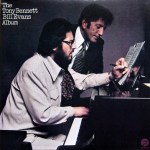
The Tony Bennett / Bill Evans Album – One of the All Time Great Male Vocal Recordings

More of the Music of Bill Evans

More of the Music of Tony Bennett

I would have to say that this album, when heard on the best Hot Stamper pressings, would rank up at the top of the All Time Great Male Vocal Recordings. If you like sophisticated vocal jazz I don’t think you can do much better than this record, especially when it sounds like this. Tony Bennett’s voice sounds wonderfully rich, BREATHY, and above all REAL.

The soundstage is open and spacious, the piano full-bodied and clear, and the vocals have the clarity and fullness missing from most pressings. It’s incredible to hear these two top-notch musicians interacting and responding to each other in this kind of huge, open and natural space.

The Acoustic

This is a studio recording in a fairly dead acoustic, worlds away from the echo-drenched sound of his Columbia releases, so for practically the first time on record you can really hear the man’s voice, not the echo chamber they used to process it.

Bill Evans may play the largest piano ever built — it stretches from wall to wall when played over here, not particularly realistic but nothing to get upset over. On the best copies it really has the clarity and heft of the real thing; you can hear the pedal being actuated in the quieter passages if you listen closely. The tonality is also dead on. (A good test for your stereo.)

The overall sound is open, spacious, and tonally correct from top to bottom. It’s a recording with no trace of bad mastering or phony EQ. (I can just imagine what Mobile Fidelity did to make it sound “better” when they remastered it.)

Waltz for Debby is the best thing here. You want to hear the Bennett-Evans Magic? Go right to that track.

(more…)