*Notes from a Shootout

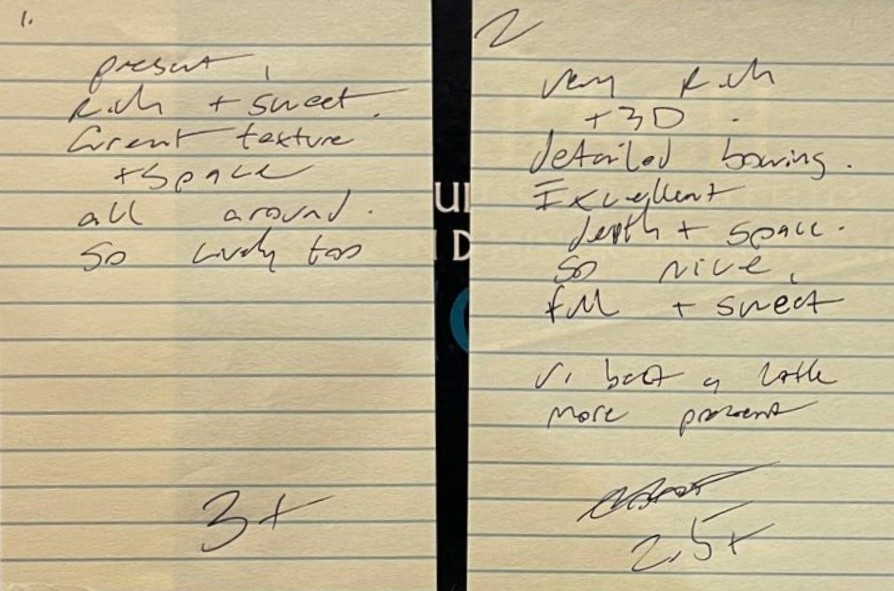
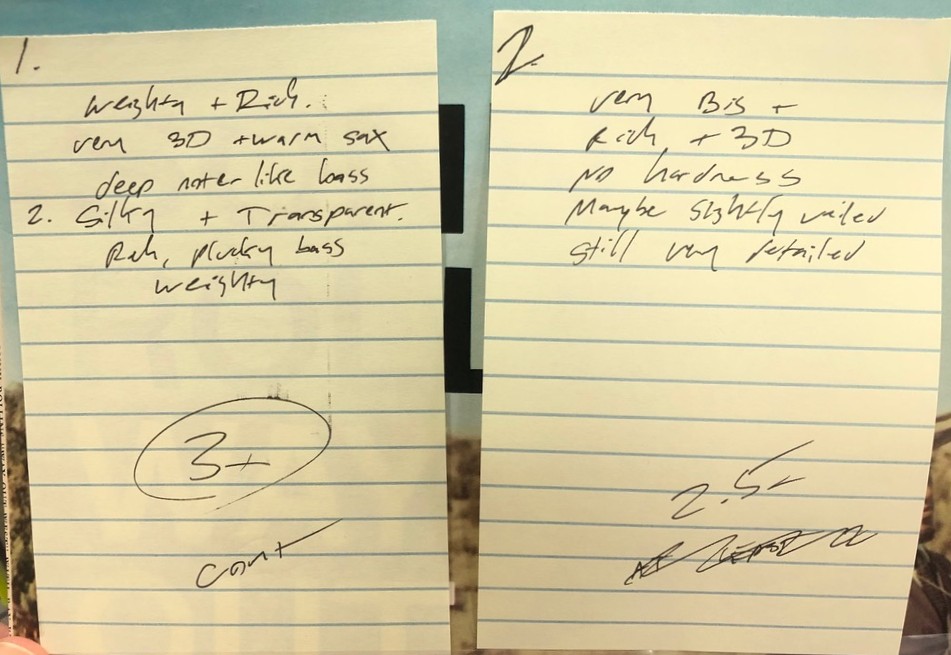
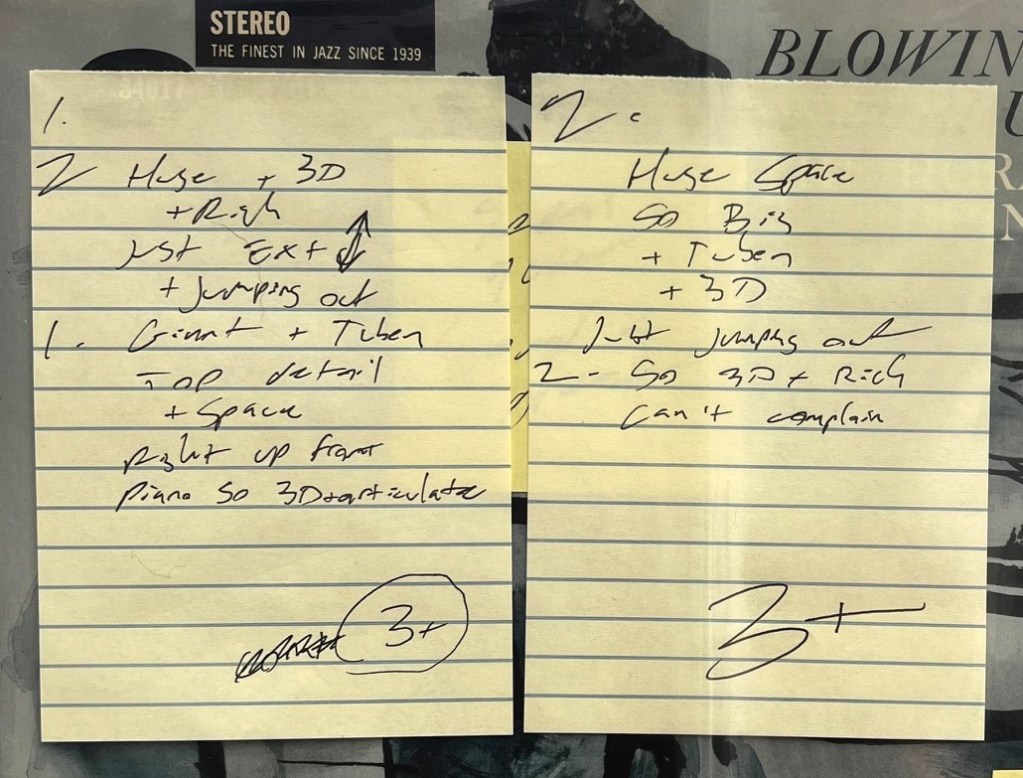
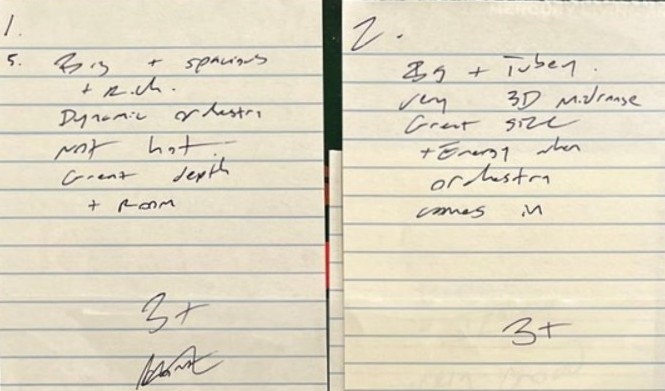
Post-it notes for records that we played in a shootout.

What Is There to Say about Mercury Sound This Good?

Hot Stamper Pressings of Mercury Classical Recordings Available Now

In 2025 we did a shootout for the Mercury you see pictured, SR-90437, having collected a large number of copies with a wide range of stampers, which of course is always the best approach when doing a shootout for the first time. (Once you have a couple under your belt you naturally can start to focus on the pressings that do well and avoid the ones that do badly.)

In our review for the White Hot Stamper shootout winner, we wrote:

Dorati and the LSO’s dynamic performance of these 16 Hungarian Dances debuts on the site with INSANELY GOOD Shootout Winning Triple Plus (A+++) sound throughout this early Mercury pressing.

These sides are doing everything right – they’re rich, clear, undistorted, open, spacious, and have depth and transparency to rival the best recordings you may have heard. You’d be hard-pressed to find a copy that’s this well balanced, yet big and lively, with such wonderful clarity in the mids and highs.

Some of the above may sound familiar. We say these sorts of things and use these stock phrases to describe many of the amazing sounding records that win our shootouts.

But aren’t these adjectives precisely the ones you should be using when a record is doing everything right? What else could you say about a record that sounds this good?

Our notes are simply the impressions a member of our listening panel wrote down as he critically listened to the record while it was playing.

In this case, his attention eas being drawn to the marvelous qualities a large scale orchestral recording can have when everything is working at the highest levels of fidelity.

With the right playback equipment and lots of practice, you could easily find yourself listening this way and taking the same kind of notes.

(more…)

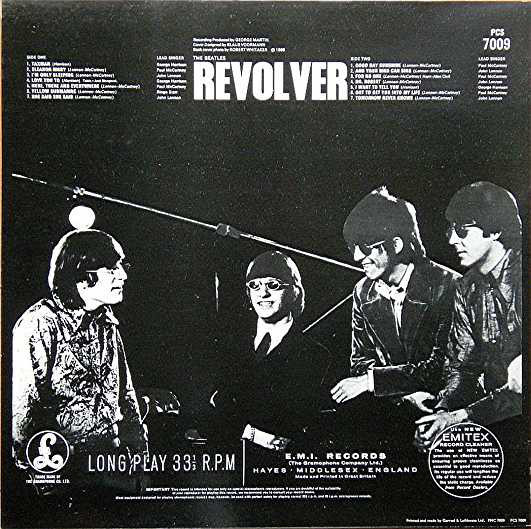
One of Our Best Sounding Pressings of Revolver Lacked Space on One Side

Hot Stamper Pressings of Revolver Available Now

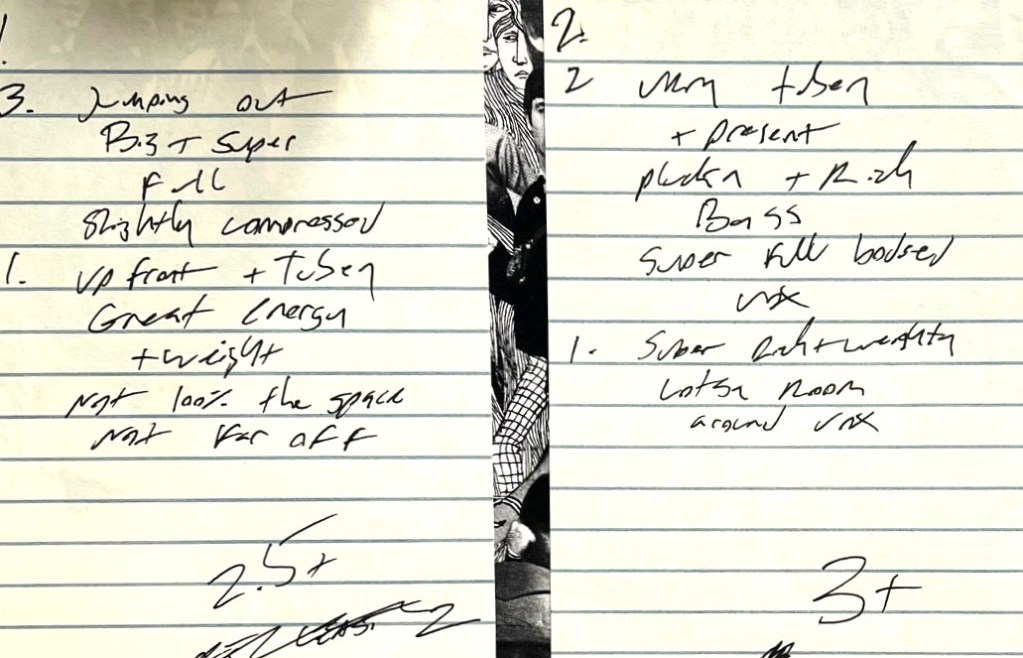
On side one we played I’m Only Sleeping first, followed by Taxman.

On side two we started with And Your Bird Can Sing, followed by Good Day Sunshine.

You may notice that there seems to be a pattern in the way we pick which songs of each side to do first.

As you can see from the notes, side two of our most recent White Hot stamper Shootout Winner was doing everything right.

The second track was very tubey and present. Good Day Sunshine, the first track, was super rich and weighty, with lots of room around the vox. (I hope you can read our writing. If you can’t, just email me and I will try to find the time to transcribe the rest of the text.)

However, we had a side one that was slightly better than the side one you see here.

The Second Round

When we played the two best copies back to back, side two of this copy came out on top, earning a grade of 3+, but the side one of another pressing showed us there was even more space in the recording than we noticed the first time around.

(more…)

How Did We Know Side Two Lacked Weight and Tubey Magic?

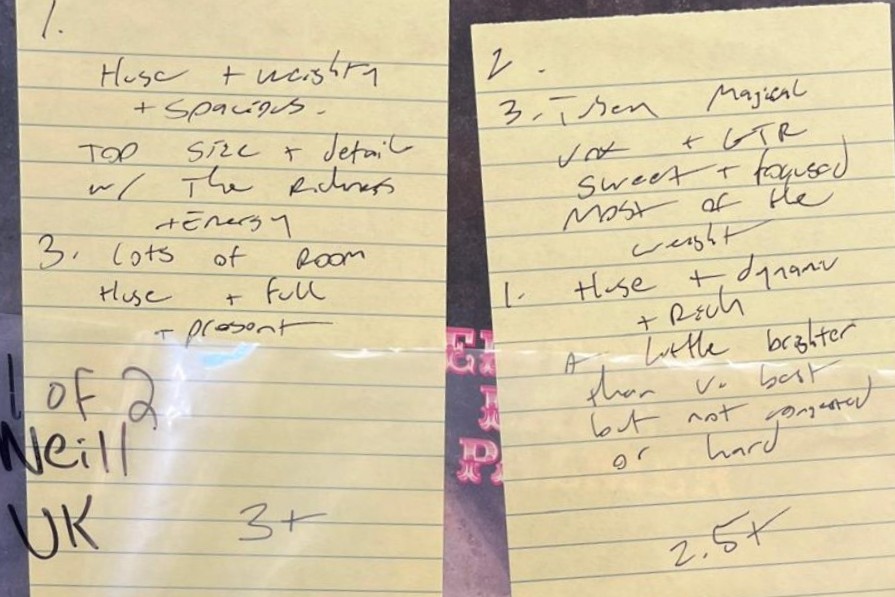
Hearing massive sound coming out of Big Speakers in a Big Soundroom from a Prog Rock blockbuster like this was a thrill our listening panel won’t soon forget. The notes from the listing we put up for ELP’s debut tell the story.

But not the full story, since we rarely mention what was lacking or wrong with the sides that did not earn our top grade of three pluses.

Our notes below will get to that, but first, here is how we described our Shootout Winning UK copy:

Boasting KILLER Shootout Winning Triple Plus (A+++) sound or close to it throughout, this UK Island Pink Rim pressing makes the case that ELP’s debut is clearly one of the most powerful rock records ever made.

Spacious, rich and dynamic, with big bass and tremendous energy – these are just some of the things we love about Eddie Offord’s engineering work on this band’s albums.

Analog at its Tubey Magical finest – you’ll never play a CD (or any other digitally sourced material) that sounds as good as this record as long as you live.

Side one was awesome in every respect, and the way we know that is we played a bunch of copies and nothing could beat it. This side one took top honors for having exactly the sound we described above.

Side two is another matter. We came across a side two that was slightly better than the side two you see here.
When we played the two best copies back to back, side one of this copy came out on top, earning a grade of 3+. However, the side two of another pressing showed us there was even more weight to be heard in the recording than we’d noticed the first time around. Also, it turns out that this side two was a little bright compared to the very best.

When comparing your own pressings of the album, consider listening for these qualities yourself.

(more…)

Hey, Maybe Rudy Van Gelder IS as Bad a Mastering Engineer as They Say

Hot Stamper Pressings of Recordings by Rudy Van Gelder Available Now
It’s certainly a proposition worth considering, mostly because so many audiophiles seem to believe it. Or maybe in spite of their believing it, skeptics such as myself being the troublemakers they always are.

So let’s dig down into the dirt of a record that Rudy both recorded and mastered.

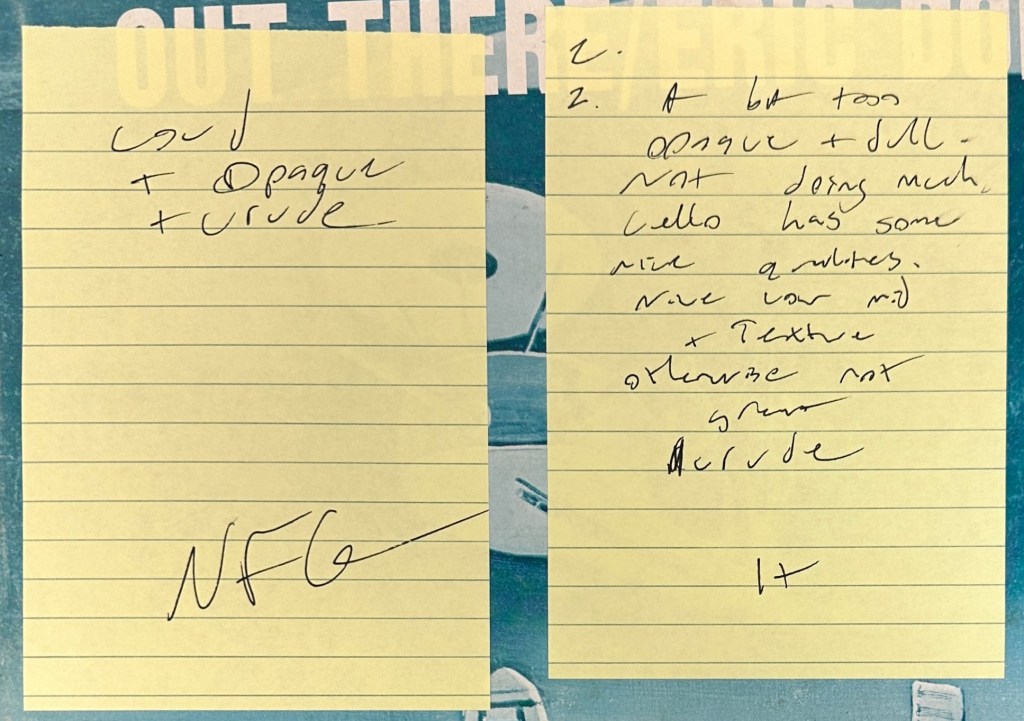
None of the Rudy Van Gelder cuttings we played of Eric Dolphy’s 1961 release of Out There were better than passable, and some had sides that were downright awful sounding, as you can plainly see from our notes.

The copies that won our most recent shootout were mastered by George Horn, and the best of them sound amazing. Here are some comments we made for the album years back as well as the Allmusic review:

Insanely good sound throughout with both sides earning Shootout Winning Triple Plus (A+++) grades. This copy was doing it all right: rich, full-bodied and Tubey Magical yet still super open and spacious.

“A somber and unusual album by the standards of any style of music, Out There explores Dolphy’s vision in approaching the concept of tonality in a way few others — before, concurrent, or after — have ever envisioned.” – 5 stars

As you will see from our notes, we played some very disappointing early pressings. All the early pressings we had on hand were expensive to acquire, the vintage jazz pressing market being what it is: expensive and full of optimistic record graders of questionable skill. (For these kinds of vintage pressings we probably return 70-80% of what comes our way.)

We have to pay top dollar to get copies that are clean, even on the 60s and 70s reissue labels. Noisy old jazz records are simply not saleable to audiophiles no matter how good they sound.

None of the early copies we played earned grades good enough to bother pursuing, not when there are wonderful sounding vintage reissues from the 80s available. On a more positive note, this being our first shootout for the album in many years, we certainly learned a lot, so let’s just chalk up the losses to the cost of doing business. Our newfound knowledge of the best pressings will continue to pay dividends for years to come now that we know what the right stampers tend to be.

The original recording of Out There was released in 1961 and was not available in stereo until 1969. (Prestige was famous for being an anti-stereo holdout long after everyone else in the jazz world had come to terms with the superiority of two channels over one. Apparently the age-old controversy over mono versus stereo is ongoing, which is why we write about it so often.)

The first record you see pictured below is the mono reissue from 1965, released with a different cover and pressed on the lovely dark blue Prestige label. It, like the stereo reissue below it, was mastered by RVG.

A word to the audiophile types who like to do their own hunting: we rarely buy vintage jazz reissue records from the 60s and 70s that were not mastered by RVG. Their track record is poor, with maybe one winner out of ten, if that.

Back to this mono reissue from 1965. It’s a mess on side one, NFG, with side two being passable at best, earning one plus.

The second record you see, the one with a different cover, is the stereo reissue from 1969, also on the dark blue label and mastered by RVG.

It too is a mess, with side one being good, not great, but side two earning a less-than-Hot Stamper grade of 1+.

Side One

  • Loud and opaque and crude
  • NFG

Side Two

  • A bit too opaque and dull
  • Not doing much
  • Cello (played by Ron Carter no less!) has some qualities
  • Nice lower mids and texture
  • Otherwise not great
  • Crude
  • 1+

(more…)

On Our Top Copy, How Could We Tell that One Side Was Not as Full-Bodied?

Hot Stamper Pressings of the Music of Gordon Lightfoot Available Now

We described a recent Shootout Winning pressing of Summer Side of Life this way:

So transparent, open, and spacious that nuances and subtleties that escaped you before are now front and center.

Everything you want in the sound of a good Folk Rock album is here in abundance.

Tubey Magical acoustic guitar reproduction is superb on the better copies of this recording. Simply phenomenal amounts of Tubey Magic can be heard on every strum, along with richness, body and harmonic coherency that have all but disappeared from modern recordings (and especially from modern remasterings).

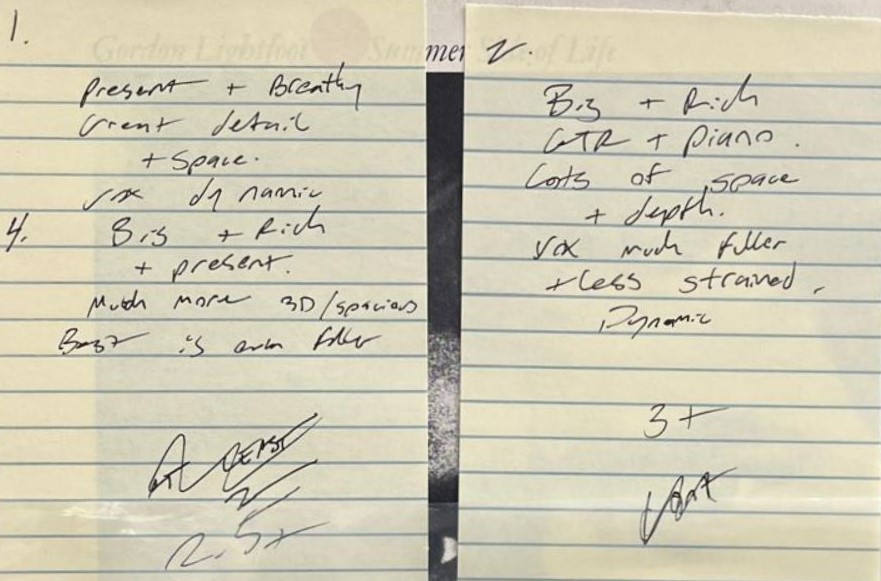
Here are the notes for the 2.5+/3+ copy we put up on the site and sold in 2025.

Side two was killer in every way, and the way we know that is we played a bunch of copies and nothing could beat it. This side two took top honors for having exactly the sound we described above.

(more…)

Living Stereo Sound Like This Is Hard to Beat

Hot Stamper Pressings of Soundtrack Recordings Available Now

Here is the kind of Living Stereo sound we just can’t get enough of.

We certainly never suspected that this old TAS list warhorse from 1962 could sound the way this early pressing did when it landed on our turntable recently. We’ve been auditioning copies of Hatari for close to forty years. Now it sound like this? Amazing.

Until we played this Shootout Winning copy, we’d never heard the phenomenal amounts of ambience that surrounds the big room full of musicians assembled here, ambience which is clearly audible on the drums which play such an important part in Mancini’s arrangements.

If you’re a fan of big drums in a big room, this is the record for you.

Hearing this album sound the way this copy did was a real thrill, as our notes should make clear:

The notes for side one read:

Track Two

Spacious and Rich

Extended top end

Deep, note-like bass

Track One

Transparent, wide and spacious

Powerful brass, not hot

The notes for track three on side two read:

Lively, jumping out

Present and spacious

(more…)

On A Day at the Races, Which Side Lacked Space?

Hot Stamper Pressings of the Music of Queen Available Now

We described our 2025 White Hot Shootout Winner this way:

Here are just a few of the things we had to say about this incredible copy in our notes: “tubey and silky vox”…”very transparent and present”…”3D and sweet and tubey”…”big bass!” (side two)…”very full bodied and 3D.”

We shot out a number of other imports and the midrange presence, bass, and dynamics on this outstanding copy placed it well above almost all the other pressings we played.

As you can see from the notes, side one was killer in every respect, and the way we know that with a high degree of certainty is that we played a bunch of copies and nothing could touch it.

Side two was every bit as good in virtually every area, but in the final analysis we determined it fell a bit short in one. We discovered that fact when we came across a side two that was slightly better in one aspect of its sound than the side two you see described in the notes below.

When we played the two best copies back to back, something we do for each side as a final test in every shootout, side one of this copy came out on top, earning a grade of 3+. However, the side two of another pressing showed us there was even more space to be heard surrounding the music than we’d noticed the first time around.

With another copy earning a better grade for having even more space and ambience, we felt the right grade for this side two was 2.5+, Nearly White Hot.

Will the owner of this copy be able to tell?

That seems unlikely. It would be the rare listener indeed who would be able to detect anything missing on this amazingly good side two.

(more…)

Our Top Copy of Broken Barricades Was Amazing Sounding

Hot Stamper Pressings of Art Rock Albums Available Now

Our recent Shootout Winning early UK pressing was described this way:

Looking for some proggy music that falls somewhere between Jethro Tull and Supertramp, with sonic credentials to match the recordings of those two very well-recorded bands? Well, look no further.

This early UK press is full of the Tubey Magic and studio space that makes the band’s recordings the joy they are to play on a heavily-tweaked audiophile rig.

If you’re a Prog Rock or Art Rock fan, this is a classic from 1971 that belongs in your collection. This also just happens to be our pick for the best sounding recording by the band. Others of similar stature can be found here.

And here are the notes that back up everything we had to say about the copy that knocked us out.

We LOVED playing this album, both for the music and the sound. These guys don’t get the respect they deserve among audiophiles, but we’re doing our best to try to change that.

Side one kicks off with the hit track Simple Sister, and you won’t believe how hard it rocks. Some copies are overly clean — they have the kind of clarity you might hope to find, but lacked the richness and fullness that makes ’70s analog so involving. Those “clean” copies simply do not earn very high grades from us. We leave that sound to the Heavy Vinyl and CD crowd; they seem to like it.

Punter and Thomas

John Punter engineered and Chris Thomas produced. They have worked on many of our favorite — and best-sounding – albums by British artists.

(more…)

The Best Pressings of Brothers in Arms Are Not Hard to Recognize

We try to be upfront with our customers that the Hot Stamper pressings of Brothers in Arms on our site have many nice qualities, but some of the best qualities of analog recordings from the 50s, 60s and 70s are not among them.

It would be foolish to pretend otherwise. We want our customers to know what to expect when they buy a modern recording, and, having played copies of this album (as well as Love Over Gold) by the score, we are qualified to tell them what even the best pressings do not do as well as we might like. In a recent listing we introduced one of the best sounding pressings from our last shootout this way:

  • Tonally correct from start to finish, with a solid bottom and fairly natural vocals (for this particular recording of course), here is the sound they were going for in the studio
  • Drop the needle on “So Far Away” – it’s airy, open, and spacious, yet still rich and full-bodied
  • We admit that the sound may be too processed and lacking in Tubey Magic for some
  • When it comes to Tubey Magic, there simply is none — that’s not the sound Neil Dorfsman, the engineer who won the Grammy for this album, was going for
  • We find that the best properly-mastered, properly-pressed copies, when played at good loud levels on our system, give us sound that was wall to wall, floor to ceiling, glorious, powerful and exciting — just not Tubey Magical

The notes you see below catalog the qualities of our 2025 Shootout Winner.

Side One

Track One (So Far Away)

  • Meaty guitar and bass
  • Big, weighty and present

Track Two (Money for Nothing)

  • Wide, full and weighty
  • Lots of punch

Side Two

Track One (Ride Across the River)

  • Tight, deep and weighty [bass]
  • Vocals are sweet and present
  • Most space yet
  • Rich too

Note that the person doing the listening confined himself to what the record was doing right. In the case of this Shootout Winning Top Shelf 3/3 pressing, there really wasn’t any aspect of the sound to find fault with. As far as we were concerned, the record was doing what the record was trying to do, and doing it better than any of the other copies we played, hence the high grades.

If you have five or ten early domestic pressings of Brothers in Arms, you can judge them accurately by limiting yourself to the qualities the best of them have. For any copy you might play, you could ask:

  • How big is it?
  • How weighty is it?
  • How present is it?
  • How wide is the soundstage?
  • How full-bodied is the sound?
  • How punchy is it?
  • How tight, deep and weighty is the bass?
  • How sweet and present are the vocals?
  • How much space does the recording have?
  • How rich is the sound?

If your equipment, room, electricity, etc. are good enough, and your front end is properly set up, all these questions can be answered with relatively little effort. You could even create a checklist of them after playing a few copies and hearing what the best of them did well.

(more…)

How Do the The Mastering Lab Pressings of Sticky Fingers Sound?

Hot Stamper Pressing of the Music of The Rolling Stones Available Now

A listing for an early domestic Hot Stamper pressing for Sticky Fingers will typically be introduced like this:

If you have never heard one of our Hot Stamper pressings of the album, you (probably) cannot begin to appreciate just how amazing the sound is.

A landmark Glyn Johns / Andy Johns recording, our favorite by the Stones, a Top 100 Title (of course) and 5 stars on Allmusic (ditto).

After hearing so much buzz about it, we finally broke down and ordered a German TML pressing about a year ago. Having played scores of phenomenally good sounding copies of the album over the past fifteen or so years, we were very skeptical that anyone could cut the record better than the mastering engineers who inscribed Rolling Stones Records into the dead wax on the early pressings. (I could find no mastering engineers credited.)

Well, the results were not good. As we suspected would be the case, we were not impressed in the least with what The Mastering Lab — one of the greatest independent cutting houses of all time, mind you — had wrought.

Their version is not really even good enough to charge money for. It might have earned a grade of One Plus, just under the threshold for a Hot Stamper that we would put on the site these days. Decent, but not much more than that.

Wait, There’s More

We subsequently learned that it is the British TML pressings that are supposed to be the best.

So we got one of those in, an A3/B4 copy.

Better, but good enough? Barely.

Here are the notes for the copy we played. For those who have trouble reading our writing, I have transcribed the notes as follows:

Side One

Track one:

Weighty, a bit veiled or smeary. Backing vox kinda lost.

Track three:

Very full, rockin’ but not the sparkle/space.

Kinda compressed.

Not as huge.

Side Two

Track two:

Not as rich, clear.

A bit pushy/dry vox.

No real space.

Thick drums

Track one:

This works better.

A bit hard, but full and lively.

This Sound?

Is this the sound audiophiles are raving about?

(more…)