Robert Fine, Engineer – Reviews and Commentaries

An Amazing Recording Held Back by Truly Awful Mercury Mastering

Hot Stamper Mercury Pressings Available Now

This Mercury 35mm recording was released through Philips after they’d bought the Mercury label back in the 60s.

Philips would go on to release the mostly dreadful Golden Import pressings that were made from all the most famous Mercury recordings, but of course they sounded a great deal more like Philips recordings than Mercury recordings once they had been remastered.

Some things never change. Do you like the sound Steve Hoffman brought to the DCC vinyl releases? You can be sure you will get plenty of that sound and very little of any other. We call that My-Fi. Once we learned to recognize it, something we admit took us longer than it should have, we became ardently opposed to it.

If you think that the right way to remaster records is to make them sound more like you want them to sound and less like the scores of vintage pressings sounded before, you and I are clearly in different camps. (One listen to a Hot Stamper pressing may be all that it takes to get you to switch camps.)

This album was recorded by Robert Fine and Wilma Cozart, then mastered by George Piros, all members of the legendary Mercury team, revered by the audiophile cognoscentias as true giants , and with good reason. We count ourselves among Mercury’s biggest fans.

It is instructive to note that the Philips mastering in this case is dramatically superior to the mediocre Mercury mastering by Robert Fine, which may strike you as counterintuitive, but is nonetheless a fact that cannot be denied once you have played a sufficient number of copies of each version, as we have.

(more…)

Balalaika Favorites on Classic Records Is Unpleasantly Hard and Sour

It’s been quite a while since I played the Classic pressing of SR 90310, Balalaika Favorites, but I remember it as unpleasantly hard and sour.

Many of the later Mercury reissues pressed by Columbia had some of that sound, so I was already familiar with it when Classic’s pressing came out in 1998 as part of the just-plain-awful-sounding Mercury series they released.

I suspect I would hear it that way today. Bernie Grundman could cut the bass, the dynamics, and the energy onto the record. Everything else was worse — not just worse, but wrong — 99% of the time.

The fast transients of the plucked strings of the Balalaikas was just way beyond the capabilities of his colored and crude cutting system.

Harmonic extension and midrange delicacy were qualities that practically no Classic Records Heavy Vinyl pressing could claim to have.

Or, to be precise, they claimed to have them, and whether they really believed they did or not, they sure fooled a lot of audiophiles and the reviewers who write for them.

(more…)

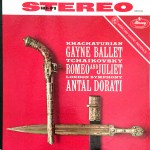
The Gayne Ballet on Mercury Can Be a Little Bright

Hot Stamper Pressings of Classical Masterpieces Available Now

UPDATE 2025

The review you see below was written more than ten years ago.

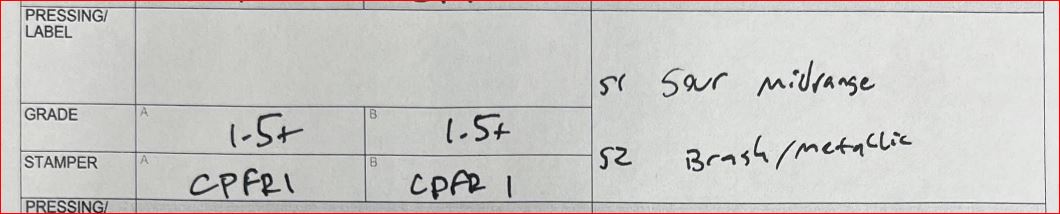
Having just done another shootout for SR 90209, Dorati’s recording of the two works, The Gayne Ballet and Romeo and Juliet, I can now confirm that there are some stampers that are indeed way too bright.

Side one of a recent copy had a sour midrange. Side two of the same copy was brash and metallic.

As for side two not sounding as good as side one in the older review before, seems we clearly got that wrong, the result, to some degree, of having an inadequate sample size.

Also,  we didn’t have as good a stereo as we do now, and we weren’t as good at doing shootouts back then either.


Our Old Review

This side one is truly DEMONSTRATION QUALITY, thanks to its superb low-distortion mastering. It’s yet another exciting Mercury recording. The quiet passages have unusually sweet sound.

This kind of sound is not easy to cut. This copy gets rid of the cutter head distortion and coloration and allows you to hear what the Mercury engineers accomplished.

(more…)

Another Amazing Mercury Dropped from the TAS Super Disc List?

Hot Stamper Pressings of TAS List Records Available Now

We have a preference for Dorati’s work with the London Symphony Orchestra over those he recorded elesewhere. A record like this will show you exactly why.

The Love of Three Oranges (SR 90006) is a killer recording — the kind of orchestral spectacular that is guaranteed to put your stereo through its paces and then some.

If you’re a fan of 20th century orchestral showpieces such as these, Robert Fine and Wilma Cozart have here produced a very special record containing two of the best.

We hope you like your sound big and bold, because that is the sound they were obviously going for, based on the sound we were hearing from the best early pressings.

I have to admit I was not a fan of this album until recently when I finally got my hands on a clean copy with the right stampers and heard the powerful sound of the London Symphony come blasting out of my speakers – what a thrill!

(more…)

Piano Concerto Testing and Inner Groove Distortion

Hot Stamper Pressings of the Music of Rachmaninoff Available Now

The piano is huge and weighty, the strings rich and highly resolving, and the overall presentation is powerful, balanced, dynamic and exciting like few other piano concerto recordings we have ever had the pleasure to audition.

Not only is the sound amazing — yes, it’s on the TAS Super Disc list, and for good reason: a copy as good as this one really is a Super Disc — but this copy has another vitally important characteristic that most copies of the record do not: no inner groove distortion.

We can’t begin to count the times we have had to return (or toss) a copy of one of these expensive Byron Janis records because the piano breakup for the last inch or so of the record was just unbearable. That’s a sound no serious listener could possibly tolerate, yet I would venture to guess that many Mercury piano concerto recordings suffer from this kind of groove damage.

As a matter of grading policy, we check the inner grooves of every record we offer on the site,

The Sound

The sound is rich and natural, with lovely transparency and virtually no smear to the strings, horns or piano. What an amazing recording! What an amazing piece of music.

The recording is explosively dynamic — on the best copies the sound comes jumping out of the speakers. In addition, the brass and strings are full-bodied, with practically no stridency, an unusual feat the Mercury engineers seem to have accomplished while in Russia (and not as often in the states).

Big, rich sound can sometimes present problems for piano recordings. You want to hear the percussive qualities of the instrument, but few copies pull off that trick without sounding thin. This one showed us a piano that was both clear and full-bodied.

With huge amounts of hall space, orchestral weight and performance energy, this is Demo Disc quality sound by any standard. Once the needle has dropped you will quickly forget about the sound (and all the money you paid to get it!) and simply find yourself in the presence of some of the greatest musicians of their generation, captured on one of the greatest analog recordings of all time.

Fine and Cozart

The piano is huge and powerful, yet the percussive and lighter qualities on the instrument are clearly heard in proper relation to the orchestra as a whole.

I simply cannot criticize the work that Fine and Cozart have achieved with this recording, and believe me, there are very few records in this world about which I could not find something to criiticize. After all, it is our job, and we like to set very high standards for the work we do.

Lately we have been writing quite a bit about how good pianos are for testing all aspects of your system, room, tweaks, electricity and the rest, not to mention turntable setup and adjustment.

  • We like our pianos to sound natural (however one chooses to define the term).
  • We like them to be solidly weighted.
  • We like them to be free of smear, a quality that for some reason is rarely mentioned in most audiophile reviews.

Our twenty or so of our favorite piano concerto recordings with top quality sound can be found here.

To read the 50 reviews and commentaries we’ve written for some of the greatest piano concerto recordings ever pressed on vintage vinyl, please click here

(more…)

Orchestral Music Is the Ultimate Test for Proper Turntable-Arm-Cartridge Setup

Hot Stamper Pressings of the Music of Stravinsky Available Now

Dorati’s performance of The Firebird for Mercury is excellent for adjusting tracking weight, VTA, azimuth and the like.

A huge and powerful recording such as The Firebird quickly separates the men from the boys when it comes to the honest recreation of an orchestra performing live in a concert hall.

Recordings of this quality are the reason $10,000+ front ends exist in the first place. Just ask Robert Brook.

You don’t need to spend that kind of money to play this record, but if you do, this might just be the record that will show you what you got for all your hard-earned dough.

Ideally you would want to work your setup magic at home with this record, then take it to a friend’s house and see if the same results could be achieved on his system.

I actually did this sort of thing for years.

Sadly, not so much anymore; nobody I know can play records such as these the way we can.

Playing and critically evaluating records all day, every day, year after year, you get pretty good at it. And the more you do it, the easier it gets.


UPDATE 2025

The above was written about ten years ago. By then I had learned enough to know that all the systems my audio friends owned were woefully inadequate to the proper reproducton of sonic blockbusters such as The Firebird. They simply hadn’t spent the money on their equipment or done the tweaking and tuning work that it takes to play a magnificent recording such as this.

It was about this time that I stopped visiting them. In my experience, mediocre sound is not simply a matter of being less enjoyable than good sound. In fact, I found it to be the opposite of enjoyable. It was frustrating, irritating and unpleasant, and I wanted no part of it. My friends couldn’t hear what was wrong — they had nothing better to compare the sound to. I knew how much better it could sound because I had the killer pressings and the highly-tweaked system that were able to work magic on orchestral spectaculars like The Firebird. (More on that subject here.)

By the way, Robert Brook can get your front end tuned up and working right.

We highly recommend his new service. It might just put you on the path to achieving the next level in audio. (You will definitely struggle to get there with a table, arm and cartridge that aren’t set up with a high degree of precision by a person who knows what they are doing, and Robert has been doing this work for years now.)


Properly set VTA is especially critical on this record, as it is on most classical recordings. The smallest change will dramatically affect the timbre, texture and harmonic information of the strings, as well as all the other instruments of the symphony orchestra of course.

(more…)

A Scheherazade that Lacks Power in the Brass and Richness in the Lower Strings? No Thanks

Hot Stamper Pressings of the Music of Rimsky-Korsakov Available Now

One of the most dynamic Scheherazade‘s on record. The brass really blasts through in this recording. 

Of course the question is how does this recording stack up to the famous Reiner. Well, I’ll tell you.

The Minneapolis Symphony Orchestra is not in the same league with the CSO, that’s well known. Dorati may be every bit as talented as Reiner, but he doesn’t have the players at his disposal capable of pulling off demanding material such as this.

But the orchestra acquits itself well here. The first violinist is quite good. That’s not the problem.

What lets the side down is the Mercury recording team, who fail to adequately present the weight of the orchestra in the lower midrange and below. One thing I noticed recently when playing an original LSC 2446 was how rich and powerful the sound was in the lower strings and in the brass relative to later pressings of the same title and other recordings of the work.

That opening movement of Scheherazade needs power down there and the Mercury simply doesn’t have enough of that power to qualify it as one of the top sounding Mercs.

(more…)

The Thrill of Discovering Great Recordings

Hot Stamper Pressings of Percussion Recordings Available Now

Robert Fine was one of the greatest audio engineers who ever lived. He is the man responsible for recording this audiophile gem for Command, as well as much of the Mercury catalog.

Unfortunately, we rarely have any Command records in stock, but we do make an effort to have a good selection of the most amazing sounding Mercury titles available in the form of Hot Stamper pressings.

If you have the system for it, it’s very possible you have never heard most of these instruments sound this real on any other recording. It’s as if you were standing right in the studio with them. Yes, it’s that crazy good.

Let Me Ask You This

Here’s a question no one seems to be asking:

Who is finding incredible Demo Discs like this Command from 1961 nowadays?

Harry Pearson used to.

Sid Marks reviewed plenty back in the day (reviews which I mostly disagreed with, but still, at least he wrote them).

Jim Mitchell (now long-forgotten) wrote about them back in the 80s.

Moon and Gray published a book full of the best sounding Deccas and Londons.

Anybody else?

Are the audiophile reviewers of today picking up the baton that the giants of the past have dropped at their feet?

I see little evidence of it. [1]

Not to worry. Better Records has taken on the job that no one else seems to want to do. For example, here are 200+ records we’ve discovered with (potentially) excellent sound.

And that’s not all. Not only have we set a higher standard for audiophile-quality records with our vintage vinyl Hot Stamper pressings, but we’ve endeavored to provide a great many other benefits to the audiophile community as well.

(more…)

Hungarian Rhapsodies 1, 4, 5 & 6 – Wait a Minute

Hot Stamper Pressings of Orchestral Spectaculars Available Now

1963 was a phenomenal year for audiophile quality recordings, but this is not one of the better records produced that year. Far from it.

The sound of our vintage Mercury here, SR 90371, was awful. The overall sound was crude and the strings were shrill.

It has been our experience that many Mercury recordings suffer from these shortcomings.

But wait a minute.

Dorati recorded Hungarian Rhapsodies 2 and 3 with the London Symphony for Mercury, and those can sound amazing when you get hold of a good one.

How did they get this one so wrong?

We don’t know, and we doubt anyone else does either.

Like so many realities of the world of records, it’s a mystery, one that is very unlikely to be solved.

One of the best reasons mysteries such as this have little chance of being solved is that no one with any real expertise, using methodologies that are reliable and reproducible in any serious way, is taking on this kind of work — besides us.

We actually like testing records, and we refined* a method for doing it that is as reliable and reproducible as any method can be in the world of audio: the record shootout.

(more…)

Mercury Produced a Truly Awful Collection of Verdi Overtures in 1959

Hot Stamper Classical and Orchestral Pressings Available Now

The sound of this 1959 Mercury release, SR 90156, is terrible. It’s crude and hot like an “old record,” a sound we find on far too many vintage pressings. The world is full of old records that just sound like old records. We’ve suffered through them by the tens of thousands.

Our website, as well as this blog, are devoted to helping audiophiles find pressings that don’t sound anything like the millions of run-of-the-mill LPs that have been stamped out over the last seven decades.

Even a million dollar stereo can’t make the average record sound good, and the more accurate and revealing the system, the more limited and lifeless the average record will show itself to be.

There are quite a number of others that we’ve run into over the years with similar shortcomings. Here they are, broken down by label.

(more…)