brook-remasters

There’s Something Not Quite Right about MoFi’s Blue

Robert Brook has a blog which he calls

A GUIDE FOR THE DEDICATED ANALOG AUDIOPHILE

Below is a link to a review Robert Brook wrote recently for the MoFi One-Step pressing of one of our favorite albums of all time, Joni Mitchell’s Blue, originally released in 1971.

BLUE: What’s the RIGHT SOUND For Joni Mitchell’s CLASSIC?

Blue Sounds Funny Now

Based on everything I am reading these days from Robert Brook, he has a good stereo, two working ears, and knows plenty about records and what they are supposed to sound like.

This was not always the case as he himself would tell you. His stereo used to be much better at hiding the faults of a record like the MoFi One-Step of Blue than the stereo he has now. He got rid of most of his audiophile electronics, got a better phono stage, cartridge and arm, improved the quality of his electricity, found some sophisticated vibration controlling platforms for his vintage gear and did lots of other things to make his playback more accurate and — we cannot stress this too strongly — more fun, more exciting and more involving.

When your stereo is doing a better job of reproducing what’s in the grooves of your records, the first thing you notice when playing a Mobile Fidelity or other Heavy Vinyl pressing is that the sound is funny and wrong. (Please excuse the technical jargon; those of you who have been audiophiles as long as we have will understand what I mean, the rest of you can just play along. All of this will make sense eventually.)

When you use colored-sounding audiophile equipment — but I repeat myself — then your colored-sounding audiophile records don’t sound nearly as colored as they would under other conditions.

For example, other conditions obtain if you have — again, sorry about the jargon — revealing, accurate, tonally correct, natural-sounding equipment, free from the colorations — euphonic and otherwise — that allow one piece of audiophile equipment to sound so different from another.
(more…)

Robert Brook Shoots Out One Flight Up

Hot Stamper Pressings of Blue Note Albums Available Now

We have never heard the Tone Poets pressing that Robert played against the Van Gelder cutting he discusses in the commentary below.

We have one in stock and are just waiting to do the shootout for the album so that we can compare it to the better pressings we know we will find.


UPDATE 2025

We have now played the Tone Poets pressing for ourselves, and if anything, Robert is being too kind!


You may have read that we were knocked out by a killer copy way back in 2007. We expect to be no less knocked out in 2023.

Robert concludes with his take on the strengths and weaknesses of the two pressings. Here is a excerpt:

Overall, the Tone Poet is closed, distant and frankly boring to listen to. Where is the energy of the music? Where is the presence of these musicians? Where is the studio space?

He goes on in much more detail, but this is exactly the kind of sound we hear on one Heavy Vinyl pressing after another. For some reason, none of these shortcomings appears to bother the fans of the label. I get why this guy is missing the boat: he actually thinks a system with five inch woofers can play jazz. What possible excuses could these other people have? [1]

The complete review can be found below. If you are considering following the crowd and buying some of this label’s albums, you might want to take it slow. (Those of you with five inch woofers can charge right ahead. The sonic problems with the Tone Poets releases Robert Brook describes would barely be audible on such a system, so get while the gettin’s good. Just make sure you are never tempted to upgrade to big speakers. You could find yourself in the unfortunate position of needing a new record collection to go along with them. Unlike Tone Poets releases, good records ain’t cheap.)

Dexter Gordon’s ONE FLIGHT UP: One of the Better TONE POETS?

[1] This is rhetorical question. These other folks have no excuses. They have exactly the sound quality they have earned by underutilizing the two most important audio resources they have at their disposal: time and money.

If they have failed to put in enough of either one or both, they have only themselves to blame for letting themselves be fooled by the chalatans currently marketing one meretricious [2] Heavy Vinyl pressing after another.

If they decide to remedy this sad state of affairs, we are more than happy to guide them in the new and exciting direction we’ve pioneered over the course of the last twenty years or so. The advice we give in this commentary would be a good place to start: first get good sound – then you can recognize and acquire good records

For another 60+ pieces of record collecting advice, more than enough to keep anyone busy for months, perhaps years, please click here.
[2] To save you the trouble of looking it up, Merrian-Webster defines meretricious as apparently attractive but having in reality no value or integrity. Used to suggest pretense, insincerity, and cheap or tawdry ornamentation.

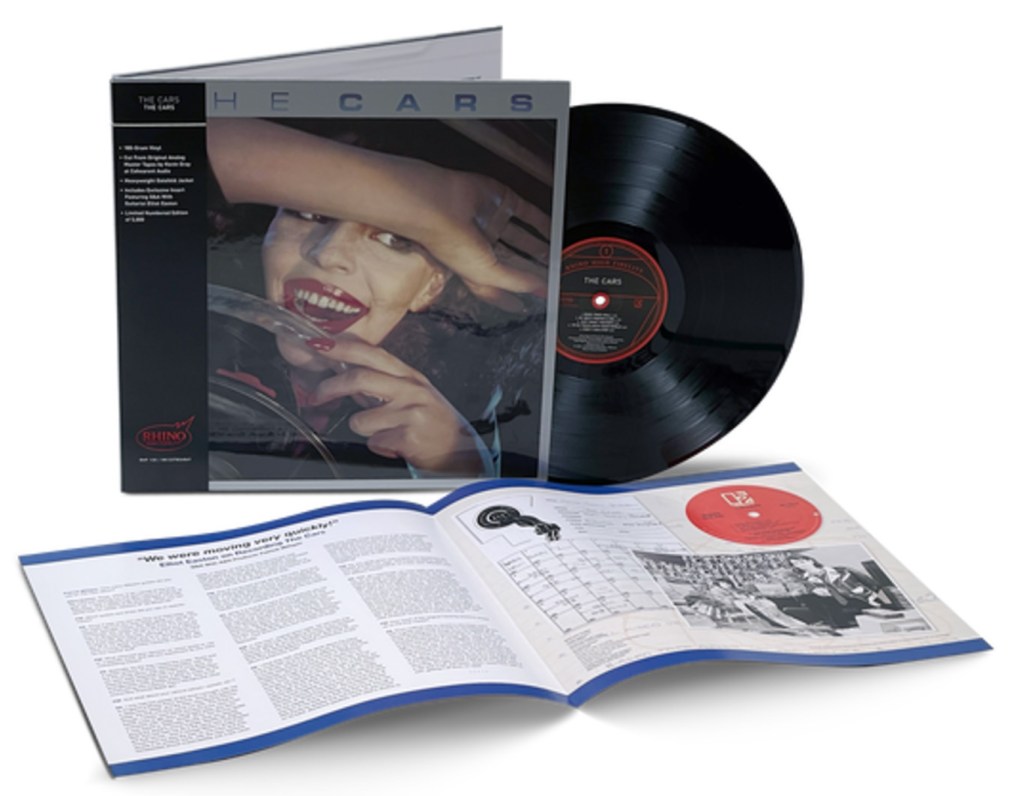
For a deeply meretricious release of recent vintage (OBI strip!, custom booklet!, premium heavy vinyl!, fold-open cover!), see The Cars on Rhino. The only thing left out of the package was a good sounding LP.


Further Reading

(more…)

Robert Brook Hears Something Funny on the MoFi One-Step of B,S&T

Robert Brook has a blog which he calls

A GUIDE FOR THE DEDICATED ANALOG AUDIOPHILE

Below is a link to a review Robert Brook has just written for the MoFi One-Step pressing of one of our favorite albums of all time, BS&T’s second album.

I do not doubt for a minute that it’s every bit as awful as Robert says it is. Probably worse! I made some rather extensive notes in the comments at the end of his review you may find of interest.

Blood, Sweat & Tears: How Do MoFi’s 2 Disc 45 rpm’s STACK UP?

We’ve written quite a bit about the album, played copies of it by the score as a matter of fact, and you can find plenty of our reviews and commentaries for the album on this very blog.

Based on everything I am reading these days from Robert Brook, he has a good stereo, two working ears, and knows plenty about records and what they are supposed to sound like.

(more…)

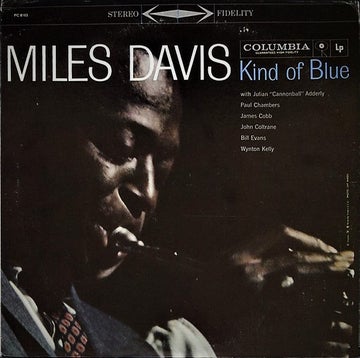
MoFi Misses The Mark by a M I L E with Kind Of Blue

Hot Stamper Pressings of Miles’s Albums Available Now

One of our good customers, Robert Brook, writes a blog which he calls

A GUIDE FOR THE DEDICATED ANALOG AUDIOPHILE

Below is a link to the review he wrote recently for one of our favorite records, Kind of Blue. (To be clear, we love the album, just not the MoFi pressing of it.)

MoFi Misses The Mark by a M I L E w/ Kind Of Blue

One of our other good customers had this to say about the Mobile Fidelity pressing:

Last night I listened to my 2015 Mobile Fidelity 45 RPM pressing.

I couldn’t get through the first cut.

Closed, muffled and flat as a pancake. No life or energy whatsoever.

I agreed and added my two cents:

My notes for their pressing read:

  • Thick, dark, flat.
  • Lacks air, space, presence.
  • Not a bad sound but it’s not right.

Later I added:

Having listened to the record more extensively, I see now I was being much too kind.

A longer review will be coming soon I hope. I think I may know why some audiophiles like the sound of this record, and will be exploring that notion in a future commentary.

The last line about the MoFi not having “a bad sound but it’s not right” reminded me of of the mistakes I made in my original review of Santana’s first album on MoFi: we owe you an apology

Kind of Blue is an album we admit to being obsessed with — just look at the number of commentaries we’ve written about it.

(more…)

Dire Straits Gets the Mobile Fidelity Treatment (Just Updated)

Reviews and Commentaries for Dire Straits’ Debut

More of the Music of Dire Straits

Geoff Edgers watched me and my lovely assistant, Sunshine, do a lengthy shootout for Dire Straits first album, but licensing problems prevented the Washington Post from using the footage. You can still see Sunshine in the video, and the yellow Phonogram label you see at one point is attached to one of the Dire Straits pressings we played that day.

Toward the end of the shootout for the first side, we put on the Mobile Fidelity pressing, and, interrupted from time to time by the sound of howling and gnashing of teeth, I pointed out for Geoff’s edification everything that was wrong with their pressing.

This took some time.

I will be writing more about their dismal effort one of these days, but for now let me leave you with this thought.

When you read the comments section for the article, it seems that quite a number of those discussing my lifelong interest in the world of audio and records go out of their way to state the obvious: that folks my age cannot hear high frequencies.

This is true, and I have never denied it. Case in point: After playing the MoFi pressing of Dire Straits, Sunshine, sitting at the turntable, asked what all that weirdly high-pitched, swirling, shusshing sound was. It wasn’t on the Phonogram pressings she had played. Only the MoFi.

I looked at her and asked “What shusshing sound?”

Sunshine had clearly heard it, Geoff may have, I don’t remember, but I had no idea there was anything untoward happening way up in that area of the frequency range. [1]

In my defense, not that I need one, I had no trouble telling how bad that Mobile Fidelity pressing was, or which of the five Dire Straits pressings sounded the best, or what each of them were doing, good, bad and otherwise.

What I was noting and explaining about the sound of these identical-looking UK pressings, their strengths and weaknesses, was clear enough for everyone in the room to hear over the course of the hour or so we spent doing it.

My goal was to walk Geoff through the steps of the shootout, and as far as I could tell he was with me all the way.

Those commenting about high frequency hearing loss are engaging in the fallacy of “begging the question,” assuming what they are trying to prove instead of proving it, which I suppose is the kind of thing you can expect to read in the comments left by those with a great deal of regard for their own opinions but little for the evidence required to support them. More here.


Robert Brook has a blog which he calls

A GUIDE FOR THE DEDICATED ANALOG AUDIOPHILE

Below you will find his review of a record I too know a fair bit about, the first Dire Straits album on Mobile Fidelity. I hope to write my review of the Mobile Fidelity pressing soon.

Ugh! Mobile Fidelity’s Remaster of DIRE STRAITS

As of 2015, this label may have entered a new and even more disgraceful era, but considering how bad their records have been from the very start — something that should be obvious to any audiophile with a high quality playback system, the kind of system that should have no difficulty exposing the manifold shortcomings of their remastered pressings — how much lower can they possibly fall?

Only time will tell.


[1.] Did Mobile Fidelity’s engineers hear this high-frequency hash? Will any audiophile come forward to expose this problem? The answers to both questions are very likely to be no.

Muddy Waters – Vintage Vinyl Vs the Analogue Productions Remaster

More of the Music of Muddy Waters

One of our good customers has started a blog which he calls

A GUIDE FOR THE BUDDING ANALOG AUDIOPHILE

Below is a link to a comparison Robert Brook carried out between two pressings of Folk Singer.

Muddy Waters’ FOLK SINGER: Analogue Productions Takes On the ’70’s Repress

I have never heard the AP pressing, and have no plans at this time to play one, mostly because not a single one that I have heard on my system was any better than passable.

You can read some of my reviews here: Analogue Productions