Shelly Yakus, Engineer – Reviews and Commentaries

Imagine on Mobile Fidelity from 1984

Hot Stamper Pressings of the Music of John Lennon Available Now

This Jack Hunt-mastered Half Speed has the midrange suckout that Mobile Fidelity was notorious for.

Lennon and his piano on the first track sound like they are coming from another room.

And yet somehow there are still “audiophiles” in this day and age that defend the records put out by this ridiculous label.

Oy vey. What is wrong with these people?

I Have a Theory

Actually, I have a good idea why so many so-called audiophile records have a sucked-out midrange.

A midrange suckout creates depth in a system that has difficulty reproducing depth.

Imagine that instead of having your speakers pulled well out from the back wall as they should be, instead you have placed your speakers right up against the wall.

This arrangement, though preferable aesthetically and dramatically more family- and wife-friendly, has the unfortunate effect of seriously limiting your speakers’ ability to reproduce whatever three-dimensional space exists on your recordings.

I hinted back in 2022 that I was going to discuss this idea down the road, and like most things that I was supposed to write about down the road, we’re still waiting to see it.

The album I was going to write more about was Kind of Blue.

(more…)

Imagine on MoFi Heavy Vinyl from 2003

Hot Stamper Pressings of the Music of John Lennon Available Now

Sonic Grade: B

The last time I played this record was probably in the mid-2000s. Not sure what I would think of it now. Probably not much. Back in those days we thought it was a reasonably good sounding pressing, but it’s doubtful we had ever heard an exceptionally good version of the album, as it would be years before we managed to do our first shootout for it. To see what we have to say about the record now, please click here.

Our review from many years ago:

I played this when it came out, and I have to hand it to the new MOFI, they did a great job with this one. It sounds better than I’ve ever heard it, and KILLS the old MoFi vinyl, which is the version we did the shootout with.

It was a short comparison, as in, no comparison. The earlier MoFi Half Speed (a different master tape, but still…) has that classic MoFi midrange suckout this awful label is famous for, so that Lennon and his piano on the first track sound like they are coming from another room. 

(more…)

In 2014, This Was the Best Sounding Tom Petty Record We’d Ever Played

Hot Stamper Pressings of the Music of Tom Petty Available Now

In 2014 we wrote:

Damn the Torpedoes is the best sounding Tom Petty album we have ever played.

Credit must go to SHELLY YAKUS, someone who we freely admit, now with a sense of embarrassment, has never been one of our favorite engineers.

After hearing this beyond-White Hot Stamper side two and a killer copy of Animal Notes, we realized we’d seriously underestimated the man, and for that we can only apologize.

If your Damn the Torpedoes doesn’t sound good (and it probably doesn’t), you sure can’t blame him — the master tape is mind-boggling in its size, weight, power and rock n’ roll energy.

Our 2014 better than White Hot Stamper copy had the kind of sound we never expected to hear on Damn The Torpedoes, an album that’s typically bright, thin, pinched and transistory — radio friendly but not especially audiophile friendly.

Well folks, all that’s changed, and by “all” I don’t necessarily mean all to include the records themselves. This may very well be a record that sounded gritty and pinched before it was cleaned. And our stereo has come a long way in the last five or ten years, as I hope yours has too.

One sign that you’re making progress in this hobby is that at least some of the records you’ve played recently, records that had never sounded especially good to you before, are now sounding very good indeed.

In our case Damn the Torpedoes is one of those records. It’s the best sounding Tom Petty album we have ever played.

We wrote about another famous rock album that somehow got a whole lot better sounding here. An excerpt:

The recordings don’t change.

Our ability to find, clean and play the pressings made from them does, and that’s what the Hot Stamper revolution is all about.

You have a choice. You can choose to take the standard audiophile approach, which is to buy the record that is supposed to be the best pressing and then just consider the case closed.

You did the right thing, you played by the rules. You bought the pressing you were told to buy, the one you read the reviews about, the one on the list, the one they said was made from the master tape, the one supposedly pressed on the best vinyl, and on and on.

Cross that title off and move on to the next, right?

When — sometimes if but usually when — the sound of the record doesn’t live up to the hype surrounding it, you merely accept the fact that the recording itself must be at fault.

Prepare to allot a fair amount of time to complaining about such an unfortunate state of affairs. “If only they had recorded the album better…” you say to yourself as you toddle off to bed, ending your listening session prematurely, fatigued and frustrated with a record that — for some reason — doesn’t sound as good as you remember.

We did it too, more times than I care to admit.

(more…)

Music from Big Pink on MoFi – Bad Bass Like This Is Just Annoying

Hot Stamper Pressings of Music by The Band Available Now

In 2012 the “new” MoFi put out another remastered Big Pink. Since their track record at this point is, to be honest, abysmal, we have not felt the need to audition it.

It’s very possible, even likely, that they restored some of the bass that’s missing from so many of the originals.

But bad half-speed mastered bass — poorly defined, never very deep and never punchy — is that the kind of bass that would even be desirable?

To us, it is very much a problem. Bad bass is just plain annoying.

Fortunately for all, it is a problem we have to deal with much less often now that we’ve all but stopped playing Half-Speed mastered records.

Here are some other records with exceptionally sloppy bass. If the bass on these records does not sound sloppy, you have your work cut out for you.

Some of our favorite records for testing bass definition can be found here.

Sucked Out Mids

The Doors first album was yet another obvious example of MoFi’s predilection for sucked-out mids. Scooping out the middle of the midrange has the effect of creating an artificial sense of depth where none belongs.

Play any original Bruce Botnick-engineered album by Love or The Doors and you will notice immediately that the vocals are front and center. 

(more…)

We Get It, This Band Is Not For Everyone

Hot Stamper Pressings of Art Rock Records Available Now

To my mind, speaking as both a fan and an audiophile, both the first two Crack the Sky albums succeed brilliantly on every level: production, originality, songwriting, technical virtuosity, musical consistency and, perhaps most importantly for those of you who have managed to make it this far, top quality audiophile sound.

This is simply a great album of adventurous, highly melodic Proggy Arty rock. If you like the well known bands that made the classic albums cited below there’s a very good chance you will like this much less well known band’s second album also. Especially if you have the taste for something different — I know of no other album quite like it. It may have been strongly influenced by many of the 70s Classics of both Prog and Art Rock, but it is stylistically unique.

This is high-production-value rock that pulls out all the stops and then some, with a massive Beatlesque string section, horns, synths, backward guitars and studio effects that rival those of 10cc.

Much like Ambrosia’s debut (another poorly understood band on a small label), such an ambitious project was clearly an effort to make a grand musical statement along the lines of Tumbleweed Connection, Sgt. Pepper, Crime of the Century, Close to the Edge, The Original Soundtrack or Dark Side of the Moon — all albums I suspect this band played countless times in hopes of recreating some of that magic themselves in the studio. I am of the opinion that they succeeded marvelously.

In the 70s I was a huge fan of those albums too. (Still am of course; check out our Top 100 if you don’t believe me. They’re all in there.) I played them more times than I can remember, with Crack The Sky’s albums spending plenty of time — in heavy rotation you could say — on the turntable in those early days.

Fun tip: Listen for the Elton-John-like piano chords on the first track. Can you name that song? (Hint: it’s on Tumbleweed Connection.)

(more…)

Thoughts on MoFi’s Midrange Suckout

Our Favorite Roots Rock Albums with Hot Stampers Available Now

I was already a huge Mobile Fidelity fan in 1982 when they released Music from Big Pink, which, for some strange reason, was an album I knew practically nothing about.

I was 15 when the second album came out and I played that album all the time. For some reason the first album had eluded me. How it managed to do that I cannot understand, not at this late date anyway. A major malfunction on my part to be sure.

At some point in the early 90s I got hold of an early British pressing of the album.

Comparing it to my MoFi, I was shocked to hear the singers in the band so present and clear. Having only played MoFi’s remastered LP, I had never heard them sound like that.

The MoFi had them standing ten feet back.

The Brit put them front and center.

There was no question in my mind which presentation was right.

Around that time I was noticing that many Mobile Fidelity pressings seemed to be finding that same distant-midrange sound, and finding it on wildly different recordings. Recordings from different studios, by different engineers, in different eras.

The midrange suckout effect is easily reproducible in your very own listening room. Pull your speakers farther out into the room and farther apart and you can get that MoFi sound on every record you own. I’ve been hearing it in the various audiophile systems I’ve been exposed to for more than 40 years.

Nowadays I would place it under the general heading of My-Fi, not Hi-Fi. Our one goal for every tweak and upgrade we make is to increase the latter and reduce the former.

And note also that when you play your records too quietly, it creates an artificial sense of depth.

That’s one of the main reasons we play them loud; we want to hear the pressings that have real presence and immediacy, because they’re the ones that are most likely to win our shootouts.

(more…)

What the Best Pressings of Long After Dark Get Right

More of the Music of Tom Petty

Energy and rock and roll rhythmic drive are of course paramount on any Tom Petty album.

Many copies were brighter than ideal, which is nothing new for Petty’s body of work but not the sound we find most pleasing.

Some copies in our shootout were dark and small. We took serious points off for both of these shortcomings.

The climaxes of the songs should be as uncompressed and uncongested as possible to earn our higher grades. When the music gets loud it should stay tonally correct and undistorted, and not all copies can do that, not at the serious levels we like to play our records.

Choruses Are Key

Watch out for too many instruments and voices jammed into too little space in the upper midrange. When the tonality is shifted-up, even slightly, or there is too much compression or distortion, there will be too many upper midrange elements — voices, guitars, drums — vying for space, resulting in congestion and a loss of clarity.

With the more solid-sounding copies, the lower mids are full and rich. Above them, the next “level up” so to speak, there’s plenty of space in which to fit all the instruments and voices comfortably, without piling them on top of one another as so often happens. Consequently, the upper midrange “space” does not get overwhelmed with musical information.

Also watch for edge on the vocals, which is of course related to the issues above. Most copies have at least some edge to the vocals — the band wants to really belt it out in the choruses, and they do — but the best copies keep the edge under control, without sounding compressed, dark, dull, or smeary.

The highest quality equipment, on the hottest Hot Stamper copies, will play the loudest and most difficult-to-reproduce passages with virtually no edge, grit, or grain, even at very loud levels.

(more…)

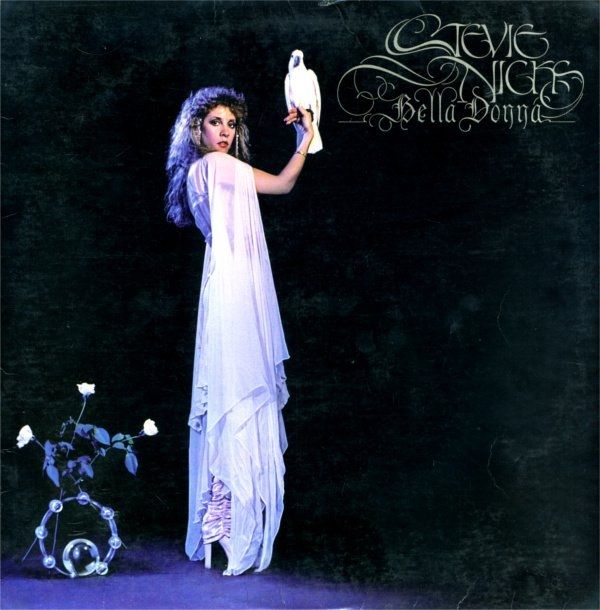
Bella Donna – Speculate Shmeculate

Hot Stamper Pressings of Stevie Nicks’ Music Available Now

The sound of the typical copy can best be summed up in three words: thin, hard and bright.

When the sound is thin or hard or bright, the fun factor of this mainstream rock, at least for us audiophiles, drops to zero.

Stop Draggin’ My Heart Around and Leather And Lace both sound great on the radio, why not on Warners vinyl?

We sure can’t blame Sheffield Labs, the original cutting house: all the copies we played — good, bad and otherwise — were originals and mastered by them.

Could it be the vinyl?

It could. It could be a lot of things, but speculating about them doesn’t really get us or you anywhere, so I’m going to stop doing it and just say we played a big pile of records and heard a lot of unpleasant sound. If you own the record you probably know what I mean.

Our Approach

In order to do the work we do, our approach to audio has to be fundamentally different from that of the audiophile who listens for enjoyment. Critical listening and listening for enjoyment go hand in hand, but they are not the same thing.

The first — developing and applying your critical listening skills — allows you to achieve good audio and find the best pressings of the music you love.

Once you have a good stereo and a good record to play on it, your enjoyment of recorded music should increase dramatically.

A great sounding record on a killer system is a thrill.

A Heavy Vinyl mediocrity, played back on what passes for so many audiophile systems these days — regardless of cost — is, to these ears, an intolerable bore.

If this sounds arrogant and elitist, so be it.

We set a higher standard. Holding our records to that higher standard allows us to price our records commensurate with their superior sound and please the hell out of the people who buy them.

For those who appreciate the difference, and have resources sufficient to afford them, the cost is reasonable. If it were not we would not grown to have a staff of ten doing the work we do. We would have gone out of business years ago. Businesses that do not satisfy the needs of their customers do not stay in business for long.*

Hot Stampers are not cheap. If the price wasn’t more than justified by the better sound quality and quieter surfaces, who in his right mind would buy them? We can’t really be fooling that many audiophiles, can we?

Some folks think the whole Hot Stamper thing is hogwash, a case of mass hysteria, a psychological syndrome that does exist and cannot be ruled out as a possibility. Maybe our customers are as delusional as most forum posters think they are.

Keep in mind that virtually none of the folks who write about us have ever heard one of our records, so that should help you decide how much confidence you should put in whatever explanations they might have to offer.

(more…)

Animal Notes – These Big, Lively Choruses Are a Thrill

Hot Stamper Pressings with Huge Choruses Available Now

The best vintage rock recordings usually have something going for them that few recordings made after the ’70s do: their choruses get big and loud, yet stay smooth, natural and uncongested. 

We’ve mentioned it in countless listings. So many records have — to one degree or another — harsh, hard, gritty, shrill, congested choruses. When the choruses get loud they become unpleasant, and here at Better Records you lose a lot of points when that happens.

This recording, more specifically this pressing of this recording, has exceptionally big, smooth and natural choruses for many of the songs. Rangers at Midnight comes to mind immediately. Credit our man Shelly Yakus below for really getting the choruses right on this album.

Fun tip: Listen for the Elton John-like piano chords on the first track. Can you name that song? (Hint: it’s on Tumbleweed Connection.)

Choruses Are Key

Watch out for too many instruments and voices jammed into too little space in the upper midrange. When the tonality is shifted-up, even slightly, or there is too much compression or distortion, there will be too many upper midrange elements — voices, guitars, drums — vying for space, resulting in congestion and a loss of clarity.

With the more solid sounding copies, the lower mids are full and rich. Above them, the next “level up” so to speak, there’s plenty of space in which to fit all the instruments and voices comfortably, without piling them on top of one another as so often happens. Consequently, the upper midrange “space” does not get overwhelmed with musical information.

Also watch for edge on the vocals, which is of course related to the issues above. Most copies have at least some edge to the vocals — the band wants to really belt it out in the choruses, and they do — but the best copies keep the edge under control, without sounding compressed, dark, dull or smeary.

The highest quality equipment, on the hottest Hot Stamper copies, will play the loudest and most difficult-to-reproduce passages with virtually no edge, grit or grain, even at very loud levels.

(more…)

Shelly Yakus Is One of Our Favorite Engineers

More Recordings Engineered by Shelly Yakus

SHELLY YAKUS is one of our favorite recording and mixing engineers.

Check out the Shelly Yakus engineered or produced albums we have in stock, along with plenty of commentaries about the sound of the records he’s engineered, from Moondance (his first official lead engineering gig) to Twelve Dreams of Dr. Sardonicus and more.

One or two can be found in our Rock and Pop Top 100 List of Best Sounding Albums with the Best Music, limited to titles that we can actually find enough copies of in order to carry out our patent pending (not really) Hot Stamper shootouts.

(more…)