Labels We Love

On This Rachmaninoff Title, the Right Reissues Clearly Have the Best Sound

More of the music of Sergei Rachmaninoff (1873-1943)

Until we heard the right later pressings, we had always been disappointed with this TAS List recording, wondering what all the fuss was about. The original Shaded Dog pressings we had played left a lot to be desired. Like many of the old records we audition, it badly lacked both highs and lows, our definition of boxy sound.

Well, now we know.

The earliest Shaded Dog pressings have consistently worse sound than the reissues we offer.

We never offered the record in Hot Stamper form because we didn’t think the sound of the originals was all that impressive, TAS List or no TAS List.

Mystery solved, and truly Hot Stampers have now been made available to the discriminating audiophile.

Harry’s list, as was so often the case, did not provide the information needed to find the pressing that captured all the qualities of the recording the way this one does.

Did Harry have a good later pressing?

Did he have an original and simply liked it more than we did?

Who knows? Like so much in the world of records, it’s a mystery.

(more…)

Direct Hits – Not Bad on Track, Awful on Classic Heavy Vinyl

More of The Who

This is a very nice looking original Track Black Label British Import LP. As anyone who knows the Who’s back catalog can attest, most of these songs were poorly recorded. Like all compilations, the sound here varies from track to track. Side two definitely has the better sound.

We guarantee that this pressing sounds better than the Classic reissue, which was so bad we never carried it.

(more…)

The Glorious Sound of Tubes in 1963

UPDATE 2026

In 2018 we put up a killer Hot Stamper pressing of Big Band and Quartet and had a few thoughts about the sound of the best copies we played.


On this record, more than most, the tubes potentially make all the difference. 

Keep in mind that we are referring specifically to 1963 tubes, not the stuff that engineers are using today to make so-called “tube-mastered” records.

Today’s modern records barely hint at the Tubey Magical sound of a record like this, if our experience with hundreds of them is any guide. We, unlike so many of the audiophile reviewers of today, have a very hard time taking any of the new pressings seriously. We think our position is pretty clear, and we have yet to hear more than a stray record or two that would make us want to change our minds.

If you’ve ever heard a pressing that sounds as good as this one, you know there hasn’t been a record manufactured in the last forty years that has this kind of sound.

Right, wrong or otherwise, this sound is simply not part of the modern world we live in.

[Well, not quite, but close.]

(more…)

Three Copies of Harold in Italy and Still No Luck

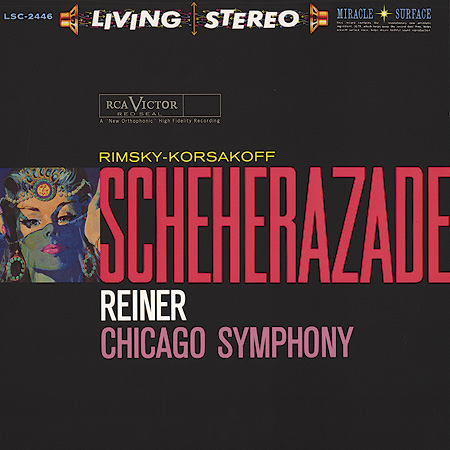
Hot Stamper Pressings of Living Stereo Titles Available Now

For a Living Stereo record from the Golden Age of All Tube recording, especially one from the late-50s, you might expect that the better Shaded Dog pressings would have exceptionally rich, natural sound.

After all, 1958 is clearly one of the great years for analog recordings, as evidenced by this amazing group of albums, all recorded or released in that year.

Unfortunately, the pressings we played of the Berlioz album you see pictured were quite a letdown. We dropped the needle on three different early copies of LSC 2228 with three different sets of stampers and found that none of them were all that impressive, as can be seen from our notes:

  • First: tubey but pretty hot, just okay. (6s/3s)
  • Second: smeary and congested, not great. (4s/4s)
  • Third: tubey but smeary (3s/1s)

We guessed that their final grades after a shootout would probably fall into the range of 1+ or so, just below the cutoff for a minimal Hot Stamper grade (1.5+).

If we’d half a dozen or more to play, some copies would probably be a bit better, some would be a bit worse, but the bulk of them would end up having sound that was merely passable, even after a good cleaning. (Without a good cleaning some might not even earn that single plus.)

For now we’re throwing in the towel and moving on to Golden Age records with better prospects.

(more…)

David Turner Was Taking Care Of Business in 1978

Hot Stamper Pressings of the Music of Sonny Rollins Available Now

The complete Tenor Madness album is found here, with big, full-bodied, MONO jazz sound at its best, courtesy of the great one, Rudy Van Gelder.

This is what classic 50s jazz is supposed to sound like – they knew how to do these kinds of records forty years ago. Those mastering skills are in short supply nowadays, if not downright extinct.

The transfers from 1978 by David Turner are in tune with the sound of these recordings – there’s not a trace of phony EQ on this entire record.

This Two-Fer includes all of Tenor Madness and most of Work Time and Tour De Force.

Top jazz players such as Ray Bryant, John Coltrane, Red Garland, Kenny Drew, Max Roach and Paul Chambers can be heard on the album.

If you want all the Tubey Magic of the earlier pressings, a top quality pressing of the real Tenor Madness album on Prestige might give you more of that sound.

David Turner’s mastering setup in the 70s has a healthy dose of Tubey Magic, but it can’t compete in that area with the All Tube cutting chains that were making records in the ’50s and ’60s.  Without one of those early pressings around to compare, we don’t think you’re going to feel you are missing out on anything in the sound with best copies.

And where can you find an early Prestige pressing with audiophile playing surfaces like these?   (more…)

The Yellow Submarine Songtrack Did Not Float My Boat

Last year a customer wrote to tell me how much he liked the sound of his 2004 Japanese DMM pressing of the Yellow Submarine Songtrack.

After looking into the background of this album, we saw right from the start that it had three strikes against it.

First off, we rarely like Japanese pressings outside of those that were recorded in Japan, such as the direct to disc jazz and classical records we’ve done shootouts for. Other Japanese pressings we like were recorded in the states for the Japanese market: the jazz direct to discs on East Wind come to mind.

Secondly, we avoid DMM pressings whenever possible. They often add what seems to us like digital artifacts to the sound.

And lastly, we rarely like modern remixes, especially modern remixes that obviously use digital processes of various kinds. The remixed Abbey Road is a complete disaster. Nothing that comes out of Abbey Road these days should be expected to sound good. Their work is a disgrace.

So rather than buy the Japanese-pressed version of the album, we cheaped out and just bought a UK one for half the price.

We half-expected the worst and that’s pretty much what we found.

I used to sell this very version of the album back in 1999 when it came out. I thought it sounded just fine.

That was about twenty years ago. My all tube system was darker and dramatically less resolving than the one I have now.

Scores of improvements have been made since then to every aspect of analog reproduction, something we discuss endlessly on this blog.

(more…)

Blind Faith – Self-Titled

More of the Music of Eric Clapton

  • The band’s debut LP, here with solid Double Plus (A++) grades throughout this original UK Polydor pressing
  • From the moment we dropped the needle and heard all that fluffy, correct-sounding tape hiss, we knew we were in for a treat – the sound on both sides is punchy, open, spacious, big, bold, and alive!
  • If you doubt this record can sound as good as you remember from back in the day, assuming you are an old goat like me, this pressing will be a revelation
  • There are some bad marks (as is sometimes the nature of the beast with these Classic Rock records) on “Had to Cry Today,” but once you hear just how excellent sounding this copy is, you might be inclined, as we were, to stop counting ticks and just be swept away by the music
  • 4 stars: “Blind Faith’s first and last album, more than 30 years old [make that 57 years old] and counting, remains one of the jewels of the Eric Clapton, Steve Winwood, and Ginger Baker catalogs. . . it merges the soulful blues of the former with the heavy riffing and outsized song lengths of the latter for a very compelling sound unique to this band.”
  • If you’re a Classic Rock fan, this band’s debut from 1969 is an absolute Must Own, especially when it sounds as good as this copy does

Here is the Blind Faith you’ve been waiting for: Tubey Magical, transparent, full of life and energy — dear friends, it’s all here.

Sick of buying one harsh, thin, distorted, veiled, closed-in, smeary LP after another in a vain attempt to find a copy that reminds you of why you loved this record so much when it came out back in 1969?

(more…)

Falla / Three-Cornered Hat / Argenta

Hot Stamper Pressings of the Music of Falla Available Now

In our review from 2010, we wrote:

Falla’s Three Cornered Hat is positively WONDERFUL on this copy (A++), and the Sinfonia Sevillana by Turina on side two is every bit as good. The second suite on side one is particularly lovely — check out how rich and full the sound is.

Side two has a HUGE soundstage, as wide as they come. The sound is very rich and full of audiophile colors — this is the kind of record that you’re going to love playing for your audio pals!  

Argenta brings the authentic Spanish flavor out in these works. Like so many audiophile reviewers have over the years, you may find these performances definitive.

The strings on the first side are a bit dry to start, like the sound many of you will recognize from Mercury’s classical records. Still, there’s much to like about the sound and you’ll have a very hard time finding a copy that’s any better. Most pressings do not have such an extended top end, and that quality here really brings this music to life.


UPDATE 2025

We played a copy of CS 6050 not long ago and were not at all pleased with the sound. You can read more about it here.

An orchestral record with dry strings? Not our idea of good sound.

But who else reviewing records these days even notices these kinds of things?

The De Burgos performance for EMI in 1964 and the Ansermet for Decca from 1961 (CS 6224) are both better recordings and our two current favorites, with the Ansermet getting the nod due to its wonderful energy and exciting performance.

There are about 150 orchestral recordings we think offer the best performances with the highest quality sound. Both are  deserving of a place on that list.

(more…)

Making More Progress in Audio

Hot Stamper Pressings of Living Stereo Titles Available Now

The story of our recent shootout is what progress in audio in all about. As your stereo improves, some records should get better, some should get worse. It’s the nature of the beast for those of us who constantly make improvements to our playback and critically listen to records all day.

Courtesy of countless revolutions in audio. (In other words, this list is far from complete.)

In our previous listings we noted:

This is one of those odd records in which the variation in sound quality from track to track is dramatic. Take the first two tracks on side one — they suck. They sound like your average LSP Mancini album, the kind I have suffered through far too many times. And that means bad bad bad. 

But track three boasts DEMO DISC QUALITY SOUND and the next one is nearly as good. Listen to that wonderful glockenspiel. It sound every bit as magical as anything on Bang, Baa-room and Harp, and that’s some pretty magical sound in my book!

Same thing happens on side two. Bad sound for the first tracks, then track four sounds great, followed by a pretty good five and a lovely six with a chorus of voices to die for. Go figure.

Is there a copy that sounds good from start to finish? Doubtful.

We’ve made a dozen or more improvements to the system since we last did this shootout, and I’m happy to report that most of the tracks we had trouble with in the past are now sounding very good indeed. Of course the better tracks we noted from years ago are even better, making this a consistently good sounding Mancini record.

One obvious change from the old days is that we now spend a fair amount of time honing in the VTA for every title. That may account for the fact that the first track on side one, which used to be problematical, now sounds wonderful. The value of getting the correct VTA setting — by ear, for every record — cannot be overestimated in our opinion.

(more…)

Deep Purple – In Rock

  • Both sides of this early UK pressing have stunning sound for the band’s 1970 Classic, earning Shootout Winning Triple Plus (A+++) grades or close to them
  • Only the Brit Harvest LPs such as this one seem to be made from the actual master tape, and it sure ain’t hard to hear the difference that mastering from a fresh, real master tape makes
  • In our experience, these import pressings are the only way to hear the band with the big, rich, Tubey Magical sound they’re famous for
  • Marks in the vinyl are sometimes the nature of the beast with these Classic Rock records – there simply is no way around them if the superior sound of vintage analog is important to you
  • 4 1/2 stars: “Deep Purple’s soon to be classic Mark II version made its proper debut and established the sonic blueprint that would immortalize this lineup of the band on 1970’s awesome In Rock.”
  • If you’re a fan of the band, this classic from 1970 belongs in your collection.
  • We think 1970 was one of the greatest years ever for popular music, and you will be pleased to know that we have compiled a handy list of Must Own Albums from 1970 to celebrate our love for these wonderful releases

The best pressings give you exactly what you want from this brand of straight ahead rock and roll: presence in the vocals; solid, note-like bass; big punchy drums, and the kind of live-in-the-studio energetic, clean and clear sound. (AC/DC is another band with that kind of live studio sound. With big speakers and the power to drive them YOU ARE THERE.) (more…)