guarajazzi

Jazz Impressions of Black Orpheus Is a Bloated Mess at 45 RPM from Hoffman, Gray and Kassem

Hot Stamper Pressings of Jazz Piano Recordings Available Now

We played an amazing Hot stamper copy that got the bottom end on this album as right as we’ve ever heard. The contribution of the bass player was clear and correctly balanced in the mix, which we soon learned to appreciate was fundamentally important to the rhythmic drive of the music.

The bass was so tight and note-like you could see right into the soundstage and practically picture Monte Budwig plucking and bowing away.

This is precisely where the 45 RPM pressing goes off the rails.

The bloated, much-too-heavy and poorly-defined bass of the Heavy Vinyl remaster makes a mess of the Brazilian and African rhythms inherent in the music. If you own that $50 waste of money, believe me, you will not be tapping your foot to Cast Your Fate to the Wind or Manha de Carnival.

Our rule of thumb: he better the system, the more second-rate Hoffman’s remastered records will sound when they aren’t just terrible.

Is this the worst version of the album ever made? That’s hard to say.

But it is the worst sounding version of the album we’ve ever played, and that should be good enough for any audiophile contemplating spending money on this kind of trash. Take our advice and don’t do it.
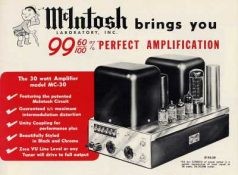
If you like the sound of old McIntosh tube equipment like the Mac 30s shown here, a sound Steve Hoffman apparently cannot get enough of, these remastered records have your name all over them.

We don’t sell junk like this, but every other audiophile record dealer does, because most of the current group of mastering engineers making records for audiophiles have somehow gotten into their heads that this is the way records should sound.

We’ve been telling them they are wrong about that for years now, that good records have never sounded this way, but the collectors and audiophiles of the world keep buying their wares, so why should they listen to us?

If you want to know what a properly-mastered, properly-pressed copy sounds like, we put the last one up in 2023.

(more…)

Keeping the Players Together on Jazz Impressions of Black Orpheus

guarajazzi_wtlf_1406113104

Hot Stamper Pressings of Jazz Recordings Featuring the Piano

Another in our series of listening exercises here discussing the importance of transparency, ambience and resolution.

The arrangement of the players is straightforward, with the bass hard left, drums hard right (with leakage well to the left on the cymbals, but that’s another story), and Guaraldi on piano in the center. (The first track of side two reverses this arrangement; why, I have no idea.)

Here’s the crazy thing about this recording: The best copies really connect up — tie together — the space each of the players is in. I heard it during the shootout, and I can’t recall if it actually happened more than once or twice, but I know I heard it. They are all live, they are all on the same soundstage, but on most copies you would hardly know it.

They sound like they are playing in booths, the ambience never extending very far in any direction. The best copies have so much ambience that one player’s space extends all the way to the edge of the other player’s space. The effect, though rare, is nothing less than magical.

The piano is solid, mostly clear and not hard. Not many copies present the piano this way — correctly in other words. The amazing snare of Colin Bailey in the right channel is LIVELY and fun like you’ve never heard before.

There is no sacrifice in fullness, richness or Tubey Magic in the presentation, and that is the right sound for this music.

No Breakup on the Piano

I would be willing to bet that 90% or more of all the early pressings still in playable condition have some breakup on the piano. The old arms and carts of the day simply could not track the groove the way modern arms and carts can, and ended up damaging the record.

We are happy to report that this copy has no breakup on the piano at all.

The best copies bring out the contribution of the bass player better, the bass being essential to the rhythm of the music. On some, the bass is so tight and note-like you can see right into the soundstage and practically watch Monte Budwig play.


Further Reading

Vince Guaraldi – Jazz Impressions of Black Orpheus

Reviews and Commentaries for Vince Guaraldi

More Jazz Recordings Featuring the Piano

    • An outstanding copy of this classic audiophile favorite with Double Plus (A++) sound from first note to last – fairly quiet for a vintage vinyl pressing on Fantasy Deep Groove vinyl too
    • You’d be hard-pressed to find a copy that’s this well balanced, yet big and lively, with such wonderful clarity in the mids and highs
    • Sublime, practically magical jazz trio sound (and music!) that belongs in every audiophile’s collection
    • If you made the mistake of buying any pressing made in the last forty years, on any label, here is your chance to finally hear this wonderful music sound the way it was meant to
    • And if this strikes you as too much money to spend on the album, don’t buy an LP, buy Hoffmann’s Gold CD, it’s wonderful
    • 5 stars: “Here is Vince Guaraldi’s breakthrough album — musically, commercially, in every which way… The whole album evokes the ambience of San Francisco’s jazz life in the 1960s as few others do.”
    • It’s hard to imagine that any list of the Best Jazz Albums of 1962 would not have this record on it

This album checks off a number of important boxes for us here at Better Records:

    1. It’s a Jazz Demo Disc (on the right stereo pressings)
    2. It’s the best sounding Vince Guaraldi album we know of
    3. It’s a jazz Masterpiece, and, lastly,
    4. It’s a personal favorite of yours truly

Great energy for this jazz classic. This quality cannot be emphasized enough — it’s critically important to the music.

The best copies really get the bottom right. They bring out the contribution of the bass player better, the bass being essential to the rhythm of the music. On these pressings, the bass is so tight and note-like, you can see right into the soundstage and practically watch Monte Budwig play.

This is precisely where the 45 RPM pressing goes off the rails. The bloated, much-too-heavy and poorly-defined bass of the Heavy Vinyl remaster makes a mess of the Brazillian and African rhythms inherent in the music. If you own that $50 waste of money, believe me, you will not be tapping your foot to “Cast Your Fate to the Wind” or “Manha de Carnival.”

If you happen to have a friend with that title in his collection, ask to take a peek at it. I’ll bet it’s pristine. Bad records don’t get played much. Some audiophiles have complained that we spend too much time bashing Heavy Vinyl, but if ever a record deserved it, it’s that one. It’s a failure as a remastering and an insult to the analog buying audiophile public at large. Searching the web, I am glad to see that no one seems to have anything nice to say about it, as of this writing. No one should, but that has not deterred the reviewers and forum posters in the past.

The piano is solid, mostly clear and not hard. Not many copies present the piano this way — correctly in other words. The amazing snare of Colin Bailey in the right channel is LIVELY and fun like you’ve never heard before.

There is no sacrifice in fullness, richness or Tubey Magic in the presentation, and that is the right sound for this music.

(more…)