Mercury (Orchestral) – Reviews, Commentaries, Letters, etc.

Paris 1917-1938 – Side One Versus Side Two

Hot Stamper Pressings of Mercury Living Presence Records Available Now

UPDATE 2025

This listing was written all the way back in 2012 for the first Hot Stamper pressing of SR 90435 we’d ever listed as a Hot Stamper.

Note that it only had one good side, and even that side had a serious problem.

Thirteen years later in 2025 we would do a real shootout for this wonderful recording and learn something very few audiophiles know to this day — that the best stampers and the worst stampers are sometimes the same stampers.


Our 2012 Review

Super Hot Stamper sound for Eric Satie’s wonderfully eccentric Parade (and the Auric piece as well) can be found on this rare original promo copy of Mercury SR 90435, a record that was previously on the TAS List if I’m not mistaken.

It certainly deserves to be. The sound is BIG and OPEN, and like so many Mercury recordings with the London Symphony, it’s rich and full-bodied, not thin and nasally as is so often the case with their domestically recorded releases. Above all the sound is transparent, lively and dynamic.

In many ways this album would certainly serve quite well as an audiophile Demo Disc: the timbre of the wide array of instruments used is (mostly) Right On The Money.

Check out the lengthy and humorous producer’s notes for the sessions below. And people think The Beatles discovered experimental sounds in the studio.

The Brass Lacked Weight

With one small exception: the brass doesn’t have all the weight of the real thing, and for that we have deducted one plus from our top grade of three.

Side one has classic bad Mercury sound.

So screechy, hard and thin. How many audiophiles own records like this and don’t know that the sound of one side is awful and the other brilliant?

Since so few have ever commented publicly about such matters — and even supposedly knowledgeable audiophile reviewers never bother to even bring up the subject of one side versus the other — one must conclude that this is a subject that has yet to pierce the consciousness of most of our audiophile brethren, especially the ones who haven’t yet discovered this site.

Now’s a good time to start. Dig in, you may be surprised by what you find.

(more…)

An Amazing Recording Held Back by Truly Awful Mercury Mastering

Hot Stamper Mercury Pressings Available Now

This Mercury 35mm recording was released through Philips after they’d bought the Mercury label back in the 60s.

Philips would go on to release the mostly dreadful Golden Import pressings that were made from all the most famous Mercury recordings, but of course they sounded a great deal more like Philips recordings than Mercury recordings once they had been remastered.

Some things never change. Do you like the sound Steve Hoffman brought to the DCC vinyl releases? You can be sure you will get plenty of that sound and very little of any other. We call that My-Fi. Once we learned to recognize it, something we admit took us longer than it should have, we became ardently opposed to it.

If you think that the right way to remaster records is to make them sound more like you want them to sound and less like the scores of vintage pressings sounded before, you and I are clearly in different camps. (One listen to a Hot Stamper pressing may be all that it takes to get you to switch camps.)

This album was recorded by Robert Fine and Wilma Cozart, then mastered by George Piros, all members of the legendary Mercury team, revered by the audiophile cognoscentias as true giants , and with good reason. We count ourselves among Mercury’s biggest fans.

It is instructive to note that the Philips mastering in this case is dramatically superior to the mediocre Mercury mastering by Robert Fine, which may strike you as counterintuitive, but is nonetheless a fact that cannot be denied once you have played a sufficient number of copies of each version, as we have.

(more…)

What Is There to Say about Mercury Sound This Good?

Hot Stamper Pressings of Mercury Classical Recordings Available Now
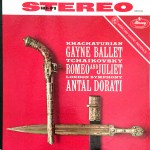
In 2025 we did a shootout for the Mercury you see pictured, SR-90437, having collected a large number of copies with a wide range of stampers, which of course is always the best approach when doing a shootout for the first time. (Once you have a couple under your belt you naturally can start to focus on the pressings that do well and avoid the ones that do badly.)

In our review for the White Hot Stamper shootout winner, we wrote:

Dorati and the LSO’s dynamic performance of these 16 Hungarian Dances debuts on the site with INSANELY GOOD Shootout Winning Triple Plus (A+++) sound throughout this early Mercury pressing.

These sides are doing everything right – they’re rich, clear, undistorted, open, spacious, and have depth and transparency to rival the best recordings you may have heard. You’d be hard-pressed to find a copy that’s this well balanced, yet big and lively, with such wonderful clarity in the mids and highs.

Some of the above may sound familiar. We say these sorts of things and use these stock phrases to describe many of the amazing sounding records that win our shootouts.

But aren’t these adjectives precisely the ones you should be using when a record is doing everything right? What else could you say about a record that sounds this good?

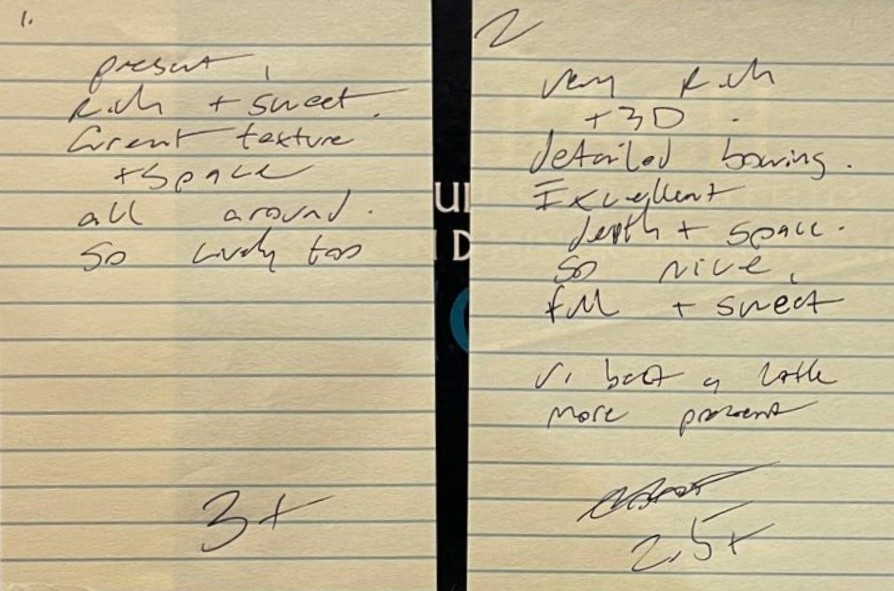
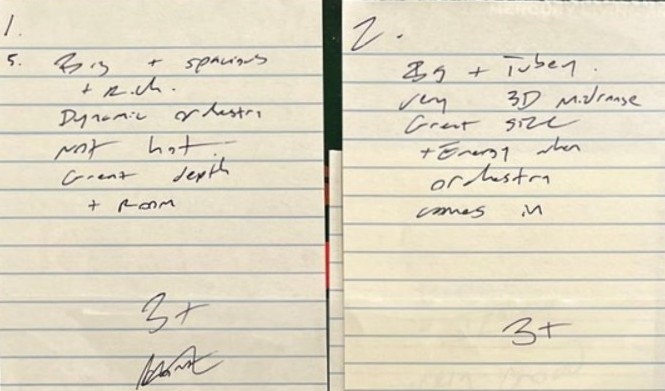
Our notes are simply the impressions a member of our listening panel wrote down as he critically listened to the record while it was playing.

In this case, his attention eas being drawn to the marvelous qualities a large scale orchestral recording can have when everything is working at the highest levels of fidelity.

With the right playback equipment and lots of practice, you could easily find yourself listening this way and taking the same kind of notes.

(more…)

Mercury Did Not Produce an Especially Good Brahms Symphony No. 2

Hot Stamper Pressings of Mercury Living Presence Records Available Now

The sound of this 1959 Mercury recording (SR 90171) was not impressive.

The sound was decent enough, although somewhat dry and opaque on even the best copies of the record we played. Which makes it a passable sounding record, not much more than that, and not worth doing a shootout for.

It’s best played on an old school stereo that can hide its shortcomings.

The much more revealing systems of today, much like the one we used to audition this very copy, simply make it too easy to recognize its many shortcomings.

Vintage Vinyl

We are not fans of vintage vinyl because we like the sound of old records. Lots of old records don’t sound good to us at all, and we review them by the hundreds on this blog.

We like old records because they have the potential to sound better than any other kind of record, including the ones that have been made and marketed to audiophiles for the last thirty years, especially the ridiculously bad pressings we’ve reviewed more recently.


It Was a Very Good Year

1959 just happens to be one of the truly great years for analog recordings, as can be seen from this amazing group of albums, each of which was recorded or released that year.

(more…)

The Gayne Ballet on Mercury Can Be a Little Bright

Hot Stamper Pressings of Classical Masterpieces Available Now

UPDATE 2025

The review you see below was written more than ten years ago.

Having just done another shootout for SR 90209, Dorati’s recording of the two works, The Gayne Ballet and Romeo and Juliet, I can now confirm that there are some stampers that are indeed way too bright.

Side one of a recent copy had a sour midrange. Side two of the same copy was brash and metallic.

As for side two not sounding as good as side one in the older review before, seems we clearly got that wrong, the result, to some degree, of having an inadequate sample size.

Also,  we didn’t have as good a stereo as we do now, and we weren’t as good at doing shootouts back then either.


Our Old Review

This side one is truly DEMONSTRATION QUALITY, thanks to its superb low-distortion mastering. It’s yet another exciting Mercury recording. The quiet passages have unusually sweet sound.

This kind of sound is not easy to cut. This copy gets rid of the cutter head distortion and coloration and allows you to hear what the Mercury engineers accomplished.

(more…)

Vienna 1908-1914 on Mercury Is No Better than Passable

Hot Stamper Pressings of Mercury Living Presence Records Available Now

The various pressings we played of Mercury SR 90316 were not awful sounding by any means, but they were not especially good sounding either.

The strings tended to be shrill on the copies we had on hand.

We felt it best to abandon our plans to do a shootout for it. We will probably end up selling our stock on Discogs.

The sound of some pressings of this album might be passable, even to some degree enjoyable, especially when played on an old school system, but they are not worth bothering with on the high quality modern equipment we use.

Many Mercury recordings suffer from shrill strings, and to be honest we have certainly heard much worse, but for the money we charge even the copies that might win a shootout would not represent a good value for our customers, not once we factor in the high cost of the records and the time it would take to clean and play them all.

If you see a copy for cheap and aren’t that particular about sound quality, by all means pick it up, assuming the music appeals to you.

(more…)

The “Not-So-Golden-Age” of RCA, Mercury, London and Others

Hot Stamper Pressings of Living Stereo Titles Available Now

We ran into a number of copies of this title that had what we like to call “old record sound,” which is surprisingly common on even the most revered Golden Age labels, RCA included.

No top, no real bottom, congested climaxes and a general shrillness to the sound — we’ve played Living Stereos by the dozens that have these shortcomings and many more.

Some audiophiles may be impressed by the average Shaded Dog pressing, but I can assure you that we here at Better Records are decidedly not of that persuasion.

Something in the range of five to ten per cent of the major label Golden Age recordings we play will eventually make it to the site. The vast majority just don’t sound all that good to us. (Many have second- and third-rate performances and those get tossed without ever making it to a shootout.)

The One Out of Ten Rule

If you have too many classical records taking up too much space and need to winnow them down to a more manageable size, pick a composer and play half a dozen of his works.

Most classical records display an irredeemable mediocrity right from the start. It does not take a pair of golden ears to hear it.

If you’re after the best sound, it’s the rare record that will have it, which makes clearing shelf space a lot easier than you might imagine. If you keep more than one out of ten, you’re probably setting the bar too low, if our experience is any guide.

(more…)

What Can You Learn from a Mercury Shootout Like This One?

Hot Stamper Pressings of Mercury Classical Recordings Available Now
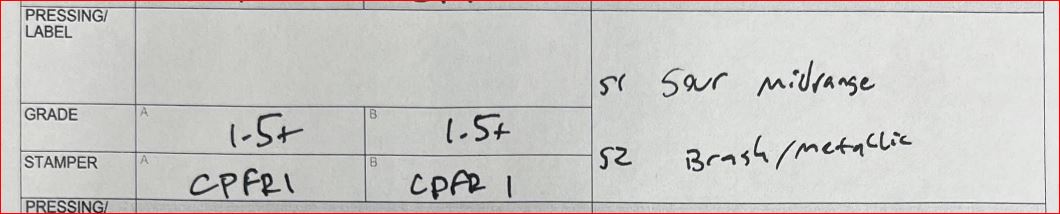
The short answer is that you can’t learn much from this shootout, because we’re not telling you which title the stampers you see below belong to.

Be that as it may, in the case of this mystery title the conventional wisdom turns out to be correct — the earlier numbered pressings did better than the later numbered pressings, and the early labels did better than the later labels.

That happens a lot, and we are happy to admit that it does. Why? Because the experimental evidence — the datasay that is what happened.

As usual for posts in which the stamper sheet from a shootout is reproduced in its entirety, the stamper numbers shown below will belong to a different album than the one you see pictured.

These can be found under the heading of Mystery Stampers. Most of these posts will illustrate something to be learned from a Hot Stamper shootout, but because the information reveals the shootout winning stampers, the actual title of the record is rarely revealed.

Much more useful stamper information can be found using this link, which includes plenty of stamper numbers for specific titles that are best avoided by audiophiles looking for top quality sound. In addition, we post the winning and losing stampers for some titles that are an unreliable guide to good sound. Unreliable stampers are also quite common.

The right stampers are only one of the many reasons some copies win our shootouts and others don’t, but in the case of this rare Mercury, a record that we only had four copies of, the RFR-2/2 stampers were clearly the best, with no other set of stampers coming close. The best of the others earned grades no better than 2+/2+.

One lesson that was clear was that the best stampers were, to quote our reviewer, “a step up!”

(more…)

Here Are the Shootout Winning Stampers for SR 90435

Hot Stamper Pressings of Mercury Living Presence Records Available Now

You may have noticed that when we give out the stampers for the top copies, we rarely identify the title of the record with those Shootout Winning stampers.

As you can well imagine, our sizable investments in research and development over the course of decades make up a big part of the costs we must pass on to our customers.

However, in the case of Mercury SR 90435, knowing the Shootout Winning stamper numbers is not going to get you very far (which is of course the only reason we can afford to give out this information).

You will actually need a pile of copies with those stampers in order to find one worthy of a 3+ White Hot stamper grade.

Obviously, knowing the “right” stamper information in this case gets you in the ballpark, but it won’t help you hit the grand slam home run you were hoping for. To do that you have to clean and play at least five copies the way we did.

Hot Stamper shootouts may be expensive, they may be a lot of work, but our experience tells us there is simply no other way to find the highest quality pressings. They’re the ones that earn the 3+ grades, not the 1.5+ grades, regardless of their stamper numbers, labels, mastering engineer credits or country of origin.

As we have been saying for more than twenty years, for title after title, when you clean them right and play them right, they might all look the same, but rarely if ever will they sound the same.


Changes for 2024

Beginning in 2024 we decided to make available to our readers a great deal of the pressing information we’ve compiled over the last twenty years, under these headings:

(more…)

Piano Concerto Testing and Inner Groove Distortion

Hot Stamper Pressings of the Music of Rachmaninoff Available Now

The piano is huge and weighty, the strings rich and highly resolving, and the overall presentation is powerful, balanced, dynamic and exciting like few other piano concerto recordings we have ever had the pleasure to audition.

Not only is the sound amazing — yes, it’s on the TAS Super Disc list, and for good reason: a copy as good as this one really is a Super Disc — but this copy has another vitally important characteristic that most copies of the record do not: no inner groove distortion.

We can’t begin to count the times we have had to return (or toss) a copy of one of these expensive Byron Janis records because the piano breakup for the last inch or so of the record was just unbearable. That’s a sound no serious listener could possibly tolerate, yet I would venture to guess that many Mercury piano concerto recordings suffer from this kind of groove damage.

As a matter of grading policy, we check the inner grooves of every record we offer on the site,

The Sound

The sound is rich and natural, with lovely transparency and virtually no smear to the strings, horns or piano. What an amazing recording! What an amazing piece of music.

The recording is explosively dynamic — on the best copies the sound comes jumping out of the speakers. In addition, the brass and strings are full-bodied, with practically no stridency, an unusual feat the Mercury engineers seem to have accomplished while in Russia (and not as often in the states).

Big, rich sound can sometimes present problems for piano recordings. You want to hear the percussive qualities of the instrument, but few copies pull off that trick without sounding thin. This one showed us a piano that was both clear and full-bodied.

With huge amounts of hall space, orchestral weight and performance energy, this is Demo Disc quality sound by any standard. Once the needle has dropped you will quickly forget about the sound (and all the money you paid to get it!) and simply find yourself in the presence of some of the greatest musicians of their generation, captured on one of the greatest analog recordings of all time.

Fine and Cozart

The piano is huge and powerful, yet the percussive and lighter qualities on the instrument are clearly heard in proper relation to the orchestra as a whole.

I simply cannot criticize the work that Fine and Cozart have achieved with this recording, and believe me, there are very few records in this world about which I could not find something to criiticize. After all, it is our job, and we like to set very high standards for the work we do.

Lately we have been writing quite a bit about how good pianos are for testing all aspects of your system, room, tweaks, electricity and the rest, not to mention turntable setup and adjustment.

  • We like our pianos to sound natural (however one chooses to define the term).
  • We like them to be solidly weighted.
  • We like them to be free of smear, a quality that for some reason is rarely mentioned in most audiophile reviews.

Our twenty or so of our favorite piano concerto recordings with top quality sound can be found here.

To read the 50 reviews and commentaries we’ve written for some of the greatest piano concerto recordings ever pressed on vintage vinyl, please click here

(more…)