Focus-Class

Here we offer insights into classical and orchestral recordings we think we know well.

Pictures at an Exhibition – An Overview

Hot Stamper Pressings of the Music of Mussorgsky Available Now

There is a slightly multi-miked quality to this recording. If you’ve been playing true Golden Age records all day you will notice that the instruments are more naturally and correctly spaced and sized on those recordings.

But, this is still a KNOCKOUT record which is guaranteed to bring any stereo to its knees. The dynamics, the deep bass and the sheer power of the orchestra have to be heard to be believed.

What does the typical EMI pressing of this album sound like?

Not good. Sour brass, smeary or shrill strings, lacking in bass — mid-hall dead-as-a-doornail sound is fairly typical.

Almost all the copies I’ve played are spacious, but so what?

The sound of the instruments is often wrong and in my book that trumps any benefits concerning soundstaging or depth.

But the best Hot Stamper pressings give you the presence and immediacy you need to get involved in the work.

The strings on the better copies have rosiny texture.

The brass has weight — not the full measure of an RCA or London recording, but at least you get the impression that those instruments are trying to sound correct.

And the bass drum really goes deep, unlike many of the Golden Age recordings I’ve heard.

(more…)

Holst and Previn – A Planets for the Ages

Hot Stamper Pressings of the Music of Holst Available Now

Fortunately for audiophiles who love The Planets but are disappointed by most performances, a group that includes us to be sure, the amazing sound found on this copy is coupled with a superb performance.

As you might imagine, on a big system this would make for a powerful listening experience, which is exactly the experience we ourselves had during our recent shootout. This copy actually deserves its place on the TAS List.

The brass is so BIG and POWERFUL on EMI’s recording that other orchestras and recordings frankly pale in comparison. Until I heard one of our top EMI pressings show me brass with this kind of weight and energy, I simply had no idea it was even possible to play the work this powerfully. The lower brass comes in, builds, gaining volume and weight, then calms down, but soon returns and builds relentlessly, ever and ever louder. Eventually the trumpets break out, blasting their way forward and above the melee the heavier brass has created below.

Quite honestly I have never heard anything like it, and I heard this work in concert in late 2012! In live performance, the members of the brass section, being at the back of the stage, were at least 100 feet away from me, perhaps more. When playing the best EMI pressings, the brass were right there in front of me, eight to ten feet away. In a way this is of course unnatural, but that fact takes nothing away from the subjective power of the experience.

Only the conductor can stand at the podium, but the EMI producers and engineers (the two Christophers in this case) have managed to put the listener, at least in this movement, right there with him.

(more…)

The Planets – Can You Imagine Sound this Bad from a TAS List Super Disc?

Hot Stamper Classical and Orchestral Pressings Available Now

We can, we played it.

Or, to be more correct, we played them. Two pressings, each with one good side and one very bad side.


UPDATE 2025

Take all of this with a very large grain of salt. In the course of doing more shootouts for the Mehta Planets, we’ve played quite a number of different pressings and now believe — believe being the operative word — we know which are the best stampers.

It is very unlikely that any Dutch pressing would be competitive with the best UK-pressed copies cut by Harry Fisher.

For those of you who just want a good sounding copy of The Planets to play and enjoy, our favorite by far is Previn’s reading on EMI from 1974.

We know of no better performance, and we much prefer the dramatically more natural sound quality.

The Mehta recording, like much of what he recorded for Decca in those days, is a multi-miked mess, the kind we grew out of (for the most part) a long time ago. (More of the multi-miked records we’ve auditioned, of varying quality to be sure, can be found here.)


Our old commentary (please excuse the heavy-handed caps):

This 2-pack from many years ago (ten fifteen perhaps), described below, boasts White Hot Stamper sound on side two for the Mehta Planets. Yes, it IS possible. Side two shows you what this record is actually capable of — big WHOMP, no SMEAR, super SPACIOUS, DYNAMIC, with an EXTENDED top.

It beat every London pressing we threw at it, coming out on top for our shootout. Folks, we 100% guarantee that whatever pressing you have of this performance, this copy will trounce it.

But side one of this London original British pressing was awful.

We wrote it off as NFG after about a minute; that’s all we could take of the bright, hard-sounding brass of War.

If you collect Super Discs based on their catalog numbers and labels and preferred countries of manufacture, you are in big trouble when it comes time to play the damn things.

That approach doesn’t work for sound and never did.

If your stereo is any good, this is not news to you. The proof? The first disc in this 2-pack is Dutch. It earned a Super Hot grade in our blind test, beating every British copy we played against it save one. Side two however was recessed, dark and lifeless. Another NFG side, but the perfect complement to our White Hot British side two!

(more…)

For Arcana, Speed Is Key

Hot Stamper Pressings on Decca and London Available Now

This is a recording that allows your speakers to disappear completely like practically no other. A powerful Test Disc as well. Use this one to check your speed and staging, subtle changes in your equipment can have a big effect on recordings like this

Incredible sound for this CRAZY 20th Century music, featuring wild and wacky works which rely almost exclusively on percussion (not one, not two, but three bass drums!). My favorite piece here may be Ionisation, which uses real sirens (the Old School ones cranked by hand) as part of Varese’s uniquely specialized instrumental array.

But the main reason audiophiles will LOVE this album is not the music, but the SOUND. Ionisation has amazing depth, soundstaging, dynamics, three-dimensionality and absolutely dead-on tonality — it’s hard to imagine a recording that allows your speakers to disappear more completely than this one.

It also makes a superb test disc. Subtle changes in your equipment can have a big effect on recordings like this.

The instrumental palette is large and colorful, giving the critical listener plenty to work with.

And this copy is perfect for testing because is is nearly FLAWLESS in its sound. No other copy could touch it. Many copies are not especially transparent, spacious or three-dimensional, and lack extension on both ends of the frequency spectrum.

The SPEED of the percussion is also critical to its proper reproduction.

No two pieces of electronics will get this record to sound the same, and some will fail miserably.

If vintage tube gear is your idea of the ultimate in sound, this record may help you to better understand where its shortcomings lie.

(more…)

The Best Danse Macabre on Record

Hot Stamper Pressings of the Music of Saint-Saens Available Now

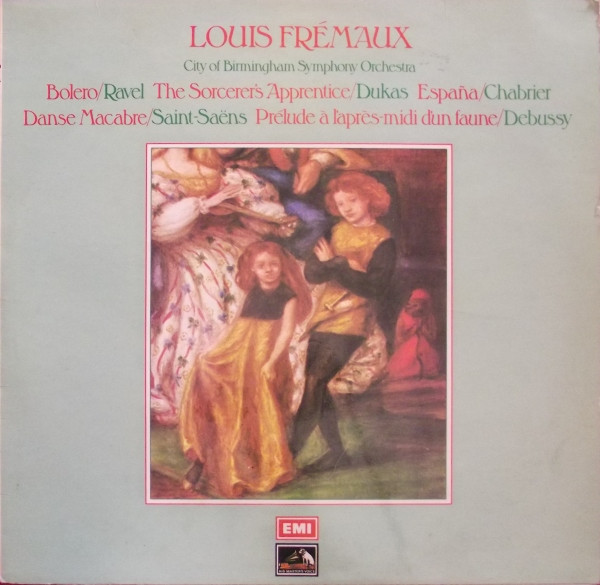
Saint-Saens’ symphonic poem, Danse Macabre, the second piece on the second side, is the heart of the album and its raison d’être for us. This is where the real fireworks can be found, although that’s not really fair as there are fireworks aplenty on both sides.

What we have here is the best Danse Macabre we have ever played.

We have always been fans of Gibson’s performance on the legendary Witches’ Brew. As good as that recording may be, this one is clearly superior in practically every way — it’s bigger, clearer, richer, more resolving, more spacious, more real and, to my surprise, more EXCITING and involving.

If you own a copy of LSC 2225, hopefully not the awful Classic Records Heavy Vinyl pressing, you need to hear what Fremaux and the City of Birmingham Symphony Orchestra have accomplished on this wonderful 70s EMI.

Audiophiles (especially those of us with large dynamic speakers) have always been drawn to the biggest and most exciting orchestral spectaculars, and we have plenty on the site at all times to satisfy the need to hear these kinds of records at their properly-mastered, properly-pressed best.

Why spend money on another underperforming modern reissue that you will end up rarely playing when much more powerful and involving sound can be found on our site, sound so good it has the potential to change your life.

Four Exceptional Orchestral Showpieces

The Sorcerer’s Apprentice (Dukas)

This piece opens the side. There is depth and richness to beat the band, as well as clarity and tonal correctness that let you forget the recording and just enjoy the music.

A superb performance as well, as good as any we know of. And the sound is the equal of the best recordings we’ve played.

Espana. Rhapsody For Orchestra (Chabrier)

As good as Fremaux is, I think the Ansermet (CS 6438) might still have the edge, but both are so good that it might just come down to a matter of taste. You cannot go wrong with either.


UPDATE 2023

And now we actually prefer the famous Argenta recording for Decca that’s on the TAS List, CS 6006.


(more…)

A Killer Copy of Pictures at an Exhibition

Hot Stamper Pressings of the Music of Mussorgsky Available Now

We describe the better copies of Muti’s Pictures for EMI this way in our listings:

Our favorite performance by far, with big, bold and powerful sonics like no other recording we know.

The brass clarity, the dynamics, the deep bass and the sheer power of the orchestra are almost hard to believe. No vintage recording of these works compares with Muti’s – and Stravinsky’s Firebird Suite is an extra special added bonus on side two.

Here are the notes for our most recent Shootout Winning pressing to back up everything we say.

Side One

  • Huge and tubey orchestra
  • Lush and strong
  • Sounds pretty right
  • Powerful low end

Side Two

  • So full and big and tubey
  • Tons of weight and power
  • Like no others!

No doubt the enthusiastic nature of these notes is in response to the big finish for Pictures.

It is a very special piece of music, one that has thrilled me as an music-loving audiophile since I first heard it on record sometime in my twenties, and this was a very special pressing of the recording. In the old days a side two like this might have been given a grade of Four Pluses, but we don’t do that anymore, for reasons explained elsewhere on the blog.

Regardless of what grade we chose to give it, this side two was superior to either side of every other copy we played. It set a standard that no other side could meet. Yes, exceptional vintage pressings with sound that good are out there sitting in the record bins.

More from Our Listing

There is a slightly multi-miked quality to this recording. If you’ve been playing true Golden Age records all day you will notice that the instruments are more naturally and correctly spaced and sized on those recordings.

But, this is still a KNOCKOUT record which is guaranteed to bring any stereo to its knees. The dynamics, the deep bass and the sheer power of the orchestra have to be heard to be believed.

What does the typical EMI pressing of this album sound like? Not good. Sour brass, smeary or shrill strings, lacking in bass — mid-hall dead-as-a-doornail sound is fairly typical. Almost all the copies I’ve played are spacious, but so what? The sound of the instruments is often wrong and in my book that trumps any benefits concerning soundstaging or depth.

But the Hot Stampers give you the presence and immediacy you need to get involved in the work. The strings on the better copies have rosiny texture. The brass has weight — not the full measure of an RCA or London recording, but at least you get the impression that those instruments are trying to sound correct. And the bass drum really goes deep, unlike the Golden Age recordings I’ve heard.

(more…)

An Extraordinary Recording of the Carmen Fantasie – This Is Why You Must Do Shootouts

It has been years since a Whiteback pressing on the later label won a shootout. Some reissue copies of CS 6165 have earned Nearly White Hot Stamper grades, but we would be very surprised if one of the Blueback originals we play in the next shootout does not come out on top. They are just too good.


This London Whiteback LP has DEMO DISC sound like you will not believe, especially on side two, which earned our coveted A Triple Plus rating. The sound is warm, sweet and transparent; in short, absolutely GORGEOUS. We call it AGAIG — As Good As It Gets!

As this is one of the Greatest Violin Showpiece Albums of All Time, it is certainly a record that belongs in every right-thinking audiophle’s collection. (If you’re on our site and taking the time to read this, that probably means you.) Ruggiero Ricci is superb throughout.

And side one was just a step below the second side in terms of sound quality, with very solid A++ sound. To find two sides of this caliber, on quiet vinyl no less, is no mean feat. You could easily go through ten copies without finding one as consistently good sounding as this one.

A True Demo Disc, Or Was It?

Ricci’s playing of the Bizet-Sarasate Carmen Fantasie is OUT OF THIS WORLD. There is no greater perforrmance on record in my opinion, and few works that have as much Audiophile Appeal.

Which is why I’ve had a copy of this record in my own collection for about fifteen years marked “My Demo Disc.” But this copy KILLED it. How could that be?

It just goes to show: No matter how good a particular copy of a record may sound to you, when you clean and play enough of them you will almost always find one that’s better, and often surprisingly better.

Shootouts are the only way to find these kinds of records. That’s why you must do them.

Nothing else works. If you’re not doing shootouts (or buying the winners of shootouts from us) you simply don’t have top quality copies in your collection, except in the rare instances where you just got lucky. In the world of records luck can only take you so far. The rest of the journey requires effort.

(more…)

Striving for Orchestral Clarity on Finlandia with Decca and Failing with RCA

More of the Music of Jean Sibelius

More of the Music of Edvard Grieg

The original RCA Living Stereo pressings we played in our 2014 shootout were not competitive with the best Deccas and London reissues of Finlandia.

Is the original the best way to go? In our experience with Finlandia, it is not. And it’s not even close.

The Decca reissue you see here is yet another wonderful example of what the much-lauded Decca recording engineers were able to capture on analog tape all those years ago. The 1961 master tapes have been transferred brilliantly using “modern” cutting equipment (from 1970, not the low-rez junk they’re forced to make do with these days), giving you, the listener, sound that only the best of both worlds can offer. [Not true, see Two Things below.)

When you hear how good this record sounds, you may have a hard time believing that it’s a budget reissue from 1970, but that’s precisely what it is.

Even more extraordinary, the right copies are the ones that win shootouts

Side One

Correct from top to bottom, and there are not many records we can say that about. So natural in every way.

The brass is HUGE and POWERFUL on this side. Not many recordings capture the brass this well. Ansermet on London comes to mind of course but many of his performances leave much to be desired. Here Mackerras is on top of his game with performances that are definitive.

The brass is big and clear and weighty, just the way it should be, as that is precisely the sound you hear in the concert hall, especially that part about being clear: live music is more than anything else completely clear. We should all strive for that sound in our reproduction of orchestral music.

The opening track on side one, Wedding Day at Troldhaugen, is one of my favorite pieces of orchestral music. Mackerras and the London Proms make it magical.

Side Two

The richness on this side is awesome. So 3-D, with depth and transparency to rival any recording you may own.

Two Things

When you hear a record of this quality, you can be pretty sure of two things: one, the original is unlikely to sound as good, having been cut on cruder equipment.


UPDATE

Let me stop myself right there. I no longer subscribe to this view. There are many original pressings mastered in the 50s that are as hi-rez and undistorted as anything made after them. Here’s one example. It would be easy to name a great many more. Live and learn I say.


And two, no modern recutting of the tapes (by the likes of Speakers Corner for example, but you can substitute any company you care to choose) could begin to capture this kind of naturalistic orchestral sound. [Mostly still true.]

I have never heard a Heavy Vinyl pressing begin to do what this record is doing. The Decca we have here may be a budget reissue pressing, but it was mastered by real Decca engineers (a few different ones in fact), pressed in England on high quality vinyl, and from fairly fresh tapes (nine years old, not fifty years old!), then mastered about as well as a record can be mastered.

The sound is, above all, real and believable.

The brass has weight, the top extends beautifully for those glorious cymbal crashes, the hall is huge and the staging very three-dimensional — there is little to fault in the sound on either side.

(more…)

Now That’s the Way a Piano Should Sound!

On the best copies the rich texture of the strings is out of this world — you will have a very hard time finding a DG with better string tone.

The best pressings of this recording have none of the shortcomings of the average DG: it’s not hard, shrill, or sour.

DG made plenty of good records in the 50s and 60s, then proceeded to fall apart, like most labels did. This is one of their finest. It proves conclusively that at one time — 1962 to be exact — they clearly knew exactly what they were doing.

Without question this is a phenomenal piano recording in every way.

I don’t know of another recording of the work that gets the sound of the piano better. On the better copies, the percussive quality of the instrument really comes through.

It’s amazing how many piano recordings have poorly-miked pianos.

These bad sounding pianos are either too distant, lack proper reproduction of the lower registers, or somehow smear the pounding of the keys into a blurry mess.

Are they badly recorded?

Or perhaps it is a mastering issue?

Maybe a pressing issue?

To be honest, it’s probably all three.

Lately we have been writing quite a bit about how good pianos are for testing your system, room, tweaks, electricity and all the rest, not to mention turntable setup and adjustment.

  • We like our pianos to sound natural (however one chooses to define the term)
  • We like them to be solidly weighted
  • We like them to be free of smear, a quality that is rarely mentioned in the audiophile reviews we read

Other records that we have found to be good for testing and improving your playback can be found here.

(more…)

Compression Works Its Magic on The Christmas Eve Suite

Hot Stamper Pressings of the Music of Rimsky-Korsakov Available Now

Some notes about the compression effects we heard on side two of a Blueback pressing of The Christmas Eve Suite album back in 2012. We wrote:

Side two is even more transparent and high-rez than side one. The texture on the strings and the breathy quality of the woodwinds make this a very special pressing indeed.

The horns are somewhat smeary and do get a bit congested when loud.

There is more compression on this side two than there was on the best copy we played, and that means low level detail is superb, but louder parts, such as when the more powerful brass instruments come in, can present problems.

Note how good The Flight of the Bumble Bee sounds here.

Compression is helping bring out all the ambience and detail in the recording, and there’s no downside because the orchestra is playing softly, unlike the piece that precedes it.

A classic case of compression having sonic tradeoffs.

(more…)