David Hentschel, Engineer – Reviews, Commentaries and Letters

Nursery Cryme on Classic Records – What System Can Make It Sound Good?

Hot Stamper Pressings of Genesis Albums Available Now

Sonic Grade: F

The Classic Heavy Vinyl pressing from 2000 is a smeary, lifeless mess next to the best early tan label British pressings. No Classic pressing of any of the Genesis albums that we’ve played sounded right to us.

The Peter Gabriel albums they remastered were just as bad. All of them earned a grade of F. We made no effort to do listings for most of them because they all were bad sounding, and bad sounding in the same way.

If I were to try to “reverse engineer” the sound of a system that could play this record and compensate for its many faults, I would look for a system that was thick, dark and fat, with added richness and a heaping portion of euphonic tube colorations.

I know that sound. I had a stereo in the 90s with many of those same shortcomings, but of course I hadn’t a clue about any of that. Back then, I didn’t know what I didn’t know. I needed to put together a system with a lot more “Hi-fi” and a lot less “My-fi,” a process that took many years and a great deal of effort.

I’m glad to say things are different now.

What to Listen For

As a general rule, this Heavy Vinyl pressing will fall short in some or all of the following areas when played head to head against the vintage pressings we offer:


Further Reading

The sonic signature of the modern Heavy Vinyl Classical reissue in five words: diffuse, washed out, veiled, and vague.

(more…)

Helpful Stamper Information You Can Use – Episode 108

Hot Stamper Pressings of the Music of Genesis Available Now

British Pressing? Check.

Pink Label? Check.

Sound Quality?  Side One:: 1+ (dubby). Side One of another copy: NFG (no good).

Apparently something went wrong, but exactly what, nobody really knows.

And if for some reason somebody actually believes they know what went wrong, we tell them that that kind of thinking is detrimental to whatever success they hope to achieve in finding better sounding records, if our experience over the last fifty years has any bearing.

We don’t know it all and we’ve never pretended to. All our knowledge is provisional. We may not be the smartest guys in the room, but we’re sure as hell smart enough to know that much.

If somehow we did know it all, there would be no need for the two hundred entries in our live and learn section about all the mistakes we’ve made over the years trying to understand record pressings at the sonic level.

We take a different approach to searching out better sounding pressings. Instead of reading about them — who made them, how they were made, where they were made, all that sort of thing — we instead devoted our efforts to cleaning and playing them, so that we could make our own judgments about the sound and the music we heard.

Our experiments, conducted using the shootout process we’ve painstakingly developed over the course of the last twenty years, produce all the data we need: the winners, the losers, and the rankings for all the records in-between.

Free Stamper Info

By my count this is the 108th stamper sheet we have posted on The Skeptical Audiophile.

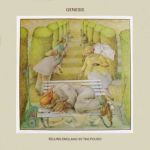
In the case of this title, these are what we would call bad stampers for Genesis’s 1973 prog album Selling England by the Pound (a record we rarely have in stock because the best stampers are just too hard to find, at least they are on copies in audiophile playing condition).

If you are looking for top quality sound — and seriously, what else would you be looking for if you are reading this blog? —  then make sure not to buy just any old early Pink Label UK pressing of the album. You may end up with one that sounds as bad as this one did.

(more…)

A Trick Of The Tail – A MoFi Disaster to Beat Them All

This review is fairly old, probably from 2005-2010.

Not long ago I played the MoFi pressing of Trick of the Tail and could not believe how ridiculously compressed it was.  Rarely have I heard sound as squashed as that which is heard on this LP.

On top of that, the midrange is badly sucked out (as is the case with most Mobile Fidelity pressings) making the sound as dead, dull and distant as can be.

Is it the worst version of the album ever made? Hard to imagine it would have much competition. I have the CD and it’s fine. It sounds like a digital version of the British pressings we favor (the domestic pressings having been made from dubs of course).  The MoFi is bad enough to have earned a place in our Mobile Fidelity hall of shame.

You think Modern Heavy Vinyl pressings are lifeless? Play this piece of crap and see just how bad an audiophile record can sound.

And to think I used to like this version! I hope I had a better copy back in the 80s than the one I played a few years ago. I’ll never know of course. If you have one in your collection give it a spin. See if it sounds as bad as we say. If you haven’t played it in a while (can’t imagine why, maybe because it’s just plain awful), you may be in for quite a shock.

If you are still buying these audiophile pressings, take the advice of some of our customers and stop throwing your money away on Heavy Vinyl and Half-Speed mastered records.

(more…)

Letter of the Week – “…you guys DID IT AGAIN – simply superlative sound quality.”

One of our good customers had this to say about some Hot Stampers he purchased recently:

Hey Tom, 

Got my “Red Rose Speedway” today. OMG. OK, this was the FIRST album I EVER bought – new from the store, as a 12-year old kid just beginning to buy his own records with his own money. I haven’t heard this in 30 plus years. SUCH GREAT SOUND!!! The first is a series of fantastic songs, from start to finish, and you guys DID IT AGAIN – simply superlative sound quality.

You have NO idea how much joy you’re giving me!!!!

Steve M.

Steve,

Glad to hear it. Joy is the name of the game!

TP

Goodbye Yellow Brick Road – What to Listen For

More Elton John

More Reviews and Commentaries for Goodbye Yellow Brick Road

The richness, sweetness and freedom from artificiality is most obvious where you often hear it on a Pop Rock Big Production like GYBR: in the loudest, densest, most climactic choruses.

We set the playback volume so that the loudest parts of the record are as huge and powerful as they can possibly become without crossing the line into distortion or congestion.

On some records, Dark Side of the Moon comes instantly to mind, the guitar solos on Money are the loudest thing on the record.

On Breakfast in America the sax toward the end of The Logical Song is bigger and louder than anything on the record, louder even than Roger Hodgson’s near-hysterical multi-tracked screaming “Who I am” about three quarters of the way through the track. Those, however, are clearly exceptions to the rule. Most of the time it’s the final chorus of a pop song that gets bigger and louder than what has come before.

A pop song is usually designed to build momentum as it works its way through the verses and choruses, past the bridge, coming back around to make one final push, releasing all its energy in the final chorus, the climax of the song. On a good recording — one with real dynamics — that part of the song should be very loud and very powerful.

Testing the Climaxes

The climax of the biggest, most dynamic songs are almost always the toughest tests for a pop record, and it’s the main reason we play our records loud. The copies that hold up through the final choruses of their album’s largest scaled productions are the ones that provide the biggest thrills and the most emotionally powerful musical experiences one can have sitting in front of two speakers. Our Top 100 is full of records that reward that kind of intense listening at loud levels.

We live for that sound here at Better Records. It’s precisely what the best vintage analog pressings do so brilliantly. In fact they do it so much better than any other medium that there is really no comparison, and certainly no substitute. If you’re on this site you probably already know that.

Two to Listen For

Number one: Too many instruments and voices jammed into too little space in the upper midrange. When the tonality is shifted-up, even slightly, or there is too much compression, there will be too many elements — voices, guitars, drums — vying for space in the upper part of the midrange, causing congestion and a loss of clarity.

(more…)

Goodbye Yellow Brick Road – A Heavy Vinyl Winner!

Hot Stamper Pressings of the Music of Elton John Available Now

Sonic Grade: B (or better)

I think these are the labels for the copy we played, It came out around 2000-2005. It’s not Speakers Corner, Simply Vinyl or Back to Black. Those are labels best avoided in our experience.

Hey, they really did a good job with this one. We are going to listen to it again at a later date to see if our initial impressions were correct [I guess by now it should be clear that we are never going to do that, sorry], but it sure sounded good to us when we played it recently during our big GYBR shootout. 

I’m guessing no domestic copy can beat it, and certainly no audiophile half-speed mastered pressing can hold a candle to it. Those records are pretty awful.

Goodbye Yellow Brick Road – Modern Sounding Stampers?

More of the Music of Elton John

Some British copies on some sides sound too much like a modern reissue; they lack weight and tend to be too “clean” sounding.

We take serious points off when records sound modern, a sound the current spate of reissues cannot get away from and one of the main reasons we gave up on them many, many years ago.

Not our thing, sorry.

All the other major audiophile record dealers sell that junk, so if you like that sound you will have no trouble finding plenty of titles that offer it. It frankly bores us to tears.

Why do audiophiles like the sound of records that sound like good CDs? We like to play records that sound like good records. We like records that sound so real that we can forget that we’re even listening to a record.

Goodbye Yellow Brick Road – Disastrous Remasters from MoFi and Direct Disk Labs

More of the Music of Elton John

More Reviews and Commentaries for Goodbye Yellow Brick Road

Sonic Grade: F (DD Labs) / D (MoFi)

If you have the Direct Disc Labs half-speed you have one truly awful record in your collection, so sucked out in the midrange, so compressed everywhere, what the hell were they thinking making this rockin’ album sound like that? It’s positively disgraceful. It makes MoFi look like they knew what they doing, and we know that sure isn’t true.

In truth we did not actually have a copy of the MoFi handy for this shootout, but in our defense let us just say that we’ve heard their pressing many times over the course of the last twenty years. It’s better than the DD Labs version but not good enough for me to want to play it — compressed and sucked-out like practically every record they ever made, just not as badly as the DD Labs version.

The most obvious problems with the sound of this album are ones common to many if not most rock records of the era: lack of presence, too much compression, smear, lack of weight from the lower mids on down — we hear lots of Classic Rock records with this litany of shortcomings. But it’s not the fault of the master tape, it’s probably not even the fault of the mastering engineer most of the time. It’s just plain bad pressing quality. The sound simply doesn’t get stamped onto the vinyl right and the result is one or more of the problems above. And if you don’t know how to clean your records properly, forget it, you have virtually no chance of hearing good sound on GYBR.

The Average Copy (more…)

Letter of the Week – “Great job on finding what for me is a new reference disk”

More of the Music of Elton John

More Reviews and Commentaries for Goodbye Yellow Brick Road

The entire letter can be found below, along with our general notes about the recording.

Hi, Tom:

Got a chance to try your Elton John Goodbye Yellow Brick Road hot stamper, and wow! EJ has never been one of my favorite artists, my liking his earlier output to some degree, but in my opinion GYBR is his magnum opus and his high water mark, down from which he slid rapidly into mediocrity.

I have tried a number of pressings of this record and always found it to be a good, but not great, recording, which is a shame considering it is one of the few double LP’s extant without anything approaching filler material. So I tried my Direct Disk Labs version, which was OK, but sounded veiled compared to the MFSL version, actually not bad for one of their efforts.

But the cinemascape evolved entirely with the hot stamper, bringing these great songs to life in my listening room like few others I have heard. If you want to hear a demo disk performance of this record you won’t find it outside a hot stamper in my experience. EJ’s voice is front and center, rich and full, allowing me to hear every vocal inflection. I swear I could tell what EJ had for breakfast–eggs and chutney, even! Pianos were arrayed in space with the correct surface loudness, guitars crunched on Funeral For a Friend/Love Lies Bleeding, the drums on Jamaica Jerkoff were massive and dynamic, and the bass drum whacks on I’ve Seen That Movie Too had that sock-in-the-gut punch.

This hot stamper shows off the difference between a recording and a performance. Great job on finding what for me is a new reference disk.

Roger

(more…)