Blues Rock – Reviews and Commentaries

Six Ways in Which Bad Sounding Remasters Get Approved

Hot Stamper Pressings of the Music of Jethro Tull Available Now

UPDATE 2026

The comments you see below for Stand Up were written in 2023.

Unfortunately, we rarely have any stock on Stand Up, or any of the other classic Tull releases for that matter. (There is a copy of Thick as a Brick on the site as of this writing, but it may have sold by the time you read this.)

In our commentary we discuss some of the reasons why a truly awful sounding Heavy Vinyl pressing — in this case Analogue Productions’ remaster of Stand Up — could possibly have gotten released.


Our Commentary from 2023

Here’s how we think it might have gone down.

On whatever crappy audiophile system they are using to play these records, the new pressing beat the original Pink Label Island. Drinks all around.

Not knowing that the original pressings do not sound very good — really, not knowing all that much about records period — made their job seem a lot easier than it actually was.

They didn’t produce a good sounding record. They produced a record that was (perhaps) better than a bad sounding record. They unknowingly set the bar very low.

But unknowingly is how this label has been operating from the very beginning.

I’ve written extensively about many of their bad sounding records, starting all the way back in 1995 with Way Out West.

Not much has changed. You may remember from the Washington Post video years back that Geoff Edgers blind-tested me with two copies of Quiet Kenny, one from The Electric Recording Company (“this guy makes mud pies!”) and the other from Analogue Productions (‘it’s the best record they ever made, because it’s not terrible”), or words to that effect.

If I’d had a good copy of Quiet Kenny on hand, a record I think I know much better now that we have done a couple of shootouts for it, I could have elucidated all the shortcomings of the AP pressing in great detail. Instead I was stuck comparing a very bad pressing of the album to a copy that was not as bad.

(more…)

This Pious Bird Is a Great Intro to the Early Fleetwood Mac

Hot Stamper Pressings of the Music of Fleetwood Mac Available Now

Along with their Greatest Hits compilation from 1971, Pious Bird is a great introduction to the early iteration of Fleetwood Mac. It’s an album that belongs in any right thinking audiophile’s collection.

If you’re a fan of Peter Green era Fleetwood Mac — and who in his right mind wouldn’t be — then you can’t go wrong with this record. Need Your Love So Bad, Albratross and Black Magic Woman are all featured here.

Speaking of Black Magic Woman, the best copies of Pious Bird reproduce the bass-heavy drumming on that track much better than the Greatest Hits album we also recommend. It’s very unlikely that you can find better sound for that classic than right here on this very copy.

Repeat

I have the CD of Pious Bird in my car and let me tell you, I’m more than happy to let it repeat for days at a time. I love the early BLUESY Mac on this album, a group that’s about as far from the players on Rumours as you can imagine. (Actually that’s not true; two fifths of the Mac, Mick Fleetwood and John McVie, anchor both eras of the band, but the music made pre-1970 compared to that from 1975 onwards couldn’t be more different.)

The Players

  • Peter Green – vocals, guitar, harmonica (left in 1970 after Then Play On)
  • Jeremy Spencer – vocals, slide guitar (left in 1971 after Kiln House)
  • Danny Kirwan – vocals, electric guitar (left in 1972 after Bare Trees )
  • John McVie – bass guitar (still rockin’)
  • Mick Fleetwood – drums (still rockin’)

(more…)

Eric Clapton’s First Album – A Personal Favorite from 1970

Hot Stamper Pressings of the Music of Eric Clapton Available Now

We had a killer pressing many years ago that sounded a whole lot better than I ever thought the album could sound.

Man, what a revelation to hear an old favorite sound so amazingly spacious and sweet.

As good as the best Atco pressings can be, the early British pressings simply capture more of the Eric Clapton magic than they do. They are dramatically less gritty. Richer and sweeter too. (We’ve included some moderately helpful title-specific advice down below.)

I’ve been playing this album since I bought it in 1970, the year it came out. During my high school years (1970-1972, my rather limited record collection was made up of albums by The Beatles, The Doors, Buffalo Springfield, Crosby Stills and Nash, America, Rod Stewart, Led Zeppelin, Elton John, Chicago, James Taylor, Spirit, The Band, Loggins and Messina, Peter Frampton, Frank Zappa, Captain Beefheart, Blind Faith, Bread, and no doubt more than a few others that are lost to time.

This was the music of my youth, and although many other artists and styles of music have been added to the playlist in the ensuing decades, classic rock still makes up a substantial portion of the music I play and enjoy today.

This is no doubt the case for many of you. It’s why Classic Rock is the heart and soul of our business. Finding quiet, exceptionally good sounding pressings of Classic Rock albums is probably the hardest thing we do around here. It’s what we devote most of our resources to, and if we can be indulged a self-compliment, it’s what we do best.

Of course, having no competition to speak of is no little help in this regard. No one is even attempting to conduct the kind of record shootouts we find ourselves immersed in all week long.

And who can blame them? It’s hard to put together the layers and layers of resources necessary to pull it off. There are a great many steps a record must go through before it finds itself for sale on our site, and that means there are ten copies sitting in the backroom for every one that’s available for purchase.

(more…)

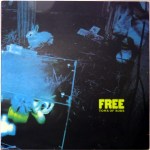
On Tons Of Sobs, the Domestic Pressings Just Don’t Make the Cut These Days

Hot Stamper Pressings of British Blues Rock Albums Available Now

Years ago — in 2011 to be exact — we wrote the following in a listing for a very good sounding domestic pressing:

Solid bass, present vocals, plenty of energy — the only thing missing here is the Tubey Magical richness and sweetness that only the British originals (in our experience) have, and in spades by the way.

But try to find one. Over the last two or three years I think we’ve managed to get hold of exactly one clean copy.

Fast forward a number of years and we’ve only had a few since then. I have seen the original Pink Label British pressing of this album sell on the web for more than 1000 dollars, which might explain why we rarely have them.

But if you want to hear this record in all of its glory, the UK Island pressings are the only game in town.

Both Pink and Sunray labels sound good, just make sure they are from the UK.

And don’t buy any later label pressing from any country if you want the best sound.

(more…)

Beware The Green Manalishi with the Two Prong Crown

Hot Stamper Pressings of the Music of Fleetwood Mac Available Now

Many years ago, more than 20 in fact!, a copy of this record was returned by one of my customers for poor sound quality, so I threw it back on the turntable to see if I had been mistaken in my judgement of its sound.

I confess that hearing the first track again, The Green Manalishi, was painful — it’s the worst sounding song on the album.

But then Oh Well starts up, and it’s full of midrange magic, ambience and exceptional transparency.

The sound varies from track to track after that, but if your stereo can’t find the magic on records like this, you seriously need to look into some better equipment.

This record sounds amazing on our system and it ought to at your house too.

The real test for a stereo is to get difficult to reproduce recordings to sound good, not easy to reproduce recordings.

If you want to test your system after doing some tweaking and tuning, these are the kinds of difficult to reproduce records that will allow you to do it.

When these records start sounding better, there’s a good chance that whatever you did to your system to improve it actually worked.

And if you’re up for a challenge and want to buy some records that can sound great but are difficult to reproduce, these Hot Stamper pressings should do the trick.

(more…)

A Nod Is As Good As A Wink… – Glyn Johns Lets It Rip

More of Glyn Johns’ Best Recordings Available Now

This album was produced by one of our favorite engineers around here, Mr. Glyn Johns, the man behind tons of Better Records faves — Sticky Fingers, The Eagles’ 1st, Who’s Next, and many, many more.

The proper sound for a band like this is RAW AND ROCKIN.’ Any phony EQ or overproduction would really make a mess of what the band does here, which, put simply, is kickin’ out the jams. It would be fair to call these guys a bar band, but they’re about the best darn bar band we’ve ever heard.

The best Faces pressings have amazing live-in-the-studio sound. 

That’s the right sound to convey the power of one of the hardest rockin’ bands of all time. What more can you ask for?

You won’t get a minute into this record before you’re blown away by all the ambience and echo. You can really hear the sound of the big room around these guys as they rock out. The vocals sound Right On The Money — smooth, but with all of the raspiness that Rod Stewart is famous for.

The drums are big and punchy and the guitars sound grungy and right.

The sound on both sides is open, spacious, and transparent — nothing like the muddy, congested sound we heard on most of what we played (all green label domestic originals – no reissue or import has ever won a shootout and we don’t really bother much with them anymore).

Here you will find none of the glossy artificiality you might hear on many of the rock records we sell — there’s nothing wrong with that sound, mind you, but this recording captures much more of what the real instruments sound like in the studio.

(more…)

Chad Has Served Poor Jethro Tull Most Barbarously

Hot Stamper Pressings of the Music of Jethro Tull Available Now

With a nod to our old friend, John Barleycorn.

We were finally able to get our hands on Analogue Productions’ newly remastered Stand Up, an album we know well, having played the British copies from every era by the score. Our notes for the sound can be seen below.

If ever a record deserved a “no” grade, as in “not acceptable,” this new 45 RPM pressing mastered by Kevin Gray deserves such a grade, because it’s just awful. (This link will take you to a great many more records best avoided by audiophiles in search of better sound. Although we’ve only linked to about 75 pressings here on the blog, it should be noted that the world is full of bad sounding records.)

But let’s put that grade in context. The last time a good sounding version of Stand Up was released, as far as we can tell, was 1989, and that version was the Mobile Fidelity Gold CD. I bought mine soon after it came out. I wasn’t even planning on buying a CD player when the Compact Disc was first invented, but then Mobile Fidelity played a dirty trick on me. Instead of releasing Loggins and Messina’s first album on vinyl, they put it out exclusively on CD as part of their Silver MFCD series.

As a die-hard MoFi fan, that sealed the deal: now I had to buy a CD player. I picked up a cheap Magnavox player, the 1040. I think it ran me less than $100, and played my new Sittin’ In CD, which, as I recall, sounded pretty good. (One of my other early CD purchases was Tumbleweed Connection, the regular label release, and it was dreadful.)

I still own Stand Up on Gold CD, and I still find it superb in every way. (Many of the MFSL Gold CDs from this era are excellent and worth seeking out.)

It sounds nothing like this new vinyl release, and that’s a good thing.

On vinyl, Stand Up has rarely been given the care it deserved. The last version of Stand Up to have sound we would want to listen to was pressed in the UK in the early ’70s. That was close to fifty years ago.

We sold some domestic pressings of the album back in the early 2000s, describing them at the time as made from dub tapes with all the shortcomings that entails, but mastered very well from dub tapes. The best domestic pressings are rich, smooth, tonally correct and natural sounding. They’re too dubby to sell as Hot Stampers, but they are not bad records. Some later Chrysalis pressings are big and open, but often they are too thin and bass-shy for the music to work. We’ve never taken them seriously.

It wasn’t long before we’d eliminated everything but the early UK pressings for our shootouts, and we quickly discovered that the earliest of the UK pressings on the older Island label were not good at all. We wrote about the problem with some originals more than ten years ago.

What was surprising about the shootouts we had done in past years was how disappointing most of the early British pressings we played were. They were flat, lacked energy and just didn’t rock the way they should have.

We learned the hard way that most British Pink label pressings aren’t especially rich, that some are small and recessed, and some are just so smeary, thick and opaque that they frustrate the hell out of you as you’re trying to hear what any of the musicians other than Ian Anderson is doing.

So when a reviewer comes along and says something positive about the new pressing compared to some unidentified original, we appreciate the problem that is at the root of his mistaken judgments:

Here’s the deal: if the goal was to duplicate the original pink label Island sound, this reissue misses that, which is good because this new double 45 reissue is far superior to the original in every possible way.

The tape was in great shape, that’s for sure. Clarity, transparency, high frequency extension and especially transient precision are all far superior to the original. Bass is honest, not hyped up and the mastering delivers full dynamics that are somewhat (but only slightly), compressed on the original. Ian Anderson’s vocals are naturally present as if you are on the other side of the microphone. Most importantly, the overall timbral balance sounds honest and correct. But especially great is the transient clarity on top and bottom.

If you’re fortunate to have an original pink label Island, at first you might think the sound is somewhat “laid back”, but that’s only because the mids and upper mids are not hyped up as they are on the original. That adds some excitement, but it clouds the picture and greatly obscures detail.

If you scroll down to our notes, you will see what we thought of the “laid back” sound this reviewer talks about. (Keep in mind that we first read the above review mere moments ago.)

We think “smaller, thick and stuck in the speakers” may be someone’s idea of “laid back,” but, just so there is no misunderstanding, it’s our idea of “awful.”

None of these are good things. Our Hot Stamper pressings are never small, thick or stuck in the speakers. They’re the records with the opposite of that sound. Our records are big, transparent and open. That’s why we can charge so much money for them and have people scooping them up from our Wednesday mailer the moment they become available.

They deliver the big, bold sound that the brilliant engineer for the album, Andy Johns, was known for. Laid back was not in his vocabulary.

Here is more of what we heard on side one.

Jeffrey Goes to Leicester Square

“Transients are sharp but body is dull. Kinda phony.”

Phony sound is the key here. Messing with the EQ in the mastering benefits some aspects of the sound at the expense of others.

Nothing new there. Audiophile pressings with wacky EQ are the norm. I would be surprised if any common Reprise pressing from back in the day wouldn’t sound more “right,” more tonally correct, more seamless. I’ve played quite a few and I don’t recall ever hearing one sound “phony.”

On side two we played the first two tracks.

(more…)

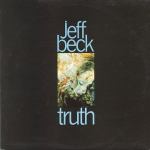
Side Two of Truth Tends to Sound Better than Side One

More of the Music of Jeff Beck

What to Listen For – Side to Side Differences

An interesting bit of trivia: many side twos earned a sonic grade that was a full plus higher than any given copy’s grade for side one. A half plus higher was quite common too.

Side two most of the time just plain sounds better than side one, so when evaluating your copy be sure to check side two first to hear what is probably going to be the best sound on the album. 

In many ways it sounds like the first Zep album, and that’s a good thing. The sound is a perfect fit for the music. In recent interviews Jeff Beck has been saying that Jimmy Page stole his idea for a Heavy Rock Band playing electrified blues. Based on the evidence found on the two sides of this very album I would say he has a point.

(more…)

Performance – Rockin’ The Fillmore – What Other Live Rock Record Sounds This Good?

Another Record We’ve Discovered with (Potentially) Excellent Sound…

And One We Also Just Added to Our Rock & Pop Top 100 List

One of the best — if not THE best — rock concert albums we have ever heard. Can you imagine if Frampton Comes Alive sounded like this? If you want to hear some smokin’ Peter Frampton guitar work from the days when he was with the band, this album captures that sound better than any of their studio releases, and far better than FCA on even the best copies.

Grungy guitars that jump out of the speakers, prodigious amounts of punchy deep bass, dynamic vocals and drum work — the best pressings of Rockin’ The Fillmore have more firepower than any live recording we’ve ever heard.

We know about quite a few records that rock this hard. We seek them out, and we know how to play them.

Who knew?  We didn’t, of course, until not that many years ago (2014 maybe?). But we are in the business of finding these things out. We get paid by our customers to find them the best sounding pressings in the world. It’s our job and we take it very seriously.

Did any audiophile reviewers ever play the album and report on its amazing sound? Not that we are aware of.

Do they have the kind of playback systems — the big rooms, the big speakers, the freedom from compression and artificiality — that are required to get the most from a recording such as this one?

Doubtful. Unlikely in the extreme even.

They don’t know how good a record like this can sound because they aren’t able to play it the way it needs to be played.

And when was the last time you read a review of a record that hadn’t just been reissued on Heavy Vinyl?

There was a time when audiophile reviewers wrote about exceptionally good sounding vintage pressings they had come across. Harry Pearson comes immediately to mind, but there were many others following his lead. Now it seems few of them can be bothered. More’s the pity.

(more…)

Big Speakers, Loud Levels and Plenty of Bass Work Their Magic on Stand Up

Hot Stamper Pressings of the Music of Jethro Tull Available Now

It’s common for pressings of Stand Up to lack bass or highs, and more often than not the copies that we play in our shootouts, shootouts which are strictly limited to import pressings on Island or Chrysalis, lack both.

The bass-shy ones tend to be more transparent and open sounding — of course, that’s the sound you get when you take out the bass.

90-plus percent of all the audiophile stereos I’ve ever heard were bass shy, no doubt for precisely that very reason: less bass equals more detail, more openness and more transparency. Go to any stereo store or audiophile show and notice how bright the sound is. (Yet another good reason not to go to those shows. We stopped decades ago.)

Just what good is a British Classic Rock Record that lacks bass?

It won’t rock, and if it don’t rock, who needs it? You might as well be playing the CD. (The average CD of Stand Up — I have a couple of them — is terrible, but the MoFi Gold CD is superb in all respects.)

The copies that lack extreme highs are often dull and thick, and usually have a smeary, blurry quality to their sound. When you can’t hear into the music, the music itself quickly becomes boring. Most Island pressings suffer from these shortcomings.

If I had to choose, I would take a copy that’s a little dull on top as long as it had a meaty, powerful, full-bodied sound over something that’s thinner and more leaned out. There are many audiophiles who can put up with that sound — I might go so far as to say the vast majority can — but I am not one of them.

(more…)