Jazz, Big Band – Reviews and Commentaries

The Biggest “If” in All of Audio

Hot Stamper Pressings of Large Group Jazz Recordings Available Now

The best of the best vintage recordings are truly amazing if you can play them right.

That’s a big if.  In fact, it may just be the biggest if in all of audio.

But that is not our story for today. Our story today concerns the relationship between more accurate timbre and higher fidelity.

What do we love about vintage pressings like the Ted Heath disc you see pictured above?

The timbre of the instruments is reproduced with wonderful fidelity.

The unique sound of every instrument in this very large ensemble has been recorded accurately. Every instrument sounds the way it would sound if you were hearing it live. Every instrument sounds real.

That’s what we mean by Hi-Fi, not the kind of “Audiophile Sound” (sneer quotes are very much called for whenever the word “audiophile” is used to describe sound quality, mostly because there is so little in the way of quality to be described ) that passes for Hi-Fidelity on some records.

Some of the worst offenders along those lines can be found here.

(more…)

Pros and Cons of this Copy of Swings in High Stereo

Hot Stamper Pressings of Large Group Jazz Recordings Available Now

Side One

Big and spacious, yet clear, dynamic and energetic. The brass is never “blary” the way it can be on so many Big Band or Dance Band records from the 50s and 60s. (Basie’s Roulette records tend to have a bad case of blary brass as a rule.)

Sharp transients and mostly correct tonality and timbres, powerful brass — practically everything you want in a Hot Stamper is here!

The stage is exceptionally wide on this copy.

Listen to the top end on track two — man, that is some natural sound!

This side could use a bit more weight so we feel a grade of Super Hot (A++) gets it right.

(more…)

Letter of the Week – “Crystal clear, musical as hell, huge sound, dynamic… What a record!”

One of our good customers had this to say about some Hot Stampers he purchased a while back:

Hey Tom,   

Good Lord, this Basie! Holy smokes!! Crystal clear, musical as hell, huge sound, dynamic …. wow.

What a record!

Dear Sir,

I agree completely, it’s a knockout.

The only other one I like as well, maybe even a bit better, is Farmers Market Barbecue.

Dennis Sands’ engineering is a bit more natural to my taste. Bigger space. All the players sound more like they are in the same big room.

Both are great though, and nothing made in the last forty years that we have heard can touch either of them for sound.

(more…)

Our Stereo Just Loves Certain Records – Why Do You Suppose That Is?

Basic Audio Advice — The Fundamentals of Good Sound

The highest quality vintage pressings are truly amazing if you can play them right. That’s a big if.

In fact, it may just be the biggest if in all of audio.

Be that as it may. What do we love about vintage pressings like the Ted Heath’s Swings in High Stereo album you see pictured?

The timbre of the instruments is hi-fi in the best sense of the word.

The unique sound of every instrument is being reproduced with remarkable fidelity on this old record.

That’s what we mean by “hi-fi,” not the kind of audiophile phony BS sound that passes for hi-fidelity on some records.

Older audiophile records, typically those made by Mobile Fidelity in the 70s and 80s, suffered from a common group of problems on practically every record they released:

A boosted top, a bloated bottom, and a sucked-out midrange.

Nowadays that phony sound is no longer in vogue. A new, but equally phony sound has taken its place.

What seems to be in vogue these days, judging by the Heavy Vinyl reissue pressings we’ve played over the last few years, is a very different sound, with a very different suite of shortcomings.

(more…)

Duke Ellington / Newport Jazz Festival 1958

Hot Stamper Pressings of the Music of Duke Ellington Available Now

If you are a fan, this record on the original 6-Eye label will be a thrill. If you’re unfamiliar with the Duke’s music, I can’t imagine a better introduction than this.

This LP also includes Gerry Mulligan’s only performance with the Ellington band.

Paul Gonsalves’s saxophone performance is superb and worth the price of the album alone.

The clarinet parts on Princess Blue are out of this world — Ellington at his best!


This is an older jazz review.

Most of the older reviews you see are for records that did not go through the shootout process, the revolutionary approach to finding better sounding pressings we developed in the early 2000s and have since turned into a full-time practice for our staff of ten.

We found the records you see in these older listings by cleaning and playing a pressing or two of the album, which we then described and priced based on how good the sound and surfaces were. (For Hot Stamper listings, the sonic grades and vinyl playgrades are listed separately.)

We were often wrong back in those days, something we freely admit.

There is no reason to hide the fact that we know a great deal more now than we used to. Audio equipment and record cleaning technologies have come a long way since those darker days, a subject we discuss here.

(more…)

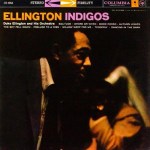
The Amazingly Spacious Sound of Ellington Indigos

Hot Stamper Pressings of the Music of Duke Ellington Available Now

This original 6-Eye Stereo pressing blew us away with its superbly well-recorded romantic big band jazz, of which Ellington was a true master.

A near-perfect demonstration of just how good 1958 All Tube Analog sound can be – no modern record can hold a candle to a pressing as good as this one.

If you like the sound of relaxed, tube-mastered jazz, you can’t do much better than Ellington Indigos. Many of the other Six Eye copies we played suffered from blubbery bass and transient smearing, but the clarity and bass definition here are surprisingly good. The warmth and immediacy of this sound may just blow your mind.

We played a handful of later pressings that didn’t really do it for us. They offer improved clarity, but can’t deliver the tubey goodness that you’ll hear on the best early pressings. We won’t be bothering with them anymore. It’s tubes or nothing on this album, and that means the best 6 Eye Stereo original pressings will always win our shootouts.

The key for vintage super-tubey recordings is balancing clarity with richness. The easiest way to test for those two qualities on this album is to find a track with clear, lively, loud trumpets that also includes rich trombones and other low brass.

On side one that track is Where or When. If your copy has clear, lively trumpets and rich, full-bodied, Tubey Magical low brass, it is definitely doing an awful lot of what it needs to do right.

Some of you may recognize that this is precisely why Bob and Ray Throw a Stereo Spectacular is our all time favorite test disc. (Was might be more accurate. It was for me, but I retired. The younger generation now running the show has their own favorite test discs, as is only fitting. They didn’t spend ten or fifteen years working on the stereo and room with the record the way I did.)

(more…)

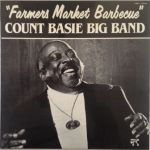
Farmers Market Barbecue – First Among Equals, or The Best Pablo Ever?

Hot Stamper Pressings of the Music of Count Basie Available Now

Musically FMB is a Top Basie Big Band title in every way. This should not be surprising: many of his recordings for Pablo in the ’70s and early ’80s display the talents of The Count and his band of veterans at their best.

Sonically it’s another story. Based on our recent shootout for this title, in comparison to the other Basie titles we’ve done lately, we would have to say that FMB is the best Basie big band title we’ve ever played. Since so many Basie big band recordings are so good, we don’t want to get ahead of ourselves; after all, we haven’t done shootouts for all of his Pablo large group recordings. To be safe we’ll just call this one First Among Equals.

The following are some general guidelines as to What to Listen For while you critically evaluate any of the Basie Big Band Pablo recordings (or any other big band recordings for that matter).

Simply put, we offer here a short list of qualities that we’ve come to appreciate on the best of the Basie Big Band pressings, qualities that we find are often in short supply on lesser LPs (and, as a rule, those that have been remastered onto Heavy Vinyl). (more…)

Letter of the Week – “They may be cheap but they are 100% a waste of money.”

Hot Stamper Pressings of the Music of Duke Ellington Available Now

Our good customer Conrad had written us quite a while ago asking what we thought about the sound of Analogue Productions’ records. Obviously we had nothing nice to say about them, which you can read here if so inclined.

He thought they were not great but good enough at the price:

I guess we can’t really compare experiences without knowing exactly the records we’ve each heard, and the AP pressings never hold a candle to any of the hot stampers I have received from you. It’s not close; my system and ears clearly know the difference. However, I don’t expect them to, and part of my relatively positive feeling about them is biased by knowing they’re dirt cheap at around $30 a pop.

An excerpt from my reply:

I believe you are trying to find reasons to justify the purchase of these modern remastered records, despite the shortcomings of their sound. My stereo is not forgiving enough of their faults to play them for enjoyment, and my ears are not forgiving enough of their sonic irregularities to find even the best of them much more than passable.

I took off my rose-colored glasses a long time ago, and I certainly have no intention of putting them back on.

Our stereo is designed to reveal the strengths and weaknesses of every record we play. Bad records sound awful on it, and mediocre records are a waste of time.

Years ago we started to notice that most of the new Heavy Vinyl pressings were sounding worse and worse, and by 2007, when Blue came out, that was the straw that broke the camel’s back. We decided to take a stand and we have never questioned for a moment that decision.

Conrad followed up with this after I had asked him about some titles he might have been impressed with.

I disagree with most of the benefit of the doubt I was giving them then, and haven’t listened to any really since then aside from here and there and always with utter disappointment. System and standards have improved. They may be cheap but they are 100% a waste of money, whereas your records cost the moon but repay in kind and are easy to amortize.

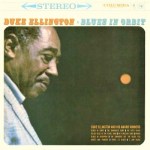
That said, one that did sound decent enough was Blues In Orbit.

Unfortunately, I was never able to get around to discussing that one title Conrad thought sounded decent enough, Blues in Orbit.

When it comes to the records audiophiles think sound good on Heavy Vinyl — especially the ones I’ve never played (or played decades ago and can’t remember their sound all that well) — we have a short question, all of three words, that we like to ask:

Compared to what?

Without playing other pressings, doing a proper shootout for the album with some nice Six-Eye stereo originals and maybe some 360s and even a red label 70s pressing or two, you simply have no way of knowing how good the album can sound.

What you have with the Classic Records remaster (or any other Heavy Vinyl reissue for that matter) is what seems like a good sounding pressing, no more, no less.

And how good is it really?

Is it in danger of getting worn out from being played too often?

Has it become a personal favorite?

Are you falling in love with the music and knocked out by the sound?

(more…)

The King James Version – What to Listen For

Hot Stamper Pressings of Large Group Jazz Recordings Available Now

Unlike most Direct to Disc recordings, this album actually contains real music worth listening to — but only when the pressing lets the energy of the musicians through, with actual fidelity to the sounds of the real instruments. Brass without bite is boring. Drummers who are too delicate in their drumming will put you to sleep.

Many copies of this album will do exactly that, which is a real shame. During our shootout, the more we played the good copies, the more we appreciated the music these guys were making. They were swinging, a big group of top quality players totally in the groove. When it’s played well, and the sound is as good as it is here, there’s nothing boring about these Big Band Jazz Classics. The music works. It swings. If you like the kind of big band recordings Basie made — and who doesn’t — you will find much to like here.

What to Listen For

No matter what copy you have, when you play it notice how the brass in the center of the soundfiield sounds so different from the brass on either side, where, obviously, closer mics allow their solos to be picked up and mixed more easily. There are lovely trumpet solos in the left channel and a baritone sax solo in the right that have amazingly realistic fidelity. Close your eyes and those instruments are RIGHT THERE.

One thing Sheffield got right is tonally-correct, hi-fidelity brass in a real acoustic space. (The latter is where For Duke fails so miserably, although no one ever seems to notice or bother to write about it. To me that dead acoustic is like fingernails on a blackboard, completely inappropriate to the sound.)

What to Watch Out For

As a rule two areas are especially lacking: there is a noticeable lack of presence on most copies, causing the brass to get stuck in the speakers and lose its bite; and, every bit as bad, the sound is often just plain compressed, lacking energy and life.

The musicians on most copies just don’t seem to be giving it their all.

But wait a minute. This is a direct disc. How can it be compressed, or lack transients? Aren’t those tape recorder problems that are supposed to be eliminated by the direct to disc process? Maybe so, but there is some very strong evidence to the contrary, and this record is that evidence.

Even though the mastering is fixed at the live event, there are many other variables which no doubt affect the sound. The album is pressed in three different countries: the United States, Japan and Germany. Many mothers were pulled from the acetates and many, many stampers made from those mothers.

Bottom line? You got to play ’em, just like any other pressing. If no two records sound the same, it follows that no two audiophile records sound the same, a fact that became abundantly clear very early on in the listening.

Of course, not many audiophiles are in a position to shootout multiple copies of The King James Version, and I’m not sure most would even want to.

Here at Better Records we have a whole system set up to do exactly that, so we waited until we had a pile of them, got them all cleaned up, and off to the races we went.

(more…)

The Recordings of Duke Ellington – Two More that Didn’t Make the Grade

More of the Music of Duke Ellington

Reviews and Commentaries for the Music of Duke Ellington

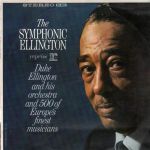
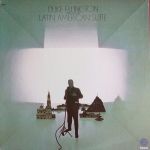
Pictured to the left are a couple of the Ellington albums we’ve auditioned over the years.

Without going into specifics, we’ll just say these albums suffer from weak music, weak sound, or both. They may have some appeal to fans of the man, but audiophiles looking for top quality sound and music — our stock in trade — are best advised to look elsewhere.

We play mediocre-to-bad sounding pressings so that you don’t have to, a public service from your record-loving friends at Better Records.

You can find these two in our Hall of Shame, along with others that — in our opinion — are best avoided by audiophiles looking for hi-fidelity sound. Some of these records may have passable sonics, but we found the music less than compelling.  These are also records you can safely avoid.

We also have an Audiophile Record Hall of Shame for records that were marketed to audiophiles for their putatively superior sound. If you’ve spent any time on this blog at all, you know that these records are some of the worst sounding pressings we have ever had the displeasure to play.

We routinely play them in our Hot Stamper Shootouts against the vintage records that we offer, and are often surprised at just how bad an “audiophile record” can sound and still be considered an “audiophile record.”

(more…)