
Deca original aftermath Rolling Stones
Notes for side one very different. Main riff gets lost
Sucked out maids
To be base and lots of it
Nope
Deca original aftermath Rolling Stones
Notes for side one very different. Main riff gets lost
Sucked out maids
To be base and lots of it
Nope

Sonic Grade: C+
The MoFi pressing of With the Beatles has so many problems it would take an hour to describe them all. Suffice it to say, it’s thinner and brighter, with voices that are grittier and grainier. The overall effect is the sinking feeling that you are listening to a cheap reissue and not the real thing. Don’t the Beatles sound better than this? To be fair, some tracks are okay, others a disaster.
If you own the MoFi, play it. Listen to it carefully. Make notes of which songs sound better than others and why. That’s how we spend our days, evaluating the relative merits of various pressings, and it’s that and that alone that has given us the critical listening skills necessary to recognize and appreciate the differences among the records we play.
One of the biggest problems with the average Parlophone copy is just the reverse of the MOFI. They tend to have rolled off highs, which emphasizes the harshness in the upper midrange and causes a loss of transparency. (The best Hot Stamper copies are of course as smooth, sweet, and transparent as they come.) Even with those shortcomings though, I would still rather listen to a typical Parlophone pressing. I wouldn’t be frustrated by the sound of somebody fooling with the EQ and screwing it up. (more…)

A distinguished member of the Better Records Rock Hall of Fame and another in the long list of recordings that really comes alive when you turn up your volume .
If you’ve been waiting for a seriously powerful Kashmir experience, today is your lucky day. (more…)

Hot Stamper Pressings of the Music of The Beatles Available Now
Here is how we described a recent Shootout Winning copy of 1967-1970:
This vintage import 2-LP compilation set boasts STUNNING Shootout Winning Triple Plus (A+++) sound or close to it on all FOUR sides. These pressings are rich, smooth and sweet, with plenty of Tubey Magic and little of the grain and grunge of most Brits (and don’t get us started on the domestics).
You get clean, clear, full-bodied, lively and musical ANALOG sound from first note to last. Like most compilations, some songs sound better than others, but “Don’t Let Me Down” and “Come Together” are two that really stand out here. For those of you out there who have never tried one of our Hot Stamper Beatles records, this may be the best sound you’ve ever heard from them. The CDs — even the new ones — sure don’t sound like this!

We are on record as finding the British pressings of 1967-1970 too bright; certainly most of them are anyway. The original domestic pressings, as anyone who has ever played one can attest, mastered at Sterling no less, are absolutely godawful.
Allow us to add one more to that group of pressings to avoid, the blue vinyl domestic pressings mastered by Gene Thompson. Based on how awful this pressings sounds, it would probably be wise to avoid his work in general.
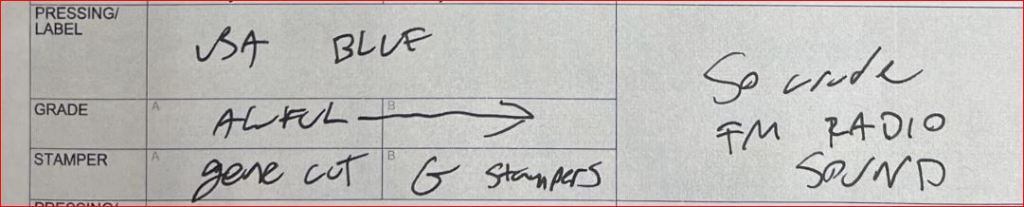
The only artists who have earned the honor (ahem) of having their very own page on this blog are The Beatles. For those of you interested in learning more about their often amazing recordings, feel free to dig in to your heart’s delight.


 Hot Stamper Pressings of the Music of Neil Young Available Now
Many copies we played would work for the heavy songs and then fall short on the quieter tracks. Others had gorgeous sound on the country-tinged numbers but couldn’t deliver much whomp* for the rockers.
Only a select group of copies could hold their own in all of the styles and engage us from start to finish. We’re pleased to present those exceptional pressings as the Hot Stamper copies of Harvest that so many of you have been begging for.
Side One
Out on the Weekend
We love the sound of the drums on Neil Young records — think of the punchy kick drum on After The Gold Rush and the punchy thwack of the snare on Zuma. On the best copies, this song should have the kind of BIG, BOLD Neil Young drum sound we audiophiles have been in love with since the album first came out.
The pedal steel guitar also sounds out of this world on the best copies.

Drop the needle on Since I’ve Been Loving You and turn it up good and loud. Robert Plant will be right there between your speakers, and your jaw will be on the floor!
Cue up Tangerine on side two for a taste of rich, sweet, Tubey Magical Analog Sound. The acoustic guitars are lush and delicate, the bass is deep and well-defined, and the vocals are completely natural and free from bad mastering or phony EQ.
Zep Unplugged
The three Zep albums with out of this world acoustic guitars are the first album, III and Houses of the Holy. (All three are currently on our Top 100 list, along with II and IV. All five can be amazing sounding on the right pressings, but those pressings tend to be tough to come by in clean condition.)
The guitars are every bit as rich, tubey, sweet, delicate and harmonically correct as those found on Tea For the Tillerman, Rubber Soul, Comes a Time or any of the other phenomenally good recordings we rave about on the site.
Of course, without the right pressing, you would never know that. Later copies, Classic Records copies, typical domestic and import copies — none of them are going to sound like this one. We guarantee it.
 Hot Stamper Pressings of the Music of John Coltrane Available Now
Some of the Rudy Van Gelder cuttings of this album were decent, but had you bought a copy with these stampers, you could be forgiven for using the man’s name in vain.
VAN GELDER in the dead wax is no guarantee of high quality sound, on any record. Records don’t work like that.
The 1+ grade found on side one of both discs means the sound for those two sides may be passable, but the NFG sound on side two of record one means you have at best only half an album with decent sound, and what good is that?
As you can see from our notes, the sound is way too hot and messy and thin.
Note that side two of the second record wasn’t played at all. Why waste more time on a record that clearly did not come off the press properly, whether from bad mastering or bad vinyl? Or bad something else, who can say?
We do not sell records with 1+ grades. You should have no trouble finding those on your own. The world is full of them.

Poor Rudy
Rudy Van Gelder comes in for a lot of criticism from the audiophile community, especially from audiophiles who tend to prefer the remastered Heavy Vinyl pressings made from his recordings.
Unsurprisingly, much of the criticism comes from some of the very same engineers responsible for the remastering those records.
Those who produce reissues of his recordings are notable critics as well.
 Hot Stamper Pressings of Pop and Jazz Vocals Available Now
Mean to Me is a favorite test track for side one, with real Demo Disc quality sound. We credit it with helping us dramatically improve our playback.
Roy DuNann at Contemporary was able to get all his brass players together in one room, sounding right as a group as well as individual voices.
The piano, bass, and drums that accompany them are perfectly woven into the fabric of the arrangement.
What makes this song so good is that when the brass really starts to let loose later in the song, with the right equipment and the right room, you can get the kind of sound that’s so powerful you could practically swear it’s live.
Helen was recorded in a booth for this album, and her voice is slightly veiled relative to the other musicians playing in the much larger room that of course would be required for so many players.
When you get the brass correct, the trick is to get her voice to become as transparent and palpable as possible without screwing up the tonality of the brass instruments.
The natural inclination is to brighten up the sound to make her voice more clear.
But you will quickly be made painfully aware that brighter is not better when the brass gets too “hot” and starts to tear your head off.
The balance between voice and brass is key to the proper reproduction of this album.
Once you have achieved that balance, tweak for transparency while guarding against too much upper midrange or top end. Which also means watch out for audiophile wires that may have fooled you into thinking they were more resolving when actually they were just peakier in some portion of the frequency range.