Bill Halverson, Engineer -rev/com

Goodbye Cream Has Some of the Best Live Rock Sound Ever Recorded

Hot Stamper Pressings of the Music of Eric Clapton Available Now

When you get a good side one of Goodbye Cream you’ll hear exactly why we are calling it one of the best sounding live rock albums of all time.

Goodbye has the Big Rock Sound that we go crazy for here at Better Records. The top copies just plain ROCK HARDER than all the others. Yes, they’re bigger. Yes, they have more weight and whomp down low. Yes, they are smoother and more natural up top. But what really sets them apart is the tremendous Energy they contain in their grooves. The music EXPLODES out of the speakers and comes to life on the best copies like practically nothing you have ever heard.

This link will take you to some of the hardest rockin’ albums we currently have in stock.

All the titles that have earned a place on our none rocks harder list can be found here.

It’s clearly one of  Bill Halverson‘s engineering triumphs, along with Deja Vu and Steve Stills’ first album (now that’s a trio!). Live rock music on record just does not sound better than a White Hot Stamper side one of Goodbye.

When it’s all working, you’re front and center for a fiery Cream concert with these guys delivering one heckuva performance. And where else are you gonna get that these days?

(more…)

The Turn Up Your Volume Test – Almost Cut My Hair

Hot Stamper Pressings of the Music of Crosby, Stills, Nash and (Sometimes) Young

The only time Crosby, Stills, Nash & Young actually sound like a real rock and roll band is on the track Almost Cut My Hair.

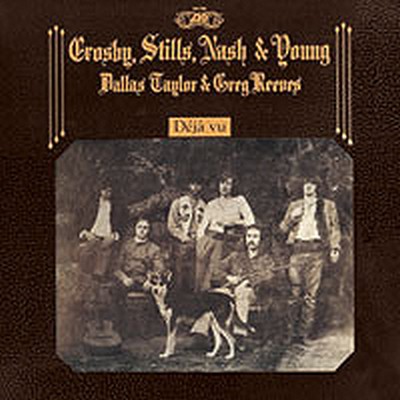
According to Stephen Barncard, one of the engineers on Deja Vu, the track was actually recorded live in the studio.

Boy, it sure sounds like it. The amount of energy the band generates on this one song threatens to exceed the energy of the entire first album put together. (Not really. The energy on 49 Bye-Byes, the last track on side two and my favorite on the album is off the charts and shows just how powerful there brand of Hippie Folk Rock could be given the right material. I defy anyone to name two albums from the period released back to back that are better. They have their equals, don’t get me wrong, but the idea of there being a pair of “betters” is a hard one to entertain once the pot smoke clears.)

The reason this song presents such a tough test is that it has to be mastered properly in order to make you want to turn it up, not just louder, but as loud as your stereo will play.

This song is not to be used as background music whilst sipping wine and smoking cigars.

It positively cries out to be played at serious volume levels on monstrously large speakers. Nothing else will do justice to the power of the band’s one and only live performance captured on the album.

Listen to Neil in the left channel wailing away like a man possessed. Imagine what his grunged-out guitar would sound like blasting out of a stack of Marshall amps the size of a house.

(more…)

Listening in Depth to Crosby Stills & Nash

Hot Stamper Pressings of the Music of Crosby, Stills and Nash Available Now

Now with bonus CD Advice.

Although millions of copies of CSN’s first album were sold, so few were mastered and pressed well, and so many mastered and pressed poorly, that only a ridiculously small number of Hot Stamper copies have ever actually made it to the site. A couple dozen would be my guess, compared to, for example, the Beatles albums, many of which have sold by the hundreds. To this day they are difficult to keep in stock, I assume because our customers seem to really like them.)

We wish that were not the case — we love the album — but the copies we know to have the potential for Hot Stamper sound are just not sitting around in the record bins waiting for us to scoop them up.

But of course that was never the really the case even back in the good old days, as the reissue we like was simply not produced in significantly large numbers the way the originals were. Finding the right reissues was always a matter of luck, with the odds stacked very much against us. I don’t remember ever finding more than one copy with the killer stampers in a single year.

Warning

Whatever you do, don’t waste your money on the Joe Gastwirt-mastered CD.

It couldn’t be any more awful. (His Deja Vu is just as bad.)

In-Depth Track Commentary

Side One

Suite: Judy Blue Eyes

What’s magical about Crosby, Stills, Nash & Young?

Their voices of course. It’s not a trick question. They revolutionized rock music with their genius for harmony. Any good pressing must sound correct on their voices or it has no value whatsoever. A CSN record with substandard midrange reproduction — like most of them — is a worthless record.

(more…)

Listening in Depth to Songs for Beginners

Hot Stamper Pressings of the Music of Graham Nash Available Now

Presenting another entry in our extensive listening in depth series with advice on what to listen for as you critically evaluate your copy of Song for Beginners.

(Here are some other albums currently on our site with similar track by track breakdowns.)

This is one helluva well recorded album. Most of the credit must go to the team of recording engineers, led here by the esteemed Bill Halverson, the man behind all of the Crosby, Stills, Nash and Young albums. Nash was clearly influenced by his work with his gifted bandmates, proving with this album that he can hold his own with the best of the best.

Some songs (We Can Change The World, Be Yourself) are grandly scaled productions with the kind of studio polish that would make Supertramp envious. For me, a big speaker guy with a penchant for giving the old volume knob an extra click or two, it just doesn’t get any better.

Others (Sleep Song, Wounded Bird) are quiet and intimate. Their subtlely is highlighted by the big productions surrounding them. This is that rare album in which every aspect of the production, from the arrangements to the final mix, serves to bring out the best qualities in the songs, regardless of scale.

(more…)

Is So Far Really Just a Waste of Money?

Hot Stamper Pressings of the Music of Crosby, Stills and Nash Available Now

The All Music Guide considers So Far to be a waste of money (on CD) because it was a slapped together effort to capitalize on CSN’s success, combining material from only two albums and then adding two unreleased tracks.

Their attitude boils down to the idea that the first two records are essential, so why buy this album for two songs?

I’ll tell you why.

Because finding good sounding pressings of either of the first two albums is practically impossible for the average audiophile record collector.

I mean that literally: as a practical matter, it is very, very difficult to find Hot Stamper versions of the band’s first two releases. This is especially true for the self-titled album from 1969, which sounds best in our experience on a later reissue that we have a devil of time finding and therefore rarely have in stock.

Both the first two albums and So Far are records we credit with helping us dramatically improve the playback quality of our system.

A Few Words About Deja Vu

Deja Vu is a special album for me, one I have been obsessed with since I first became an audiophile.

I was a big Crosby, Stills and Nash fan already — the first album being life-changing to a 15 year old music lover such as myself, on 8-track tape in the car no less — so it was only natural that I would fall in love with Deja Vu when it came out in 1970.

(more…)

Money CAN Buy You Happiness, You Just Have to Spend It Right

Hot Stamper Pressings of the Music of Crosby, Stills, Nash and (Sometimes) Young

A testimonial from a customer for his Hot Stamper Deja Vu discusses what it takes to get good sound from your stereo. (Hint: it starts with a good sounding record, or two as in this case.)

An excerpt. (Emphasis added.)

Tom:

I received my Deja Vu 2 Pack yesterday. Even though I have not yet listened to all of the mother load that I got on Marathon week, I had to take a listen to this tonight.

Whew – Mother of God!

I have never heard even a semi-decent copy of this album before on either LP or CD – although the music is outstanding and chock full of memories for anyone my age. This white hot stamper is transcendental nirvana. Tom was not kidding when he said master tape sound. The vocals and instrumentals were so alive it was unbelievable. Some of the songs were so good that I just tilted my head back and opened my mouth real wide and just zoned out. Crosby’s vocal on Almost Cut My Hair is masterful. I took your advice and played it twice at even louder volumes. Yikes – better than acapulco gold. Neil Young’s Country Girl was so huge – a vast wall of sound with every single voice and instrument standing out.

This album is even better than I ever thought it was.

I was just not prepared to hear how it really sounds after all that crap I had been listening to for 30 years.

I have come to a conclusion – no matter whether I had the best $50,000 amps in the world or a $29,000 phono supply or the $150,000 Wilson Alexandria speakers or all that other incredible stuff that audiophiles lust for – not one of those items can make a shit record sound anything but like a shit record.

There is no overcoming the original source material that you play on your stereo system.

Buying a hot stamper for what can seem like a lot of money – especially if you want a whole lot of them – is really a bargain for those who have invested in a super audio system (with analog capability of course). It is true that the better your system is the more you will get out of hot stampers – but at some point in the process it is more effective to spend available resources on the LPs rather than on more better mega equipment.

I just don’t believe an additional $20,000 spent on a better amplifier can deliver as much as $20,000 spent on Super or White Hot Stampers played with my current amplifier. Additionally, I do believe that even a modest analogue system will sound fabulous when you have master tape sound coming out of it.

Bless Tom and all the folks at Better Records. My system enjoyment quotient has increased dramatically this year since I have been buying the good stuff to play on it. Keep up the good work.

Regards,
John

John,

So glad to hear you loved that Deja Vu as much as your enthusiastic letter indicates you did. When we come across a copy as good as the one we sent you, it is indeed a cause for celebration here at Better Records: We know someone is very likely going to have their mind blown, and soon. Obviously, in this case the mind that was blown was yours.

As far as megabuck equipment is concerned, we discussed the subject in a commentary entitled Money Can’t Buy You (Audio) Happiness [since removed] in which we noted that a certain reviewer’s very, very expensive equipment did not seem to be helping him tell the difference between good sounding records and bad. From our perspective, there’s little difference in the sound of the Heavy Vinyl pressings he seems to like so much from Classic, Sundazed, Speakers Corner and the like. To us almost all of them leave a lot to be desired.

(more…)

What Track Here Would Be Right at Home on David Crosby’s First Album?

Hot Stamper Pressings of the Music of Graham Nash Available Now

Our last shootout for this album took place in 2021. I wish we could keep the record in stock but finding the right stampers these days is not easy.

Still, as a favorite album of mine, I listen to the album regularly, just not on vinyl. Both the standard CD and the cassette I have sound right to me, sounding very much like the original record.

Recently I was playing the album and heard a song that sounded an awful lot like it might have been produced by the same team that recorded David Crosby’s first album, If Only I Could Remember My Name.

If you’re up for it, listen to the Crosby, then play the Nash and see if you can spot it. Feel free to leave your impressions in the comments section below.

Digging Deeper

Songs for Beginners is one of those albums that made me want to dig deeper into audio. After every improvement I managed to make to the system, Songs for Beginners would be one of the records that I would play (at very high volume) to see what changes I had brought about.

All the best changes — the ones I kept — always made the album sound better than I had last heard it. Over the course of decades the sound became amazingly good, a true Demo Disc that belonged in the company of Tea for the Tillerman or Dark Side of the Moon.

Back in the 70s and the 80s, not so much later as I had found plenty of other tough test discs by then, it helped me dramatically improve the playback quality of my system, which, to be honest, had a very long way to go, although I sure didn’t know that at the time. I thought it sounded great.

Early on in the history of our track by track breakdowns, written in order to aid listeners in testing their stereos and the other copies of the record they might own, we did a breakdown for the album which you can read here.

If you can’t find a nice original, whatever you do, don’t buy the awful Classic Records pressing of the album. They ruined it.

(more…)

Letter of the Week – “Here is where the life and groove of the music is!”

Hot Stamper Pressings of the Music of Crosby, Stills, Nash and (Sometimes) Young

One of our good customers had this to say about some Hot Stampers he purchased recently:

What a batch of records! I just finished playback last night.

It only occurred to me afterwards that some of these titles I had only heard on compact disc or streaming, I thought I knew this music but the Hot Stampers – particularly Aja and CSNY So Far – defied me.

Here is where the life and groove of the music is! The digital formats have been calling my attention to all the wrong details.

I could go on and on. All eight titles are a knockout. Close To The Edge is a monster – the presentation is massive, and I’m sure my system isn’t doing it full justice, but I love this record and it’s by far the best I have ever heard it.

Thanks again to the Better Records team for everything you do – for this music lover it’s manna from heaven.

Cheers,

Austin

Austin,

Yes, you are so right about the digital formats. They get the sound of classic albums wrong by drawing your attention to recording details at the expense of the flow and drive and energy of the music.

As for So Far, I am a huge Crosby, Stills and Nash fan — the first album being life-changing to a 15 year old music lover such as myself, on 8-track tape in the car no less — and my ardor never flagged in all the years that have gone by since then.

It seems that there are some albums that will last you a lifetime — the first two albums, produced in 1969 and 1970, are still right at the top of my All Time Favorites.

Close to the Edge is a monster and always has been. I listen to it regularly, along with The Yes Album and Fragile. What a run of albums they released before hitting a wall with Tales of Topographic Oceans in 1973.

Aja is record I have been writing about for decades. It’s often an overblown mess, on vintage and modern pressings alike.

The copies that do well in our shootouts are the ones that are coherent, where the over-production suits the songs and does not draw too much attention to itself.

(more…)

Listening in Depth to So Far

Hot Stamper Pressings of the Music of Crosby, Stills and Nash Available Now

This is a very difficult record to find with proper mastering (and good vinyl, ouch!). It seems that all of Crosby, Stills and Nash’s albums are that way. The average domestic pressing rarely even hints at how well recorded this band really was (and the imports are even worse — we’ve never heard one that didn’t sound dubby, veiled and compressed).

In my experience not even one out of ten LPs sounds right; I put the figure at one out of twenty. Most of them are shrill, dull, grainy, flat, opaque, harsh and in varying degrees suffer from every other mastering and pressing malady known to man.

But the best ones have some tracks in superb sound. When you hear the Hot Stampers for records like this you will simply be AMAZED. If you’ve ever heard a really good If Only I Could Remember My Name, an album that CAN be found with proper mastering, that should give you some idea of how good the first two albums can sound.

Side One

Déjà Vu

When you get a good copy of this album, this song sounds like it was lifted right off of a Hot Stamper copy of Deja Vu itself. It’s so rich and Tubey Magical you’d swear it couldn’t get any better. Huge amounts of deep bass. Acoustic guitars that ring for days. Midrange magic to die for. Not many of them sound this way, unfortunately.

If I could indulge in some more MoFi and Half-Speed bashing for a moment, the bass “solo” at the end of this song is a great test for bass definition. The notes are relatively high, and it’s easy for them to sound blurred and wooly. The MoFi, like virtually all Half-Speed mastered records, has a problem with bass definition. If you own the MoFi, listen for how clearly defined the notes are at the end of this track. Then play any other copy, either of So Far or Deja Vu. It’s a pretty safe bet that the bass will be much more articulate. I know how bad the MOFI is in this respect. Rarely do “normal” records have bass that bad.

(more…)

Mobile Fidelity Actually Produced a New and Improved Deja Vu in 1983

Hot Stamper Pressings of the Music of Crosby, Stills, Nash and (Sometimes) Young

A letter came to us years ago with the comment “I had no idea that vinyl could produce this sound.”

As the time I made some of the following comments in reply and have added a few new ones since then.

Deja Vu is indeed a very special album, one I have been obsessed with since I first became an audiophile.

I was a big Crosby, Stills and Nash fan already — the first album being life-changing to a 15 year old music lover such as myself, playing over and over on 8-track tape in the car no less — so it was only natural that I would fall in love with Deja Vu when it came out in 1970.

13 Years Go By

Time went by and then, oddly enough, my love for the music was reignited by a pressing that came out 13 years after the album’s first release, on a label you may be familiar with, Mobile Fidelity Sound Labs.

I realized instantly that Mobile Fidelity had indeed improved upon the average original’s sound.

This is not a high bar considering how awful sounding most originals are, but let us give credit where credit is due. With the volume cranked good and loud,  I often played the first track, Carry On, using the MoFi pressing to demonstrate how smooth, rich, big, powerful and dynamic my system could sound.

“The CD may be taking over the world,” I would say, because by 1983 that was exactly what was happening, “but you”ll never hear a CD that sounds like this!”

13 More Years Go By

It would take me many years, at least another 13 or so, to come across the domestic reissues that trounced the MoFi and showed me how colored, compressed, thick, blurry and recessed their pressing was.

Here is the real shocker from that time: I actually thought that the extremely hard-to-find reissue I’d discovered was so flukishly good that it could never be beaten by any other pressing!

(To be fair, my long-time audiophile buddy Robert Pincus probaby deserves the credit for finding it. He found a great many special pressings for me back when I was buying records from him, reaching all the way back to 1987.)

Which is yet another example of everything being relative. I admit I had a poor understanding of that vitally important concept at the time. I really had no idea how good a recording Deja Vu was, and I didn’t really have a way to find out because many of the most important revolutions in audio had not been incorporated into my system, or had yet to be invented.

Within the last five years or so another domestic pressing, and now most recently an import (!), have come to be seen as clearly superior to all of these.

This is the result of having never given up the search for a better Deja Vu.

Record Collecting in My World

Anticipating the release of the newest Half-Speed remastered pressing that would deliver me from the evils of the garden-variety domestic or import LP I happened to own was the dominant feature of my record collecting world in the 70s and 80s.

No one reading this blog will be surprised to learn that almost none of those “new and improved” pressings would pass the test of time. This is an idea I first came to appreciate in the 90s and one that has become more true with each passing year.

With the increasing proliferation of one Heavy Vinyl mediocrity after another, in 2007 we finally recognized we had a duty to our customers to stand athwart audio history and yell “Stop.”

(more…)