piano-test

Pianos are very good for testing your system, room, tweaks, electricity and all the rest, not to mention turntable setup and adjustment.

Recordings that get the piano to sound neither thin nor smeary usually do well in our shootouts. It’s one of the most important instruments we listen for.

The more full-bodied, powerful and clear the piano sounds, the higher the grades will be for the pressing under review, all other things being equal.

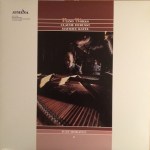
Piano Works of Debussy & Ravel – This Is How to Make a Good Audiophile Record

Hot Stamper Pressings Engineered by Robert Ludwig Available Now

A lovely solo piano recording from Athena, which is certainly not a label we have ever associated with good sound. Just the opposite in fact.

But they did a great job on this album (or at least I thought so many years ago when I last played it. For purposes of this commentary, let’s assume the sound still holds up).

This is how to make a good audiophile record.

Yes, there is such a thing. They may be rare but they do exist. We have a few of them for sale as a matter of fact.

Take a good tape, hire someone who knows his way around a normal-speed cutting lathe (with 5800+ credits on Discogs, I would hope he knows what he’s doing) as well as classical music (he cut a huge number of records for Nonesuch back in the day), press it on good vinyl and let the audiophiles of the world enjoy it.

The Connoisseur Society original may in fact be better, but where are you going to find one?

Robert, Bernie and Doug – An Honest Comparison

In another listing for an audiophile record that Robert Ludwig cut, we noted:

I suspect that if Ludwig hadn’t stopped cutting records years ago, we would not be complaining nearly as much about the questionable sound of the modern Heavy Vinyl pressings currently inundating the market.

Bernie and Doug really started letting the record lovers of the world down, beginning as far back as the 90s. See here and here.

(more…)

Listening in Depth to Emerson, Lake & Palmer

Hot Stamper Pressings of the Music of Emerson, Lake and Palmer Available Now

If you’ve got the system to play this one loud enough, with the low end weight and energy it requires, you are in for a treat with Emerson, Lake and Palmer’s debut.

The organ that opens side two will rattle the foundation of your house if you’re not careful. This music really needs that kind of megawatt reproduction to make sense. This is bombastic prog that wants desperately to rock your world. At moderate levels it just sounds overblown and silly. At loud levels, it actually will rock your world.

To play this record right, you should have, at a minimum:

  • Big dynamic speakers, and they should be pulled out well into the room to create a three-dimensional presentation, in this case of a live rock concert. If the speakers are too big for the room, or stuck in the corners, you haven’t got a chance with a recording as powerful as this one.
  • A large room. (Our new studio has a 12 foot ceiling, a big help with a blockbuster recording such as this one.)
  • Strong walls with no windows, and, if possible, a concrete floor to keep the bass from leaving the room.
  • Seating for a single listener far from any boundary, especially the back wall (a common problem with small-ish rooms).
  • Extensive room treatments to deal with the loud levels this music requires.
  • Enough amplifier power driving speakers with big enough woofers to move all the air in the listening room with authority.
  • And, finally, high quality electricity, a heavily tweaked front end and all the rest of the audio stuff we discuss endlessly on this blog.

Without all of these things, it’s hard for us to imagine anyone could hear this record sound the way the artists and engineers wanted it to. Playing a record like this in a small room at moderate levels practically guarantees that the listener will not be able to hear what makes the best copies of this album so special.

(more…)

The Strings on this Album Are a Tough Test

jobimthecomposerHot Stamper Pressings of the Music of Antonio Carlos Jobim Available Now

Credit engineer Phil Ramone for correctly capturing the sound of every instrument here: the guitars, piano, flutes, strings, drums, percussion instruments — everything has the natural timbre of the real thing.

I used to think this recording erred on the bright side, but not the Hot Stamper copies. They are tonally right on the money.

When the balance lacks lower midrange, the sound can get lean, which causes the strings to seem brighter than they really are, a not uncommon problem with some of the pressings we heard.

We had quite a batch of these to play, including imports, originals, reissues (all stereo), and one lone mono, which was so ridiculously bad sounding we tossed it right out of the competition and into the trade pile.

For those of you playing along at home, we are not going to be much help to you here in finding your own Hot Stampers. Every version had strengths and weaknesses and all are represented in the three listings we are putting up today.

The sound of this side one blew our minds — no other copy could touch it. So open and airy, yet with real weight to the piano and a clear and strong bass line, this copy did EVERYTHING right.

The strings are very much part of the ensemble on this album, and getting good string tone, with just the right rosiny texture, the least amount of smear, freedom from shrillness or hardness — this is not easy to do. 

Side two was quite good at A+ to A++, but we found other copies that bested it, including one Triple Plus that was in a league of its own. Even so, this copy on side two would be hard to beat without a number of carefully cleaned pressings to choose from. 

Here are some records we’ve discovered that are good for testing string tone and texture.

Here are some records we’ve discovered that are good for testing midrange tonality.

(more…)

Listening in Depth to Aja

Hot Stamper Pressings of the Music of Steely Dan Available Now

Generally, what you try to get on side one is a copy with ambience, because most copies are flat, lifeless and dry as a bone.

You want a copy with good punchy bass — many are lean, and the first two tracks simply don’t work at all without good bass. And then you want a copy that has a natural top end, where the cymbals ring sweetly and Wayne Shorter’s saxophone isn’t hard or honky or dull, which it often is on the bad domestic copies.

The truly amazing side twos — and they are pretty darn rare — have an extended top end and breathy vocals on the first track, Peg, a track that is dull on nine out of ten copies. (The ridiculously bright MoFi actually kind of works on Peg because of the fact that the mix is somewhat lacking in top end. This is faint praise though: MoFi managed to fix that problem and ruin practically everything else on the album.)

If you play Peg against the tracks that follow it on side two, most of the time the highs come back. On the best of the best, the highs are there all the way through.

Side One

Black Cow

Fagen’s voice on the first line will always sound grainy – it’s that way on the CD and every LP I have ever played, which means it’s on the tape that way. It will quickly pass, and the rest of the vocals will sound amazing if you have a Hot Stamper Copy.

This song is as BIG and BOLD sounding as any pop song I know. This is Demo Disc material if you have the system to do it justice.

And don’t you just love the way it starts on the upbeat? Now that’s the way to kick off an album!

Aja

Got a big speaker? Lots of power? You will need both to play this song right. Note how the percussion comes through the dense mix, without being abrasive in any way. That’s a sure sign that you have a copy with the transparency and resolution you need to bring out the track’s best qualities. The mix needs that percussion; it’s there for a reason. You, dear audiophile, need an LP that lets that percussion be heard. Many are called; few are chosen.

Deacon Blues

It’s the rare copy that gets the top end for the first two tracks right and still has enough presence and top end for this song, which will tend to sound dull even if the first two tracks don’t. The truly killer pressings get all three tracks to sound amazing, no mean feat.

Side Two

For some reason, side two is almost always cut at a lower level than side one. Pump up the volume a db or two in order to get the full Aja effect for the songs on this side.


UPDATE 2022

The commentary about Peg you see below was written many years ago, and I no longer agree with the claim it makes.

The MoFi is so bad in so many ways that whatever it fixes on the top end, it destroys everywhere else.

It’s one of the greatest audio disasters of the 80s, along with the equally awful Cisco pressing, which qualifies as one of the great audio disasters of the modern Heavy Vinyl era.

(more…)

Listening in Depth to The Royal Scam

Hot Stamper Pressings of the Music of Steely Dan Available Now

We really went overboard with the track commentary for this one many years ago. This should make it easy for you to compare what we say about the sound of these songs with what they sound like to you on your system, using the copy you own or, better yet, one of our Hot Stampers. 

If you end up with one of our pressings, listen carefully for the effects we describe below. This is a very tough record to reproduce — everything has to be working in tip-top form to even begin to get this complicated music sounding the way it should — but if you’ve done your homework and gotten your system really cooking, you are in for the time of your Steely Dan life.

Side One

Kid Charlemagne

By far the most sonically aggressive track on this album, Kid Charlemagne is a quick indicator of what you can expect from the rest of the side. The typical copy is an overly-compressed sonic assault on the ears. The glaring upper midrange and tizzy grit that passes for highs will have you jumping out of your easy chair to turn down the volume. Even my younger employees who grew up playing in loud punky rock bands were cringing at the sound.

However, the good copies take this aggressive energy and turn it into pure excitement. The boys are ready to rock, and they’ve got the pulsing bass, hammering drums, and screaming guitars to do it.

Without the grit and tizz and radio EQ — which could have been added during mastering or caused by the sound of some bad ABC vinyl, who can say which — the sound is actually quite good on the best copies.

It’s one of the toughest tests for side one. Sad to say, most copies earn a failing grade right out of the gate.

The Caves of Altamira

This is the best test for side one.

There are sweet cymbals at the beginning, and Fagen’s double tracked voice should be silky and smooth, but on the really hot copies it’s also big and alive.

When I was first doing these shootouts, I noted that the hi-hat is front and center in the mix of this song, and when that hi-hat sounds grainy or aggressive, it’s positively unlistenable.

That hi-hat needs to sound silky and sweet or this song is going to give you a headache, at least at the volume I play it at: GOOD and LOUD.

(more…)

Now That’s the Way a Piano Should Sound!

On the best copies the rich texture of the strings is out of this world — you will have a very hard time finding a DG with better string tone.

The best pressings of this recording have none of the shortcomings of the average DG: it’s not hard, shrill, or sour.

DG made plenty of good records in the 50s and 60s, then proceeded to fall apart, like most labels did. This is one of their finest. It proves conclusively that at one time — 1962 to be exact — they clearly knew exactly what they were doing.

Without question this is a phenomenal piano recording in every way.

I don’t know of another recording of the work that gets the sound of the piano better. On the better copies, the percussive quality of the instrument really comes through.

It’s amazing how many piano recordings have poorly-miked pianos.

These bad sounding pianos are either too distant, lack proper reproduction of the lower registers, or somehow smear the pounding of the keys into a blurry mess.

Are they badly recorded?

Or perhaps it is a mastering issue?

Maybe a pressing issue?

To be honest, it’s probably all three.

Lately we have been writing quite a bit about how good pianos are for testing your system, room, tweaks, electricity and all the rest, not to mention turntable setup and adjustment.

  • We like our pianos to sound natural (however one chooses to define the term)
  • We like them to be solidly weighted
  • We like them to be free of smear, a quality that is rarely mentioned in the audiophile reviews we read

Other records that we have found to be good for testing and improving your playback can be found here.

(more…)

Listening in Depth to Famous Blue Raincoat

Hot Stamper Pressings of the Music of Leonard Cohen Available Now

I’m a huge fan of this FBR. It’s the only album Jennifer Warnes ever made that I would consider a Must Own recording or a Desert Island Disc. Without question this is her Masterpiece.

Key Test for Side One

Listen to the snare drum on Bird on a Wire. On most copies it sound thin and bright, not very much like a real snare. Let’s face it: most copies of this record are thin and bright, and that’s just not our sound here at Better Records. If the snare on Bird sounds solid and meaty, at the very least you have a copy that is probably not too bright, and on this album that puts it well ahead of the pack.

While you’re listening for the sound of that snare, notice the amazing drum work of Vinnie Colaiuta, session drummer extraordinaire. The guy’s work on this track — especially with the high hat — is genius.

Key Test for Side Two

Listen to the sound of the piano on Song of Bernadette. If it’s rich and full-bodied with the weight of a real piano, you might just have yourself a winner. At the very least you won’t have to suffer through the anemically thin sound of the average copy.

Side One

First We Take Manhattan

Don’t expect this song to be tonally correct. It runs the gamut from bright to too bright to excrutiatingly bright. Steve Hoffman told me that he took out something like 6 DB at 6K when he mastered it for a compilation he made, and I’m guessing that that’s the minimum that would need to come out. It’s made to be a hit single, and like so many hit single wannabes, it’s mixed brighter than we audiophiles might like.

(more…)

Three Tracks Are Key on Supertramp’s Fifth Album

Hot Stamper Pressings of the Music of Supertramp Available Now

On the best copies of Even in the Quietest Moments the bottom end is big and punchy, the top end smooth and sweet, and the vocals are present and breathy.

If your copy sounds like that, you have the basic ingredients for a Hot Stamper pressing. Now all you need is half a dozen more cleaned copies and you are ready to do a shootout to find out just how good your copy may be.

On an exceptionally transparent copy the drums really punch through the dense mixes that Supertramp and Geoff Emerick favored for the album, giving the music more life and energy. (More of Geoff’s work can be found here.)

Also make sure that the piano sounds solid and clear with little to no smear, and that the sax is full and breathy. These are all critically important to getting the record to sound right, which of course is simply another way of saying getting the music to sound right.

In 2005 we wrote:

This is actually one of Supertramp’s best albums but it’s almost impossible to find a domestic copy that won’t tear your head off. The vast majority of them are unbelievably bright and grainy. I’ve been buying them lately because I found a copy or two that seemed to sound pretty good, but most of my money was wasted on aggressive, noisy vinyl.

Side one of this copy is no great shakes — it’s too bright — but side two is actually quite good. The highs are sweet and silky, there’s plenty of bass and the vocals are actually quite natural sounding. I can’t call this a Hot Stamper. The best way to look at it is to say it’s a Relatively Hot Stamper. The average copy is so bad that when a copy like this one sounds pretty good it really sticks out. We’re still in the hunt but haven’t got much to show for our efforts to date, I can tell you that.

The good news is that ten years later and more copies than we care to remember we think we’ve got EITQM’s ticket. We now know which stampers have the potential to sound good as well as the ones to avoid. Finding the right stampers (which are not the original ones for those of you who know what the original stampers for A&M records are) has been a positive boon.

Once we figured them out we were in a much better position to hear just how well recorded the album is. Now we know beyond all doubt that this recording — the first without Ken Scott producing and engineering for this iteration of the band — is of the highest quality, in league with the best. Until recently we would never have made such a bold statement. Now it’s nothing less than obvious.

Key Tracks for Critical Listening

Give a Little Bit

The piano can get buried in the dense mix. Side ones that are rich and tubey and smooth with a clear piano did very well in our shootout.

Lover Boy

A Demo Quality track on the best copies. It can be huge, spacious and lively.

Getting the strings to sound harmonically rich without sliding into shrillness is not easy but some copies manage it. The breakdown at about 2:20 is a lot of fun on the biggest, richest copies.

From Now On

On side two the recording quality of the solo piano at the start of this track is nothing short of breathtaking.

No piano on any Supertramp album sounds as good, and only the White Hot Stamper pressing will get it to sound its best.

It’s such a well-recorded piano that it will always sound at least good.

Shootouts are the only way to know when it actually sounds its best.

(more…)

Shooting Out Blue from 2005 to 2011

Hot Stamper Pressing of the Music of Joni Mitchell Available Now

UPDATE

This review starts with a killer copy we played in 2011. Further down you can read about our aborted attempt to do a shootout for the album in 2005.


ABSOLUTELY STUNNING TRIPLE PLUS SOUND ON SIDE TWO with a side one that’s nearly as wonderful! You’ve probably heard us say this before, but it is ridiculously tough to find great copies of Blue. It’s not just the toughest nut to crack in Joni’s catalog, it’s one of the most difficult albums in ALL OF POP MUSIC to get to sound right.

So when we find one like this, it’s a BIG DEAL. It’s got Off The Charts breathiness, delicacy, warmth and sweetness, and that’s just Joni’s voice. The sound of the ensemble throughout is amazingly natural, the recording so spacious.

Just check out the piano on The Last Time I Saw Richard: this is not the thin and hard-sounding instrument that accompanies Joni on every pressing you have ever had the misfortune to audition, hoping against hope that someday you would find that “elusive disc” with sound worthy of such extraordinary music. No, this piano has real weight; it has body; and it’s surrounded by real, three-dimensional studio space. No vinyl pressing we have ever played has managed to capture the sound of the piano on this record any better. Exactly no copies. (A few White Hot Stamper copies have done it as well, but none any better.) For those of you with a certain Heavy Vinyl pressing in your collection, we can only say: Put that in your pipe and smoke it.

Both sides here are rich, full-bodied and warm with amazing immediacy. The sound is exceptionally DYNAMIC and the clarity and transparency are OFF THE SCALES. Joni’s vocals sound just right — so clear and natural, with lots of breath and texture.

We Promised Not to Talk About It

In the introduction to the Blue Game you may remember reading this:

Down the road when we’ve had a chance to do a shootout amongst all our best copies, we will be offering something more to our liking. I recommend instead — and this is coming from a die-hard LP guy, someone who disconnected his home CD player over two years ago and only plays the damn things in the car — that you pick yourself up a nice used copy of the gold CD Hoffman mastered for DCC. It’s wonderful.”

We then went on to explain that we didn’t want to just tell you what we found lacking in the newly remastered version. We much preferred that you discover it for yourself, an experience we were sure would be both edifying and enjoyable in equal amounts.

We Weren’t Ready in 2005

That first aborted attempt at a shootout for Blue failed because we had neither the specialized cleaning techniques and machinery that we use now, nor the equipment required to play such a challenging recording. We pointed out at the time that our notes contained comments such as “soft, lacks bass, grungy, grainy, thin, hi-fi, bright, so-so, aggressive, hard, thick, groove damage, highs worn away, lacking in bass and extreme top, gritty, swooshy, bad vinyl.”

No doubt that’s what we were hearing.

We also found comments such as “perfection, wonderful, lovely, sweet, transparent, as good as it gets, Joni’s right there, one of the best, wow.”

So there was hope, even way back in 2005. But no Blue to sell.

(more…)

Pictures at an Exhibition – Uncannily Natural Piano Reproduction

More of the music of Modest Mussorgsky (1839-1881)

In a recent listing for a shootout winning pressing, we noted:

This original London pressing of the solo piano version of Pictures at an Exhibition has uncannily natural piano reproduction, which is why we are awarding this side one our highest sonic grade, A Triple Plus.

The fact that the recording takes place in Kingsway Hall in 1967 no doubt plays a large part in the natural sound. The hall is bigger here than on other copies, the piano even more solidly weighted, yet none of this comes at the expense of the clarity of the playing.

The piano has no smear, allowing both the percussive aspects of the instrument and the extended harmonics of the notes to be heard clearly and appreciated fully.

Side two has Mehta’s performance of the orchestrated work squeezed onto side two, which is never a good idea if one is looking for high quality orchestral sound. The performance itself is mediocre as well.

We are not, and never haver been, big fans of Mehta’s work with the Los Angeles Philharmonic on London.

The exceptionally rare copy of Mehta’s Planets can sound good, but 90% of them do not — just don’t make the mistake of telling that to the average audiophile who owns one. Harry told him it was the best, he paid good money for it, and until someone tells him different it had better be “the one Planets to own.” (Our favorite performance of The Planets can be found here.)

We see one of our roles here at Better Records as being the guys who actually will “tell you different,” and, more importantly, can back up our opinions with the records that make our case for us. (more…)