Top Artists – Clark Terry

Oscar Peterson + Clark Terry – Oscar Peterson Trio + One

More of the Music of Oscar Peterson

  • Amazing sound throughout this vintage pressing, with both sides earning INSANELY GOOD Shootout Winning Triple Plus (A+++) grades – fairly quiet vinyl too
  • Rich, solid bass; you-are-there immediacy; energy and drive; instruments that are positively jumping out of the speakers – add it all up and you can see that this copy had the sound we were looking for
  • 5 stars: “Some guest soloists get overshadowed by Oscar Peterson’s technical prowess, while others meet him halfway with fireworks of their own; trumpeter Clark Terry lands in the latter camp on this fine 1964 session. With drummer Ed Thigpen and bassist Ray Brown providing solid support, the two soloists come off as intimate friends over the course of the album’s ten ballad and blues numbers.”

(more…)

The 2013 OJC of Brilliant Corners Has a Problem Many of Them Do

Hot Stamper Pressings of Top Quality Jazz Recordings Available Now

Brilliant corners on the 2013 OJC pressing is not a bad record. At $20, roughly the price they sell for on Discogs, you are getting a decent LP for your money, which is not the case with a lot of what’s produced these days, the worst of which can be found here.

The sound is nice and meaty, which is all to the good, but where this pressing falls apart is in the area of transparency, as in, it doesn’t have much.

In simple language, it is opaque. (Other pressings with a opacity problem can be found here.)

This is a very common shortcoming of the new OJC pressings. When they manage to get the tonality right — which is about  half the time — they still come across as crude and underwhelming. They require too much effort from the listener to become involved and stay that way.

If you see this OJC pressing in your local record store, and you don’t have a good CD player (a dirty little secret: the standard CD is likely to be better sounding). buy it for cheap, but don’t pay much money for it. You may find that, after a spin or two, playing it is more trouble than it’s worth.

(more…)

Judging the Sound of Heavy Vinyl We’ve Never Played

Hot Stamper Pressings of Pablo Recordings Available Now

We freely admit that we have never played the Heavy Vinyl pressing of The Alternate Blues on the Analogue Productions label. It started life in 1996 as APR 3010, part of the Analog Revival Series on 150 gram vinyl (average price on Discogs these days: $99), and now it seems to be in print on 180 gram vinyl, made from the same metalwork by the looks of it.

The mastering of the Analog Revival Series pressing may have been credited to Bruce Leek and Stan Ricker, but the stamper information is TML, The Mastering Lab all the way.

In case you, unlike us, are tempted to try one or both of the AP pressings, or perhaps already own one or both, here is our advice on how to recognize the fairly predictable shortcomings of Chad’s pressing, or any pressing mastered by Doug Sax in the 90s for that matter. Every one we’ve ever played has suffered from the same suite of sins.

The Best Part

And we expect that the AP pressing’s failures in some areas will be so obvious that you really don’t need any other copy of the album to be able to hear them.

Just focus on the two qualities that Analogue Productions’ records have always failed to deliver: transparency and freedom from smear.

In our 2011 shootout notes we drew the reader’s attention to both:

What to Listen For – Transparency

What typically separates the killer copies from the merely good ones are two qualities that we often look for in the records we play: transparency and lack of smear. Transparency allows you to hear into the recording, reproducing the ambience and subtle musical cues and details that high-resolution analog is known for.

Note that most Heavy Vinyl pressings being produced these days seem to be quite transparency challenged.

Lots of important musical information — the kind we hear on even second-rate regular pressings — is simply nowhere to be found. That audiophiles as a whole — including those that pass themselves off as the champions of analog in the audio press — do not notice these failings does not speak well for either their equipment or their critical listening skills.

What to Listen For – Lack of Smear

Lack of smear is also important, especially on a recording with this many horns, where the leading edge transients are so critical to their sound. If the horns smear together into an amorphous blob, as if the sound were being fed through ’50s vintage tube amps (for those of you who know that sound), half the fun goes right out of the music.

Richness is important — horns need to be full-bodied if they are to sound like the real thing — but so are speed and clarity, two qualities that insure that all the horns have the proper bite and timbre.

More on Smeary Sound

Smear, a blurring of the sharpness of the notes, refers to the loss of transient information which is most often associated with tube gear.

However, smear occurs with every kind of gear, especially high-powered amps, the kind typically required to power the inefficient speakers audiophiles often favor. We caution against the use of both.

When we finally got rid of our tube equipment and high-powered amps, a lot of smear in the playback of our records disappeared with them.

Once that happened, the smear that is commonly heard on most modern Heavy Vinyl repressings became much more noticeable and, over time, even more annoying.

Nobody else seems too bothered by smear, and one of our many theories about the stereo shortcomings of reviewers and audiophiles in general is that their systems are fairly smeary, so a extra smear — a little or a lot — becomes virtually inaudible to them.

(more…)

Gerry Mulligan – Gerry Mulligan ’63


  • You’ll find INCREDIBLE Shootout Winning Triple Plus (A+++) sound throughout this original Verve All Tube Chain Stereo pressing
  • This copy is hard to fault – big, open, clear, with space and three-dimensionality that modern pressings fail miserably to reproduce
  • “With originals by Bob Brookmeyer, Gary McFarland and the baritonist/leader (in addition to the standards ‘Little Rock Getaway’ and ‘My Kind of Love’), this is a high-quality if rather brief program. Trumpeter Clark Terry and guitarist Jim Hall co-star with Mulligan in the solo department. It is a pity that this orchestra could not prosper; all five of its recordings are worth getting.”

For us audiophiles both the sound and the music here are wonderful. If you’re looking to demonstrate just how good 1963 All Tube Analog sound can be, this killer copy will do the trick.

This pressing is super spacious, sweet and positively dripping with ambience. Talk about Tubey Magic, the liquidity of the sound here is positively uncanny. This is vintage analog at its best, so full-bodied and relaxed you’ll wonder how it ever came to be that anyone seriously contemplated trying to improve it.

This IS the sound of Tubey Magic. No recordings will ever be made like this again, and no CD will ever capture what is in the grooves of this record. There is of course a CD of this album, but those of us who possess a working turntable and a good collection of vintage vinyl could care less. (more…)

Skip the OJCs of Letter from Home and Come Along With Me

Hot Stamper Pressings of Excellent Jazz Recordings Available Now

If you see this OJC pressing in your local record store, our best advice is to skip it. We found the sound to be much too dry and bright — think CD-like sound — for our tastes. Veiled too, lacking the resolution common to good vintage pressings.

We’ve never played an early pressing of the album, but we know a bad sounding record when we hear one, and this OJC is pretty bad.

It clearly lacks Tubey Magic as well as weight in the lower registers, and that is simply not a sound we can abide, whether it’s found on a cheap jazz reissue or a modern Heavy Vinyl pressing.

Same with Come Along With Me. The copy we played years ago had many of the same problems.

Our OJC Overview

We’ve easily played more than a hundred OJC pressings in the more than 37 years we’ve been in the record business.

Some OJC pressings have the potential to be great.

We’ve even found some of the more recent pressings on OJC that have good — not great mind you, but good — sound. (Just to be clear, any OJC produced this century is to our way of thinking a recent pressing.)

Some are we’ve played are just awful.

And the only way to judge them fairly is to judge them individually, which requires actually throwing one on the turntable and giving it a spin. If it shows promise, we buy a bunch more and see if we can find some good ones.

If the sound is hopeless, we don’t pursue it. We have way too many potentially good sounding records waiting to be played.

It’s a Lot of Work

Since virtually no record collectors or audiophiles like going the extra mile, they draw faulty conclusions based on their lack of rigor, among other things, when evaluating pressings. They are quick to judge the whole series based on a few examples.

OJC’s are cheap reissues sourced from digital tapes, run for the hills!

Those who approach the problem of finding top quality pressings with what can only be described as an utter lack of seriousness can be found on every audiophile forum there is. The youtubers are the worst, but are the self-identified aristocrats of audio any better?

I see no evidence to support that proposition, for or against. None of them in our estimation seem to know much about the mysteries and arcana that lie at the heart of the vinyl LP.

(more…)

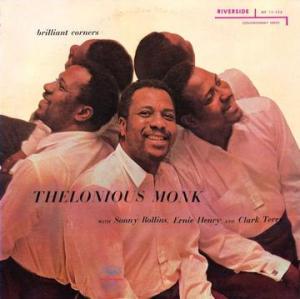
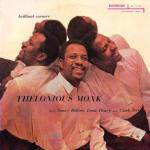
Thelonious Monk / Brilliant Corners

More Thelonious Monk

More Jazz Recordings Featuring the Piano

  • Boasting solid Double Plus (A++) grades or close to them from start to finish, this vintage MONO recording pressed on OJC vinyl was giving us the sound we were looking for on Monk’s 1957 release – fairly quiet vinyl too
  • Rich, full-bodied and present yet still clear and spacious (particularly on side one) – we guarantee this copy sounds better than any pressing you’ve heard, and should beat the pricey originals hands down
  • With masterful horn playing from Sonny Rollins and Clark Terry, and a rhythm section that can actually keep up with Monk – made up of Max Roach, Oscar Pettiford and Paul Chambers – this is a Must Own for any music loving audiophile
  • 5 stars: “Brilliant Corners may well be considered the alpha and omega of post-World War II American jazz. No serious jazz collection should be without it.”
  • If you’re a fan of Mr. Monk, this All Tube Recording from 1957 belongs in your collection.
  • We’ve recently compiled a list of records we think every audiophile should get to know better, along the lines of “the 1001 records you need to hear before you die,” but with the accent on the joy these amazing audiophile-quality recordings can bring to your life. Brilliant Corners is a good example of a record most audiophiles probably don’t know well but would benefit from getting to know better

If you’re looking to demonstrate just how good a 1957 All Tube Analog recording can be, this superb copy should be just the record for you. Talk about Tubey Magic! The liquidity of the sound here is positively uncanny. This is vintage analog at its best, so full-bodied and relaxed you’ll wonder how it ever came to be that anyone seriously contemplated trying to improve it.

No recordings will ever be made like this again, and no CD will ever capture what is in the grooves of this record. There is of course a CD of the album, but those of us in possession of a working turntable could care less.

(more…)

Brilliant Corners – This Pig Sure Wears Pretty Lipstick

Hot Stamper Pressings of the Music of Thelonious Monk Available Now

During our most recent shootout of Brilliant Corners, we took the opportunity to play the Craft pressing cut by Bernie Grundman and released in 2023.

We thought it was godawful, the worst sounding version of the album we’ve ever played.

But how is that possible? Read all about the best practices being followed and look at the description of the fancy packaging below. Why would they go to all that trouble just to produce a bad souding record?

For the answer to that question, you will have to ask them. We’re stumped.

  • Pressed using a one-step lacquer process at RTI utilizing Neotech’s VR900 compound
  • All-analog mastering by Bernie Grundman from the original master tapes
  • Housed in a foil-stamped, linen-wrapped slipcase
  • Numbered and limited to 4,000

They used Neotech’s VR900 compound! Really?! That must be one awesome compound!

Apparently even the VR900 compound was not enough to save this pathetic excuse for a record.
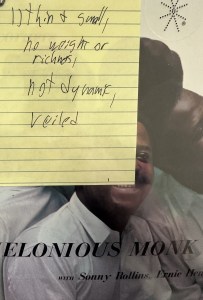
For those of you who might be new to this blog, we should point out that we have been dumbfounded by Bernie Grundman’s work for more than twenty five years. The first RCA he remastered for Classic Records, LSC 1806, was so bright and the strings were so shrill that it probably lasted on our turntable maybe all of three minutes. My ears just couldn’t take it, even on a system that was dramatically darker and less revealing than the one we have now.

Equally bad sounding Classic Records were to follow by the hundreds.

Our quickie notes for side one are shown on the left. After hearing side one fall so short of the mark, we dropped it from the shootout and put the Craft pressing on the shelf to go back to whoever loaned it to us. Who cares what side two sounds like if side one is that bad? Time is money. We are in the business of finding good records to sell to our customers, not playing crap Heavy Vinyl that only the most hard-of-hearing collector types would consider owning.

Before long we had a change of heart. We thought we owed it to Bernie’s fans to be more thorough, so we took our best side two and played it against the Craft pressing.

(more…)

Robert Brook Shoots Out Brilliant Corners

Robert Brook has a blog which he calls

A GUIDE FOR THE DEDICATED ANALOG AUDIOPHILE

Below you will find a link to the shootout Robert recently conducted for Thelonious Monk’s amazing Brilliant Corners album on OJC.

(more…)

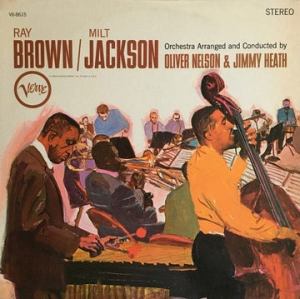
Ray Brown / Milt Jackson

More of the Music of Milt Jackson

More of the Music of Ray Brown

  • Outstanding Double Plus (A++) sound or BETTER on both sides of this early Verve stereo pressing
  • Both sides here are big and lively, both of which are key elements for any album arranged by the-bigger-the-better Oliver Nelson
  • A lot of Verve records from this era are poorly mastered, but this one sounds just right to us
  • Big sounding ’60s jazz with lively arrangements from Oliver Nelson and Jimmy Heath
  • Clark Terry’s trumpet and flugelhorn contributions play a major role in the festivities
  • This is cool, swinging ’60’s jazz at its best – the Allmusic Guide awards this album 4 1/2 stars, and that sounds about right to us
  • If you’re a fan of the jazz stylings of either Milt Jackson or Ray Brown, this is a Classic from 1965 that belongs in your collection. The complete list of titles from 1965 that we’ve reviewed to date can be found here.

(more…)

Clark Terry – The Happy Horns of Clark Terry

More Clark Terry

More Jazz Recordings

  • Clark Terry’s three horn lineup album returns to the site with superb Double (A++) sound on both sides of this Impulse LP
  • It’s simply bigger, more transparent, less distorted, more three-dimensional and more REAL than most of what we played
  • Credit goes to Rudy Van Gelder once again for the huge space this superbly well-recorded ensemble occupies
  • 4 stars: “This all-star LP has plenty of memorable moments… The lively music is quite enjoyable.”

We dropped the needle on a copy of the album a couple of years ago and immediately we knew it would be a record worthy of a shootout — the sound was big and lively in the best tradition of Rudy Van Gelder’s recordings from the mid-’60s. His sound is the right sound for this style of music, that’s for damn sure.

(more…)