rigorous

Some commentaries on the idea that rigorous testing protocols are key to succeeding in this hobby.

As Richard Feynman famously remarked, “The first principle is that you must not fool yourself – and you are the easiest person to fool.”

An Overview of Beatles Oldies But Goldies

Hot Stamper Pressings of the Music of The Beatles Available Now

This is a Beatles album we think we know well.

We’ve done a number of shootouts for A Collection of Beatles Oldies over the last ten years or so, and our experimental approach using many dozens of copies provides us with strong evidence to support the following conclusions regarding the sound of the originals vis-a-vis the reissues:

  1. The best of the early pressings always win our shootouts. No reissue has ever earned our top grade of A+++ and it is unlikely any reissue ever will.
  2. The reissues can be quite good however. The best of them have earned grades of Double Plus (A++).
  3. The worst of the early pressings also earned grades of Double Plus (A++).
  4. Conclusion: if you have a bad original and a good reissue, you might be fooled into thinking the sound quality was comparable.

(more…)

Let Us Help You Back Up Your Claims

How to Become a Better Listener

UPDATE 2026

We wrote this commentary a couple of years back and now, having played some of the Tone Poets pressings we thought would have bad sound, have updated it with all the latest information on that sorry label.

Credibility is at the heart of our many disagreements with the online audiophile community, so we felt we needed to offer a way for audiophiles to do a better job of giving some context to their opinions.


When we run experiments that include modern remastered Heavy Vinyl records, comparing them to the vintage vinyl pressings we have on hand for our shootouts, the one thing we can say about them is that they are almost certain to be inferior. (Well, almost, but not quite.)

Some are a great deal worse than others, to be sure, but they are all inferior to one degree or another.

On another blog we were taken to task — by those who felt their systems were more than adequate to judge the sound quality of the real Blue Notes compared to the new releases — for predicting that Joe Harley’s Tone Poets releases, once we finally got around to playing them, would be just as awful as all the other records he has had a hand in producing

For the thirty years since these Heavy Vinyl pressings have come along, it has seemed to us that all the evidence pointed in the same direction — namely that audiophile systems are rarely capable of showing their owners the strengths and weaknesses of the records they play.

We discussed that very issue here in some depth. Curiously, the audiophile systems of reviewers has seemed to fail them every bit as badly.

If you, speaking as an audiophile, want to make the case for the superior quality of the records put out on the Tone Poets label, we are happy to entertain the possibility. Having played Heavy Vinyl pressings by the hundreds over the past three decades, the chances of their records having sound we would find acceptable are vanishingly small, but we can’t say the chances are zero.

Repeating the tiresome truism (aren’t they all?) that because reviews are subjective, your review is as credible as any other, simply will not do.

When we wrote the above we had yet to play a Tone Poets reissue in one of our shootouts. (We’d dropped the needle on a couple, but to get deep into the sound we really needed to do a shootout with a good-sized pile of cleaned Blue Note pressings, with special emphasis on those mastered by RVG. They’re the ones that most often win shootouts.)

We actively started to search out real Blue Note pressings, on various labels from various eras, for a couple of titles. After about two years we were able to do the shootouts and report our findings.


UPDATE 2026

We have now played a couple of the Tone Poets releases, for two of the very best sounding Blue Note recordings we’ve had the pleasure to play: Dexter Gordon’s One Flight Up and Lee Morgan’s Cornbread.

To read our reviews, click on the respective links for either or both of them: One Flight Up and Cornbread.

(more…)

A Collection of Beatles Oldies on Video – Expert Advice?

The LOST Beatles Album | Cancelled By Apple – Should It Be Re-released?

Click on the link above to see an interesting and informative video that we think is well worth watching.

Allow me to make a few points:

As to the question posed above, my vote would of course be no. The new Beatles albums are awful sounding. Here are a few of rour eviews detailing their many shortcomings:

After playing those three, we gave up on the idea of playing the rest of the set.

The Mono Box (in analog!) was even worse. We played one record, heard truly awful sound, and that was all she wrote.

Mushy Sound Quality

Andrew Milton, the Parlogram Auctions guy, offers opinions about the sound quality of the various pressings he reviews. Naturally we are skeptical of reviewers’ opinions for reasons that should be clear to readers of this blog.

We have no idea how he cleans his records or how carefully he plays his records, or even what he listens for.

Frankly, even if we knew all those things it wouldn’t mean much to us. So many reviewers like so many bad sounding modern records that we’ve learned not to take anything they say seriously.

The comment about the 1G stampers being “mushy” that Andrew makes about 19 minutes in is one we take exception to. Part of the problem with his comment is that we can’t really be sure what he means by “mushy.” If it means smeary or thick, that has not been our experience with the best cleaned originals.

(more…)

For a Better Approach to Finding Higher Quality Pressings, Sweat the Details

Please Consider Taking Some of Our Audio Advice

When it comes to doing shootouts, half the battle is just being able to play the record right.

Our approach is simple enough. We precisely adjust the arm and cartridge for every title by ear, then compare the various pressings — properly cleaned of course — under carefully controlled, blinded conditions, with as much scientific rigor as we can bring to the proceedings.

In some ways it may in fact be analogous to rocket science, which we would define as the process of discovering all the details that need to be sweated and then sweating the hell out of them.

It’s the opposite of theoretical physics. One doesn’t need to be a novel thinker or have big ideas to do audio well.

Obsessively working through the basics of table setup, tweaks, room treatments and electrical quality will take your system to levels beyond those you have ever imagined.

And, you sure don’t need a bloody microscope to check your stylus rake angle, unlike some audiophile reviewers who insist that such devices are essential.

Your ears, if they are any good at all, will do the job just fine, and probably much better.

(more…)

How Not to Conduct a Proper Shootout for Aqualung

UPDATE 2023

This commentary was probably written in 2010 or thereabouts, since that’s the date on Fremer’s Aqualung review, which, for those with much more tolerance for audiophile BS than I am able to muster, can be found here. I’ve made a few changes to the commentary below, but most of the original text is intact.


We recently put up a Hot Stamper Aqualung that just BLEW THE DOORS OFF the CLASSIC 200g pressing. Michael Fremer may think the new reissue is the ultimate pressing, but we sure don’t. 

The Aqualung shootout on his site is priceless. He has so many silly things to say about it, let’s not waste any more time and get right to them.

His Shootout Begins

He says he “… compared Classic’s new 200g reissue with: 1) an original UK Chrysalis 2) an original American Chrysalis/Warner Brothers, 3) an original French Pink Label Island, 4) The Mobile Fidelity ½ speed mastered edition and 5) DCC’s 180g issue mastered by the team of Hoffman and Gray.”

How many of each? One, right? (All the articles in front of the nouns are singular. Assuming MF is using good grammar, how many could there be?)

Mikey, that’s your first mistake.

When it comes to the domestic release, one is a wholly inadequate sample size for pressings that were pumped out by the millions and therefore mastered multiple times. Go to Discogs if you want to see just how many different stamper numbers can be found in the original Reprise pressings. Hint: it’s a lot. Some of them are known to us to be awful, some fall into the middle of the pack, and some we like. Figuring out which are which has taken us a lifetime of work and is well beyond the ability of any single person to decode for more than a few dozen records.

Maybe you got hold of a bad sounding “original American Chrysalis/Warner Brothers,” did you ever think of that? The record bins are full of them.

If you did get hold of a bad one — and all the evidence points in that direction — the time and effort you put into your shootout just went flying out the window, defenestrated as they say.

Shootouts using only a small number of pressings have very little value. Anybody who claims to know anything about records ought to know that.

This next line just floors me.

Now rather than make value judgments, let’s just compare without prejudice.

This guy may not be good for much, but he sure is good for a laugh.

Does he really expect us to believe that the comments that follow are not biased in any way, that they are The Truth, that he is able to measure “intimacy and warmth” and tell us precisely how much of each there is on any given pressing? Who in his right mind thinks like that?  (At this rate he may end up wandering about a park with snot running down his nose, greasy fingers smearing shabby clothes, but let’s hope it doesn’t come to that. Help is available; perhaps Stereophile has a mental health plan under which he could be covered.)

Soon enough he goes on to give his opinion as to the merits of each of the pressings noted above. I’m sorry, did I say opinion? I meant comparisons without prejudice. Sorry, my bad.

The Big Truth

And of course he is more than welcome to make any and all the comparisons he deems fit, each from that lovely sample size of one. And if he wants to add another sample (size = 1) to the mix by playing the DCC gold CD, he’s welcome to do that too, which he did. I’m guessing that his CD player is every bit as accurate as his front end (comprising turntable/ arm/ cartridge/ phono stage/ cables), which, if he were to ascribe a percentage to the accuracy of all the pieces that make up this chain, would have to be in the range of 100% or thereabouts. Or as the late John McLaughlin might say, on a scale of one to ten: ten, meaning Metaphysically Accurate.

No colorations. No imperfections. Pure Truth, and nothing but.

(more…)

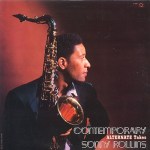
Sonny Rollins Helped Us See the Light Many Years Ago

The following commentary was taken from our mid-90s catalogs, the ones that came out back in the days when it was still possible to find great jazz records like Alternate Takes for cheap, often still sealed.

The Analogue Productions Heavy Vinyl recuts done by Doug Sax had come out a few years earlier, starting in 1992. Those remastered records were in print at the time I wrote this, and I was pretty pissed off at the way they sounded.

Here is our listing with some minor changes from long ago:

Acoustic Sounds had just remastered and ruined a big batch of famous jazz records, and shortly thereafter a certain writer in The Absolute Sound had said nice things about them.

Said writer and I got into a war of words over these records, long, long ago. You’ll notice that no one ever mentions these awful records anymore, and for good reason: they suck. If you own any of them, do yourself a favor and get either the CD or a good LP for comparison purposes. I expect you will hear what I’m talking about.

In my essay on reviewers I attack him for giving a big “Thumbs Up” in TAS to the botched remastering of Sonny’s Way Out West. The OJC reissue, though superior, is still only a pale shadow of the original.

The Real Deal

Now we have the real thing! This LP has three alternate takes from that session, all mastered by George Horn, and surprise, surprise, surprise, they sound just like my original, much better than (but not so different from) the OJC, and worlds away from the muted flab of the Analogue Productions LP!

(more…)

Put Us to the Test! We Can Tell a Good Record from a Bad One, Digital or No Digital

Skeptical Thinking Is Key to Finding Better Sounding Records

And we don’t need to know anything about how it was made in order to judge it!

For those of you who did not follow this story from a few years back, you may want to catch up here.

Although it’s behind a paywall, you can get a free test drive easily enough.

Now that you are up to date on the overall contours of this mess, here is another one of the many thoughts I have had concerning the revelation that Mobile Fidelity has been secretly sourcing at least some of their masters digitally since 2015.

Back in August of 2022, I wrote what you see below to Geoff Edgers, the reporter who exposed this ridiculous mess. (I toned it down quite a bit. The original version was not suitable for publication.)

Earlier that same year he had visited me at my studio, where I played him the awful Dire Straits first album that MoFi remastered, one of the worst half speeds ever made (review coming, but you can get a good idea of my take on it here).

By August of 2022 he was starting to see just how crazy the world of audiophiles actually is, and the more he learned about some of these people, the crazier they seemed. And he was not wrong about that.

My letter (with a few additions):

Jim Davis (of MoFi) is not one to be trusted and would have loved to cover up this whole thing if he could have figured out how to do it. It got away from him, and as far as I’m concerned, good.

And you heard how shitty their Dire Straits record is. Who cares if it’s digital? The sound is bad. Why bother trying to figure out the reasons this crappy label doesn’t know how to make good records? It’s just a fact. Accept it.

Many of MoFi’s now-exposed records were on Fremer and Esposito’s own lists of the best sounding analog albums.

Of course they were. I defy you to find me two “audiophile experts” who are wrong more often than these guys!

From the article:

One of the reasons they want to excoriate MoFi is for lying,” says Howarth. “The other part that bothers them is that they’ve been listening to digital all along and they’re highly invested in believing that any digital step will destroy their experience. And they’re wrong.

These people who claim they have golden ears and can hear the difference between analog and digital, well, it turns out you couldn’t.

The best ears? Are you kidding me? In their dreams. These guys give every indication that they are virtually devoid of critical listening skills. The evidence supporting this reality has been laid out in this very blog in scores of commentaries over the course of more than twenty years.

(more…)

We Were So Sure We Had The Pink Floyd’s Ticket, But We Were Wrong

Hot Stamper Pressings of the Music of Pink Floyd Available Now

In a reply to some questions Robert Brook asked about Revolver and Sticky Fingers — see here and here — I made mention of the advice, found on Hoffman’s forum and other sites, that is commonly offered regarding the superiority of specific pressings of albums discussed by those who post there and purport to know well.

This often-arcane advice includes labels, pressing plants, stamper numbers, specific mastering credits, etc. The practice is so common that audiophiles “in the know” are now expected to share their findings with other members for the benefit of all.

That’s the background for my comment below. I was explaining where I stood with respect to the recommendations I often read, in my typically undiplomatic language:

We do not respect the opinions of those who appear to have little understanding of records and their pressing variations. The faulty conclusions they invariably arrrive at lack evidentiary support because they don’t know how to do what we do and can’t be bothered to learn.

Regardless of what these folks believe, by now we’ve heard dozens and dozens of amazing originals [referring to Sticky Fingers]. This made us extremely skeptical that any other mastering house could compete with the right original’s sound. It was just too good.

Yes, we were skeptical, and it has turned out, at least so far, that we were right to be skeptical. Nothing has come close to the best early domestic pressings of Sticky Fingers, the ones that win shootouts and that we have long known to be the best pressings of the album.

But sometimes we are skeptical and we turn out to be wrong.

Specifically we were wrong about some albums by Pink Floyd (but not the title you see pictured). I wrote:

We’re not always correct about these things. We were dead wrong about a couple of famous Pink Floyd albums from the “wrong” country that we’d heard good things about.

They have been winning shootouts for many years now.

Our judgments concerning the best sounding pressings for any given title must be seen in the light of any information arrived at scientifically: it’s considered provisionally true. (We may not be the smartest guys in the room, but we’re sure as hell smart enough to know that much.)

I felt it was important to point all this out. The impression I did not want to leave in the reader’s mind is that we know all the answers.

(more…)

It Ain’t Easy Being a One-Man Band

How to Go About Improving Your Critical Listening Skills

I should know. I was a one-man band working 60 to 80 hours a week with very little help until about 2000. I had someone cleaning records and packing and shipping, but everything else was on me. It was a lot.

In order to evaluate the qualities of the titles I was selling back then, whether on Heavy Vinyl or thin, imported or domestic, original or reissue, the process was the same.

I would play the record, and I would listen for the qualities that were important to me, qualities you might say were of a “make it or break it” nature.

What I mostly wanted to know about the record was whether it was:

  • Tonally correct.
  • Big enough.
  • Clear enough.
  • Balanced from top to bottom.
  • Energetic.
  • Present in the midrange.
  • Not bass shy.
  • Not rolled off in the high frequencies.
  • Not compressed.
  • And, finally, whether it would appeal to a wide enough audience to make carrying it worthwhile.

If I had other pressings of the same title to audition, which, to be honest, sometimes I did not, I would play those to see how they compared.

For some records this was not easy. To give just one example, for many of the Speakers Corners Decca classical pressings, I rarely had especially good pressings to judge them by.

I might have had some Londons and some Stereo Treasurys I could throw on, but good sounding, brand new Heavy Vinyl pressings on quiet German vinyl for $35 each did not warrant a big shootout back in those days. I was too busy doing other, more profitable things to keep the business alive.

If the Heavy Vinyl reissue sounded right to me, I said as much and sold it, figuring for $35 the customer who bought it was getting a good record at a fair price. (In constant dollars, those records would be more than $60 today.)

And of course the stereo I had back then (all tube and very powerful, but richer, darker and dramatically less revealing) set a low bar, one that was a great deal easier to get over than the ruthlessly revealing stereo we use now. (More on that subject here.)

I had someone cleaning records for me, sure, but to take the time to clean and play a pile of classical pressings was simply not the best use of my time. I would approve of the sound of whatever pressing I had just auditioned, something along the lines of “good” to “great,” and then write a short review to go in the next catalog.

Many of the records that passed these tests don’t sound all that good to me now. I clearly had a lot to learn.

And I had no other option but to understand records and audio at a higher level because the success of the business depended on it.

There was just too much money on the line at the prices we needed to charge. We, as a company, were forced to deliver a clearly superior product or the discipline of the market would come crashing down on our heads and put an end to our crazy experiment in “Hot Stampers.”

Lack of Resources

When you operate as a one-man band, you simply do not have the resources to clean and play enough copies of a given album to make accurate judgments about their sound.

Everybody makes mistakes, but small sample sizes increase the frequency of mistakes by orders of magnitude, especially a sample size as small as one. More on that here.

Here is another example of a sample size of one, because the three other pressings have very little chance of offering top quality sound. They’re what an audiophile who’s been asleep for the last twenty years might find on his record shelf. We find it hard to take seriously anything such an audiophile would say.

No Resources Needed

The current crop of audiophile reviewers appears to be writing for those who are generally satisfied with the Heavy Vinyl pressings being made today.

The reviews they do are easily carried out by those with an obvious aversion to the serious, disciplined, intense work it would take to do them properly.

They get one of these new records in, they give it a spin and they tell everybody how great it is. The advertisers like it, their readers like it, the labels like it, and everybody is happy as a clam.

When troublemakers like us come along, we upset that one-hand-washes-the-other arrangement, and before long everybody gets real upset real fast. Nobody wants that. They want to keep selling Heavy Vinyl because that is what can be produced, in volume, at a reasonable cost, then advertised and distributed easily and, most importantly, priced affordably.

Win win win win win. So much winning!

If you want something better sounding, from us, it will most likely cost you a pretty penny. It will be every bit as good as we say it is, but it will not be cheap and it will rarely be have any collector value.

Collecting for the Sake of Collecting

It appears as though the vast majority of record loving audiophiles really like collecting records. If I had to guess, I would venture it’s at least 95% and perhaps more. The five per cent that do not fall into that category are unlikely to want to spend their life savings on our pricey, not-especially-collectible pressings.

Our records have virtually no resale value. All their value is tied up in their sound.

That leaves our potential pool of customers at less than one per cent of all the record-loving audiophiles who want better sound and can afford it. Subtract the number of them who don’t like me personally — judging by what I read on Hoffman’s forum it seems like a lot — and you have a fairly small cohort of customers from which to draw.

Thankfully, it is big enough to keep our business going and food on the table for the ten dedicated. music-loving men and women who supply the world with Hot Stamper pressings. Nobody is getting rich, even at these prices, but we’re making a living and providing a service which people really appreciate, or at least that’s what they tell us.

(more…)

Is the Heavy Vinyl from 2012 the Best Sounding Sgt. Pepper?

beatlessgtHot Stamper Pressings of Sgt. Peppers Available Now

You might agree with some reviewers that EMI’s engineers did a pretty good job with the new stereo pressing of Sgt. Pepper mastered by Sean Magee from the 2009 digitally remastered tapes.

In the March 2013 issue of Stereophile Art Dudley weighed in, finding little to fault on this title but being less impressed with most of the others in the new box set. His reference disc? The MoFi UHQR! Oh, and he also has some old mono pressings and a domestic Let It Be.

Now there’s a man who knows his Beatles. Fanatical? Of course he is! We’re talkin’ The Beatles for Chrissakes.

When I read the reviews by writers such as these, I often get the sense that I must’ve fallen through some sort of Audio Time Warp and landed back in 1982. How is it that our so-called experts evince so little understanding of how records are made, how variable the pressings can be, and, more importantly, how absolutely crucial it is to understand and implement rigorous protocols when attempting to carry out comparisons among pressings.

Critically comparing LPs is difficult and time-consuming. It requires highly developed listening skills. I didn’t know how to do it in 1982. I see no evidence that the audiophile reviewers of today are much better at it now than I was in 1982.

Just to take one example: They all seem to be operating under the same evidence-free conceit: that the original is the benchmark against which other pressings must be compared.

To those of us who have played Beatles pressings by the hundreds, this is patent nonsense. To cite just one instance, a recent Hot Stamper listing notes [inaccurately as it turns out, see below]:

We defy any original to step into the ring with it. One thing we can tell you, it would not be a fair fight. The cutting equipment to make a record of this quality did not exist in 1967, not at EMI anyway.

We had the opportunity not long ago to audition a very clean original early pressing of the album and were frankly taken aback by how AWFUL it was in virtually every respect. No top end above 8k or so, flabby bass, murky mids — this was as far from Hot Stamper sound as one could imagine. If it were a Heavy Vinyl or Audiophile pressing we would surely have graded it F and put it in our Hall of Shame.

To be fair we have played exactly one early copy of the record on our current system. (Played a copy or two long ago but on much different equipment, so any judgments we might have made must be considered highly suspect.) Perhaps there are good ones. We have no way of knowing whether there are, and we are certainly not motivated to find out given the price that original Sgt. Pepper’s are fetching these days.

We can tell you this much: no original British pressing of any Beatles album up through Pepper has ever impressed us sonically. We’ve played plenty and have yet to hear one that’s not congested, crude, distorted, bandwidth-limited and full of tube smear. (The monos suffer from all of these problems and more of course, which is only natural; they too are made with the Old School cutting equipment of the day.)

If that’s your sound more power to you. It’s definitely not ours. The hotter the stamper, the less congested, crude, distorted, bandwidth-limited and smeary it will be. (Or your money back.)


UPDATE 2023

There is a copy of a Beatles album on the original label that was competitive with our best 70s pressings, this one. We explained why it’s not a problem to admit we were wrong about the album in question, For Sale, this way:

This finding about For Sale is precisely why live and learn is our motto.

We don’t know it all, and we’ve never claimed that we did. We constantly learn things about pressings in our daily shootouts. That should not be too surprising, as record shootouts are the only way to learn anything about the sound of records that’s actually worth knowing.

Start doing your own experiments and your record knowledge might just take off the way ours has. 99% of what we think we know about the sound of records we’ve learned in shootouts over the course of the last twenty years.

Here is our advice on getting started.

Before this, the only Beatles record we would sell on the Yellow and Black Parlophone label was A Collection of Oldies… But Goldies. That title does have the best sound on the early label. In numerous shootouts, no Black and Silver label pressing from the ’70s was competitive with the best stereo copies made in the ’60s.

Until now, it was clearly the exception to our rule. From With the Beatles up through Yellow Submarine, the best sounding Beatles pressings would always be found on the 70s reissue label.


The Best Pepper Pressings

How did we come to find the best Sgt. Peppers pressings? Our recent commentary about a wonderful Benny Carter record on the original Contemporary Black Label may serve to shed some light on the process.

(more…)