George Massenburg, Engineer – Reviews and Commentaries

Which Side Lacked Space, and How Did You Figure That Out?

Hot Stamper Pressings of the Music of Linda Ronstadt Available Now

Big, rich, smooth, and sweet, how did George Massenburg pull off this kind of analog sound in 1987?

We don’t know, but we do know good sound when we hear it, and we heard remarkably good sound on this copy.

The first track on side one was big and rich, with vocals that were breathy and present, just the way we like ’em.

The third track was every bit as good, with sound that was rich and weighty. The vocals wer so present and open, sweet and silky. This is exactly what you want on this album.

And the way we know that is we played a bunch of copies and nothing could beat it. This side one took top honors for having sound we described above.

Side two is another matter. We came across a side two that was slightly better than the side one you see here.

How did that kind of thing happen, you ask?

Well, when we played the two best copies back to back, side one of this copy came out on top, earning a grade of 3+, but the side two of another pressing showed us there was even more space in the recording than we noticed the first time around.

We knew side two was “at least 2+,” the crossed-out text you see in the notes.

With another copy earning a better grade, 3 pluses, we felt the right grade for this side two was 2.5+.

(more…)

Mobile Fidelity’s Approach to Mastering – I Have a Theory

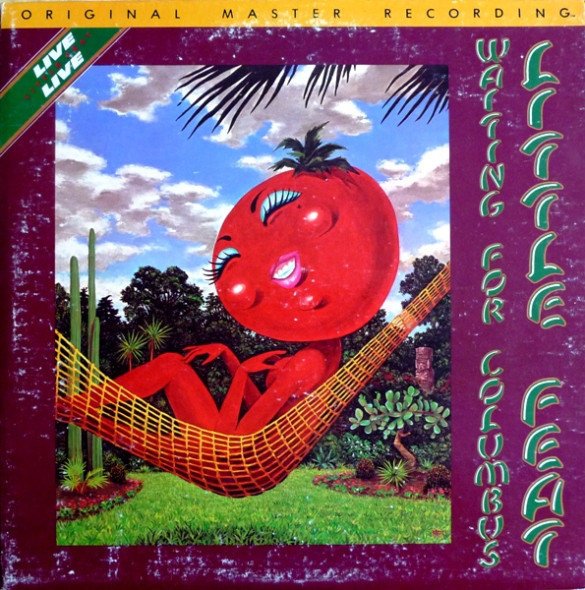
Hot Stamper Pressings of the Music of Little Feat Available Now

I have a theory about why MoFi’s mastering approach tended to work for the Waiting for Columbus album when it failed so miserably for so many others. It goes a little something like this. 

Back in their early days, MoFi tended to add bass and treble to practically every record they mastered, regardless of whether or not the master tape they were using needed a boost.

A little extra sparkle up top and a little extra kick down low was what the audiophile public seemed to want.  We call this the smile curve and lots of audiophile records have a case of it.

Truth be told, I was a member of that group and I know I did.

Fortunately for them, Waiting for Columbus is an album that can ofteny use a little at both ends. Rarely did The Mastering Lab supply it, making the original domestic pressings somewhat bass-shy and dull on the extreme top. The MoFi clearly corrected the poor EQ choices The Mastering Lab had often made. 


UPDATE 2024: Poor EQ Choices?

Or perhaps it could have been one or more of the following:

  • Perhaps the band liked it better that way.
  • Perhaps The Mastering Lab found it easier to cut that way.
  • Perhaps the cause of the records lacking extension on both ends comes from some other factors that cannot be known.

Or, if you don’t like those three, just make up some other reasons that sound plausible, or ones that fit in with other ideas you may have, even though there is probably not an iota of evidence to support any of it.

This is the way of the audiophile record collector — theories galore, but not much experimental evidence to back them up (or falsify them as the case may be). We are more inclined to the No Theory approach to finding good records, which you can read about here. We believe it has served us well and can do the same for you.

(more…)

Waiting For Columbus – We Broke Through in 2017

Hot Stamper Pressings of the Music of Little Feat Available Now

Way back in 2009 we had this to say about a Hot Stamper pressing we listed:

This German import pressing of Waiting for Columbus is much better sounding than the typical Mastering Lab-mastered copy.

This German pressing is similar to one that came from my own personal collection, accidentally discovered way back in the early ’80s as I recall. It KILLED my domestic original, and got some things right that even my treasured Mobile Fidelity pressing couldn’t. We have been meaning to do a shootout for this album for at least the last five years, but kept running into the fact that in a head to head shootout the right MoFi pressing — sloppy bass and all — was hard to beat.

This is no longer the case, courtesy of that same old laundry list you have no doubt seen on the site countless times: better equipment, tweaks, record cleaning, room treatments, et cetera, et cetera. Now the shortcomings of the MoFi are clear for all to see, and the strengths of the best non-Half-Speed mastered pressings are too, which simply means that playing the MoFi now is an excruciating experience.

All I can hear is what it does wrong.

I was so much happier with it when I didn’t know better.

That same laundry list of improvements continued to pay big dividends, and right around 2017 or so the best original domestic Mastering Lab copies started to sound much more right to us than the German ones. 

The German pressings can be good, but the TML pressings are the only ones we would expect to win shootouts from now on.

But who knows? We might find something even better down the road. That’s what shootouts are for. (more…)

Listening in Depth to The Best of Earth Wind & Fire

Not many compilation albums offer top quality sound, but this one does, and here are some of the others we’ve discovered.

The best pressings sound amazing, with big-as-life Demo Disc Quality sound.

Luckily for us, EWF was always an audiophile-oriented band. They produced some of the best ’70s multi-track recordings around. With a big speaker system turned up good and loud, the first track is simply mind-boggling. It’s some of the best sound we have heard around here in weeks, and we play a lot of good sounding records.

When the vocals are thin and pinched, as they often are, the edge and overall harshness take all the fun out of the music. Every track has group vocals and choruses, and the best copies make all the singers sound like they are standing in a big room, shoulder to shoulder, belting it out live and in living color.

The good copies capture that energy and bring it into the mix with the full-bodied sound it no doubt had live in the studio. When the EQ or the vinyl goes awry and their voices (and brass) start to take on a lean or gritty quality, the party’s over.

But the richness and fullness must be balanced with TRANSPARENCY. Of course this has to be a multi-miked, multi-tracked, overdubbed pop record — they don’t make them any other way — but it doesn’t have to FEEL like one.

When you get a good copy, it feels like all these guys are live in the studio. You see them clearly. They may have their own mics, and are certainly being placed artificially in the soundfield to suit the needs of the track (kick drum here, hand-claps over there), but the transparency of the killer pressings makes them sound like they are all in the same big room playing together.

Side One

Got to Get You into My Life 

On the best pressings of this album, the groove is so heavy and lively in this song that the typical copy sounds just plain cheap. It may be an original but the sound is pure bargain-bin reissue.

Fantasy
Can’t Hide Love 

This is our favorite EW&F song here at Better Records, a beautiful ballad that is truly a perfect representation of the band’s capability to change pace from blowing doors down to tugging heart-strings. They do both as well as any soul band ever could. This song is a MASTERPIECE.

Love Music
Getaway

Side Two

That’s the Way of the World
September 

EW&F’s biggest hit, but only the best pressings brought out the magic in the powerful horns and layered vocals without being smeary or spitty. Our best copies soared higher than we had ever heard for this song; the sound just leapt out of the speakers. What a great track.

(more…)

Two of the Worst Mistakes You Can Make Collecting Records

Our Guide to Record Collecting for Audiophiles

To be clear, it’s only a mistake if you are looking for top quality sound.

If, however, you are a record collector who doesn’t care about the sound of your records and is just looking for music to play, you may want to consider the very real possibility that you are on the wrong site. At the very least you are probably wasting your time.

Do you know many audiophiles who own multiple copies of the same album?

Some? Sure, okay. How many of them are still hunting around for more? Not many, right?

I’ve been buying duplicate copies of my favorite albums for more than three decades, but I’m not exactly your average audiophile record collector.

Fortunately for me, with the advent of Better Records in 1987, I’ve had an outlet for the second- and third-rate pressings I choose not to keep. (What’s left of my audiophile pressings are being sold on ebay these days. Good riddance!)

A few audiophile friends have multiple copies, but most audiophiles I know usually stop after one, or at most two or three.

At least they know not to make the worst mistake of them all: buying an audiophile pressing and figuring that that’s the one to keep.

Tossing out their vintage pressings, or never bothering to buy vintage pressings in the first place guarantees you will never have an especially good sounding collection of records to play.

Those of you who take the time to read our Hot Stamper commentary, whether you buy any of our special pressings or not, no doubt know better. At least I hope you do.

Hearing Is Believing

The only way to understand this Hot Stamper thing is to hear it for yourself, and that means having multiple copies of your favorite albums, cleaning them all up and shooting them all out on a good stereo.

Nobody, and we mean nobody, who takes the time to perform this little exercise can fail to hear exactly what we are on about.

If that’s too much trouble, you can join the other 99% of the audiophiles in the world, the ones who don’t know just how dramatic pressing variations for records and CDs can be. Probably a fairly large percentage of that group also doesn’t want to know about any such pressing variations and will happily supply you with all sorts of specious reasoning as to why such variations can’t really amount to much — this without ever doing a single shootout!.

Such is the world of audiophiles. Some audiophiles believe in anything — you know the kind — and some audiophiles believe in nothing, not even their own two ears.

(more…)
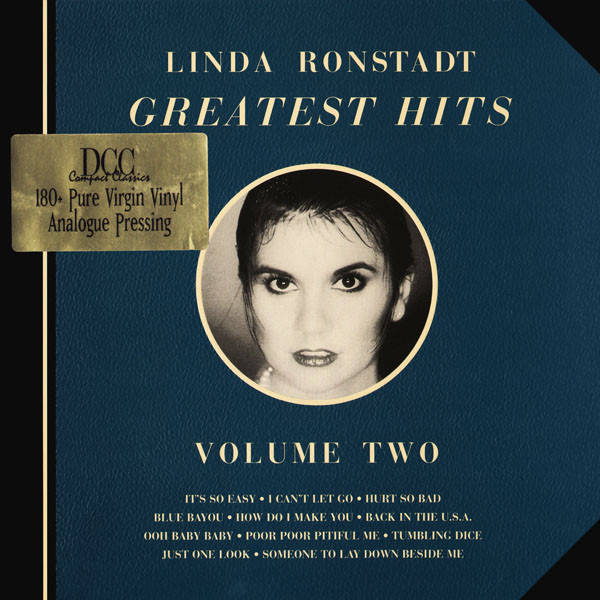
The Best of Earth Wind & Fire – Hard and Honky Brass Is a Dealbreaker

More of the Music of Earth, Wind and Fire

As you can imagine, most copies of this album leave a lot to be desired. Most were, to one degree or another, dull, smeary, opaque, gritty or shrill.

Our Hot Stampers, on the other hand, depending on hot hot they are, will give you the sound you’re looking for. If you’re a fan of BIG HORNS, with jump-out-of-the-speakers presence, this is the album for you. Some of the best R&B-POP brass ever recorded can be found here — full-bodied, powerful, fast, dynamic and tonally correct.

Advice

Here is some specific advice on What to Listen For as you critically evaluate your copy of The Best of Earth Wind & Fire.

When the brass sounded the least bit squawky on a given copy, that was almost always a dealbreaker and out it went.

When the BIG, MULTI-TRACKED vocals get going they need to have plenty of space to expand into. They also need to be breathy and warm, with airy extension for the harmonies (and those crazy high notes that only Philip Bailey can sing). Proper tape hiss is a dead giveaway in this respect.

This advice will of course work for any Earth Wind & Fire record you happen to have multiple copies of.

Here are a couple of hundred other albums with specific advice on what to listen for.

Choruses Are Key

Three distinctive qualities of vintage analog recordings — richness, sweetness and freedom from artificiality — are most clearly heard on a Big Production Recording like this one in the loudest, densest, most climactic choruses of the songs.

We set the playback volume so that the loudest parts of the record are as huge and powerful as they can possibly become without crossing the line into distortion or congestion. On some records, Dark Side of the Moon comes instantly to mind, the guitar solos on Money are the loudest thing on the record.

(more…)

Listening in Depth to Heart Like a Wheel

More of the Music of Linda Ronstadt

Presenting another entry in our extensive Listening in Depth series with advice on precisely what to listen for as you critically evaluate your copy of Heart Like a Wheel.

A key test on either side was to listen to all the multi-tracked guitars and see how easy it was to separate each of them out in the mix. Most of the time they are just one big jangly blur. The best copies let you hear how many guitars there are and what each of them is doing.

Pay special attention to Andrew Gold’s Abbey Road-ish guitars heard throughout the album. He is all over this record, playing piano, guitar, drums and singing in the background.

If anybody deserves credit besides Linda for the success of HLAW, it’s Andrew Gold.

Our In-Depth Track Commentary

Side One

You’re No Good

Right from the git-go, if the opening drum and bass intro on this one doesn’t get your foot tapping, something definitely ain’t right. Check to make sure your stereo is working up to par with a record you know well. If it is, your copy of HLAW belongs on the reject pile along with the other 90% of the copies ever pressed.

It Doesn’t Matter Anymore

Amazing acoustic guitars! Lots of tubey magic for a mid-’70s pop album. And just listen to the breathy quality of Linda’s voice. She’s swimming in echo, but it’s a good kind of echo. Being able to hear so much of it tells you that your pressing is one of the few with tremendous transparency and high resolution.

Faithless Love

Another superb arrangement with excellent sound. The banjo that opens this track is key — the picking should have a very strong plucky quality, with lovely trailing harmonics, even some fret buzz.

So many copies are veiled or blunted sounding; this clearly demonstrates a lack of transient information.

The copies without the trailing harmonics lack resolution.

Once you hear either of these problems on the banjo, you can be sure to find them on the voices and guitars throughout the side.

That the Cisco pressing doesn’t do a very good job reproducing the banjo should be clear for all to hear. If you want the sound of the real thing, only the best Capitol pressings are going to be able to give it to you.

(more…)

That’s the Way of the World – The Hit Is Made from a Dub Tape

More of the Music of Earth, Wind and Fire

We’re pretty sure that the first track on side one, Shining Star, is made from a dub tape, a common occurrence with planned hit singles. The rest of the songs on side two are a step up in class; when you play the side, see if you don’t hear some veiling and smearing on Shining Star, both of which are good indications of a dubby tape.

These are problems we hear in the sound of practically all the Heavy Vinyl pressings that, let’s be honest, we waste our time auditioning, which leads us naturally to conclude that they are not really made from master tapes, but high quality analog dubs or high-rez digital masters. Some of course sound better than others, but none will ever sound the way this copy does.  (more…)

Can’t Hide Love Is the Best Song These Guys Ever Wrote

As you may have read elsewhere on the site, the high point for me on this record is the song “Can’t Hide Love,” the best track this band ever recorded and a work of True Pop Genius. (Check out side four for the best lineup of any side.)

Grammy nominated for Best Arrangement For Voices, it’s hard to imagine that another song beat it. The album was of course nominated as well.

The second best thing about this album is that it allows Earth, Wind & Fire to stretch out and incorporate some funky jazz into their music, like on “Sun Goddess”, a song that they recorded with Ramsey Lewis and which doesn’t appear on any other EW&F album. They do a couple of extended saxophone solos on the live stuff that really take the songs to another level. The band is on fire for practically every track here. This and The Greatest Hits Volumes One get you most of what’s great about the band. Both are Must Owns for anyone who likes Big Production Pop, soulful and otherwise.

Old News

A while back, I happened to have heard the Joe Gastwirt mastered CD and noted:

What a joke. LIFELESS and DULL. This record kills it. If you want to hear this music right you better own this record or one like it, otherwise you are wasting your time.

Of course, since this is a Hot Stamper copy, “one like it” is hard to find. But if you don’t want to buy one from us, get a hold of any LP you can, because this music belongs in your collection.

(more…)

Waiting for Columbus – A MoFi Pseudo-Hot Stamper

Hot Stamper Pressings of the Music of Little Feat Available Now

Sonic Grade: C

Ten or fifteen years ago we did a listing for this Mobile Fidelity pressing as a Pseudo-Hot Stamper. Here is what we had to say about it at the time:

This is actually a pretty good sounding record, all things considered. We put this one through our cleaning process and gave it a listen. Although our Hot Stamper copies do sound better, they’re also quite a bit more expensive. This copy had the best sound we heard out of the three or four we played, which makes it a Hot Stamper I suppose, but we are instead just calling it a Very Good Sounding Copy.

Waiting for Columbus is one of the greatest live rock and roll albums ever made, containing performances by one of the greatest rock and roll bands to ever play. If you only buy one Little Feat album in your lifetime, make it this one.

We spent years trying to get shootouts together for this album, but kept running into the fact that in a head to head shootout the right MoFi pressing — sloppy bass and all — was hard to beat.

This is no longer the case, courtesy of that same old laundry list you have no doubt seen on the site countless times: better equipment, tweaks, record cleaning, room treatments, et cetera, et cetera. Now the shortcomings of the MoFi are clear for all to see, and the strengths of the best non-half-speed mastered pressings are too, which simply means that playing the MoFi now would be an excruciating experience. All I can hear is what it does wrong. I was so much happier with it when I didn’t know better.

(more…)