good-test

Here are about 60 titles that are good for testing. All genres of music are represented.

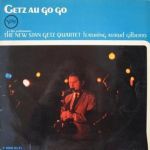
Getz Au Go Go – Critical Listening Exercise

Hot Stamper Pressings of Bossa Nova Albums Available Now

This album works wonderfully well as a test disc.

The third track on side 2, The Telephone Song, has a breathy vocal by Astrud, soon followed by Getz’s saxophone solo. If those two elements in the recording are in balance, your system is working, tonally anyway. Lots of other tracks are good for testing, and you can read about them below.

Side One 

Corcovado (Quiet Nights Of Quiet Stars) 

On the best copies the voice is perfection. The horn is always a bit hard sounding on this track though.

It Might As Well Be Spring

The best copies are warm, rich and sweet here, with much better sound for Getz’s sax. This track has some of the tubiest Tubey Magic you will find on the album.

Eu E Voce (Me and You)
Summertime

This one has real dynamics — the playing and the sound are lively, but somehow still cool…

Nix-Quix-Flix

Side Two

Only Trust Your Heart
The Singing Song
The Telephone Song

The best song on side two, certainly the most fun, and a wonderful test track as described above.

One Note Samba
Here’s That Rainy Day

RVG

This is one of Rudy Van Gelder’s greatest recordings. I think it’s as good as it is because he was out of his studio (mostly) and had to revert to Recording 101, where you set up some good mics and get the thing on tape as correctly as you can.

There’s not a trace of his penchant for too much compression, and no bad EQ choices either. (The sax is somewhat problematical in places, but most everyone else is tonally right on the money.)

(more…)

Exile on Main Street – A Good Test for Grit and Grain

More reviews and commentaries for the music of The Rolling Stones

The best copies will tend to have the qualities we discuss below, and the more abundant these qualities are on any given pressing, the higher its grade will be.

Yes, it is a science, an empirical one, which can only be carried out by the use of strict protocols and controls, but it sure ain’t rocket science.

All you need is the system, the room, the records, the time and the will to do the painstaking critical listening required to carry out the task.

It can be done, but you could spend a lifetime meeting audiophiles of the vinyl persuasion and never run into a single one who has made the effort more than a handful of times.

To be honest, shootouts are a bitch. If you aren’t getting paid to do them the way we are, finding the motivation to devote the time and energy required to do them right — not to mention the piles of copies of each record you will need — is daunting to say the least.

So, back to the question: what to listen for? (more…)

The Turn Up Your Volume Test – Almost Cut My Hair

Hot Stamper Pressings of the Music of Crosby, Stills, Nash and (Sometimes) Young

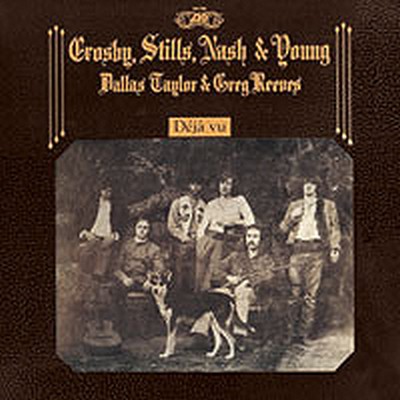
The only time Crosby, Stills, Nash & Young actually sound like a real rock and roll band is on the track Almost Cut My Hair.

According to Stephen Barncard, one of the engineers on Deja Vu, the track was actually recorded live in the studio.

Boy, it sure sounds like it. The amount of energy the band generates on this one song exceeds the energy of the entire first album put together. 

The reason this song presents such a tough test is that it has to be mastered properly in order to make you want to turn it up, not just louder, but as loud as your stereo will play.

This song is not to be used as background music whilst sipping wine and smoking cigars.

It positively cries out to be played at serious volume levels on monstrously large speakers. Nothing else will do justice to the power of the band’s one and only live performance captured on the album.

Listen to Neil in the left channel wailing away like a man possessed. Imagine what his grunged-out guitar would sound like blasting out of a stack of Marshall amps the size of a house.

Now hold that sound in your head as you turn up the volume on your preamp.

When your system starts to distort, back it off a notch and take your seat.

Deja Vu Letters

Some of our customers have written to tell us about the amazing sound they heard on our Hot Stamper pressings of Deja Vu.

“I know in one sense you’re only doing your job but who the hell else does what you do?”
“I almost fell off my listening chair.”
“I think It’s a bargain at $800. It absolutely trashes my Mofi version…”
“I had no idea that vinyl could produce this sound.”

(more…)

What to Listen for on Time Further Out

Hot Stamper Pressings of the Music of Dave Brubeck Available Now

The best copies demonstrate the big-as-life Fred Plaut Columbia sound at its best (even better than Time Out in our opinion).

These vintage recordings are full-bodied, spacious, three-dimensional, rich, sweet and warm in the best tradition of an All Tube Analog recording.

If you want to hear big drums in a big room, these Brubeck recordings will show you that sound better than practically any records we know of. 

The one standout track on this album for audiophiles is surely Unsquare Dance, with its uncannily real sounding handclaps in 7/4. The copies that did the best job of reproducing that “flesh on flesh” sound of actual human hands clapping scored very well in our shootout.

More to Listen For

For starters, listen for a fat snare and rich piano on the first track of side one. When you hear that, assuming you do, you should know you are in for a treat. Our best copies captured those two sounds brilliantly.

On the second track the clarity of the brushed snare is key to how resolving and transparent any copy is. The rich, smooth sound of Desmond’s sax balanced against the clarity of the brushes will help you make sure that the overall sound is tonally correct from top to bottom.

On side two the first track has the Wall to Wall Big Drums in a Big Room sound that positively blows our minds. If you’re a fan of  with jump out of the speakers sound, this is the album for you.

Note that in some places it sounds like the piano is overdriving its mic. We heard that sound on practically every copy we played, so we’re pretty sure it’s on the tape that way.

(more…)

In the Market for New Speakers? – Will They Handle the Size and Energy of Take It Easy?

Hot Stamper Pressings of the Music of The Eagles Available Now

Take one of our killer Hot Stamper pressings with you when you go shopping for speakers. The speaker that gets the POWER and ENERGY of this music right is the one you want.

This record will separate the men from the boys thirty seconds into Take It Easy.

It will be glaringly obvious who’s got the piston power and who doesn’t.  

With big bass and huge scope, this may become your favorite disc for showing your friends just what analog is really capable of. No CD ever sounded like one of our killer Hot Stamper pressings.

When the big chorus comes in on Take It Easy — one of the toughest tests for side one — you will be amazed by how energetic and downright GLORIOUS these boys can sound. Believe us when we tell you, it’s the rare copy that can pass that test.

Choruses Are Key

The richness, sweetness and freedom from artificiality is most apparent on Breakfast in America where you most always hear it on a pop record: in the biggest, loudest, densest, climactic choruses.

We set the playback volume so that the loudest parts of the record are as huge and powerful as they can possibly grow to be without crossing the line into distortion or congestion.

On some records, Dark Side of the Moon comes instantly to mind, the guitar solos on Money are the loudest thing on the record. On Breakfast in America the sax toward the end of The Logical Song is the biggest and loudest element in the mix, louder even than Roger Hodgson’s near-hysterical multi-track screaming “Who I am” about three quarters of the way through the track.

Those are clearly exceptions though. Usually it’s the final chorus that gets bigger and louder than anything else.

(more…)

Two Key Tracks for Testing Sibilance and Transparency on Tea for the Tillerman

Hot Stamper Pressings of the Music of Cat Stevens Available Now

The song Father and Son can be a bit sibilant. On the best copies the sibilance is under control.

The best copies have the least amount and make the spit they do have much less gritty and objectionable.

We’ve known for decades how good a test sibilance is for tables, cartridges and arms. Sibilance is a bitch. The best pressings, with the most extension up top and the least amount of aggressive grit and grain mixed into the music, played using the highest quality, most carefully dialed-in front ends, will keep sibilance to an acceptable minimum.

VTA, tracking weight, azimuth and anti-skate adjustments are critical to reducing the amount and the quality of the spit in your records.

Another track I like to play on side two is Into White. With this song, you hear into the music on the best copies as if you were seeing the live musicians before you. The violinist is also a key element. He’s very far back in the studio. When he’s back where he should be, but the sound of the wood of his violin and the rosin on the strings is still clearly audible, without any brightness or edginess to artificially create those details, you know you are hearing the real thing.

(more…)

Clarity Was Never the Point

Hot Stamper Pressings of Live Recordings Available Now

Some audiophiles spend their time listening for details in their favorite recordings. I should know; I was as guilty as anyone of that behavior.

But is that where the music is – in the details? Lots of details come out when one copy is brighter than another.

Brighter ain’t necessarily better. Most of the time it’s just brighter

Listening for the details in a recording can be a trap, one that is very easy to fall into if you are not careful or don’t know where these kinds of pitfalls lie.

801 Live isn’t about clarity. It’s about the sound of a rock concert.

It’s about the raw power of one of the most phenomenal rhythm sections ever captured in performance on analog tape.

That’s what makes it a good test disc. When you play the hardest rocking tracks, the harder they rock, the better.

Next time you try out some audiophile wire or a new tweak, play this record to make sure you haven’t lost the essential energy, weight and power of the sound. This album doesn’t care about your love of detail. It wants you to feel the energy of the band pulling out all the stops. If the new wire or the new tweak can’t get that right, it’s not right and it’s got to go.

(more…)

The King James Version – What to Listen For

Hot Stamper Pressings of Large Group Jazz Recordings Available Now

Unlike most Direct to Disc recordings, this album actually contains real music worth listening to — but only when the pressing lets the energy of the musicians through, with actual fidelity to the sounds of the real instruments. Brass without bite is boring. Drummers who are too delicate in their drumming will put you to sleep.

Many copies of this album will do exactly that, which is a real shame. During our shootout, the more we played the good copies, the more we appreciated the music these guys were making. They were swinging, a big group of top quality players totally in the groove. When it’s played well, and the sound is as good as it is here, there’s nothing boring about these Big Band Jazz Classics. The music works. It swings. If you like the kind of big band recordings Basie made — and who doesn’t — you will find much to like here.

What to Listen For

No matter what copy you have, when you play it notice how the brass in the center of the soundfiield sounds so different from the brass on either side, where, obviously, closer mics allow their solos to be picked up and mixed more easily. There are lovely trumpet solos in the left channel and a baritone sax solo in the right that have amazingly realistic fidelity. Close your eyes and those instruments are RIGHT THERE.

One thing Sheffield got right is tonally-correct, hi-fidelity brass in a real acoustic space. (The latter is where For Duke fails so miserably, although no one ever seems to notice or bother to write about it. To me that dead acoustic is like fingernails on a blackboard, completely inappropriate to the sound.)

What to Watch Out For

As a rule two areas are especially lacking: there is a noticeable lack of presence on most copies, causing the brass to get stuck in the speakers and lose its bite; and, every bit as bad, the sound is often just plain compressed, lacking energy and life.

The musicians on most copies just don’t seem to be giving it their all.

But wait a minute. This is a direct disc. How can it be compressed, or lack transients? Aren’t those tape recorder problems that are supposed to be eliminated by the direct to disc process? Maybe so, but there is some very strong evidence to the contrary, and this record is that evidence.

Even though the mastering is fixed at the live event, there are many other variables which no doubt affect the sound. The album is pressed in three different countries: the United States, Japan and Germany. Many mothers were pulled from the acetates and many, many stampers made from those mothers.

Bottom line? You got to play ’em, just like any other pressing. If no two records sound the same, it follows that no two audiophile records sound the same, a fact that became abundantly clear very early on in the listening.

Of course, not many audiophiles are in a position to shootout multiple copies of The King James Version, and I’m not sure most would even want to.

Here at Better Records we have a whole system set up to do exactly that, so we waited until we had a pile of them, got them all cleaned up, and off to the races we went.

(more…)

Led Zeppelin IV – The First Two Tracks on Side One Are Key

Hot Stamper Pressings of the Music of Led Zeppelin Available Now

We always have a great time doing Zep IV shootouts. It’s one of those all-too-rare cases where amazing music and amazing sonics potentially coexist on the same slab of vinyl. You just need to find the right slab and be able to clean it right, a proposition that turns out to be much harder than it might sound.

You probably know by now just how tough it is to find audiophile quality sonics on this album. Far too many copies just leave us cold. However, the best pressings, whether British or domestic, are so good, and so much fun at the loud volumes we play them at, that in the end it turns out to be worth all the time, trouble and expense it has taken to find them.

On these two tracks, the best pressings of Led Zeppelin IV were capable of producing some of the biggest, boldest sound we have ever heard.

It’s clearly a Demo Disc for big speakers that play at loud levels. The louder you play it, the better it sounds.

Warning: do not attempt to play this album on any system that looks like this one.

The two tracks we discuss below are the ones that can truly test the energy and musical drive of whatever pressing you are playing. If you are fortunate to be able to have one of our better Hot Stamper copies on your table, the energy and musical drive of Black Dog and Rock and Roll might just take your breath away.

Side One

Black Dog

The key to both of the first two tracks is to find a copy with a solid bottom end. Next look for an extended top end, easily heard on all the splashing cymbals.

Now listen for a tonally correct Robert Plant.

The copies with lots of top will typically have him sounding too bright. The copies with little in the way of high frequency extension will have him sounding veiled and dull.

One out of ten copies (with potentially good stampers) will get all three right: the top, the bottom and his voice. When you hear it you know it immediately, but you sure do have to go through a lot of copies before you have much of a chance of hearing it.

Rock and Roll

“[Rock and Roll] was a little tough to record because with the hi-hat being so open and [Bonham] hitting it that hard it was difficult to control. But I managed somehow or another.”

Andy Johns

“The best copies prove once and for all that these are some of most up-front, lively and above all real sounding rock cymbals ever put on tape.”

Tom Port


Further Reading

Back In Black – None Rocks Harder

More of the Music of AC/DC

This review was written shortly after we discovered what an amazing recording Back in Black was after finally getting around to doing our first big shootout for the album, right around 2008 or thereabouts.

Robert Ludwig must have had a phenomenally good transistor cutting system in 1980, aided in no small part by superbly musical tube compressors, perhaps the same ones he used on Led Zeppelin II, and we’re very glad that he did.

All that massive tube compression on the low end is at least partly responsible for Back in Black being one of the best sounding rock records ever made, especially if you have the kind of big speaker system that plays at loud levels like we do.

(more…)