tubes-in-audio

Thoughts on tubes in audio.

We Get Letters – “That is the only CD I have ever heard that had Hot Stamper sound quality.”

Hot Stamper Pressings of the Music of The Doors Available Now

A customer wrote the following to us not long ago:

Recently I fired up my CD circuit, which does not happen very often.

Once the system was warmed up I played some MoFi gold CDs.

Nothing special, but I did like the Yes Fragile CD. Actually enjoyed it.

Guns and Roses Appetite was nasty…

Supertramp Breakfast was nasty…

Enough of that. Then I read your blog on the Doors LA Woman DCC gold CD. Found I have it!

Played the whole thing and I wanted more of it. That is the only CD I have ever heard that had Hot Stamper sound quality.

Dear Sir,

Steve did a great job on L.A. Woman, let me be the first to say. Of course the real thing on vinyl is even better, but it’s a great way to test how good your front end is, assuming you have a killer copy of the vinyl, something that is very unlikely to be the case but something that cannot be ruled out entirely. (Tell me your stamper numbers and I will tell you if you are close.)

I worked through a lot of changes to my system in the 90s and 2000s partly because I had CDs that sounded better in some ways than my vinyl versions of them.

That never happens now, but it took me 20 years to get there!

For example, in the early 2000s this title did not sound as good as the CD until I got rid of all my tube equipment and discovered the life-changing sound of the EAR 324P, the Dynavector 17d and a lot more. The transient attack of the drums and cymbals went from “well recorded — it’s a direct to disc, what did you expect?” to suddenly sounding like real drums you might hear if you were sitting right in front of the kit in a small club.

(I recently took a trip to Nashville and had a chance to see and hear more than a dozen drum kits on the main boulevard. There seemed to be one in every club, facing inwards with the glass of the window removed to give the passers by a taste of what was in store for them inside. Standing three feet from a guy banging a drum kit is something that can teach you a lot about sound, mostly by showing you the enormous gulf that separates live sound from recorded sound in the most audiophile systems.)

That CD of The Three showed me what I had been missing — the presence, dynamics, and most importantly speed and complete freedom from smear of any kind on any instrument. It changed many of my ideas about audio in the most fundamental ways imaginable. Nothing in my audio world was the same after that.

Of the many audio breakthroughs I’ve undergone in the fifty years I’ve been pursuing audio , I might be inclined to put this one right at the top of the list.

(more…)

Miles Davis In Person and the Sound of Tubes in 1961

Hot Stamper Pressings of the Music of Miles Davis Available Now

UPDATE 2025

We have two new lists for those who would like to know which Columbia label pressings win shootouts — one for 6-Eye winners and one for 360 Label winners.

The pressing we review below was one of the 6-Eye winners. Most of what we have to say about it revolves around the idea that in 1961 the tube mastering was key to the sound of the best copies.


Below you will find some of the notes I made while playing a killer copy we auditioned a while back.

Normally our notes for the sound of the records we are shooting out against each other fall into two categories: what the record is doing right and what the record is doing wrong.

You’ll see that in the case of this pressing there was nothing wrong with the sound to write about.

I could have found fault somewhere, but when a specific pressing is so clearly superior to its competition, what’s the point?

  • The right sound — big, rich, tubey and real.
  • Transparent.
  • Rich, smooth, balanced.
  • Horn gets huge and loud the right way.
  • Piano is full.
  • Solid bass.
  • No need to pick nits.

The bottom line: both sides are killing it.

Reissues

There are some very good sounding reissues from the 70s that will eventually make it to the site. Again and again my notes made it clear that on those reissue pressings, the sound could have used some tubes in the chain.

On this record, more than any other, the tubes potentially make all the difference.

Now keep in mind that we are only talking about 1961 tubes, not the stuff that engineers are using today to make “tube-mastered” records. Those modern records barely hint at the Tubey Magical sound of a record like this, if our experience with hundreds of them is any guide.

(more…)

On Ballet Music From The Opera, How Much Tubey Magic Is Too Much?

Hot Stamper Pressings of Living Stereo Recordings Available Now

UPDATE 2023

We have stopped buying the original LSC 2400 for the simple reason that it is not competitive with the budget VICS 1206 reissue from 1960 that replaced it in the RCA catalog.

The review we wrote for the Shaded Dog is probably close to twenty years old. There was a time when the shortcomings of the original RCA were not nearly as easy for us to recognize, but that time has long since past.

If any copy of the original, or any remastered version from the modern era sounds good to you, we can almost guarantee that you are mistaken about the quality of the sound, and, even better, we can offer you the pressing that makes our case better than any review can.


Our Old Review

The hall is HUGE — so transparent, spacious and three-dimensional it’s almost shocking, especially if you’ve been playing the kind of dry, multi-miked modern recordings that the 70s ushered in for London and RCA. (Many of Solti’s recordings from the decade are not to our liking, for reasons we lay out here.)

EMI recordings may be super spacious but much of that space is weird, coming from out-of-phase back channels folded in to the stereo mix. And often so mid-hall and distant. Not our sound, sorry.

We strongly believe that there will never be a modern reissue of this record that even remotely captures the richness of the sound found on the best of these Living Stereo original pressings.

Here are some of the strengths and weaknesses we noted on a copy we played way back when.

Side One

Big and lively. The Tubey Magical colorations are a bit much for us, with too much tube smear on the strings and brass to earn more than a single plus. 

Side Two

Even bigger and more spacious, with some smear caused by the serious amounts of tube compression being used, of course, but the quiet passages are magical. [Which is precisely what heavy tube compression is designed to accomplish.]

The Victrola Reissue

We much prefer the sound of the Victrola reissue, VICS 1206, which came out in 1966.

As for the Victrola pressing, we’re guessing — how could we possibly know for sure? — that less tube compression was used in the mastering.

It’s still plenty tubey, but more to our taste for not being overly tubey.

(more…)

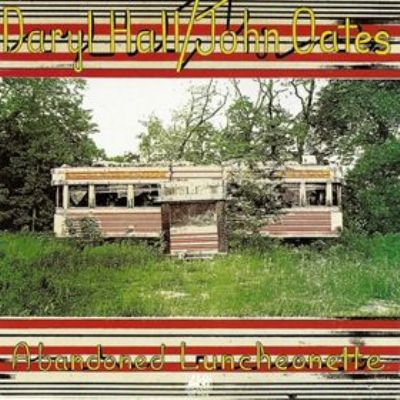
Abandoned Luncheonette – Remembering the Glorious Sound of Tubes

Hot Stamper Pressings of the Music of Hall and Oates Available Now

This record has the sound of TUBES. I’m sure it was recorded with transistors, judging by the fact that it was made after most recording studios had abandoned that “antiquated” technology, but there may be a reason why they were able to achieve such success with the new transistor equipment when, in the decades to come, they would produce nothing but one failure after another.

In other words, I have a theory.

They remember what things sounded like when they had tubes. Modern engineers appear to have forgotten that sound. They seem to have no reference for Tubey Magic. If they use tubes in their mastering chains, they sure don’t sound the way vintage tube-mastered records tend to sound.

Transistor Audio Equipment with Plenty of Tubey Magic

A similar syndrome was then operating with the home audio equipment manufacturers as well. Early transistor gear by the likes of Marantz, McIntosh and Sherwood, just to name three I happen to be familiar with, still retained much of the smooth, rich, natural, sweet, grain-free sound of the better tube equipment of the day.

I once owned a wonderful Sherwood receiver that you would swear had tubes in it. In fact it was simply an unusually well-designed transistor unit. Anyone listening to it would never know that it was solid state. It has none of the “sound” we associate with solid state, thank goodness.

Very low power, 15 watts a channel. No wonder it sounded so good.

Stick with the 4 Digit Originals (SD 7269)

If you’re looking for a big production pop record that jumps out of your speakers, is full of TUBEY MAGIC, and has consistently good music, look no further. Until I picked up one of these nice originals, I had no idea how good this record could sound. For an early ’70s multi-track pop recording, this is about as good as it gets (AGAIG as we like to say). It’s rich, sweet, open, natural, smooth most of the time — in short, it’s got all the stuff we audiophiles LOVE.   

(more…)

Jazz Giant and Tube Versus Transistor Tradeoffs

Hot Stamper Pressings of Contemporary Jazz Albums Available Now

In a commentary from more than ten years ago we weighed the tradeoffs in the sound of the originals versus the reissues.

This superb sounding original Black Label Contemporary pressing of Benny Carter’s swingin’ jazz quartet is the very definition of a top jazz stereo recording from the late ’50s recorded and mastered through an All Tube Chain.

There’s good extension on the top end for an early pressing, with TONS of what you would most expect: Tubey Magic and Richness. If that’s what you’re looking for, this copy has got it!

We prefer the later pressings in most ways, but this record does something that no later pressing we have ever played can do — get Benny’s trumpet to sound uncannily REAL.

If you want to demonstrate to your skeptical audiophile friends what no CD (or modern remastered record) can begin to do, play side two of this copy for them. They may be in for quite a shock.

The sound of the muted trumpet on side two is out of this world. 

It’s exactly the sonic signature of good tube equipment — making some elements of a recording sound shockingly real.

(more…)

1962 Tubes and The Sound That’s Been Lost for Fifty Years

Hot Stamper Pressings of Pop and Jazz Vocal Albums Available Now

UPDATE 2025

This review was written many years ago, circa 2010 I would guess, right about the time we first started doing shootouts for the album. (Here is what we have to say about I Left My Heart in San Francisco these days, suspiciously similar to what we had to say in 2010. As the song says, ‘”The fundamental things apply…”)


Everything that’s good about All Tube vocal recordings from the 50s and 60s is precisely what’s good about the sound of this record.

The huge studio the music was recorded in is captured faithfully on this pressing. The height, width and depth of the staging are extraordinary, a true Demo Disc in that regard.

We are not big soundstage guys here at Better Records, but we can’t deny the appeal of the space to be found on a record that sounds as good as this one does.

Transparency and Tubey Magic are key to the sound of the orchestra and you will find both in abundance on these two sides.

(Other records that are good for testing those two qualities can be found here and here.)

Albums such as this live and die by the quality of their vocal reproduction. On this record Mr. Tony Bennett himself will appear to be standing right in your listening room, along with the 38 other musicians from the session. (Actually, come to think of it, they’re probably sitting.)

On the best pressings, the space of your stereo room will seem to expand in all directions to accommodate them — an illusion of course, but nevertheless a remarkably convincing one.

(more…)

For Arcana, Speed Is Key

Hot Stamper Pressings on Decca and London Available Now

This is a recording that allows your speakers to disappear completely like practically no other. A powerful Test Disc as well. Use this one to check your speed and staging, subtle changes in your equipment can have a big effect on recordings like this

Incredible sound for this CRAZY 20th Century music, featuring wild and wacky works which rely almost exclusively on percussion (not one, not two, but three bass drums!). My favorite piece here may be Ionisation, which uses real sirens (the Old School ones cranked by hand) as part of Varese’s uniquely specialized instrumental array.

But the main reason audiophiles will LOVE this album is not the music, but the SOUND. Ionisation has amazing depth, soundstaging, dynamics, three-dimensionality and absolutely dead-on tonality — it’s hard to imagine a recording that allows your speakers to disappear more completely than this one.

It also makes a superb test disc. Subtle changes in your equipment can have a big effect on recordings like this.

The instrumental palette is large and colorful, giving the critical listener plenty to work with.

And this copy is perfect for testing because is is nearly FLAWLESS in its sound. No other copy could touch it. Many copies are not especially transparent, spacious or three-dimensional, and lack extension on both ends of the frequency spectrum.

The SPEED of the percussion is also critical to its proper reproduction.

No two pieces of electronics will get this record to sound the same, and some will fail miserably.

If vintage tube gear is your idea of the ultimate in sound, this record may help you to better understand where its shortcomings lie.

(more…)

How Is It that the Earliest Pressings from the Tube Era Often Lack the Sound of Tubes?

Hot Stamper Pressings of Music on Island Records Available Now

Please note that the album you see pictured on the left is not the one we are discussing here.

It has been our experience going back many years that the earliest pressings for many records on the Island label are not very good.

To be fair, this one — again, not Mr. Fantasy — is not a bad sounding pressing.

With grades of 1.5+ on both sides, it fits comfortably in our section for good, not great sounding LPs. But the right reissues are a big step up in class sonically. They’re the ones that win shootouts, not these Pink Label LPs.

It’s big and clear but dry and spitty and badly needs tubes — or the sound of tubes — in the cutting chain.

That’s not supposed to happen, the early pressings are supposed to be the most Tubey Magical ones, with the reissues being less Tubey Magical — but in the world of records, when has that rule of thumb ever counted for anything?

Been There, Done That

We’ve run into so many sonically-flawed Pink Label Islands by now that hearing one sound lackluster if not actually awful doesn’t phase us in the least. Some of the other Pink Labels that never win shootouts can be found here.

(more…)

This Carmen Ballet Is a Great Test Disc for Shrill, Gritty Strings

Hot Stamper Pressings of the Music of Georges Bizet Available Now

UPDATE 2025:

I’ve added some tubes-versus-transistors commentary at the bottom of this posting.


This Angel Melodiya pressing of Bizet’s Carmen, rearranged by Soviet composer Rodion Shchedrin for strings and 47 percussion instruments, has two incredible sides. Demo Quality Sound barely begins to do it justice. If you have the system to play it, this copy is a KNOCKOUT.

But boy is it a difficult record to reproduce. You better have everything working right when you play this one — it’s guaranteed to bring practically any audiophile system to its knees.

Speed, resolving power and freedom from distortion are what this record needs to sound its best.

Is your system up to it? There’s only one way to find out.

And if you have any peaky audiophile wire in your system, the kind that is full of detail but calls attention to itself, you are in big trouble with a record like this.

More than anything, this is a record that rewards your system’s neutrality.

Testing

This is a superb Demonstration Disc, but it is also an excellent Test Disc. The sound of the best copies is rich, full-bodied, incredibly spacious, and exceptionally extended up top. There is a prodigious amount of musical information spread across the soundstage, much of it difficult to reproduce.

Musicians are banging on so many different percussion instruments (often at the far back of the stage, or, even better, far back and left or right) that getting each one’s sonic character to clearly come through is a challenge — and when you’ve met it, a thrill. If you’ve done your homework, this is the kind of record that can show you what you’ve accomplished.

On the best copies the strings have wonderful texture and sheen. If your system isn’t up to it (or you have a copy with a problem in this area), the strings might sound a little shrill and possibly gritty as well, but I’m here to tell you that the sound on the best copies is just fine with respect to string tone and timbre. You will need to look elsewhere for the problem.

(more…)

Trying to Get at the Truth with Transistors

More Entries from Tom’s Audiophile Notebook

In 2007 we did a shootout for The Four Seasons on RCA and noted the following:

For those of you with better tube gear, the string tone on this record is sublime, with that rosin-on-the-bow quality that tubes seem to bring out in a way virtually nothing else can, at least in my experience.

Our experience since 2007 has changed our view concerning the magical power of tubes to bring out the rosiny texture of bowed stringed instruments.

We have in fact changed our minds completely with respect to that rarely-questioned belief.

It’s a classic case of live and learn, and represents one of the bigger milestones in audio that we marked in 2007, a year that in hindsight turns out to have been the most important in the history of the company.

Everything changed dramatically for the better for us sometime in 2005. That’s when we discovered the transistor equipment we still use to this day.

We found a low-power integrated amp made in the 70s that was vastly superior to our custom-built tube preamp and amp. We had an EAR tube phono stage at that time, which we quite liked.


UPDATE 2025

We recently hooked up our old 834p phono stage in the system and did not like the sound at all.

Things change. Boy do they ever!


In 2007 we auditioned the EAR 324P transistor phono stage and immediately recognized it would take our analog playback to an entirely new level, one we had simply never experienced before and really had never thought could possbily exist.

(more…)