turn-up-your-volume-test

Being able to play some records at good loud levels is key to properly evaluating their sound.

It is far and away the toughest test we know of.

If you want to hear the difference between a Hot Stamper pressing and any other pressing, play the two of them good and loud and see which one sounds right.

The better sounding pressing will almost always be the Hot Stamper.

Letter of the Week – “Santana’s guitar is scorching on this record!”

Hot Stamper Pressings of the Music of Santana Available Now

Our good customer, Dan, wrote to tell us he was positively astounded by our Hot Stamper pressing of Abraxas. We told Dan to listen to this record as loud as his ears could take it. Take it from the man himself: “As you suggested, I played this album as loud as my ears could tolerate and the result was astounding.”

Hey Tom,

Today I was blown away by yet another Hot Stamper I bought from your store: Santana’s Abraxas. Now, I have always been in awe of the musicianship of the band’s first three albums, but it was not until I heard the grooves in this Hot Stamper that I realized they are geniuses. Santana’s guitar is scorching on this record! Those leads just burst out of the musical soundscape that’s behind him. But it never sounded like that in the hundreds of times I’ve heard it. Sure, his leads always stood out, but they didn’t leap out.

As you suggested, I played this album as loud as my ears could tolerate and the result was astounding. Though my stereo is still short of being able to reproduce a live concert (for now!), it felt pretty damn close to that experience with this record! Mike Shrieve’s drums positively exploded with power after that organ intro on “Hope You’re Feeling Better”. There’s no denying it, playing this music at a polite volume would be a sin, and one I happily did not commit. This record is just poppin’ all over the place with dynamics, and the only way to hear everything is to set the dial to 11.

On a similar topic, I recently purchased the Mofi pressing of Santana’s first album and later stumbled upon your commentary on it. It is indeed good, but no nowhere near alive. My hot stamper of “Abraxas” gives me an excellent reference point for the Santana sound, and I can see just how much is missing now from Mofi’s pressing of their debut.

Anyhow, just wanted to say thank you again a keep up the great work at Better Records!

Dan

Dan, I’m glad to see you hadn’t wasted your money on the awful MoFi pressing of Abraxas, which, as I pointed out in my blog, is so bad (compressed to death, whomp factor = zero) we refused to carry it.

(more…)

Listening in Depth to Songs for Beginners

Hot Stamper Pressings of the Music of Graham Nash Available Now

Presenting another entry in our extensive listening in depth series with advice on what to listen for as you critically evaluate your copy of Song for Beginners.

(Here are some other albums currently on our site with similar track by track breakdowns.)

This is one helluva well recorded album. Most of the credit must go to the team of recording engineers, led here by the esteemed Bill Halverson, the man behind all of the Crosby, Stills, Nash and Young albums. Nash was clearly influenced by his work with his gifted bandmates, proving with this album that he can hold his own with the best of the best.

Some songs (We Can Change The World, Be Yourself) are grandly scaled productions with the kind of studio polish that would make Supertramp envious. For me, a big speaker guy with a penchant for giving the old volume knob an extra click or two, it just doesn’t get any better.

Others (Sleep Song, Wounded Bird) are quiet and intimate. Their subtlely is highlighted by the big productions surrounding them. This is that rare album in which every aspect of the production, from the arrangements to the final mix, serves to bring out the best qualities in the songs, regardless of scale.

(more…)

Takin’ Off – A Cisco Record We Used to Like

Hot Stamper Pressings of Blue Note Albums Available Now

UPDATE 2026

This is a very old review and it is doubtful we would be remotely as enthusiastic now as we were in 2006 when the Cisco pressing came out. Please take everything you read below with a big grain of salt (if such a thing can exist).


The sound is very good, with correct tonal balance and plenty of life. I was WAY TOO HARD on this album when it first came in. It’s playing right now and really swinging!

I just learned the secret to getting this one to sound right, and I am happy to share it with you. TURN IT UP! When you get some volume going, the musicians really come to life on this album. It may sound crazy, but you need to play this one as loud as you would play your average rock record.

Billy Higgins whacks the hell out of his snare on the second track on side one. He really goes to town on that thing. Imagine you are sitting twenty feet from him in a jazz club; it would be plenty loud, right? Now find the equivalent volume setting on your preamp, drop the needle and get ready to FEEL the music, the way you would feel it if you were in that club. 

Robert Pincus and Kevin Gray did a great job on this one. I put it right up there with the very best jazz records on Heavy Vinyl being made today. The first track is a tiny bit lean for my taste, but things get better after that.

Of course, how many copies do you really see of an album like this that aren’t beat to death, or minty but hundreds of dollars? Mighty few in our experience, so this has to be seen as a welcome addition to any audiophile’s jazz collection.

What to Listen For on Breakfast in America

What follows is some advice on what to listen for.

If you are interested in digging deeper, our listening in depth commentaries have extensive track breakdowns for some of the better-known albums for which we’ve done multiple shootouts.

What to listen for, you ask?

Number One

Too many instruments and voices jammed into too little space in the upper midrange. When the tonality is shifted-up, even slightly, or there is too much compression, there will be too many elements — voices, guitars, drums — vying for space in the upper part of the midrange, causing congestion and a loss of clarity.

With the more solid sounding copies, the lower mids are full and rich; above them, the next “level up” so to speak, there’s plenty of space in which to fit all the instruments and voices comfortably, not piling them one on top of another as is often the case. Consequently, the upper midrange area does not get overloaded and overwhelmed with musical information.

(more…)

Folks, This Is Why We Love Vintage Analog

Hot Stamper Pressings of the Music of Emerson, Lake and Palmer Available Now

This is ANALOG at its Tubey Magical finest. You ain’t never gonna play a CD that sounds like this as long as you live. I don’t mean to rain on anyone’s parade, but digital media are evidently incapable of reproducing this kind of sound. There are nice sounding CDs in the world but there aren’t any that sound like this, not in my experience anyway.

If you are thinking that someday a better digital system is going to come along in order to save you the trouble and expense of having to find and acquire these expensive original pressings, think again.

This is the kind of record that shows you what’s wrong with your BEST sounding CDs. (Best not to talk about the average one in your collection, or mine. The less said the better.)

This is the kind of record that somebody might hear in a stereo store and realize that the digital road he’s been going down for so many years is nothing but a sonic dead end.

The organ captured here by Eddie Offord (of Yes engineering fame — we’re his biggest fans) and then transferred so well onto our Hot Stamper pressings (that’s partly what makes them Hot Stampers, right?) will rattle the foundation of your house. This music really needs that kind of megawatt reproduction to make sense.

It’s big bombastic Prog Rock that wants desperately to rock your world.

At moderate levels it just sounds overblown and silly.

At loud levels it actually will rock your world.

(more…)

Listening in Depth to Emerson, Lake & Palmer

Hot Stamper Pressings of the Music of Emerson, Lake and Palmer Available Now

If you’ve got the system to play this one loud enough, with the low end weight and energy it requires, you are in for a treat with Emerson, Lake and Palmer’s debut.

The organ that opens side two will rattle the foundation of your house if you’re not careful. This music really needs that kind of megawatt reproduction to make sense. This is bombastic prog that wants desperately to rock your world. At moderate levels it just sounds overblown and silly. At loud levels, it actually will rock your world.

To play this record right, you should have, at a minimum:

  • Big dynamic speakers, and they should be pulled out well into the room to create a three-dimensional presentation, in this case of a live rock concert. If the speakers are too big for the room, or stuck in the corners, you haven’t got a chance with a recording as powerful as this one.
  • A large room. (Our new studio has a 12 foot ceiling, a big help with a blockbuster recording such as this one.)
  • Strong walls with no windows, and, if possible, a concrete floor to keep the bass from leaving the room.
  • Seating for a single listener far from any boundary, especially the back wall (a common problem with small-ish rooms).
  • Extensive room treatments to deal with the loud levels this music requires.
  • Enough amplifier power driving speakers with big enough woofers to move all the air in the listening room with authority.
  • And, finally, high quality electricity, a heavily tweaked front end and all the rest of the audio stuff we discuss endlessly on this blog.

Without all of these things, it’s hard for us to imagine anyone could hear this record sound the way the artists and engineers wanted it to. Playing a record like this in a small room at moderate levels practically guarantees that the listener will not be able to hear what makes the best copies of this album so special.

(more…)

Turned Up Good and Loud, Carnavalito Is Glorious

Records that Must Be Turned Up Good and Loud to Sound Their Best

UPDATE 2024

The commentary about Carnavalito you see below was written in 2016. With the 12 foot high ceiling in our new, bigger and quite a bit more spacious studio, I’ll bet this album sounds even more mind-blowing than it did back then.

Ken Perry mastered all the best early pressings — accept no substitutes.

Here in 2024 we’ve just done the shootout again, our first since 2016.

Sky Islands is not an easy record to find as it didn’t sell particularly well, but those of you who treasure the music of Weather Report or Return to Forever or The Mahavishnu Orchestra the way we do here at Better Record (or, to be clear, some of us do) will find much to like here.

Finding customers for music most audiophiles have never heard of, let alone heard, has always been the trick with well recorded, mostly unknown releases such as Sky Islands.

Which means that this is a woefully underrated album that should be more popular with audiophiles.

It’s also one of those difficult-to-reproduce records that I credit with helping me make real progress in audio (along with a great many others.).


Carnavalito is a track that really comes alive when you crank up the volume. I played it full blast on two different occasions for audiophile friends of mine just to show them what happens when a big speaker system meets a recording with absolutely amazing audiophile quality sound — big and bold, wall to wall and then some!

It’s my favorite track not only for the album as a whole but for the band’s entire recorded output. It just doesn’t get any better than this if you have the system for it.

Hearing the megawatt energy in the section when the soprano saxophonist jumps in, right into an ongoing orgy of wild percussion, who then proceeds to blow his brains out — now that is a thrill beyond belief. Played REALLY LOUD it’s about the closest to The Real Thing, the Live Event, that you will ever hear in your living room. (Unless you have a very large living room and lots of latin jazz musician friends.)

Even a year ago there was no way I could get that music to play that LOUD, that CLEANLY, and that CORRECTLY in terms of tonality, from the deepest bass to the highest highs, with the wild swings in dynamics that the recording captures so well.

The audio revolution is alive and well. It’s never too late to join in the fun.

(more…)

The Turn Up Your Volume Test – Blood Sweat and Tears

Hot Stamper Pressings of the Music of Blood, Sweat and Tears Available Now

UPDATE 2025

This commentary was written about twenty years ago, back in the days when I could find clean 360 Label pressings of this album actually sitting in the bins of used record stores. The picture at the bottom says it all — I think we had more than forty copies to work through for our first shootout, pressings of the album that I had been buying (many from Robert Pincus, he was the B,S&T expert back then) since the late-80s. Blood, Sweat and Tears and I go way back.

You may notice that we rarely write about the album these days, and that’s simply because we are not able to find clean, early label pressings to play anymore. (The Red Label pressings can be good but they don’t come close to winning shootouts. Without at least some potential Shootout Winning copies, it makes no sense to do the shootout. The winners are the ones that pay for the losers, naturally, with some profit left over if things go as planned.)

Speaking of which: Our last shootout was quite a few years ago. If we somehow managed to luck into a few copies locally, it’s possible we could do the shootout tomorrow, but buying this title on Discogs and Ebay has been a nightmare, with upwards of 90% of the copies we buy ending up marked return to sender.

The cost in labor (and frustration) we incurred to pursue the album long ago forced us to move on, after plenty of swearing and licking of wounds of course. How is it that record sellers can be so oblivious to the scratches and wear on their consistently noisy vinyl offerings is beyond me.

For those of you who can’t devote the resources to finding a good copy on the Columbia 360 Label, the Gold CD put out long ago by Mobile Fidelity is excellent and well worth whatever you have to pay for it. And I mean that sincerely.


Our Old Commentary

In my opinion this is the BEST SOUNDING rock record ever made. I may be biased because I like the music so much, but played on a Big Speaker System a Hot Stamper pressing is nothing less than ASTOUNDING, the ultimate Demo Disc. It has the power of LIVE MUSIC.

You don’t find that on a record too often, practically never in fact. I put this record at the top of The Best Sounding Rock Records of All Time link (seen on the left) and said it was in a class of its own for good reason — IT IS IN A CLASS OF ITS OWN.

As I’ve noted before, this record is a milestone in the history of popular music. Not only is it The Most Successful Fusion of Rock and Jazz Ever. It’s also One of the Finest Recordings of Popular Music Ever.

The sound is nothing short of amazing. Just the drums alone are enough to win awards: the kick drum has real kick, the snare may actually be the best rock snare ever recorded, the cymbals shimmer like real cymbals; almost everything is right with this record. Especially the music.

Good Demo Disc, Good Test Disc Too

This is the kind of record that doesn’t fall into the good Demo Disc, bad test disc trap. It’s both a good Demo Disc and a good test disc; not too many records can make that claim. (Especially the kinds of records audiophiles tend to like.)

The good copies of this album sound good on almost any system. But the better systems reveal qualities to this recording that you are very unlikely to have ever heard on another record. That’s the Demo side.

On the test side, no matter what level your system is at, any change you make will be instantly obvious on this recording, for good or bad. Nothing can fool it. It’s too tough a test, the toughest I know of bar none. For this record to sound right, truly right, every aspect of its reproduction has to be at the highest level. Any shortcoming will be glaringly obvious. The record may still sound good, but it won’t really sound right. (Knowing what “right” means in this context makes all the difference in the world of course.)

One reason the turn up your volume test is such a great test — the louder the problem, the harder it is to ignore.

(more…)

Goodbye Cream Has Some of the Best Live Rock Sound Ever Recorded

Hot Stamper Pressings of the Music of Eric Clapton Available Now

When you get a good side one of Goodbye Cream you’ll hear exactly why we are calling it one of the best sounding live rock albums of all time.

Goodbye has the Big Rock Sound that we go crazy for here at Better Records. The top copies just plain ROCK HARDER than all the others. Yes, they’re bigger. Yes, they have more weight and whomp down low. Yes, they are smoother and more natural up top. But what really sets them apart is the tremendous Energy they contain in their grooves. The music EXPLODES out of the speakers and comes to life on the best copies like practically nothing you have ever heard.

This link will take you to some of the hardest rockin’ albums we currently have in stock.

All the titles that have earned a place on our none rocks harder list can be found here.

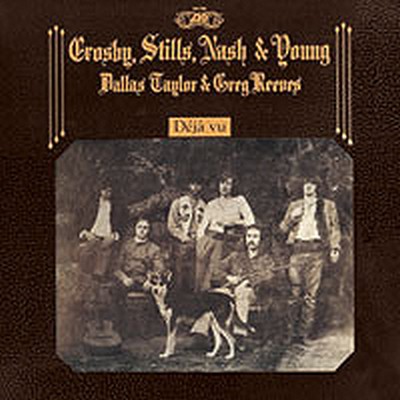
It’s clearly one of  Bill Halverson‘s engineering triumphs, along with Deja Vu and Steve Stills’ first album (now that’s a trio!). Live rock music on record just does not sound better than a White Hot Stamper side one of Goodbye.

When it’s all working, you’re front and center for a fiery Cream concert with these guys delivering one heckuva performance. And where else are you gonna get that these days?

(more…)

First Question: “How loud do you play your records?”

More Records that Can Only Sound Their Best Turned Up Good and Loud

Our good customer, Conrad, wrote us about his experience with a Stevie Ray Vaughan album a while back.

You can find the bulk of his letter here.

I wanted to make a point about one of his observations. (Emphasis added.)

“There seems to be a threshold level for this record at which it sounds congested below, but which it comes alive above (and how).”

Conrad,

You hit the nail on the head with your newfound appreciation of the sound of the two sides at louder levels.

We don’t know what our records sound like at moderate levels.

This is true for the electric blues albums of Stevie Ray Vaughan, but just as true for rock, jazz and even classical.

We don’t play them at moderate levels, and we don’t want to hear them at moderate levels.

There are at least two very good reasons for our position:

The first one is the most obvious — we don’t think music played at unrealistically low levels is very enjoyable.

And two, lower levels interefere with our ability to properly judge the sound of the pressings we play in our shootouts.

Playing records quietly too often obscures their faults.

It also reduces their energy, as well as whatever dynamic contrasts they might have, their ability to play clean in the loudest climaxes or choruses, and on and on down the list.

(more…)