10-2023

An Insult to Aaron Copland on Reference Records

Hot Stamper Pressings of Orchestral Music Available Now

Yet another Reference Record we’ve reviewed and found wanting.

In all the years I was selling audiophile records, one of the labels whose appeal made no sense to me whatsoever (along with their long-forgotten TAS list brethren, American Gramaphone and Telarc) was Reference Records.

Back then, when I would hear one of their orchestral or classical recordings, I was always left thinking, “Why do audiophiles like these records?”

I was confused, because at that time, back in the 80s, I had simply not developed the listening skills that today make it so easy to recognize the faults of their recordings.

I made the mistake of thinking that other audiophiles with more advanced equipment and more refined listening skills must be hearing something I was not.

I had trouble putting my finger on what I didn’t like about them, but now, having worked full time (and then some!) for more than twenty years to develop better critical listening skills, the shortcomings of their records, or, to be more accurate, the shortcomings of this particular copy of this particular title, took no time at all to work out.

My transcribed notes for RR-22:

  • Lean tonality
  • No real weight
  • No Tubey Magic
  • Blurry imaging when loud
  • No real depth
  • Bright tonal balance

Is this the sound you are looking for in an audiophile record?

Shouldn’t you be looking for audiophile quality sound?

Well, you sure won’t find it here.

On our current playback system, this Reference Record is nothing but a joke, a joke played on a much-too-credulous audiophile public by the ridiculously inept and misguided engineers and producers who worked for Reference Records.

This is a reference for something? For what?

As I wrote about another one of their awful releases, if this is your idea of a reference record, you are in real trouble.

It would be hard to imagine that anyone who has ever heard a good vintage classical recording — here are some of our favorites — could ever confuse this piece of audiophile trash with actual hi-fidelity orchestral sound.

(more…)

Disraeli Gears – Live and Learn

Hot Stamper Pressings of the Music of Cream Available Now

A classic case of live and learn.

Our shootout from quite a while ago for Cream’s classic second album provided proof positive that we were wrong about Disraeli Gears when we wrote:

No reissue we’ve ever played sounded especially good and none likely ever will.

Ah, but some do! We would love to tell you exactly what to look for so that you can go find one yourself, but that’s bad for business as I’m sure you know.


UPDATE 2025

Just to be clear, reissues can sound good, but they haven’t won a shootout in years. The best copies are still found on the early Blue Reaction labels.


We also have to admit to being wrong about this:

If you’re expecting Sunshine of Your Love to rock on record like you remember it rockin’ on the radio back in the day, forget it. When you heard that song your brain added the bass and dynamics that are missing from the record. Either that or you did it through the loudness control on your old receiver. There’s maybe five db of dynamic range on that song and there can never be more than that.

We discovered that there are copies with dynamic vocals on that track.

The vocals are practically the only thing that do get loud, and they only get loud on some of the copies we played.

Likewise, on some copies the drums have much more body and punch than than they do on most.

So, when it comes to bass and dynamics, yes, some copies have some, maybe even more than you remember.

Heavy compression created the sound you heard on the radio, added to the compression that is already baked into the mix and whatever amount was added in mastering.

We Admit It

Yes, as is clear from the above, we was wrong. It’s not the first time and it sure won’t be the last. We happily admit to our mistakes because we know that all this audio stuff and especially the search for Hot Stampers is a matter of trial and error. We do the trials; that’s how we avoid the kinds of errors most audiophiles and audiophile record dealers make when it comes to finding the best sounding records. Of course, being human we can’t help but make our share of mistakes. The difference is that we learn from them. We report the facts to the best of our ability every time out. Every record gets a chance to show us what it’s made of, regardless of where it was made, who made it or why they made it. (Like anybody cares.)

If we used to like it and now we don’t, that’s what you will read in our commentary. Our obligation is to only one person: you, the listener. (Even better: you, the customer. Buy something already!)

On every shootout we do now, if the notes are more than six months old we toss them out. They mean nothing. Things have changed, radically, and that’s the way it should be. With each passing year you should be hearing more of everything in your favorite LPs. That’s the thrill of this hobby — those silly old records just keep getting better! (I wish someone could figure out how to make digital get better. They’ve had twenty five years and it still leaves me cold. You too I’m guessing.)

(more…)

Not as Good a TAS List Title as We Thought, Sorry!

Hot Stamper Pressings of Living Stereo Titles Available Now

We had a handful of copies of this famous TAS List title in the backroom, so we decided it was high time to get a shootout going. We pulled all the pressings of the music (both Billy the Kid and Rodeo) we had on hand on every label and proceeded to needle-drop them in preparation for a big Copland shootout.

Much to our chagrin, most of the copies of LSC 2195 we played were unacceptable. The sound, for the most part, was very much not to our liking. Our notes read:

  • Smeary — (more records with smeary sound can be found here),
  • Dry — (more records with dry sound can be found here),
  • Bright — (more records with bright sound can be found here),
  • Flat — (more records with flat sound can be found here),
  • Hi-Fi-ish — (more records with hi-fi-ish sound can be found here),

Those records weren’t cheap. That was a lot of money down the drain. Not only can’t we sell records that sound as bad as this Living Stereo — our customers simply would not buy them — but we would never even try. Unlike other record dealers, we actually know what our records sound like. We don’t care about the reputations of the records we sell. We only care about their sound.

Some of the records on the TAS List seem better suited to the old school audio systems of the 60s, 70s and 80s than the modern systems of today.

(more…)

Is Kind of Blue a Good Test Record?

Hot Stamper Pressing of Miles’s Albums Available Now

One of our good customers had this to say about some Hot Stampers he purchased recently:

Hey Tom, 

Listening to Kind Of Blue. Who needs an equipment upgrade with records like these?

Our reply at the time:

So true!

But on further reflection, it became clear to me that there is more to this idea than one might think upon first hearing it.

When records sound as good as Kind of Blue on vintage vinyl (not this piece of trash), it’s easy to think that everything in the system must be working properly, and, more to the point, reproducing the sound of the album at a high level.

If only more records were as well recorded as KOB, we could save ourselves a lot of time and money, time and money that we’re currently spending on tweaking, tuning and upgrading the various components of our systems. (Assuming you are in fact doing these things. I certainly hope you are. Achieving higher quality sound is one of the greatest joys to be had in all of audio.)

This is undoubtedly true, as far as it goes. But we must live in the world of records as we find it, not the one we want to exist.

Finding good sound for most of the records you wish to enjoy takes a great deal of effort, assuming you are setting your standards for sound at an exceptionally high level. Yours don’t have to be as high as ours — we’re the guys who put their reputations on the line for extravagantly priced Hot Stampers, not you — but the records you are playing have to sound good enough to allow you to forget they are records and just get lost in the music.

With every improvement you make to your system, you eventually will find yourself banging your head up against the psychological effect of Hedonic Adaptation.* Once you have achieved better sound, it doesn’t take long before you get used to it, and now your much-improved “new normal” isn’t as thrilling as it was when you first experienced it.

(more…)

I Knew This Guy Was Full of Sh*t, But I Had to Be Sure

Skeptical Thinking Is Critical to Achieving Better Sound

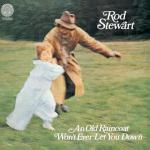
Recently a fellow named Jared tried to correct our assertion that Rod Stewart’s early albums from the US are made from dubbed tapes, as is our contention.

Here is his letter:

Hey there. Just wanted to point out some errors on your listing for Rod Stewart’s “An Old Raincoat…” LP. The UK pressings are the ones made from dupes.

The first generation masters for all of Rod’s Mercury albums are in the US. All vinyl vintage pressings, UK or US, are made from EQ dupes.

The original US Polygram CDs mastered by Dennis Drake are straight off the original masters.
Thanks!

Naturally this information took us by surprise. We replied:

Jared,

Can you refer me to the source of your information?

Thanks,

TP

There was no answer to my query. Nor was I able to find any source for this information.
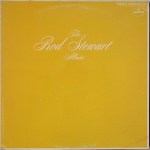
I hadn’t played a domestic copy of The Rod Stewart album, the title Old Raincoat was released under in the states, in at least twenty years, probably more like thirty. It had sure sounded dubby to me back then. I stopped buying them a long time ago.

Was I remembering the sound right? The odds were very high that I was, but I had to know for sure, even though I had no idea who Jared was or where his information came from.

I asked my main man Fred to get one in and give it a listen. Here is his report:

We played The Rod Stewart Album (domestic Old Raincoat) we got in and it sounds absolutely terrible. Super spitty and bright.

Are they all this bad? Who can say?

Could my UK pressing be made from copy tapes?

I suppose it’s possible. It doesn’t sound dubby to me, but it is not an especially good sounding record, unlike Rod’s third album, which is about as good sounding a rock record as is possible to make. (In the case of Every Picture, it’s the imports that are made from dubs. Go figure.)

Maybe Dennis Drake actually did get hold of the real master tapes when making his CD. He is a very talented engineer; I have many compact discs mastered by him and I don’t know of any that aren’t at least good sounding. For those of you who play CDs, you are free to give his version of An Old Raincost a try. Please let me know what you hear.

What’s that Smell?

But the reason Jared letter is being published is that it reeks of information that has not been verified by anyone’s ears. Certainly not Jared’s.

If, like Jared, you read something that sounds plausible, that you think might be true, why would you be so willing to believe it without any real evidence to back it up?

Even worse, the comments Jared makes weren’t even prefaced with “I’ve read that…” or “People seem to agree that…” No, Jared leaves no room for doubt. The information is presented as true.

Can anyone who has played both versions of Old Raincoat not hear how much better the UK pressing is?

We couldn’t. Nothing could have been more obvious to us than that one version is made from good tapes and one version is made from bad tapes.

(more…)

Letter of the Week – “Listenability is a great way to cut through the noise and put your record-buying money where it matters.”

Thoughts on Hot Stampers Versus Collector Pressings

We received this letter a while back:

Although I have a very collectable collection that I hope and expect will hold its value over the years to come, it is with joy, relief, and a sense of relaxation that I shift my record-buying focus now to listenability rather than collectability. As we cope with the ever-growing onslaught of new pressings and inflation in the prices we’re seeing on discogs, listenability is a great way to cut through the noise and put your record-buying money where it matters.

It is really hard to buy for listenability anywhere other than on Better Records. Maybe if you have a friend who wants to sell you some of his records, you could do it. But, if you’re buying on Discogs or ebay, you’re not buying for how things sound. Occasionally, you can hear listening descriptions as part of the seller’s grading, but those are not comparisons to other pressings of the same title. And, as much as I like to support my local record stores, when it comes to listening first as a basis for buying, you can basically forget about it.

I’ve been formulating these thoughts for a while, but not sure why I’d want to post them. I mean, who wants to drive more customers to this guy when I still want to buy his merchandise, and some titles already sell out within seconds of listing, before I can even make up my mind? But, here you have it. Merry Christmas, I guess. Add my voice to the choir – you can buy better records hot stampers with confidence.

Dear Ab_ba,

Thanks for writing about your experiences playing our Hot Stamper pressings against others in your collection.

We constantly encourage our customers to do their own shootouts. It is the only way to know exactly what the strengths and weaknesses of any pressing you may own might be.

Naturally, we enthusiastically welcome the challenge when someone wants to play our records head to head with whatever other pressings they may own.

Shootouts are the only way to answer the most important question in all of audio: “compared to what?

(more…)

Letter of the Week – “Then I did Street Fighting Man. The BR copy destroyed the other two!”

Hot Stamper Pressing of the Music of The Rolling Stones Available Now

Our new customer Michel wrote to tell us how much he likes his Super Hot Stamper pressing of Beggars Banquet.

Hi Tom,

Doing that shootout was really interesting. I had culled the two best I had some months ago which were two old London presses (one TH and one Monarch). So I mixed those two up so I didn’t know which was which, and then the BR copy would be third on the table.

I did Sympathy for the Devil first. I actually preferred one of my copies (monarch) for that track as the tone
of the bass was a little more forward which I really like for that one song.

Then I did Street Fighting Man. The BR copy destroyed the other two!

What a pleasure it was
to hear that song at max volume with everything just right. Turn it up more!

That was definitely the very best I’d ever heard that song in 63 years. Well done BR!Michel

Michel,

Michel,

I would agree with you that Street Fighting Man is the better test. It’s easy to be thrown off by one aspect or another of the sound of a particular track. We always use at least two in our shootouts and oftentimes three is better.

The production is heavy on strummed acoustic guitars. Those are a good test for any record.

No Expectations would have been my first choice, but the rockers are important for energy, weight, size and power, so you really have to play a number of tracks to know which pressings get Beggars right.

Thanks for your enthusiatic letter.

Best, TP

PS

We love it when our customers take the time and make the effort to do their own shootouts, especially when we win, which is what happens about 99% of the time.

It is not the least bit unusual for our customers to take another listen and become more aware of the superior sound of the Hot Stamper pressings the second time around.

When we do lose a shootout, we promptly refund the buyer’s money and wish him or her a nice day.

What do we do with the record, assuming the customer had no problem with its playing condition?

We put it right back up on the site to sell to the next customer who might want it. In only two or three cases did it ever come back to us again. Two or three out of thousand and thousands of Hot Stampers sold. Not bad.

(more…)

You Won’t Learn Much Playing the Same Record on the Same Setup

More on the Subject of Developing Your Critical Listening Skills 

UPDATE 2023

This commentary was written around 2006, about two years after we started to put Hot Stampers on our website. This is one of the early ones that helped to explain what we were up to.


You learn almost nothing from the same record played back on the same system.

What you must do is learn to listen for differences in the sound, and differences only come about as the result of a change.

You have to CHANGE something in the system to develop your critical listening skills.

How about this example: the difference in sound between any two sides of a record.

The only change there involves flipping the record over. No new equipment, no tweaks, no shootouts with dozens of alternate pressings. Just flip the record.

Almost no record has the same sound on both sides, not the records we sell anyway. Where else have you ever read such a thing? Nowhere else, at least to my knowledge. Because not enough audiophiles and almost no record dealers make the effort to listen critically.

If you can’t hear the difference on at least some of your records, it has to be one or both of the following.

Either your system is not good enough to resolve these differences, which is sometimes the case, or, much more likely, you simply haven’t trained your ears to listen for them. Not listening for pleasure. Listening like it’s a job. Critically. Analytically. Try to listen for one quality by itself. Listen for grain, or top end extension, or bass dynamics — anything, the list is endless. Focus in on that single quality, recognize it, appreciate it, then flip the record over and judge that quality for side two.

Although we make plenty of mistakes, we consider ourselves expert when it comes to evaluating the sound of records and stereo equipment. (Experts make mistakes; they just make fewer of them.) 

(more…)

Doing Shootouts for Other Genres of Music

Record Collecting for Audiophiles from A to Z

Jack contacted us recently about doing shootouts for the kinds of records that we rarely do shootouts for:

Hello Tom,

I am thinking about opening an online record store based on the same hot stamper methodology as Better Records, only I focus on genres that you do not cover, such as rap, metal, punk, hardcore, post-punk, noise and other niche genres.

Thus I am trying to get a sense of what it would take to make this project work. Did you have a reputation in the audiophile community prior to starting Better Records that drove people to your store?

The other question I am wondering is about equipment. Do you think that one has to have extremely high-end equipment (e.g., $5000 tone arms and the like) to properly tell whether a record is a hot stamper?

Finally, do you think that your methodology could work on LPs released post-1990, when there are far fewer variants of an album available? Any insight you could offer would be much appreciated.

Regards, Jack

Jack,

You need to follow our approach to the letter. The basics of it can be found here: the four pillars of success.

For a deeper dive, here is where you will find more helpful advice on doing your own shootouts

This would be a good budget to start with:

  1. Cleaning system: $10k.
  2. Stereo: $40k.
  3. Dedicated sound room: (not cheap)
  4. Staff to help with the work: 3-5.
  5. Years to figure all this stuff out: 10, at least. (This assumes you are twice as smart as me. It took me more than 20.)

Chances it will work: not very good. Better to find something else to do with your next ten years. I regret to inform you that this idea strikes me as a non-starter.

Best, TP

I sent Jack’s letter to one of my customers who has done some of his own shootouts, and here is what he had to say about it:

Tom,

Thanks for sharing it. You make it look easy, I guess!

Without a 30-day money-back no-questions-asked policy, nobody would buy anything from him. And, with a policy like that in place, he’d go broke in a month. Also, the raw materials he’s talking about just don’t support finding hot stampers. They are all overpriced. I have a couple hip hop albums that sound ok to me but sell for a small fortune on discogs. I’m not sure what people think they are buying, but it’s not sound quality. To find a copy that sounds really great, he’d have to charge more than you do.

(more…)

The Best Policy for Any Label that Sells Bad Sounding Records

More of the Music of Stevie Ray Vaughan

A good customer, initials CF, bought some SRV Hot Stampers from me a while back. He then told me he was going to spend $400 on the AP SRV Box Set in the hopes that the rave reviews from audiophile reviewers were justified.

The complete story of his disappointment can be found here. An excerpt:

What do you do with the Box Set if you find out these reviewers are full of horse pucky and it sounds as awful as our friend CF say it does? Can you send it back to Acoustic Sounds?

Oh, sorry, you can’t.

Within 30 days of purchase, we will accept returns of any physically or audibly defective or damaged item. We do not guarantee that you will like the music or recording quality of a LP or CD, and personal taste does not qualify as a reason for return.

There is a reason they have that policy. They sell bad sounding records.

We have the opposite policy. You can return any record for any reason within 30 days and get 100% of your money back.

We can do that because we sell good sounding records.

PS from CF

Great stuff, love it. Someone’s gotta keep this industry as a whole accountable. It’s like we’re in the dark ages with just a few devoted monks scouring the libraries and preserving the truth of what once was. Hopefully due to your lifetime’s commitment to this we’ll one day see a renaissance of quality, but it’s looking pretty bleak currently.

Ain’t that the truth.


We leave you with this comment from Michael Fremer, a man who apparently cannot get enough of this crap.

With all of the reissues coming from questionable sources or proudly proclaiming their ‘digital-ness’ ala The Beatles Box, we’re fortunate to have labels like Analogue Productions, Mobile Fidelity, ORG, IMPEX, Rhino and the others cutting lacquers from analog tapes. Acoustic Sounds’ Chad Kassem sent this image of the master tape box from Couldn’t Stand the Weather one of the many Stevie Ray Vaughan albums his reissue label is currently readying for release, pressed at his Quality Record Pressings pressing plant in Salina, Kansas. That’s a form of vertical integration we like! I have heard some truly miserable vinyl reissues from labels like Vinyl Lovers and ZYX some of which didn’t even sound like the same music when compared to original pressings. I’ve also heard test pressings of these SRV albums and they will rock your world! So, we are lucky to have these companies that are doing things correctly lavishing vinyl goodies on us all year long. Sometimes we wish they’d stop long enough for us to catch up, but then we come to our senses and say “more please!” even when the shelves are stuffed.

Lucky to Have Analogue Productions Around?

If you think his pressing of Tea for the Tillerman sounds good, it’s a near certainty you will want to be the first on your block to collect all the newly remastered Steely Dan Heavy Vinyls (the first of which has been reviewed here).

The same goes for this pressing of Stand Up. If this is the sound you are looking for, you can be sure Chad will give it to you, good and hard (apologies to H.L. Mencken). Here are some of the other titles of theirs we’ve reviewed:

Do these records sound fine to you? You’re happy with them, are you?

Then you have much to look forward to with the release of the complete Steely Dan LP collection!

These Analogue Productions releases will no doubt share many of the sonic characteristics of the above-mentioned titles.

How could they not? They are guaranteed to sound the way Chad wants them to sound. Chad is the customer, and the customer is always right.

If you’re Bernie Grundman, it might take you seven runs at it until you find that indescribable and elusive “Chad” sound, but you will have to keep at it until you do, assuming you plan on getting paid.

(more…)