grainy-sound

The records listed here have, or often have, grainy sound.

With The Beatles on Mobile Fidelity

Sonic Grade: C+

The MoFi pressing of With the Beatles has so many problems it would take an hour to describe them all. Suffice it to say, it’s thinner and brighter, with voices that are grittier and grainier. The overall effect is the sinking feeling that you are listening to a cheap reissue and not the real thing. Don’t the Beatles sound better than this? To be fair, some tracks are okay, others a disaster.

If you own the MoFi, play it. Listen to it carefully. Make notes of which songs sound better than others and why. That’s how we spend our days, evaluating the relative merits of various pressings, and it’s that and that alone that has given us the critical listening skills necessary to recognize and appreciate the differences among the records we play.

One of the biggest problems with the average Parlophone copy is just the reverse of the MOFI. They tend to have rolled off highs, which emphasizes the harshness in the upper midrange and causes a loss of transparency. (The best Hot Stamper copies are of course as smooth, sweet, and transparent as they come.) Even with those shortcomings though, I would still rather listen to a typical Parlophone pressing. I wouldn’t be frustrated by the sound of somebody fooling with the EQ and screwing it up.  (more…)

Not that Long Ago Blue Was a Nut We Just Could Not Crack

Hot Stamper Pressing of the Music of Joni Mitchell Available Now

This commentary was written in 2006 or thereabouts.

Allow me to tell you about a Blue shootout I tried to do at a friend’s house. The system he owns has some nice equipment in it (the EAR 864, a $4200 tube preamp, for one) and can sound very good — if not wonderful — on certain program material.

But it’s the kind of audiophile system that is easily overwhelmed by difficult to reproduce material. On my copy of Blue his stereo was a complete disaster: grainy, shrill, thin, flat, harsh, compressed, unmusical, no real extension at either end; in short, no magic, tubey or otherwise.

My copy of Blue, which had earlier in the day sounded so good at my house, now sounded so bad at his that I could hardly recognize it as the same LP.

Pieces of the Puzzle

Of course it was the same LP, and by the time I got home the pieces of the puzzle had all fallen into place. It takes a very special stereo to overcome the shortcomings of even the best domestic pressings of Blue in order to reveal the beauty of this music.

The new one isn’t better. It’s just easier to play on the average audiophile system.

Do you have one of those? Most audiophiles do; that’s what being average means. If you’ve been in this hobby for less than five years it’s almost certain you do. I would say a decade of serious dedication to home audio would be the minimum needed to acquire the knowledge and skill to build a truly hi-fidelity system.

(more…)

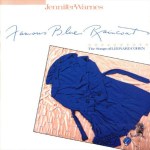
Listening in Depth to Famous Blue Raincoat

Hot Stamper Pressings of the Music of Leonard Cohen Available Now

I’m a huge fan of this FBR. It’s the only album Jennifer Warnes ever made that I would consider a Must Own recording or a Desert Island Disc. Without question this is her Masterpiece.

Key Test for Side One

Listen to the snare drum on Bird on a Wire. On most copies it sound thin and bright, not very much like a real snare. Let’s face it: most copies of this record are thin and bright, and that’s just not our sound here at Better Records. If the snare on Bird sounds solid and meaty, at the very least you have a copy that is probably not too bright, and on this album that puts it well ahead of the pack.

While you’re listening for the sound of that snare, notice the amazing drum work of Vinnie Colaiuta, session drummer extraordinaire. The guy’s work on this track — especially with the high hat — is genius.

Key Test for Side Two

Listen to the sound of the piano on Song of Bernadette. If it’s rich and full-bodied with the weight of a real piano, you might just have yourself a winner. At the very least you won’t have to suffer through the anemically thin sound of the average copy.

Side One

First We Take Manhattan

Don’t expect this song to be tonally correct. It runs the gamut from bright to too bright to excrutiatingly bright. Steve Hoffman told me that he took out something like 6 DB at 6K when he mastered it for a compilation he made, and I’m guessing that that’s the minimum that would need to come out. It’s made to be a hit single, and like so many hit single wannabes, it’s mixed brighter than we audiophiles might like.

(more…)

The Riddle of the Vastly Different Sides Has Been Solved

Hot Stamper Pressings of Recordings Featuring the Violin

About ten or fifteen years ago we came across a puzzling Shaded Dog pressing of the Bruch / Vieuxtemps recording from 1962 with Heifetz, LSC 2603.

We were surprised at the time how much worse one side sounded than the other. That had rarely if ever happened back in those early Living Stereo shootout days.

We sold the record as a one-sided disc with one complete performance in top quality sound, The Scottish Fantasy. Obviously the Vieuxtemps / Concerto No. 5 wasn’t worth playing; the sound was sub-par, a pale shadow of the sound of the other side of the record. You can read all about it here.

Well, we ran into those stampers again, or at the very least we ran into a copy with the same bad stampers for side one, 5s. Something sure went wrong somewhere, as you can see from our notes below.

At the time we described this curious pressing this way:

The violin is captured beautifully on side two. More importantly there is a lovely lyricism in Heifetz’s playing which suits Bruch’s Romantic work perfectly. I know of no better performance.

The performance of the Vieuxtemps Concerto No. 5 is also wonderful, but the sound is not. Want proof that two sides of the same record can have vastly different sound? Here it is. Note how oversized the violin on side one is, how smeary the orchestra, how little texture there is to anything in the soundfield. This side one is no Hot Stamper.

All true, and now that we know that 5s etched stampers are responsible for the bad sound and not just some pressing anomaly, we can all sleep peacefully once again.

(more…)

Dream Weaver – A Good Test Record for Gritty, Grainy Sound

More Records that Are Good for Testing Grit and Grain

Most pressings of this album tend to err in one of two ways: either they’re a little bright and get hard and gritty in the upper mids, or they’re wrong in the opposite direction, with sound that is smeary and dull.

Our best copies get the balance right — plenty of texture on the keyboards and drums, with vocals that still have presence and breathiness — and not too much grit.

An all-keyboard pop record like this was a rarity at the time. The only other instruments besides drums (and one track with guitar) are keyboards. Every song is layered with multi-tracked clavinets, organs, and Moogs — it was a remarkable feat in 1975 to create an album with nothing but keys.

Listen to the title track, the most dynamic song on the record, and you will hear just how well all of those stacked keyboards and synths work together. (Steve Winwood’s Back in the High Life borrowed a page or two from Gary’s solo debut here.)


  • If you’re a Gary Wright fan, or perhaps a fan of mid-’70s synth-pop, this title, a personal favorite of mine from 1975, is surely a Must Own.
  • In our opinion, Dream Weaver is his best sounding album, and probably the only Gary Wright record you’ll ever need. Click on this link to see more titles we like to call one and done.
  • The sound may be too heavily processed for some, making it fairly difficult to reproduce, but the best sounding pressings, played at good, loud levels on big dynamic speakers in a large, heavily-treated room, are a fun listen. They sound just fine to us.
  • 1975 was a good year for music on vinyl — here are some excellent pressings of well-recorded albums available for purchase now.

(more…)

Exile on Main Street – A Good Test for Grit and Grain

More reviews and commentaries for the music of The Rolling Stones

The best copies will tend to have the qualities we discuss below, and the more abundant these qualities are on any given pressing, the higher its grade will be.

Yes, it is a science, an empirical one, which can only be carried out by the use of strict protocols and controls, but it sure ain’t rocket science.

All you need is the system, the room, the records, the time and the will to do the painstaking critical listening required to carry out the task.

It can be done, but you could spend a lifetime meeting audiophiles of the vinyl persuasion and never run into a single one who has made the effort more than a handful of times.

To be honest, shootouts are a bitch. If you aren’t getting paid to do them the way we are, finding the motivation to devote the time and energy required to do them right — not to mention the piles of copies of each record you will need — is daunting to say the least.

So, back to the question: what to listen for? (more…)

Listening in Depth to Help

Hot Stamper Pressings of Help Available Now

More of the Music of The Beatles

Presenting another entry in our extensive Listening in Depth series.

Much like we said about the Please Please Me Hot Stampers, on the top copies the presence of the vocals and guitars is so real it’s positively startling at times.

Drop the needle on You’ve Got To Hide Your Love Away and turn up the volume — on the best copies it will be as if John and Paul were right there in your living room.

The best import copies of this album sound AMAZING, but the typical one is pretty mediocre. Most tend to be dull, with not enough extension up top, as well as thin, lacking weight and body from the lower midrange on down.

Side One

Help! (A Number One Hit)
The Night Before

One of the biggest problems we found with this album is that the top end tends to be somewhat lacking. On the better copies, the cymbals on this track will sound correct and lively.

You’ve Got to Hide Your Love Away

One of the reasons this song sounds so good is that there are only acoustic instruments being played. There’s not an electric guitar to be found anywhere in the mix, one of the few tracks that can make that claim. We love the Tubey Magical guitars and voices found on early Beatles albums, and this song is a good example of both.

(more…)

The Up-Front Vocals on Bringing It All Back Home Can Be a Bit Much

Hot Stamper Pressings of the Music of Bob Dylan Available Now

It’s hard to find copies of this album that give you the tubey richness and warmth that this music needs to sound its best. We’ve done this shootout a number of times over the years, but I can count the number of Hot Stamper copies that have hit the site on one hand.

A lot of copies seem to be EQ’d to put the vocals way up front, an approach that makes the voice hard and edgy. Copies like that sound impressive at first blush (“Wow, he’s really IN THE ROOM!”) but get fatiguing after a few minutes. When you get a copy that’s smooth, relaxed and natural, the music sounds so good that you may never want it to stop.

Our Hot Stamper Pressings from Years Ago

Side one is lively and present with a punchy bottom end and real depth to the soundfield. It’s also open and transparent with lots of natural ambience. Compared to the A+++ side two here, there’s a touch of grit and grain at times, but dramatically less than you get on most copies. We rated side one A++, which means you get excellent sound for Subterranean Homesick Blues, Maggie’s Farm, She Belongs To Me and a few more classic Dylan tracks.

Side two was UNSTOPPABLE — it was clearly As Good As It Gets based on years of listening and scores of copies auditioned over the years. Everything sounds right — the vocals and guitar sound wonderfully natural and correct with superb clarity and lots of richness and warmth. 

(more…)

Listening in Depth to Heart Like a Wheel

More of the Music of Linda Ronstadt

Presenting another entry in our extensive Listening in Depth series with advice on precisely what to listen for as you critically evaluate your copy of Heart Like a Wheel.

A key test on either side was to listen to all the multi-tracked guitars and see how easy it was to separate each of them out in the mix. Most of the time they are just one big jangly blur. The best copies let you hear how many guitars there are and what each of them is doing.

Pay special attention to Andrew Gold’s Abbey Road-ish guitars heard throughout the album. He is all over this record, playing piano, guitar, drums and singing in the background.

If anybody deserves credit besides Linda for the success of HLAW, it’s Andrew Gold.

Our In-Depth Track Commentary

Side One

You’re No Good

Right from the git-go, if the opening drum and bass intro on this one doesn’t get your foot tapping, something definitely ain’t right. Check to make sure your stereo is working up to par with a record you know well. If it is, your copy of HLAW belongs on the reject pile along with the other 90% of the copies ever pressed.

It Doesn’t Matter Anymore

Amazing acoustic guitars! Lots of tubey magic for a mid-’70s pop album. And just listen to the breathy quality of Linda’s voice. She’s swimming in echo, but it’s a good kind of echo. Being able to hear so much of it tells you that your pressing is one of the few with tremendous transparency and high resolution.

Faithless Love

Another superb arrangement with excellent sound. The banjo that opens this track is key — the picking should have a very strong plucky quality, with lovely trailing harmonics, even some fret buzz.

So many copies are veiled or blunted sounding; this clearly demonstrates a lack of transient information.

The copies without the trailing harmonics lack resolution.

Once you hear either of these problems on the banjo, you can be sure to find them on the voices and guitars throughout the side.

That the Cisco pressing doesn’t do a very good job reproducing the banjo should be clear for all to hear. If you want the sound of the real thing, only the best Capitol pressings are going to be able to give it to you.

(more…)

Spending More Time With The Beatles

beatlwitht_x20

Hot Stamper Pressings of the Music of The Beatles Available Now

To find the Hottest Stampers it helps to have piles and piles of minty British pressings. And lots of time on your hands. And lots of help. Fortunately, with a staff of ten and nothing else to do all day, we have all three.

This is a tough album to get to sound right, as long-time readers of our site surely know, but on a good copy it can sound wonderful. This one really delivers, with plenty of presence and energy as well as natural, balanced tonality.

So, What’s Out There?

We’ve heard copies that were smeared, murky, muddy, grainy, or all of the above. Almost all of them had no real magic in the midrange. And of course, we heard tons of copies with the kind of gritty vocals that you’ll find all over the average Parlophone Beatles pressing.

Early or Late Pressing?

So many Parlophone copies would have you think With The Beatles is a gritty, edgy, crude recording — especially if you made the mistake of buying an early pressing.

The early pressings are consistently grittier, edgier and more crude than the later pressings we played.

(more…)