spkr-adv

Advice on speakers.

Sound Like This Makes Audiophiles the Laughing Stocks of the Music World

Advice We Think Can Help You Make More Audio Progress
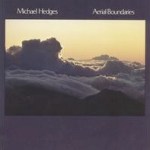

Click on the link below and give this system a listen for a minute or two.

Have you ever heard live music that sounded like this?

Who in his right mind wants a stereo with this kind of ridiculously artificial sound?

If you’re reading this blog, I hope it’s not you, because you will never find a record on our site with sound this unnatural.

If you like the sound of an album such as Aerial Boundaries, then buy this speaker. It will make all your records sound just like it! It’s the perfect example of a pass/fail record, the way this speaker is an example of a pass/fail speaker.

Here is how we described the sound of Aerial Boundaries years ago:

It sounds as if someone went into the biggest room in the studio they could book, sat Michael Hedges down on a stool out in the middle of it, and then took all the mics and aimed them at the walls. Roll tape! (Assuming they used tape, who knows what kind of crap digital system they were using.)

And the best part is that it was nominated for an engineering Grammy!

If you think the average music lover today wouldn’t know good sound if it bit him in the ass, this album is proof that nothing has changed, not since 1984 anyway.

Some commentary I found on the web

Aerial Boundaries is the second album by guitarist Michael Hedges released on the Windham Hill label in 1984. It was nominated for a Grammy Award as Best Engineered Recording.

(more…)

Small Speakers and Some Audio Lessons I’ve Learned Over the Last 50+ Years

These Are the Fundamentals of Good Sound

UPDATE 2026

The video linked to below is now private.

However, as you will see from our commentary, it really doesn’t make much of a difference whether it is or not. What we had to say about it years ago is nonetheless true.


Do not believe a word you hear in this video. [Not a problem!]

You probably shouldn’t even watch it. [Same.]

Let me state clearly one of our core beliefs here at Better Records.

Small speakers are incapable of lifelike musical reproduction in the home.

(more…)

Some Speakers Don’t Let Frampton Come Alive

Hot Stamper Pressings of the Music of Peter Frampton Available Now

When I was first getting serious about audio in the mid-70s, electrostatic and screen-type speakers were quite common in audio showrooms. Classical music aficionados in particular seemed to prefer them to other designs. They were more often than not big, open and clear, and never boxy or sour.

Another quality they had going for them was that they were exceptionally transparent.

Alas, they were inadequate or wrong in almost every way a speaker can be, but transparency was their strong suit and everybody could hear it. All of the qualities noted above — big, open, clear — worked together to fool a great many audiophiles into thinking that theirs was the right approach to reproducing music.

(Circa the Pretzel Logic era, Becker and Fagen of Steely Dan fame were apparently big fans of Magnepan speakers, to the consternation of everyone else in the band — especially the engineers, one imagines — who thought they were overly-smooth, incapable of reproducing the frequency extremes high and low, soft, and lacking in their ability to reproduce many of the most important aspects of music, energy especially. Count me among their harshest critics.)

It was my good fortune at the time that I liked to play my rock music good and loud, so screens, panels and full-range electrostats were never going to cut it for me.

I once heard the giant Magnaplanar 1D system — a series of ten panels that stretched all the way across the long wall of the audio showroom I frequented at the time, standing about 7 feet tall to boot — try to reproduce a favorite Peter Frampton record of mine. (It was Wind of Change, a Desert Island Disc I still play regularly to this day.)

(more…)

Cat Stevens Wants to Know How You Like Your Congas: Light, Medium or Heavy?

Hot Stamper Pressings of the Music of Cat Stevens Available Now

During the shootout for this record a while back [the late 2000s would be my guess], we made a very important discovery, a seemingly obvious one but one that nevertheless had eluded us for the past twenty plus years (so how obvious could it have been?).

It became clear, for the first time, what accounts for the wide disparity in ENERGY and DRIVE from one copy to the next. We can sum it up for you in one five letter word, and that word is conga.

The congas are what drive the high-energy songs, songs like Tuesday’s Dead and Changes IV.

Here is how we stumbled upon their critically important contribution.

We were listening to one of the better copies during a recent shootout. The first track on side one, The Wind, was especially gorgeous; Cat and his acoustic guitar were right there in the room with us. The transparency, tonal neutrality, presence and all the rest were just superb. Then came time to move to the other test track on side one, which is Changes IV, one of the higher energy songs we like to play.

But the energy we expected to hear was nowhere to be found. The powerful rhythmic drive of the best copies of the album just wasn’t happening. The more we listened the more it became clear that the congas were not doing what they normally do. The midbass to lower midrange area of the LP lacked energy, weight and power, and this prevented the song from coming to LIFE the way the truly Hot Stampers can and do.

Now I think I understand why. Big speakers are the only way to reproduce the physical size and powerful energy of the congas (and other drums of course) that play such a big part in driving the rhythmic energy of the song.

(more…)

Speaker Placement — The Room Coupling Method

Robert Brook runs a blog called The Broken Record, with a subtitle explaining that the aim of his blog is

A GUIDE FOR THE DEDICATED ANALOG AUDIOPHILE

We know of none better, outside of our own humble efforts to enlighten that portion of the audiophile community who love the sound of music reproduced with the highest fidelity and, more importantly, are serious enough to be willing to spend a great deal of their money and their time in order to make that happen.

If you aspire to great things in audio, Robert’s blog is for you, as is the one you are now on.

SPEAKER PLACEMENT: The ROOM COUPLING METHOD

An excerpt:

[A] few months ago I came across an article on a Room Coupling Method for speaker placement. Encouraged by finding some common ground with author Richard Mak’s thinking, I started trying it out, and it has helped me make some meaningful progress.

One thing I particularly appreciated in Mak’s article was his assertion that “measurements” and “analysis” are not a substitute for “listening.”

“Charts, graphs, room nodes, reflection coefficients, or even a Ph.D. in room acoustics won’t get you there. Many who are armed with an arsenal of scientific knowledge do not even know how or what to listen for on a reference test track.”

To Mak’s point, as I attempted to apply his approach to my speaker and listening chair positions, I realized in the process that even though the placement of my speakers and listening chair have been suboptimal for some time, that time was far from wasted.

Because in that time I’ve done A LOT of listening, and that listening has led to a special kind of knowledge, which for a long time was without a clear application. Mak’s methodology has since given me an outlet for this knowledge, and all that listening is now paying off.

In his article, Mak walks us through a process that begins with how to determine the distance of the speakers from the back wall. From there he describes how to determine their width, then their toe-in angle, and finally how to dial in the position of the listening chair.

For those of you who would like to tune and tweak the location of their speakers, the article seems to have some good advice for doing that, with plenty of tests to challenge both your setup and your critical listening skills. (We have some great test records you might find useful as well. The more difficult ones to get to sound right can be found here.)

This subject is so complicated that to say much more might send me down a rabbit hole I’d have a hard time climbing out of, but here’s a thought or two.

I’ve had many different big speaker systems set up in a number of good-sized rooms over the years, starting in 1975. When I moved into the house I bought in Thousand Oaks in the early 2000s there was a “great room” with a piano on the far end (where the speakers are now) and a dining table at the opposite end. It measured 15×30 with about a nine foot ceiling.

I was hoping to use my Legacy Whisper speakers in this room so that I could audition records all day (my desk can be seen there on the right). I spent about two years trying to make the speakers sound good where you see them in the picture below.

(more…)

Money Down the Drain

Basic Audio Advice — These Are the Fundamentals of Good Sound

Readers of this blog know that I’m a fan of big speakers, but in a room that’s as bad for sound reproduction as this one is, these monsters would qualify as a form of torture at anything above a whisper.

There is an ideal balance between absorption and reflection that must be found for every room. The balance this fellow has chosen is 98% reflection, which will lead to 100% awful sound.

I don’t even like the picture between the speakers. If you must have something there, in my experience rarely will it sound good unless it is five or more feet off the ground. (See picture below.)

Note that sidewall absorption in our listening room is never more than about five feet high. For some reason that seems to work the best. We tried lots of different heights over the course of years and we always came back to nothing over five feet.

The back wall has 4 inch thick 4×8 sheets of styrofoam across most of it, leaving the corners empty (which always seems to work the best, again, who knows why).

A small piece of absoptive material in the middle up high seemed to help, but more than that was too much and less did nothing.

These may be the most wonderful speakers in the world in the right room, but in this room there is no speaker that could possibly reproduce music properly, which means this guy spent a lot of money and got nothing for it. He’s not alone.

He could get some carpet and pull his speakers well out into the room for starters, but then the whole thing just won’t have the elegance it did, so what on earth would ever make him do such a thing? His favorite music? Hah, that’s a good one.

(more…)

A Few Quick Thoughts on Correctly Sized Instruments

More Unsolicited Audio Advice

Something I rarely take time to write about on this blog is the sizing of instruments.

Some speakers — typically those with smaller drivers — create images of instruments that are too small, smaller than you would picture them in your mind if you were sitting in the audience with your eyes closed.

Other speakers — typically screens of one kind or another — produce larger-than-life images of instruments and vocalists. In the 70s, I heard a lot of screens and full-range electrostats — these come to mind, and there were plenty of others like them, Magneplanars and the like — but the images never seemed right-sized or real enough to be taken seriously.

I opted for a big dynamic system in the mid-70s and over the course of the next fifty years never heard anything that would give me reason to doubt that choice.

(more…)

In the Market for New Speakers? See How Well They Handle the Energy of Far More Drums

Hot Stamper Pressings of the Music of Dave Brubeck Available Now

The drum solo Joe Morello lets loose on Far More Drums is one of the best on record. I was playing that song recently and it occurred to me that it is practically impossible for a screen or panel speaker of any design to reproduce the sound of those drums properly, regardless of how many subs you have.

Most of the music is not in the deeper bass anyway. It’s the whack of instruments whose energy is in the lower midrange and mid-bass that a screen speaker will struggle with.

A good large-driver dynamic speaker fed by fast electronics can handle the energy in that range with ease.

This is the album you need to take with you next time you head to your local stereo store to audition speakers.

It will help clarify the issues. Screen speakers do many things well, but drums are not one of them, at least in my experience they aren’t. If drums are important to you, do yourself a favor and buy a dynamic speaker, the bigger the better.

brubeck in the studio733

Time Further Out, like most of the classic Brubeck albums, is a big speaker record. It requires a pair of speakers that can move air with authority below 250 cycles and play at fairly loud levels. If you don’t own speakers that can do that, this record will never really sound the way it should.

(more…)

Find a Copy with Drums that Punch Through the Mix on Fleetwood Mac’s Greatest Hits

Hot Stamper Pressings of the Music of Fleetwood Mac Available Now

Many pressings are compressed, murky, veiled and recessed. To find one that is transparent, clear, present and punchy is no mean feat.

Proper cleaning is essential. The early Orange label CBS pressings (the only ones that have the potential to win shootouts) too often just sound like old records until they have been properly cleaned.

There are two tracks to play to hear how well the drums punch through the mix.

Mick Fleetwood is banging the hell out of his toms on Black Magic Woman. If it doesn’t sound like he’s really pounding away, you need a better copy.

Or a better stereo; one must always be open to the possibility that the system may not be up to reproducing the punchiness of the drums.

(more…)

Every Picture Tells a Story Is a Big Speaker Recording Par Excellence

Hot Stamper Pressings of the Music of Rod Stewart Available Now

I Know I’m Losing You rocks as hard as any song from the period, with Demo Disc sound.

If you have a system with big dynamic speakers and can drive them to seriously loud listening levels, you will be blown away by the power of this recording.

You know what album this one has the most in common with? Nirvana’s Nevermind.

Every Pictures Tells a Story is the Nevermind of its day, twenty years earlier.

It has that kind of power in the bass and drums. Off the charts energy too.

But it also has beautifully realized acoustic guitars and mandolins, something that virtually no recording for the last twenty years can claim. In that sense it towers over Nevermind, an album I hold in very high esteem. 

If you’re a fan of big drums in a big room, with jump out of the speakerslive-in-the-studio sound, this is the album for you.

The opening track on side one has drums that put to shame 99% of the rock drums ever recorded. The same is true of I Know I’m Losing You on side two. It just doesn’t get any better for rock drumming, musically or sonically.

Some of the best rock bass ever recorded can be found here too — punchy, note-like and solid as a rock. Got big dynamic speakers? A concrete foundation under your listening room? You are going to have a great time playing this one for your audiophile friends who have screens or little box speakers. Once they hear what big well-recorded drums can sound like on speakers designed to move air, they may want to rethink their choices.

(more…)