milestone-2007

2007 turns out to be the year that everything changed for us, although we certainly did not know it at the time.

The Rhino Heavy Vinyl pressing of Blue came out, sounding passable at best, and we asked ourselves why we were selling such mediocrities when there were so many dramatically better sounding records in the backroom just waiting to be cleaned and played in the shootouts we had been doing since 2004.

That put us on a very different course and we have never looked back. Good riddance to Heavy Vinyl has been our motto ever since.

Thick as a Brick Marked a Milestone in 2007

jethrthick_1410_3_1192056381

Hot Stamper Pressings of the Music of Jethro Tull Available Now

Until about 2007, Thick as a Brick was the undiscovered gem (by me anyway) in the Tull catalog. The pressings we’d heard up until then were nothing special, and of course the average pressing of this album is exactly that: no great shakes.

With the advent of better record cleaning fluids and much better tables, phono stages, room treatments and the like — taking full advantage of the remarkable number of revolutions in audio that have occurred over the last two or three decades –some copies of Thick As A Brick have shown themselves to be truly amazing sounding. Even the All Music Guide could hear how well-engineered the album was.

Marking Two Milestones from the Past

The 2007 commentary you see below discusses the pros and cons of both the British and Domestic original pressings. With continuing improvements to the system, room, etc., it would not be long before we realized that the British pressings were simply not competitive with the best domestic ones.

You might say this record helped us mark two important milestones in the developing history of Better Records.

The first, around 2007, was recognized by the fact that we had improved our playback to a very high level, one high enough to reproduce the album with all the clarity, size and energy we were shocked to hear at the time.

The second milestone would result from the audio changes we continued to make for the next couple of years, from 2007 to 2010, which allowed us to recognize that the best British pressings, as good as they might be, were not in the same league as the best domestic ones. We broke down in detail exactly what we were listening for and what were hearing in this commentary, and the Brits were clearly not cutting it at the highest levels by 2010.

If you find yourself with one of more British copies of the album that you think have superior sound — any copies of the album, really — we would love to send you one of our Hot Stampers so you can hear what you are missing.

(more…)

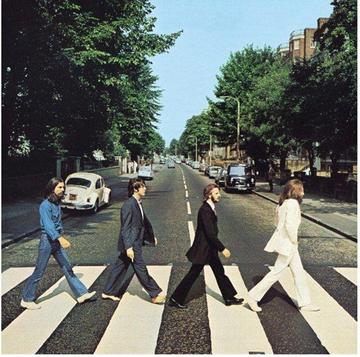
The Beatles – Looking Back on Our First Abbey Road Shootout

Hot Stamper Pressings of the Music of The Beatles Available Now

This review is a window into our limited understanding of Abbey Road on vinyl in 2007.

Let’s just say we have learned a lot about the album since then, mostly through better playback and cleaning, but also because we’ve played roughly one hundred more pressings since then, having done shootouts for the album by the dozens.

These regularly-held shootouts are the only thing that has taught us what we think we know.

Looking back, 2007 seems to have been a milestone year for us here at Better Records, although we certainly did not know that at the time.

Later that same year we swore off Heavy Vinyl (prompted by the mediocre sound of the Rhino pressing of Blue) and committed ourselves to doing record shootouts of vintage pressings full time.

Much of the review you see below indicates we had a much more limited understanding of Abbey Road than we do now, but we obviously have no problem admitting to it, a subject we discussed in some detail here.

Live and learn is our motto, and progress in audio is a feature, not a bug, of record collecting at the most advanced levels. (“Advanced” is a code word for having little to no interest in any remastered pressing marketed to the audiophile community. If you want to avoid the worst of them, we are happy to help you do that.)


Our Review from 2007

This Minty Apple British Import pressing has MASTER TAPE SOUND ON SIDE ONE! We just finished a big Abbey Road shootout (1/16/07) and this side one was IN A LEAGUE OF ITS OWN!

This is the first Hot Stamper Abbey Road we’ve ever listed … and there’s a good reason for that. It’s practically impossible to find a properly mastered copy. For whatever reasons — probably because this recording is so complicated and required so many tracks — Abbey Road is the toughest nut to crack in the Beatles’ catalog.

This copy is actually my personal Ref Copy, which I have had in my collection for many years. Surprisingly, while doing this shootout we discovered that it doesn’t have the ultimate side two, which is the side I really liked on this copy. It still merits an A+ for side two, but it’s interesting that one of the things that we often discover in these shootouts is copies that exceed our expectations and set entirely new standards for albums we’ve been listening to critically for decades.

This copy turned out to have the Ultimate Side One — A+++. No other copy came close; it’s two full grades above the next best pressing.

Frankly, up to now we’ve been afraid to take on Abbey Road. With recent improvements to the stereo, and knowing that I had at least one superb sounding copy, now was the time. Out of all the imports I’ve been collecting over the last dozen years or so, only three or four copies really qualified as having Hot Stampers.

(more…)

Trying to Get at the Truth with Transistors

More Entries from Tom’s Audiophile Notebook

In 2007 we did a shootout for The Four Seasons on RCA and noted the following:

For those of you with better tube gear, the string tone on this record is sublime, with that rosin-on-the-bow quality that tubes seem to bring out in a way virtually nothing else can, at least in my experience.

Our experience since 2007 has changed our view concerning the magical power of tubes to bring out the rosiny texture of bowed stringed instruments.

We have in fact changed our minds completely with respect to that rarely-questioned belief.

It’s a classic case of live and learn, and represents one of the bigger milestones in audio that we marked in 2007, a year that in hindsight turns out to have been the most important in the history of the company.

Everything changed dramatically for the better for us sometime in 2005. That’s when we discovered the transistor equipment we still use to this day.

We found a low-power integrated amp made in the 70s that was vastly superior to our custom-built tube preamp and amp. We had an EAR tube phono stage at that time, which we quite liked.


UPDATE 2025

We recently hooked up our old 834p phono stage in the system and did not like the sound at all.

Things change. Boy do they ever!


In 2007 we auditioned the EAR 324P transistor phono stage and immediately recognized it would take our analog playback to an entirely new level, one we had simply never experienced before and really had never thought could possbily exist.

(more…)

Ziggy Stardust Broke the Price Barrier in 2007

UPDATE 2024

The following is our 2007 commentary for the best Ziggy Stardust we had ever heard up to that time. Note that for the most part we were playing early British pressings back in those days, a mistake we did not know we were making. (Heroes was the same way, and it took us another ten years to figure out that one.)

In 2007, all we had to go by was the conventional wisdom that the original UK pressings on the RCA orange label should be the best, so that’s mostly what we were playing. I’m not even sure what pressing won this long-ago shootout. 

Looking back in 2024, it’s obvious to us that we had a great deal more research and development to do.

As best as I can tell, it would take us about ten more years to discover the pressings, like this one, that, based on our database going all the way back to 2017, consistently win our shootouts.


This RCA Import has DRAMATICALLY better sound than any Ziggy LP we’ve ever played here at Better Records. Whatever you think you know about the sound of this record, THINK AGAIN. The sound of this copy is so far beyond any expectation I had that hearing it was nothing short of a REVELATION. It’s TWO FULL GRADES better than any copy we played in our shootout.

After hearing this copy we had to lower our grades for every other pressing we had played. This was a completely new standard. (more…)

Advances in Playback Technology Are More Than Blind Faith

More of the Music of Eric Clapton

In a 2007 commentary for a Hot Stamper pressing of Blind Faith we noted that:

When it finally all comes together for such a famously compromised recording, it’s nothing less than a THRILL. More than anything else, the sound is RIGHT. Like Layla or Surrealistic Pillow, this is no Demo Disc by any stretch of the imagination, but that should hardly keep us from enjoying the music. And now we have the record that lets us do it.

The Playback Technology Umbrella

Why did it take so long? Why does it sound good now, after decades of problems? For the same reason that so many great records are only now revealing their true potential: advances in playback technology.

Audio has finally reached the point where the magic in Blind Faith’s grooves is ready to be set free.

What exactly are we referring to? Why, all the stuff we talk about endlessly around here. These are the things that really do make a difference. They change the fundamentals. They break down the barriers.

You know the drill. Things like better cleaning techniques, top quality front end equipment, Aurios, better electricity, Hallographs and other room treatments, amazing phono stages like the EAR 324p, power cables; the list goes on and on.

If you want records like Blind Faith to sound good, we don’t think it can be done without bringing to bear all of these advanced technologies to the problem at hand, the problem at hand being a recording with its full share of problems and then some.

Without these improvements, why wouldn’t Blind Faith sound as dull and distorted as it always has? The best pressings were made more than thirty years ago [thirty? make that fifty] — they’re no different.

(more…)

Our First Shootout for The Voice from 2007

More of the Music of Frank Sinatra

By 2007 we were doing regular shootouts for albums such as Sinatra’s The Voice (1955) whenever we had the stock, and of course we naturally would throw the Classic Records pressing in the mix to see how it compared to the real thing.

I was selling the Classic when it was in print back in 1999 although it had never impressed me much at the time. It was a “good enough” record for $30 back then.

We used to tolerate the differences between good vintage pressings and Classic Records reissues, but by 2007 the sound of many of these remastered titles was just too second- and third-rate to ignore, when they weren’t just awful as in the case of most of their orchestral titles.

By 2007 we had much better equipment, a better sounding room due to the room treatments we had purchased, and others we had developed, better cleaning technologies with our discovery of the Enzyme Record Cleaning System, and probably a lot of other things to go with them.

Looking back, 2007 seems to have been a milestone year for us here at Better Records, although we certainly did not know it at the time.

Our review from 2007 follows.

This is a Six Eye Mono Original Columbia pressing. These originals have the Tubey Magical Midrange that is missing from the Classic Records heavy vinyl pressing.

In our experience these Six Eye Mono Original Columbia pressings are the only ones with any hope of having the Midrange Magic that is fundamental to the sound of Frank’s early Columbia LPs — and is clearly missing from the Classic Records heavy vinyl pressing. The Classic is clean and clear and tonally correct like a CD. Without the warmth and sweetness of analog and, in this case, tube mastering, the sound just isn’t “the real Frank”.

(more…)

I Misunderstood – Clarity Was Never the Point

Hot Stamper Pressings of Live Recordings Available Now

Some audiophiles get worked up listening for details in their favorite recordings. I should know; I was as guilty as anyone of that behavior.

But is that where the music is – in the details? Lots of details come out when one copy is brighter than another. Brighter ain’t necessarily better. Most of the time it’s just brighter

Listening for the details in a recording can be a trap, one that is very easy to fall into if we are not careful or don’t know better.

801 Live isn’t about clarity. It’s about the sound of a rock concert.

It’s about the raw power of one of the most phenomenal rhythm sections ever captured in performance on analog tape.

That’s what makes it a good test disc. When you play the hardest rocking tracks, the harder they rock, the better.

Next time you try out some audiophile wire or a new tweak, play this record to make sure you haven’t lost the essential energy, weight and power of the sound. This album doesn’t care about your love of detail. It wants you to feel the energy of the band pulling out all the stops. If the new wire or the new tweak can’t get that right, it’s not right and it’s got to go.

(more…)

Listening For the Spirit and Enthusiasm of the Musicians

Hot Stamper Pressings of Revolver Available Now

The discussion below, brought about by a Hot Stamper shootout we conducted for Revolver quite a number of years ago (2007!), touches on many issues near and dear to us here at Better Records.

Some of the things we learned about Revolver all those years ago are important to our Hot Stamper shootouts to this very day, including, but not limited to:

  • Pressing variations,
  • System upgrades,
  • Dead wax secrets,

and the quality we prize most in a recording:

  • LIFE, or, if you prefer, energy.

At the end of the commentary we of course take the opportunity to bash the MoFi pressing of the album, a regular feature of our Beatles Hot Stamper shootouts. We’re not saying the MoFi Beatles records are bad; in the overall scheme of things they are mostly pretty decent. What we are saying is that, with our help, you can do a helluva lot better.

Our help doesn’t come cheap, as anyone on our mailing list will tell you. You may have to pay a lot, but with us you get what you pay for, and we gladly back up that claim with a 100% money back guarantee for every Hot Stamper pressing we sell.


The Story of Revolver, Dateline October 2007

(Incidentally, 2007 turns out to have been a milestone year for us here at Better Records.)

White Hot Stampers for Revolver are finally HERE! Let the celebrations begin! Seriously, this is a very special day for us here at Better Records. The Toughest Nut to Crack in the Beatles’ catalog has officially been cracked. Yowza!

(more…)

Blue – Play The Game, Not the Album

Hot Stamper Pressing of the Music of Joni Mitchell Available Now

Another in our series of Home Audio Exercises, one we created all the way back in 2007. If you want to learn more about doing your own shootouts, this listing has lots of good advice on how to go about it.

In 2007, a milestone year for us here at Better Records, we mentioned to our customers that we would not be carrying the new 180 gram Rhino pressing of Blue. We noted:

Since Kevin and Steve are friends of mine I won’t belabor its shortcomings. Let’s just say I think you can do better.

Down the road when we’ve had a chance to do a shootout amongst all our best copies, we will be offering something more to our liking. I recommend instead — and this is coming from a die-hard LP guy, someone who disconnected his home CD player over two years ago and only plays the damn things in the car — that you pick yourself up a nice used copy of the gold CD Hoffman mastered for DCC. It’s wonderful.

Some people are already upset with us over this decision, actually going so far as to question our motives, if not our sanity. Without a doubt we feel this will end up being the single most controversial stance we’ve ever taken. I predict that a great number of audiophiles are going to get really upset over our criticism of this new pressing. We are going to get emails like crazy asking us to explain what on earth could possibly be wrong with such a wonderful sounding LP. The writers of these emails will no doubt extoll its virtues relative to the other pressings they may have heard, and, finding no other reasonable explanation, these writers will feel impelled to question both the quality of our playback equipment and — yes, it’s true — even our ability to recognize a good record when it’s spinning right on our very own turntable.

(more…)

Listening in Depth to Little Queen

Hot Stamper Pressings of the Music of Heart Available Now

This is a recording that I credit with taking me to the next level of sound. When I first heard a killer Hot Stamper pressing played back through the EAR 324P phono stage at a friend’s house, I immediately called the distributor and ordered one. That was a Saturday. It arrived on the following Tuesday.

Compared to the 834P tube unit I had been using, the solid state 324P simply took the recording to a level I had no idea could possibly exist. Yet there it was.

That was 2007. Looking back now, it’s clear to me that 2007 was by far the most momentous year in the history of Better Records.

Once I had reached that higher level of playback, I set about using the album for tweaking and testing, and learned a lot doing it. Along with a substantial number of other records I have come across in my forty plus years as a hobbyist and audiophile record dealer, Little Queen is one that has done a great deal to help me become a more critical listener. [1]

Side One

Barracuda

One of the little tricks I used toward the end of my marathon Little Queen tweaking session from many years ago (which lasted more than six hours one Saturday evening, leaving me euphoric but exhausted) was to listen to the ending of Barracuda. Some of the big guitar chords at the end of the song are louder than others, and the more the differences in level among them can be heard, the better the stereo and the room must be at exposing these micro-dynamic changes.

You can’t make the guitarist play some of the notes at the end louder than others, you can only reveal the fact that he indeed must have. This is what we mean by Hi-Fidelity.

(more…)