milestones

Thick as a Brick Marked a Milestone in 2007

jethrthick_1410_3_1192056381

Hot Stamper Pressings of the Music of Jethro Tull Available Now

Until about 2007, Thick as a Brick was the undiscovered gem (by me anyway) in the Tull catalog. The pressings we’d heard up until then were nothing special, and of course the average pressing of this album is exactly that: no great shakes.

With the advent of better record cleaning fluids and much better tables, phono stages, room treatments and the like — taking full advantage of the remarkable number of revolutions in audio that have occurred over the last two or three decades –some copies of Thick As A Brick have shown themselves to be truly amazing sounding. Even the All Music Guide could hear how well-engineered the album was.

Marking Two Milestones from the Past

The 2007 commentary you see below discusses the pros and cons of both the British and Domestic original pressings. With continuing improvements to the system, room, etc., it would not be long before we realized that the British pressings were simply not competitive with the best domestic ones.

You might say this record helped us mark two important milestones in the developing history of Better Records.

The first, around 2007, was recognized by the fact that we had improved our playback to a very high level, one high enough to reproduce the album with all the clarity, size and energy we were shocked to hear at the time.

The second milestone would result from the audio changes we continued to make for the next couple of years, from 2007 to 2010, which allowed us to recognize that the best British pressings, as good as they might be, were not in the same league as the best domestic ones. We broke down in detail exactly what we were listening for and what were hearing in this commentary, and the Brits were clearly not cutting it at the highest levels by 2010.

If you find yourself with one of more British copies of the album that you think have superior sound — any copies of the album, really — we would love to send you one of our Hot Stampers so you can hear what you are missing.

(more…)

How Paul and Judy Finally Turned Me Against DCC

Hot Stamper Pressings of the Music of Paul Simon Available Now

When I finally got around to comparing the two, I remember being taken aback by how much better my original Artisan pressing sounded than the supposedly superior DCC, the one pressed at high quality Heavy Vinyl at RTI to the most exacting standards possible, yada, yada, yada.

What finally turned me completely against DCC were the awful Paul Simon solo albums they remastered.  Two were released, two I had as unreleased test pressings, and all of them were clearly and markedly inferior to the good original pressings I had owned.

So much for believing in DCC.

Since that time we have learned that placing your faith in any record label or cutting operation is a mistake.

You have to play the records to know how they sound.

Nothing else works, and nothing else can work.

(more…)

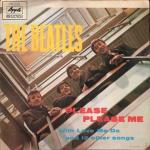
On Please Please Me, Which Is More 3-Dimensional, Mono or Twin Track?

Hot Stamper Pressings of the Music of The Beatles Available Now

With all due respect to George Martin, we’ve played a number of mono pressings of Please Please Me in the past twenty or so years and have never been particularly impressed by any of them.

The monos jam all the voices and instruments together in the middle, stacking them one in front of the other, and lots of musical information gets mashed up and simply disappears in the congestion. 

But is twin track stereo any better?

Yes, when you do it the way Norman Smith did on Please Please Me.

Twin Track stereo (which is actually not very much like two-track stereo, I’m sure Wikipedia must have a listing for it if you’re interested) is like two mono tracks running simultaneously. It allows the completely separate voices to occupy one channel and the completely separate instruments to occupy another, with no leakage between them.

On some stereos it may seem as though the musicians and the singers are not playing together the way they would if one were hearing them in mono. They are in fact recorded on two separate mono tracks, the instruments appearing in the left channel and the singers in the right, separated as much as is physically possible.

Stuck in their individual stereo speakers, so far apart from one another, the members of the band don’t even seem to be playing together in the same room.

That’s on some stereos, and by some stereos I mean stereos that need improvement. Here’s why.

Three-Dimensional Mono?

In the final mixing stage, Norman Smith added separate reverb to each of the two channels, sending the reverb for the sound recorded in each channel to the opposite channel. This has the effect of making the studio, the physical space that The Beatles appear to be in, seem to stretch all the way from the right channel, where the Beatles’ voices are heard, to the back left corner of the studio, where the reverb eventually trails off.

(more…)

Thoughts on Hearing an Amazing Copy of Thriller in the 80s

Hot Stamper Pressing of the Music of Michael Jackson Available Now

The killer copy of Thriller that we discovered in our 2006 shootout gave us a whole new appreciation for just how good the album could sound. It was a real breakthrough, and proof that significant progress in audio is just a matter of time and effort, the more the better.


Our review from 2006

I remember twenty years ago (that would be 1986) playing Thriller and thinking the sound was transistory, spitty, and aggressive.

Well, I didn’t have a Triplanar tonearm, a beautiful VPI table and everything that goes along with them back then. (More here.)

Now I can play the record.

I couldn’t back then.

All that spit was simply my table, arm, cartridge and setup not being good enough, along with all the garbage downstream from them feeding the speakers.

The record is no different, it just sounds different now. Which is what makes the record a great test. If you can play this record, you can probably play practically any pop and rock record. (Orchestral music is quite another matter.)

This Pressing Changes Everything

This pressing has a side two that’s so amazing sounding that it completely changed my understanding and appreciation of this album. The average copy is a nice pop record. This copy is a Masterpiece of production and engineering.

(more…)

Fittingly, Teaser and the Firecat Was the First Hot Stamper We Ever Officially Offered for Sale

Hot Stamper Pressings of the Music of Cat Stevens Available Now

UPDATE: 2015

The listing you see below describes the first Hot Stamper pressing we ever offered to our customers. It was written in 2004, the year we officially made any Hot Stamper pressing available through our website.

It’s a fairly accurate reflection of our understanding of the album at the time. In the ensuing years we would learn a great deal more about Teaser and the Firecat and overturn some of our mistaken beliefs from 2004.

Although the fundamentals of the playback system we use are much the same, it too has undergone a great many changes since those days, described in detail here.

Record cleaning has changed even more dramatically.

As you will see, we felt the need to address a controversial issue: the very high price of the record. (More on pricing here.)


Our 2004 Listing

Before we start discussing this record, let’s talk about the price for a moment.

I have never put a vintage used non-audiophile rock record on the site at a price this high.

I’ve sold other records directly to my best customers for this kind of money, but this is the first $500 rock record of its kind to go on this website. This is the result of three factors.

First, it’s the best sounding copy of this record I have ever heard (on side two anyway).

Second, this is Teaser and the Firecat, one of the most important recordings in the history of popular music.

Third, it’s amazingly quiet. The confluence of these three factors makes this copy practically unique.

For years I have been telling people that one day I would put up on the website some Hot Stamper copies of Cat Stevens greatest albums. Today is that day.

Before I get further into the sound of this record, let me preface my remarks by saying this is a work of GENIUS. Cat Stevens made two records which belong in the Pantheon of greatest popular recordings of all time. In the world of folky pop, Teaser and the Firecat and Tea for the Tillerman have few peers. There may be other recordings that are as good but there are no other recordings that are better.

The above comments were written for the last Hot Stamper which went up early in 2005, and of course, my sentiments have not changed. Not only do I think this record can’t be bettered, I have now found copies that are superior to even the best pressing I had heard back then.

Of course, I own a much better stereo than I did in 2005. I’m now using the Dynavector 17D3 cartridge, which is more correct than the 20X I had before. Also, I’ve improved phono stages quite a bit, incorporating the EAR 834P (and a very special vintage tube complement which makes ALL the difference in the world) into the system, balancing tubey magic with the speed and dynamics of the best transistor systems.

I’ve been acquiring and evaluating copies of this album for a couple of years now, waiting for just the right time and the right stereo to shoot them out with.

The changes I mention above gave me the confidence to tackle this project.

I can tell you in all honesty that I have NEVER heard better sound than I heard last night while doing these comparisons. It is my contention that there is no audiophile pressing on the face of the Earth that can compete with the best sounding original Teaser and the Firecats. Of ANY music. This is a sound I simply don’t experience when playing modern mastered records. There is a magic in these grooves that seems to be impossible to recapture. Perhaps one day I’ll be proven wrong, but that day is not upon us yet. Until then, this is the king.

Last night I listened to at least fifteen of the best pressings of this album that I had available to me — we’re talking some heavy hitters here, all top quality British and American original pressings — and this pressing took top honors. In my opinion, it’s one of a handful of the best records we have EVER put up on the site. It is without a doubt the best sounding record I have ever played. (more…)

We Was Wrong About The Beatles Magical Mystery Tour (Circa 1985-90)

Hot Stamper Pressings of the Music of The Beatles Available Now

This is a very old and somewhat embarrassing commentary about how ridiculously wrong we were about which are the best sounding German pressings of the Magical Mystery Tour.

Today we would never consider selling a record that sounds as phony as this version of the album does, but we did back in the 90s and probably as late as the 2000s.

Bad sounding records I once liked are common enough on the blog to have their own category, with 76 entries to date. If we had the time to make listings for them, there would surely be hundreds of others. If you’ve been in the audio game for as long as we have, you should have plenty of records that fit that bill. All those old records sitting on the shelves that you haven’t played in years might not sound they way you remember them, but the only way to know that is to pull them out and play them. If you’ve been making regular audio progress, most of them should sound better than ever, but there have to be plenty that won’t. You just don’t know which are which as long as they sit on the shelf.


This German pressing has sound that is dramatically different from that found on other Hot Stamper pressings of MMT we’ve had on the site. I used to be convinced that its sound was clearly superior to the regular German MMT LPs.

Back in the late 80s and into the 90s this was the pressing that I was certain blew them all out of the water.

We know better now. We call this version the “Too Hot” Stamper pressing — the upper mids and top end are much too boosted to be enjoyable on top quality equipment.

It does have some positive qualities though. It has substantially deeper bass than any other version; in fact, it has some of the deepest bass you will ever hear on a pop recording. It can literally rattle the room when Paul goes down deep on Baby You’re A Rich Man.

It also uses a slightly different mix on some tracks and is mastered differently in terms of levels. The level change is most obvious at the beginning of Strawberry Fields, where it starts out very quietly and gets louder after a short while, unlike all other versions which start out pretty much at the same level.

The effect is pleasing, you might even say powerful, but probably not what The Beatles intended, as no other copy I’ve ever heard makes use of the same quiet opening. An unknown mastering engineer made the choice, he created a new sound for the song, probably because he didn’t like all the tape hiss at the opening, during which few instruments were playing loud enough to mask it.

With this mix the record is now more of a Hi-Fi spectacular — great for waking up sleepy stereo systems but not the last word in natural sound.

Records that are boosted on the top and bottom suffer from what we like to call the smile curve. This pressing, as well as lots of records remastered to appeal to audiophiles, have a bad case of it.

(more…)

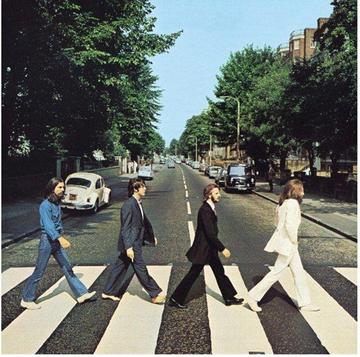
The Beatles – Looking Back on Our First Abbey Road Shootout

Hot Stamper Pressings of the Music of The Beatles Available Now

This review is a window into our limited understanding of Abbey Road on vinyl in 2007.

Let’s just say we have learned a lot about the album since then, mostly through better playback and cleaning, but also because we’ve played roughly one hundred more pressings since then, having done shootouts for the album by the dozens.

These regularly-held shootouts are the only thing that has taught us what we think we know.

Looking back, 2007 seems to have been a milestone year for us here at Better Records, although we certainly did not know that at the time.

Later that same year we swore off Heavy Vinyl (prompted by the mediocre sound of the Rhino pressing of Blue) and committed ourselves to doing record shootouts of vintage pressings full time.

Much of the review you see below indicates we had a much more limited understanding of Abbey Road than we do now, but we obviously have no problem admitting to it, a subject we discussed in some detail here.

Live and learn is our motto, and progress in audio is a feature, not a bug, of record collecting at the most advanced levels. (“Advanced” is a code word for having little to no interest in any remastered pressing marketed to the audiophile community. If you want to avoid the worst of them, we are happy to help you do that.)


Our Review from 2007

This Minty Apple British Import pressing has MASTER TAPE SOUND ON SIDE ONE! We just finished a big Abbey Road shootout (1/16/07) and this side one was IN A LEAGUE OF ITS OWN!

This is the first Hot Stamper Abbey Road we’ve ever listed … and there’s a good reason for that. It’s practically impossible to find a properly mastered copy. For whatever reasons — probably because this recording is so complicated and required so many tracks — Abbey Road is the toughest nut to crack in the Beatles’ catalog.

This copy is actually my personal Ref Copy, which I have had in my collection for many years. Surprisingly, while doing this shootout we discovered that it doesn’t have the ultimate side two, which is the side I really liked on this copy. It still merits an A+ for side two, but it’s interesting that one of the things that we often discover in these shootouts is copies that exceed our expectations and set entirely new standards for albums we’ve been listening to critically for decades.

This copy turned out to have the Ultimate Side One — A+++. No other copy came close; it’s two full grades above the next best pressing.

Frankly, up to now we’ve been afraid to take on Abbey Road. With recent improvements to the stereo, and knowing that I had at least one superb sounding copy, now was the time. Out of all the imports I’ve been collecting over the last dozen years or so, only three or four copies really qualified as having Hot Stampers.

(more…)

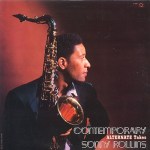
Sonny Rollins Helped Us See the Light Many Years Ago

The following commentary was taken from our mid-90s catalogs, the ones that came out back in the days when it was still possible to find great jazz records like Alternate Takes for cheap, often still sealed.

The Analogue Productions Heavy Vinyl recuts done by Doug Sax had come out a few years earlier, starting in 1992. Those remastered records were in print at the time I wrote this, and I was pretty pissed off at the way they sounded.

Here is our listing with some minor changes from long ago:

Acoustic Sounds had just remastered and ruined a big batch of famous jazz records, and shortly thereafter a certain writer in The Absolute Sound had said nice things about them.

Said writer and I got into a war of words over these records, long, long ago. You’ll notice that no one ever mentions these awful records anymore, and for good reason: they suck. If you own any of them, do yourself a favor and get either the CD or a good LP for comparison purposes. I expect you will hear what I’m talking about.

In my essay on reviewers I attack him for giving a big “Thumbs Up” in TAS to the botched remastering of Sonny’s Way Out West. The OJC reissue, though superior, is still only a pale shadow of the original.

The Real Deal

Now we have the real thing! This LP has three alternate takes from that session, all mastered by George Horn, and surprise, surprise, surprise, they sound just like my original, much better than (but not so different from) the OJC, and worlds away from the muted flab of the Analogue Productions LP!

(more…)

After 40 Years, Waiting for the Sun Comes Full Circle

Hot Stamper Pressings of the Music of The Doors Available Now

This commentary was written in 2008, shortly after playing an amazingly magical Gold Label pressing in a shootout.

My favorite of the first three Doors album, Waiting for the Sun is imbued with more mystery and lyricism than previous efforts. The album shows them maturing as a band, smoking large amounts of pot and preparing for the wild ride of their next opus, the ambitious, controversial The Soft Parade.

Actually, as I listen to this album, it reminds me more and more of that one. Now that it sounds as good as The Soft Parade, I find I’ve gained a new respect for Waiting.

More to Come

I started playing these albums in high school on my 8-track tape player. My older stepbrother had the records and I probably played those too.

When I seriously got into audio sometime in the ’70s, I tried every kind of record I could get my hands on — Brits, Germans, Japanese, originals, reissues — but no matter what I did, I couldn’t find good sounding pressings of their albums. Everything I played sounded terrible and I just assumed the band, like so many other ’60s artists, had been poorly recorded.

Then in the early 80s, the MoFi pressing of the first album came out. It sounded amazing to me at the time.

Ten or so years later the DCC pressing on Heavy Vinyl came along and showed me how wrong I — and it — were.

Now we’ve come full circle — back to the right originals. (The operative word there is “right”; some early stampers are terrible. We know, we’ve played them.)

With better cleaning technologies and much better playback equipment, the tables have turned.

(more…)

Ziggy Stardust Broke the Price Barrier in 2007

UPDATE 2024

The following is our 2007 commentary for the best Ziggy Stardust we had ever heard up to that time. Note that for the most part we were playing early British pressings back in those days, a mistake we did not know we were making. (Heroes was the same way, and it took us another ten years to figure out that one.)

In 2007, all we had to go by was the conventional wisdom that the original UK pressings on the RCA orange label should be the best, so that’s mostly what we were playing. I’m not even sure what pressing won this long-ago shootout. 

Looking back in 2024, it’s obvious to us that we had a great deal more research and development to do.

As best as I can tell, it would take us about ten more years to discover the pressings, like this one, that, based on our database going all the way back to 2017, consistently win our shootouts.


This RCA Import has DRAMATICALLY better sound than any Ziggy LP we’ve ever played here at Better Records. Whatever you think you know about the sound of this record, THINK AGAIN. The sound of this copy is so far beyond any expectation I had that hearing it was nothing short of a REVELATION. It’s TWO FULL GRADES better than any copy we played in our shootout.

After hearing this copy we had to lower our grades for every other pressing we had played. This was a completely new standard. (more…)