wrong-country

A 45 RPM Audiophile Pressing to Put Them All to Shame

Hot Stamper Pressings of the Music of Prokofiev Available Now

This Japanese 45 RPM remastering of our favorite recording of Prokofiev’s wonderful Lt. Kije Suite has DEMONSTRATION QUALITY SOUND. For starters, there are very few records with dynamics comparable to these. Since this is my favorite performance of all time, I can’t recommend the record any more highly. 

Most of what’s “bad” about a DG recording from 1978 is ameliorated with this pressing. The bass drum (drums?) here must be heard to be believed. We know of no Golden Age recording with as believable a presentation of the instrument as this.

The drum is clearly and precisely located at the back of the stage; even better, it’s as huge and powerful and room-filling as it would have been had you attended the session yourself. That’s our idea of hi-fidelity here at Better Records.

(more…)

Siren on Import Vinyl? Not So Fast

Hot Stamper Pressings of the Music of Roxy Music Available Now

Siren is one of our favorite Roxy albums, right up there with the first album and well ahead of the commercially appealing Avalon.

After reading a rave review in Rolling Stone of the album back in 1975, I took the plunge, bought a copy at my local Tower Records and instantly fell in love with it.

As is my wont, I then proceeded to work my way through their earlier catalog, which was quite an adventure. It takes scores of plays to understand where the band is coming from on the early albums and what it is they’re trying to do. Now I listen to each of the first five releases on a regular basis.

Somehow they never seem to get old, even after more than forty years.

Of all the Roxy albums (with the exception of Avalon) this is probably the best way “in” to the band’s music. The earlier albums are more raucous, the later ones more rhythmically driven — Siren catches them at their peak, with, as other reviewers have noted, all good songs and no bad ones.

Imports? Not So Fast

The British and German copies of Siren are clearly made from dub tapes and sound smeary, small and lifeless.

(more…)

An Amazing Recording Held Back by Truly Awful Mercury Mastering

Hot Stamper Mercury Pressings Available Now

This Mercury 35mm recording was released through Philips after they’d bought the Mercury label back in the 60s.

Philips would go on to release the mostly dreadful Golden Import pressings that were made from all the most famous Mercury recordings, but of course they sounded a great deal more like Philips recordings than Mercury recordings once they had been remastered.

Some things never change. Do you like the sound Steve Hoffman brought to the DCC vinyl releases? You can be sure you will get plenty of that sound and very little of any other. We call that My-Fi. Once we learned to recognize it, something we admit took us longer than it should have, we became ardently opposed to it.

If you think that the right way to remaster records is to make them sound more like you want them to sound and less like the scores of vintage pressings sounded before, you and I are clearly in different camps. (One listen to a Hot Stamper pressing may be all that it takes to get you to switch camps.)

This album was recorded by Robert Fine and Wilma Cozart, then mastered by George Piros, all members of the legendary Mercury team, revered by the audiophile cognoscentias as true giants , and with good reason. We count ourselves among Mercury’s biggest fans.

It is instructive to note that the Philips mastering in this case is dramatically superior to the mediocre Mercury mastering by Robert Fine, which may strike you as counterintuitive, but is nonetheless a fact that cannot be denied once you have played a sufficient number of copies of each version, as we have.

(more…)

The Pretenders – Get Close

More of the Music of The Pretenders

  • With two INSANELY GOOD Shootout Winning Triple Plus (A+++) sides, you’ll have a hard time finding a copy that sounds remotely as good as this vintage import pressing – fairly quiet vinyl too
  • These sides are energetic, clear and full-bodied, with Chrissie Hynde’s vocals front and center where they belong
  • If all you know are audiophile or domestic pressings, you should be prepared for a mind-blowing experience with this copy
  • However, the sound of the album is more aggressive than some audiophiles might like, so fair warning: you will not be demonstrating your stereo with this one, no matter how much better sounding than other copies it may be
  • “Hynde’s voice is in great form throughout, and when she gets her dander up, she still has plenty to say and good ways to say it; ‘How Much Did You Get for Your Soul?’ is a gleefully venomous attack on the musically unscrupulous; ‘Don’t Get Me Wrong’ is a superb pop tune and a deserved hit single; and the Motown-flavored ‘I Remember You’ and the moody ‘Chill Factor’ suggest she’d been learning a lot from her old soul singles.”

Get Close has long been a personal favorite of mine. Side one starts off with a bang with “My Baby,” one of the best tracks this band ever recorded. Of course at this point it’s hard to call The Pretenders a band as it is pretty much Chrissie Hynde’s show. She continues to mature as a songwriter, and the arrangements and production value are excellent as well, with heavy hitters such as Steve Lillywhite, Bob Clearmountain and Jimmy Iovine involved.

We have a category on the site entitled women who rock. No other woman on earth can rock the way Chrissie Hynde can, and this album, along with Learning to Crawl, is all the proof anyone needs.

(more…)

Thick as a Brick Marked a Milestone in 2007

jethrthick_1410_3_1192056381

Hot Stamper Pressings of the Music of Jethro Tull Available Now

Until about 2007, Thick as a Brick was the undiscovered gem (by me anyway) in the Tull catalog. The pressings we’d heard up until then were nothing special, and of course the average pressing of this album is exactly that: no great shakes.

With the advent of better record cleaning fluids and much better tables, phono stages, room treatments and the like — taking full advantage of the remarkable number of revolutions in audio that have occurred over the last two or three decades –some copies of Thick As A Brick have shown themselves to be truly amazing sounding. Even the All Music Guide could hear how well-engineered the album was.

Marking Two Milestones from the Past

The 2007 commentary you see below discusses the pros and cons of both the British and Domestic original pressings. With continuing improvements to the system, room, etc., it would not be long before we realized that the British pressings were simply not competitive with the best domestic ones.

You might say this record helped us mark two important milestones in the developing history of Better Records.

The first, around 2007, was recognized by the fact that we had improved our playback to a very high level, one high enough to reproduce the album with all the clarity, size and energy we were shocked to hear at the time.

The second milestone would result from the audio changes we continued to make for the next couple of years, from 2007 to 2010, which allowed us to recognize that the best British pressings, as good as they might be, were not in the same league as the best domestic ones. We broke down in detail exactly what we were listening for and what were hearing in this commentary, and the Brits were clearly not cutting it at the highest levels by 2010.

If you find yourself with one of more British copies of the album that you think have superior sound — any copies of the album, really — we would love to send you one of our Hot Stampers so you can hear what you are missing.

(more…)

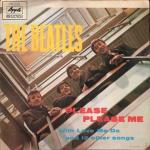
On Please Please Me, Which Is More 3-Dimensional, Mono or Twin Track?

Hot Stamper Pressings of the Music of The Beatles Available Now

With all due respect to George Martin, we’ve played a number of mono pressings of Please Please Me in the past twenty or so years and have never been particularly impressed by any of them.

The monos jam all the voices and instruments together in the middle, stacking them one in front of the other, and lots of musical information gets mashed up and simply disappears in the congestion. 

But is twin track stereo any better?

Yes, when you do it the way Norman Smith did on Please Please Me.

Twin Track stereo (which is actually not very much like two-track stereo, I’m sure Wikipedia must have a listing for it if you’re interested) is like two mono tracks running simultaneously. It allows the completely separate voices to occupy one channel and the completely separate instruments to occupy another, with no leakage between them.

On some stereos it may seem as though the musicians and the singers are not playing together the way they would if one were hearing them in mono. They are in fact recorded on two separate mono tracks, the instruments appearing in the left channel and the singers in the right, separated as much as is physically possible.

Stuck in their individual stereo speakers, so far apart from one another, the members of the band don’t even seem to be playing together in the same room.

That’s on some stereos, and by some stereos I mean stereos that need improvement. Here’s why.

Three-Dimensional Mono?

In the final mixing stage, Norman Smith added separate reverb to each of the two channels, sending the reverb for the sound recorded in each channel to the opposite channel. This has the effect of making the studio, the physical space that The Beatles appear to be in, seem to stretch all the way from the right channel, where the Beatles’ voices are heard, to the back left corner of the studio, where the reverb eventually trails off.

(more…)

Straight Up – Porky Not So Prime Cut

Hot Stamper Pressings of the Music of Badfinger Available Now

UPDATE 2026

This commentary has been updated multiple times, most recently in 2025.


British band, British pressing… right?

Nope. It’s just another mistaken idea.

We evaluated an original British pressing in our shootout, unbeknownst to me as it was playing of course. And guess where it finished: dead last.

The most thick, congested, crude, distorted, compressed sound of ALL the copies we played.

We love the work of Porky, Pecko, et al. in general, but once again this is a case where a British Band recorded in England sounds best on domestic vinyl. (McCartney’s first album on Apple is the same way.)

Just saw this today (11/29/2021)

On November 18, 2019, a fellow on Discogs who goes by the name of Dodgerman had this to say referencing the original UK pressing of Straight Up, SAPCOR 19:

So Happy, to have a first UK press, of this lost gem. Porky/Pecko

Not sure what those two commas are doing there. Pausing for emphasis? Sure, why not? This is a big deal.

Like many record collectors, he is happy to have a mediocre-at-best, dubby-sounding original pressing, poorly mastered by a famous mastering engineer, George Peckham, a man we know from extensive experience to be responsible for cutting some of the best sounding records we’ve ever played. He is truly one of the greats.

Is Dodgerman an audiophile? He might be, or at least he might choose to describe himself as one.

Many audiophiles employ this kind of mistaken audiophile thinking, believing that a British band’s albums must sound their best on British vinyl for some reason, possibly a cosmic one.

(more…)

What Are the Best Stampers for Led Zeppelin’s Albums?

Hot Stamper Pressings of the Music of Led Zeppelin Available Now

What are the best sounding stampers for Led Zeppelin’s albums?

As if we would tell you!

This is a reworked excerpt from a much longer piece entitled record collecting for audiophiles – the limits of expert advice

In it we discussed the various stampers for some of Led Zeppelin’s albums and what role they play in our Hot Stamper shootouts.

Please to enjoy.

There is no way to know whether a record is any good without playing it, early stamper, late stamper or any other stamper.

First pressings (A, 1A, A1) don’t always win shootouts.

If they did we would simply buy only first pressings with those early stampers and only sell copies with those early stampers, since they are the best.

But this ignores the inconvenient fact that a great many other things go into the production of a record that have nothing to do with how early the stamper is.

A single copy of an album with stampers numbered (or lettered) A, when compared to B, when compared to C, has no definitive meaning for stampers A, B, C, or any others, because of the tremendous variation in the sound of all the pressings with A,B,C and other stampers.

Example Number One

There is a hot stamper for a certain Zep album that always wins the shootouts, [redacted].

It beats the hell out of the early stampers, A and B. In fact, we don’t even go after A and B anymore because they are expensive and rarely sound good enough to recoup our investment of the time and money we would spend buying, cleaning and auditioning them in a shootout.

A and B can be good, but why pay top dollar for them when they have never been any better than “good?”

We’re looking for “great” so that we can charge a premium price for them. This accomplishes three things that are obviously of great importance to any business:

  1. It pleases the hell out of our customers.
  2. It covers our costs, and
  3. It lets us pay our staff good wages and bonuses for their hard work, skill and knowledge.

(more…)

Reposted in Honor of Ozzy’s Passing — Import or Domestic on Paranoid?

Hot Stamper Pressings of the Music of Black Sabbath Available Now

The domestic copies we’ve played over the years for all the Black Sabbath titles are clearly better sounding than any import we’ve ever auditioned. It may be counterintuitive, but these are exactly the kinds of things you find out when doing blinded shootouts.

We have little use for intuitions (UK recording, UK pressing) and rules of thumb (original = better sound). We call that way of approaching the search for better sounding pressings mistaken audiophile thinking. 

Hard data — the kind you get from actually playing the records — trumps them all.

(We recently posted a lengthy commentary about conventional wisdom, attempting to make the case that, although the most common record collecting approaches are more often right than wrong, there is simply no way to know when any given approach will work for any given title.)

Want to find your own killer copy?

Consider taking our moderately helpful advice for how to find your own shootout winners.

(more…)

Harry Moss Cut These UK Stampers for Hey Jude – How Did He Go So Wrong?

Hot Stamper Pressings of the Music of The Beatles Available Now

Now with a couple of shootouts for both Hey Jude and the 1967-1970 compilation album under our belts, our main listening guy thinks the versions of the overlapping songs on Hey Jude are a little more fun.

He said that, all things being equal, the best pressings of Hey Jude might be a little more exciting while the best pressings of The Blue Album are a little more polite.

Here is how we described a recent shootout winning copy:

An amazing 10-song compilation from 1970 of some of the band’s biggest and best hits – “Can’t Buy Me Love,” “Paperback Writer,” “Lady Madonna,” and the iconic title track among them.

Longtime customers know that we had never been able to offer this title up until 2022 – it took us twenty years to figure out what the right pressings are, and believe me, we had to go through a lot of crap to find them.

If you know the album at all, you know how bad it sounds on the average copy, and my guess is you just gave up on the idea of finding good sound for these songs, which is more or less the way we felt too, but we finally found what we were looking for, and here it is.

However, some stampers are disappointing as you can see from this section of the stamper sheet we compiled for the shootout.

Harry T. Moss, the man with the initials HTM you see above, is the Parlophone/Apple engineer who cut many of the greatest sounding Beatles albums ever made (and plenty of not-so-great sounding ones, which is why you either need to do your own shootouts or have us do them for you).

Seems at though at least some of the work he did for the Hey Jude album is not his best. We awarded both sides a sub-Hot Stamper grade of 1+, which means the sound is passable at best, even after a good cleaning. (Without a good cleaning it would probably not even earn that one plus.)

We do not sell records with 1+ grades; you can find those on your own. The world is full of them.

Our notes for this pressing read:

  • Too midrangey and compressed
  • Heavy tape or tube saturation, side two especially

Your only other option for hearing some of this music with top quality sound is on the 1967-1970 compilation album, the Hot Stamper pressings of which have only recently been discovered.

(more…)