fred-plaut

Six-Eye, Black Print, White Print, Red Label – Which Is the Best Sounding Kind of Blue?

Hot Stampers Pressings of the Music of Miles Davis Available Now

Is the 50s original always better, is the 70s reissue always better, is the 60s 360 pressing always better?

The answer is “no” to all three.

Why? Because no pressing is always better. All pressings are unique and should only be judged on their merits, and you do that by playing them, not by looking at their labels. For us this truth is practically axiomatic. It is in fact the premise of our entire business. Over the course of the 28 years we have been selling records we have never found any compelling evidence to invalidate it.

The day that someone can accurately predict the sound quality of a specific record by looking at the label or cover is a day I do not expect to come, ever.


UPDATE 2024

Our Latest Thinking on KOB

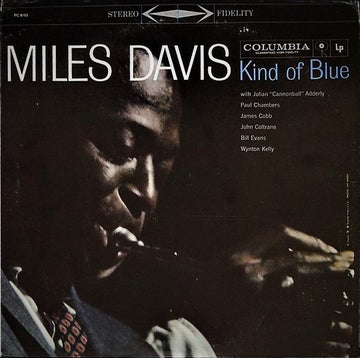
The 6 Eye label domestic stereo pressings win our shootouts, in the case of Kind of Blue without exception.

The 360 label pressings, black print (1962-63) or white print (1963-70), as well as the rare 70s red label (1970-?), can sound very good, but they never win shootouts.

We’ve identified a select group of reissues with the potential to do well in shootouts, typically earning a grade of Super Hot (A++) when up against the best originals which earn our top grade, White Hot (A+++). Kind of Blue is one of those recordings.


A Larger Point

But there is a larger point to be made. Let’s assume that the best original Six Eye Columbia pressings can be the best — the most Tubey Magical, the most involving, the most real. You just happen to have a clean pressing, and you absolutely love it.

But is it the best? How could you possibly know that?

Unless you have done a comparison with many copies under controlled conditions, you simply cannot know where on the sonic curve your copy should be placed.

Perhaps you have a mediocre original. Or a mediocre 360 Label copy. Since you haven’t done a massive shootout you simply have no way of knowing just how good sounding the album can be.

(more…)

Reproducing the Phenomenal Size and Space of Time Out

More Columbia 30th Street Studio Recordings

Time Out is a jazz album that’s been a personal favorite of mine for a very long time, as well as a record I’ve been obsessed with for decades. I spent a lot of time working on my system in order to get this album to sound its best.

It taught me a lot, and for that reason it is a recording that deserves a fair amount of credit for helping me become a better listener.

Here is how we described a copy that won one of our shootouts a while back:

Spacious and transparent, this copy has the big three-dimensional soundstage that makes this record such a joy to listen to. The piano has weight and heft, the drums are big and dynamic, and everything is relaxed and sweet — in short, this copy is doing pretty much everything we want a top quality Time Out to do. 

Listen to the drums on Everybody’s Jumpin’. This album was recorded on a big sound stage and there is a HUGE room which can clearly be heard surrounding the drum kit. Add to that that some of the drums are in the left channel and some of the drums are in the right channel and you have one big drum kit — exactly the way it was intended to sound.

Size and Space

One of the qualities that we don’t talk about on the site nearly enough is the SIZE of the record’s presentation. Some copies of the album just sound small — they don’t extend all the way to the outside edges of the speakers, and they don’t seem to take up all the space from the floor to the ceiling. In addition, the sound can often be recessed, with a lack of presence and immediacy in the center.

Other copies — my notes for these copies often read “BIG and BOLD” — create a huge soundfield, with the music positively jumping out of the speakers. They’re not brighter, they’re not more aggressive, they’re not hyped-up in any way, they’re just bigger and clearer.

And most of the time those very special pressings just plain rock harder. When you hear a copy that does all that, it’s an entirely different listening experience.

More letters, reviews and commentaries for recordings made at Columbia’s 30th Street studio.

(more…)

Michael Fremer Says You Should Own the Classic 45 of Time Out

Hot Stamper Pressings of the Music of Dave Brubeck Available Now

Michael Fremer spends two hours and ten minutes on his site going through a list of 100 All Analog In Print Reissued Records You Should Own.

On this list is the 45 RPM Bernie Grundman cutting of Time Out. Fremer apparently liked it a whole lot more than we did. We think it is just plain awful.

The MoFi Kind of Blue is on this same list, another pressing that is astonishingly bad, or, at the very least, really, really wrong.

If you’re the kind of person who might want to give Michael Fremer the benefit of the doubt when it comes to All Analog records he thinks sound good, ones he thinks you should own, try either one of them. If you think they sound just fine, you sure don’t need me to tell you that they’re completely and utterly awful.

There might be some decent records on the list, but if it has two massive failures that I just happened to come across in the five minutes I spent watching the video — I have very little tolerance for the sort of amateurishness he displays — I would suspect the winners are few and the losers many.

As a practical rule, if you want good sounding vinyl, you should avoid anything on his list.

And if you do try some and do like them, let me know which ones you think sound good and I will try to get hold of some copies and listen to them for myself.

Here is what we had to say about the Brubeck that Mikey recommends. We called it:

An audiophile hall of shame pressing and another Classic Records jazz LP poorly mastered for the benefit of audiophiles looking for easy answers and quick fixes. Sonic Grade: F.

Our story:

Not long ago we found a single disc from the 45 RPM four disc set that Classic Records released in 2002 and decided to give it a listen as part of a shootout. My notes can be seen below, but for those who have trouble reading my handwriting, here they are:

  • Big but hard
  • Zero (0) warmth
  • A bit thin and definitely boring
  • Unnatural
  • No fun
  • No F***ing Good (NFG)

Does that sound like a record you would enjoy playing? I sure didn’t.

(more…)

Is Kind of Blue a Good Test Record?

Hot Stamper Pressing of Miles’s Albums Available Now

One of our good customers had this to say about some Hot Stampers he purchased recently:

Hey Tom, 

Listening to Kind Of Blue. Who needs an equipment upgrade with records like these?

Our reply at the time:

So true!

But on further reflection, it became clear to me that there is more to this idea than one might think upon first hearing it.

When records sound as good as Kind of Blue on vintage vinyl (not this piece of trash), it’s easy to think that everything in the system must be working properly, and, more to the point, reproducing the sound of the album at a high level.

If only more records were as well recorded as KOB, we could save ourselves a lot of time and money, time and money that we’re currently spending on tweaking, tuning and upgrading the various components of our systems. (Assuming you are in fact doing these things. I certainly hope you are. Achieving higher quality sound is one of the greatest joys to be had in all of audio.)

This is undoubtedly true, as far as it goes. But we must live in the world of records as we find it, not the one we want to exist.

Finding good sound for most of the records you wish to enjoy takes a great deal of effort, assuming you are setting your standards for sound at an exceptionally high level. Yours don’t have to be as high as ours — we’re the guys who put their reputations on the line for extravagantly priced Hot Stampers, not you — but the records you are playing have to sound good enough to allow you to forget they are records and just get lost in the music.

With every improvement you make to your system, you eventually will find yourself banging your head up against the psychological effect of Hedonic Adaptation.* Once you have achieved better sound, it doesn’t take long before you get used to it, and now your much-improved “new normal” isn’t as thrilling as it was when you first experienced it.

(more…)

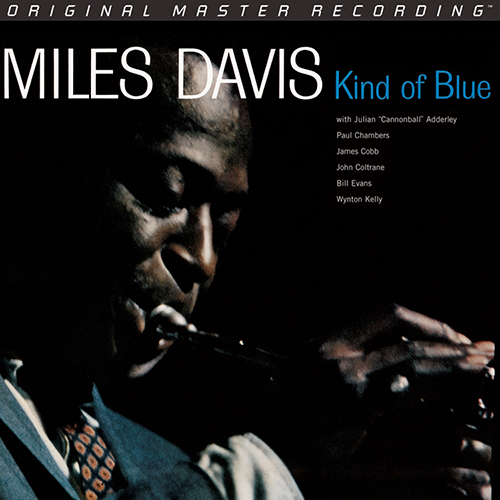
MoFi Misses The Mark by a M I L E with Kind Of Blue

Hot Stamper Pressings of Miles’s Albums Available Now
One of our good customers, Robert Brook, writes a blog which he calls

A GUIDE FOR THE DEDICATED ANALOG AUDIOPHILE

Below is a link to the review he wrote recently for one of our favorite records, Kind of Blue. (To be clear, we love the album, just not the MoFi pressing of it.)

MoFi Misses The Mark by a M I L E w/ Kind Of Blue

One of our other good customers had this to say about the Mobile Fidelity pressing:

Last night I listened to my 2015 Mobile Fidelity 45 RPM pressing.

I couldn’t get through the first cut.

Closed, muffled and flat as a pancake. No life or energy whatsoever.

I agreed and added my two cents:

My notes for their pressing read:

  • Thick, dark, flat.
  • Lacks air, space, presence.
  • Not a bad sound but it’s not right.

Later I added:

Having listened to the record more extensively, I see now I was being much too kind.

A longer review will be coming soon I hope. I think I may know why some audiophiles like the sound of this record, and will be exploring that notion in a future commentary.

The last line about the MoFi not having “a bad sound but it’s not right” reminded me of of the mistakes I made in my original review of Santana’s first album on MoFi: we owe you an apology

Kind of Blue is an album we admit to being obsessed with — just look at the number of commentaries we’ve written about it.

(more…)

In June of 2005 Our First Hot Stamper of Kind of Blue Went Up

Hot Stampers of Miles’s Albums Available Now

Reviews and Commentaries for Kind of Blue

This Columbia Red Label LP has DEMO DISC QUALITY SOUND!

Call me crazy, but I DON’T THINK YOU CAN CUT A BETTER SOUNDING KIND OF BLUE THAN THIS ONE!

I’m fully aware of how outrageous a statement that is, considering the fact that this is a ’70s Red Label reissue. But I’ve long known of amazing sounding Kind Of Blue reissues.

Having played dozens of different pressings of this record over the years, I think I know this recording about as well as anyone. The tube mastered original Six Eye Stereo copies have wonderful, lush, sweet sound. I’ve heard many of them. The 360s from the ’60s often split the difference — less tubey magical, but cleaner and more correct.

But my point here is simply this: you can cut this record DIFFERENTLY, but you can’t cut it any BETTER.

If you cut it with tubes it will bring out some qualities not as evident on this pressing. But there will be loses as well. It’s a matter of trade-offs. There is no copy that will satisfy everyone, just as there is no speaker or amplifier that will satisfy everyone.

So what do you get on this copy? Zero distortion. Zero compression. 100% transparency. Amazing transients. The deepest, cleanest, most note-like bass with no smearing, veiling or added warmth. The sense that you are hearing every instrument sound exactly the way it really does sound.

You could almost say this pressing sounds like a master tape, not a record at all. Now don’t get me wrong. I love tubey colorations. I say so all over this site. And if I had to choose one pressing of this record to take to a desert island, I don’t know which one it would be. But there is no way that the qualities of this record exist on those early, tubey cuttings. They simply didn’t have the technology. The technology they did have is wonderful in its own way. And this record is wonderful in its own, very different, way.

$150 is a lot of money for a record that any jazz record dealer would be embarrassed to charge more than $20 for. But jazz record dealers don’t know anything about sound. They know about collectability. They know about price guides. They know their market — jazz collectors — and I know mine: audiophiles. This record has unimpeachable audiophile credentials. It has the sound in the grooves like you have never heard before.

And of course it beats the pants off of the Classic reissue, as good as that one is. If you don’t want to spend a lot of money for this album — widely considered the greatest jazz album of all time — then the Classic should do the job just fine.

(more…)

Kind of Blue – An Album We Are Clearly Obsessed With

Hot Stamper Pressings of Miles’s Albums Available Now

Kind of Blue is an album we admit to being obsessed with — just look at the number of commentaries we’ve written about it.

Some highlights include:

Kind of Blue checks at least seven of our most important boxes here at Better Records.

  1. It’s a core jazz title, one that belongs in any serious audiophile’s record collection
  2. It’s a jazz masterpiece
  3. It’s a personal favorite
  4. It was recorded by one of the greats, Fred Plaut
  5. It was produced by another one of the greats, Teo Macero
  6. It was recorded at Columbia’s famed 30th street studio
  7. And some of the greatest jazz artists of their day played on it:

Letter of the Week – “It sounds f*cking atrocious.”

Hot Stamper Pressings of Miles’s Albums Available Now

One of our good customers recently moved his stereo into a new house.

Hey Tom, 

Interestingly, the electricity and spatial characteristics are so much better in the new place that I’ve had a complete sea change regarding the MoFi Kind of Blue. If you recall, I previously found this oddly EQ’d and unrealistic, but also wasn’t as hell bent against it as you are (though I certainly have been against other crappy heavy vinyl from MoFi, Analog Productions, Blue Note, etc.).

Well, now I can’t stand it. It sounds fucking atrocious. The difference between it and my humble hot stamper copy is night and day. Whole collection sounds better, and is awesome to rediscover again, but this one really stood out. Onwards and upwards!

Conrad,

That is indeed good news. That record is Pass/Fail for me. If anyone cannot tell how bad it is, it’s a sure sign that something is very wrong somewhere. Glad you are hearing it as I am hearing it. It is, as you say, atrocious.

TP

Conrad followed up with these remarks:

The MoFi KoB never sounded right or real, but now it sounds downright puke. Will hang onto it and use as a test record for fun on other systems. As bad as it is, as I’ve said before, you have no idea how much worse their Junior Wells Hoodoo Man Blues is. My god; you’d suspect your system is broken, playing that.

Bloated asphyxiated subaquatic delirium.

Cheers, C

Well said!

(more…)

Fred Plaut Is One of Our Favorite Engineers

More Recordings by Fred Plaut

Reviews and Commentaries for the Recordings of Fred Plaut

Fred Plaut is one of our favorite recording and mixing engineers. Click on the link to find our in-stock Fred Plaut engineered or produced albums, along with plenty of our famous commentaries. 

Frederick “Fred” Plaut was a recording engineer and amateur photographer. He was employed by Columbia Records during the 1940s, 1950s, and 1960s, eventually becoming the label’s chief engineer.

Plaut engineered sessions for what would result in many of Columbia’s most famous albums, including the original cast recordings of South Pacific, My Fair Lady, and West Side Story, jazz LPs Kind of Blue and Sketches of Spain by Miles Davis, Time Out by Dave Brubeck, Mingus Ah Um and Mingus Dynasty by Charles Mingus.

Wikipedia


Further Reading

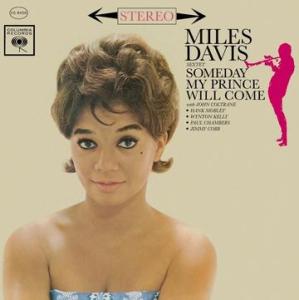
Someday My Prince Will Come – We Played a Good Sounding Reissue in 2014

More of the Music of Miles Davis

This Red Label reissue DESTROYED the similar copies we played it against, and was also surprisingly competitive with our Super Hot (and Super Noisy) Six Eye ref copy.

Most of these later pressings have superior clarity (compared to the earlier ones) but lack nearly all of the tubey magic. This one’s amazingly clean and clear, but still delivers on the tubey qualities — it’s richer, warmer, and sweeter than any other Red Label pressing we played.

I think that the very best Six Eye copies are still a step up in class [I don’t have to think it, I know it], but you can be sure that one of those would set you back a lot of bread. If you want to hear this music sound great without spending an arm and a leg, a Hot Red Label copy like this is the ticket. There’s lots of ambience, plenty of tubey magic, and amazing presence. Miles’ trumpet sounds amazing, with lots of breath and just enough bite. The clarity is INCREDIBLE.

(more…)