brass-test

Bashin’ Is a Good Test for Setup, Tweaks, Room Treatments, etc.

Hot Stamper Pressings of Large Group Jazz Recordings Available Now

On side one of Smith’s (and Oliver Nelson’s) Masterpiece, Bashin’, the bell tree in the right channel on track one is a great test for top end extension, resolution of harmonic complexity, overall clarity and freedom from smear.

Get all the top end you can from whatever turntable adjustment, tweak or room treatment you’re messing around with, then check to make sure that all the brass instruments still sound right. If they do, you are probably good to go.

Blary, smeary, leading-edge-challenged horns are the kiss of death on this album, as are grainy, gritty, transistory ones.

When the horns have clarity, correct tonality, plenty of space around them and a solid, full-bodied sound, probably every other instrument in the soundscape will too. Other records with brass instruments that are good for testing can be found here.

(more…)

The Amazingly Spacious Sound of Ellington Indigos

Hot Stamper Pressings of the Music of Duke Ellington Available Now

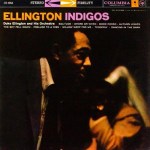
This original 6-Eye Stereo pressing blew us away with its superbly well-recorded romantic big band jazz, of which Ellington was a true master.

A near-perfect demonstration of just how good 1958 All Tube Analog sound can be – no modern record can hold a candle to a pressing as good as this one.

If you like the sound of relaxed, tube-mastered jazz, you can’t do much better than Ellington Indigos. Many of the other Six Eye copies we played suffered from blubbery bass and transient smearing, but the clarity and bass definition here are surprisingly good. The warmth and immediacy of this sound may just blow your mind.

We played a handful of later pressings that didn’t really do it for us. They offer improved clarity, but can’t deliver the tubey goodness that you’ll hear on the best early pressings. We won’t be bothering with them anymore. It’s tubes or nothing on this album, and that means the best 6 Eye Stereo original pressings will always win our shootouts.

The key for vintage super-tubey recordings is balancing clarity with richness. The easiest way to test for those two qualities on this album is to find a track with clear, lively, loud trumpets that also includes rich trombones and other low brass.

On side one that track is Where or When. If your copy has clear, lively trumpets and rich, full-bodied, Tubey Magical low brass, it is definitely doing an awful lot of what it needs to do right.

Some of you may recognize that this is precisely why Bob and Ray Throw a Stereo Spectacular is our all time favorite test disc. (Was might be more accurate. It was for me, but I retired. The younger generation now running the show has their own favorite test discs, as is only fitting. They didn’t spend ten or fifteen years working on the stereo and room with the record the way I did.)

(more…)

Prelude Is a Phenomenally Good Van Gelder Recording from 1973

Hot Stamper Pressings of Recordings by Rudy Van Gelder

On Deodato’s magnificent Prelude, listen to the trumpet on the second track on side one — it’s so immediate, it’s practically JUMPING out of the soundfield, just bursting with energy. Rudy can really pull off these big productions on occasion, and this session was clearly one of them.

If you have the kind of stereo that’s right for this music (the bigger the better) you could easily find yourself using this record as a demonstration disc. It’s very unlikely that many of your audiophile friends have ever heard anything like it.

The congas are present in the mix and very full-bodied — this allows them to really drive the rhythmic energy of the music. We know this because the copies with congas that were veiled or thin never seemed to want to get up and go. 

The top is most often the problem with these CTI pressings. The best sides seem to give you all the top end that was on the tape.

There is wonderful transparency and openness to the soundstage, as well as less congestion in the loudest parts. Also Sprach (2001) is on side one of the album and it is KILLER on the best pressings.

The best sides are also surprisingly sweet and Tubey Magical, nice qualities for a CTI record to have since so many of them are aggressive and edgy.

Full, lively horns; rich, punchy, smear-free congas; fuzzy fuzzed-out guitars; as well as correct tonality and Tubey Magic in every area of the spectrum, what’s not to love?

The best are so much bigger than most copies too. There is no doubt that you will hear the difference immediately. If you do a shootout with your best copy and ours plan on it being over practically before it starts.

(more…)

Blary Brass Ruins Another Mercury – This Time It’s Pictures at an Exhibition

Hot Stamper Pressings of the Music of Modest Mussorgsky Available Now

The sound of the pressings we’ve played over the years has always been awful.

On SR 90217, the brass is just too sour and blary. To our knowledge, no copies of the album do not suffer from these problems.  They may exist — who can say they don’t? — but we’ve yet to play one and have no intention of seeking them out, not when there are other superior performances with top quality sound.

The performance is awful, too.

When the horns have clarity, correct tonality, plenty of space around them and a solid, full-bodied sound, probably every other instrument in the soundscape will too.

One minute into side one we knew that this Mercury had failed the brass test.

It was simply much too unpleasant to be played on modern high quality equipment.

The less revealing systems some audiophiles seem to favor can make the shortcomings of a recording such as this more tolerable, but we’ve worked very hard for many decades to make sure our system is as truthful and unforgiving as possible.

We knew right from the get-go this Mercury was not going to make the grade. Here are some others that we’ve found seriously wanting. We’ve also compiled a list of more than 40 of the worst sounding Heavy Vinyl pressings of orchestral and classical music, and it can be found here.

(more…)

Good Horns, Probably Good Everything

Hot Stamper Pressings of the Music of Eric Clapton Available Now

This is not your usual Clapton album, and that’s a good thing, because most Clapton albums are full of filler. Not so here — almost every song is good, and many are superb.

The sound of the horn arrangements that back almost every song on the album are key to understanding the pressing and mastering quality on any given copy.

Blary, smeary, leading-edge-challenged horns are the kiss of death on this album, as are grainy, gritty, transistory ones.

When the horns have clarity, correct tonality, plenty of space around them and a solid, full-bodied sound, probably every other instrument in the soundscape will too.

Other records with brass instruments that are good for testing can be found here.


Want to find your own top quality copy?

Consider taking our moderately helpful advice concerning the pressings that consistently win our Hot Stamper shootouts.

This record has been sounding its best for many years, in shootout after shootout, this way:

(more…)

This Is Why We Love Pablo in the 70s

Hot Stamper Pressings of Pablo Recordings Available Now

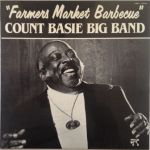
For years we have been including the followinig commentary in our Hot Stamper listings for Farmers Market Barbecue:

Musically FMB is a top Basie big band title in every way. This should not be surprising: many of his recordings for Pablo in the 70s and early 80s display the talents of The Count and his band at their best.

Sonically there’s more to the story. Based on our recent shootout for this title, in comparison to the other Basie titles we’ve done lately, we would have to say that FMB is the best Basie big band title we’ve ever played.

Since so many Basie big band recordings are so good, we don’t want to get ahead of ourselves; after all, we haven’t done shootouts for all of Basie’s Pablo large group recordings. To be safe we’ll just call this one first among equals.

Having recently done another shootout, our first in two and a half years, we would have to say that the album still sounds every bit as amazing as we thought it did when we wrote the above comments more than fifteen years ago.

Our notes for a shootout winning copy get right to the heart of what makes the recording so special.

For those who might have trouble reading our scratch, allow me to transcribe what Riley, our main listening guy, heard and noted as he played the two sides of this copy.

(more…)

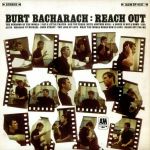
What to Listen For on Reach Out

More of the Music of Burt Bacharach

We played a good-sized stack of these recently, but not many of them sounded the way we wanted them to.

The majority of copies had a tendency to be bright, which is MURDER when the horns start blaring at the levels we play our records at.

In addition there are plenty of copies out there that lack energy, while others suffer from transient smearing, clearly audible on the brass.

And while we’re at it, what would a vintage A&M record be without a healthy amount of Tubey Magic? The best copies have loads of it, without ever becoming thick, fat, or overly smooth, or losing bass definition.

What to listen for? This group of problems that tends to plague the average copy:

  • Brightness,
  • Blare,
  • Lifelessness,
  • Smear,
  • Tubey Magic.

It takes a special copy to make these easy listening numbers sound as fresh and invigorating as they no doubt did in the studio, and that’s what the best Hot Stampers are all about.

Above all, this is simply a fun album of pop tunes, cleverly arranged and played with gusto. (I would be very surprised if these West Coast sessions weren’t Wrecking Crew to a man, or woman as the case may be. Bacharach is known to be a stickler so the best of the best session guys and gals are probably the only ones he would consider.)

When it sounds this good the music is positively wonderful. There are tons of Burt Bacharach hits here — The Look Of Love (sounding in some ways even better than it does on Casino Royale!), Message To Michael, Alfie, What The World Needs Now, I Say A Little Prayer and many more.

(more…)

The Best of Earth Wind & Fire – Hard and Honky Brass Is a Dealbreaker

More of the Music of Earth, Wind and Fire

As you can imagine, most copies of this album leave a lot to be desired. Most were, to one degree or another, dull, smeary, opaque, gritty or shrill.

Our Hot Stampers, on the other hand, depending on hot hot they are, will give you the sound you’re looking for. If you’re a fan of BIG HORNS, with jump-out-of-the-speakers presence, this is the album for you. Some of the best R&B-POP brass ever recorded can be found here — full-bodied, powerful, fast, dynamic and tonally correct.

Advice

Here is some specific advice on What to Listen For as you critically evaluate your copy of The Best of Earth Wind & Fire.

When the brass sounded the least bit squawky on a given copy, that was almost always a dealbreaker and out it went.

When the BIG, MULTI-TRACKED vocals get going they need to have plenty of space to expand into. They also need to be breathy and warm, with airy extension for the harmonies (and those crazy high notes that only Philip Bailey can sing). Proper tape hiss is a dead giveaway in this respect.

This advice will of course work for any Earth Wind & Fire record you happen to have multiple copies of.

Here are a couple of hundred other albums with specific advice on what to listen for.

Choruses Are Key

Three distinctive qualities of vintage analog recordings — richness, sweetness and freedom from artificiality — are most clearly heard on a Big Production Recording like this one in the loudest, densest, most climactic choruses of the songs.

We set the playback volume so that the loudest parts of the record are as huge and powerful as they can possibly become without crossing the line into distortion or congestion. On some records, Dark Side of the Moon comes instantly to mind, the guitar solos on Money are the loudest thing on the record.

(more…)

The King James Version – What to Listen For

Hot Stamper Pressings of Large Group Jazz Recordings Available Now

Unlike most Direct to Disc recordings, this album actually contains real music worth listening to — but only when the pressing lets the energy of the musicians through, with actual fidelity to the sounds of the real instruments. Brass without bite is boring. Drummers who are too delicate in their drumming will put you to sleep.

Many copies of this album will do exactly that, which is a real shame. During our shootout, the more we played the good copies, the more we appreciated the music these guys were making. They were swinging, a big group of top quality players totally in the groove. When it’s played well, and the sound is as good as it is here, there’s nothing boring about these Big Band Jazz Classics. The music works. It swings. If you like the kind of big band recordings Basie made — and who doesn’t — you will find much to like here.

What to Listen For

No matter what copy you have, when you play it notice how the brass in the center of the soundfiield sounds so different from the brass on either side, where, obviously, closer mics allow their solos to be picked up and mixed more easily. There are lovely trumpet solos in the left channel and a baritone sax solo in the right that have amazingly realistic fidelity. Close your eyes and those instruments are RIGHT THERE.

One thing Sheffield got right is tonally-correct, hi-fidelity brass in a real acoustic space. (The latter is where For Duke fails so miserably, although no one ever seems to notice or bother to write about it. To me that dead acoustic is like fingernails on a blackboard, completely inappropriate to the sound.)

What to Watch Out For

As a rule two areas are especially lacking: there is a noticeable lack of presence on most copies, causing the brass to get stuck in the speakers and lose its bite; and, every bit as bad, the sound is often just plain compressed, lacking energy and life.

The musicians on most copies just don’t seem to be giving it their all.

But wait a minute. This is a direct disc. How can it be compressed, or lack transients? Aren’t those tape recorder problems that are supposed to be eliminated by the direct to disc process? Maybe so, but there is some very strong evidence to the contrary, and this record is that evidence.

Even though the mastering is fixed at the live event, there are many other variables which no doubt affect the sound. The album is pressed in three different countries: the United States, Japan and Germany. Many mothers were pulled from the acetates and many, many stampers made from those mothers.

Bottom line? You got to play ’em, just like any other pressing. If no two records sound the same, it follows that no two audiophile records sound the same, a fact that became abundantly clear very early on in the listening.

Of course, not many audiophiles are in a position to shootout multiple copies of The King James Version, and I’m not sure most would even want to.

Here at Better Records we have a whole system set up to do exactly that, so we waited until we had a pile of them, got them all cleaned up, and off to the races we went.

(more…)

On Dvorak’s Ninth, Big Brass Is Key to the Sound of the Best Pressings

More of the music of Antonin Dvorak (1841-1904)

What do all the best pressings all have in common?

There the ones with brass that is both powerful and weighty. That’s the sound that has the drive and energy to move the listener. As a rule, the tympani too will sound right when the brass has the air-moving power it should. The same is true for the lower strings.

Without fullness, richness and clarity in the area below the midrange, neither the sound nor the music can succeed. Many of the pressings we auditioned early on in an elimination round could not reproduce the brass with much weight; consequently they did not make it to the shootout.

(Sibelius’ Finlandia is the same way; it needs real weight down low. The huge brass opening of the piece is breathtaking on the best copies.)

More  of our favorite orchestral recordings with especially weighty brass

(more…)