*Mastering Issues

Hearing Is All It Should Take, Right?

Hot Stamper Classical and Orchestral Pressings Available Now

Some person on some audiophile forum might feel obligated at some point to explain to you, benighted soul that you are, that the old classical records you — and other audiophiles like you — revere so highly have to be recognized these days for what they are: drastically compromised by the limits of their old technology.

Simply put, there’s just no way they can sound good.

It’s just a fact. It’s science. Technology marches on and those old records belong on the ash heap of history collecting dust, not sitting on the platter of a modern turntable.

That’s why the audio world was crying out for Bernie Grundman to recut those Living Stereo recordings from the 50s and 60s on his modern transistorized cutting equipment and have RTI press them on quiet, flat, high-resolution 180 gram vinyl, following the best practices of an industry that everybody knows has been constantly improving for decades.

Right?

For those of us who actually play these records, there is little evidence to support this narrative.

It’s a story made up mostly of assertions, along with an unhealthy amount of faith in so-called experts. [1]

Note that Bernie had no experience cutting classical music. He was a rock, pop and jazz guy. Robert Ludwig was the classical guy, cutting hundreds of albums for labels like Nonesuch in the 60s. What a different world it would be if he was the guy who cut for Classic Records! This review gets to the heart of the matter.

However, the contrarian view outlined above only really holds true for a very small minority of audiophiles of the analog persuasion: those given to empirical testing of such propositions. [2]

For an audiophile to compare the new pressings to the old ones, proper testing requires that the following four conditions can are met:

  1. He or she has a revealing, accurate stereo,
  2. A good record cleaning system, and
  3. Knows how to do shootouts using his or her
  4. Well-developed critical listening skills

If you’ve spent much time on this blog, you’ve probably read by now that the first three on this list are what allow you to achieve the fourth.

Compromises?

The best classical recordings of the 50s, 60s and 70s were compromised in every imaginable way, yet still they sound amazing.

(more…)

Inner Secrets Is One of the Best Sounding Rock Records We’ve Ever Played

Hot Stamper Pressings of the Music of Santana Available Now

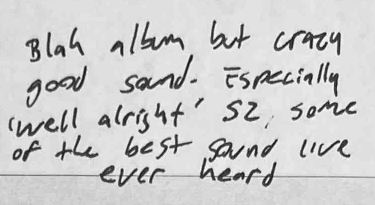
In our most recent shootout (11/2023), the first we’ve done in quite a few years, my main listening guy was blown away by the sound of the Shootout Winning copy. This warmed my heart no end, as I have been raving about the sound of this album for fifteen years or more.

We created a section for phenomenally good sounding records like Inner Secrets, and this link will take you to it.

His notes from the session can be seen below.

And he’s not wrong about much of the album being “blah.” There are really only about four top quality songs out of the nine on the album, but three of those four are killer, and, even at our prices, make the album a Must Own for those of you with big speakers that can play good and loud.

Phase One and Phase Two of a Shootout

Like other Hot Stampers you may have read about, sometimes the instruments and voices just jump out of the speakers. When that happens I usually write “It’s Alive!” on the post-it, and I know exactly what to do with it. I put it right in the Contender pile, to be compared with the other top contender copies at some point.

It’s definitely a crazy-good Hot Stamper; just how hot we still need to find out.

Which is what happens in Phase Two of these affairs. We go back through all the best copies to see in what areas they really shine and in what areas they may fall a bit short of the best.

Of course there’s no way to know what accounts for any of the sound we hear. Not for sure anyway. It’s just interesting to ponder what makes one record sound one way and the next record, with stampers as little as one letter off in the alphabet — sometimes with exactly the same stampers! — sound so different from one another.

Doug Sax Is The Man

All the originals (the only ones with the potential for good sound in our experience) are cut by The Mastering Lab, one of the greatest cutting houses to ever master records.

Doug Sax may or may not have had anything to do with the making of this record, but one thing we can be sure of: he knew how to keep his lathes and amplifiers working at state-of-the-art levels. The sound quality is unsurpassed.

And he did it all with tubes.

(more…)

Morph The Cat – Mastered by the Cats from DCC

More of the Music of Steely Dan

Yet another disastrous Heavy Vinyl release with godawful sound, and in this case, equally godawful music, a fitting entry for our audiophile hall of shame.

Hopelessly murky, muddy, opaque, ambience-free sound, and so artificial I honestly cannot make any sense of it.

This is someone’s idea of analog? It sure ain’t mine.

Is this music for robots? That would explain a lot. Audiophile robots, perhaps?

Why do audiophiles waste their money on crap like this?

(more…)

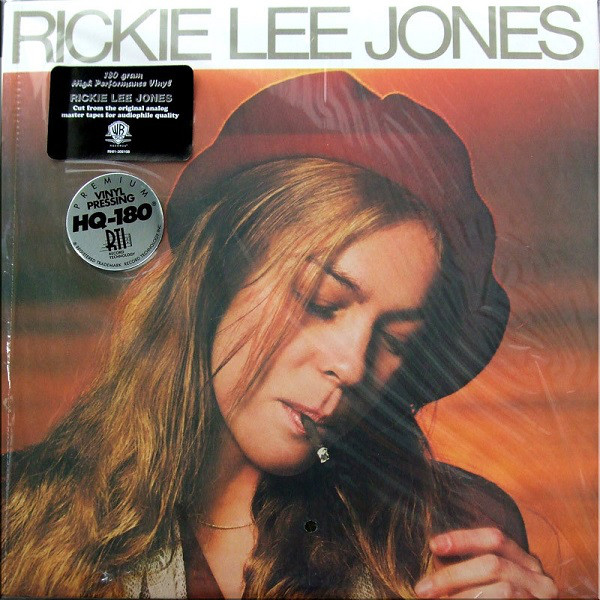
Rickie Lee Jones on Rhino Records – Not Our Idea of Good Sound, and We Hope Not Yours

Hot Stamper Pressings of the Music of Rickie Lee Jones Available Now

We were fairly unimpressed with the Rickie Lee Jones on Warners that came out a few years back [2008 in fact, time flies!].

It has that same phony modern mastering we find so unappealing on the Heavy Vinyl reissue of Blue. (We seem to be pretty much alone in not liking that one, and we’re proud to say we still don’t like it. We encourage you to play The Blue Game and maybe you’ll see why we feel the way we do.)

We liked the new Sweet Baby James Hoffman and Gray cut. We note in our review that:

Hoffman and Gray can take pride in this Sweet Baby James. It’s some of the best work I’ve heard from them to date. If more DCC and Heavy Vinyl reissues sounded like this, we wouldn’t be so critical of them. Unfortunately they don’t, and there are scores of pages of commentary on the site to back up that statement for those of you interested in the subject.

We went on to say

The amazing transparency and dynamic energy of the best originals will probably never be equaled by an audiophile pressing like this. (It hasn’t happened yet and we remain skeptical of the possibility.) Considering that this pressing is sure to beat most reissues, imports and other such like, we have no problem heartily recommending it to our customers, especially at the price.

So, What’s Wrong With Rickie Lee?

Simple. They took a somewhat artificial, hi-fi-ish, close-miked, heavy-on-the-reverb recording and made it sound even more artificial, phony and hi-fi-ish (but less-heavy-on-the-reverb; there is always a noticeable loss of resolution in these modern mastering jobs).

What were they thinking?

The best copies have warmth, richness and sweetness to balance out the more unnatural elements in the recording. Copies with these qualities are not that common, but we’ve run across plenty of them in our shootouts and proudly offered them for sale, where of course they sold quickly for lots of money. Major league audiophile appeal, this one. In its day it was heavily demo’ed in every stereo store in town, and for good reason — the sound positively jumps out of the speakers.

It’s a Trap

The average copy of this album is a sonic disaster, akin to the average copy of Famous Blue Raincoat or — gulp, even worse — Graceland. If you’re a detail freak, this Rhino pressing may be just what you are looking for. It’s got detail all right.

But all that phony detail obscures what is wrong with the sound. Overly detailed sound is a trap that is all too easy to fall into.

Plenty of recordings designed to appeal to audiophiles strike us as being phony in this way. Stan Ricker cut a lot of overly-detailed records for Mobile Fidelity in the 70s and 80s, records that may have sounded fine on the lo-rez stereos of that era (like the one I owned), but are positively painful to play on the top quality equipment that is available (but rare) today. [1]

I would hope that the audiophile community would have developed their listening skills to a level sufficient to recognize what this pressing doesn’t have — warmth, richness and sweetness — but I get the feeling I will be proved wrong yet again in that regard.

This Performance Is High?

Rhino Records has really made a mockery of the analog medium. Rhino bills their releases as pressed on “180 gram High Performance Vinyl.” However, if they are using performance to refer to sound quality, we have found the performance of their vinyl to be quite low, lower than the average copy one might stumble upon in the used record bins.

The CD versions of most of the LP titles they released early on are far better sounding than the lifeless, flat, pinched, so-called audiophile pressings they released starting around 2000. The mastering engineer for this garbage actually has the nerve to feature his name in the ads for the records. He should be run out of town, not promoted as a keeper of the faith and defender of the virtues of “vinyl.”

If this is what vinyl sounds like I would switch to CD fast enough to make your head spin.

And the amazing thing is, as bad as these records are, there are people who like them. I’ve read postings on the internet from people who say the sound on these records is just fine.

Their Grateful Dead titles sound worse than the cheapest Super Saver reissue copies I have ever heard.

The Yes Album sounds like a cassette, a mere ghost of the real thing.

(more…)

Bernie Leaned Out the Vocals on Morrison Hotel, to Ruinous Effect

Hot Stamper Pressings of the Music of The Doors Available Now

Sonic Grade: D (at best)

A few years back we played the 180 gram reissue of Morrison Hotel that came out in 2009. Initially we thought it pretty good, but the longer it played, the more leaned-out and unpleasant it sounded.

Just listen to the vocals — they’re all wrong.

Jim Morrison has one of the richest and most distinctive baritone voices in the history of rock. When he doesn’t sound like the guy I’ve been listening to for more than forty years, something ain’t right.

And what ain’t right — not to put too fine a point on it — is the sound of that record.

Here are a few commentaries you may care to read about Bernie Grundman‘s work as a mastering engineer in the modern era.

We much prefer the work he did back in the old days.

(more…)

A Simple Listening Test Makes It Easy to Judge Pressings of Scheherazade

Hot Stamper Orchestral Pressings Available Now

The Classic reissue of LSC 2446, as well as the Analogue Productions version from 2013 (the original 33 is the only one I have played, mastered by Ryan Smith at Sterling), are both disasters for many reasons, but they do have one specific failing that is easy to recognize.

Both pressings are worth further discussion and analysis because they provide an easy test that can show you how wrong they are.

When reading the commentary below, keep in mind that what is bad about the Classic Records reissue from 1995 is what is bad about the Analogue Productions remaster put out many years later.

As I noted for some of the Classic Heifetz titles a while back, for all I know the CDs for his Living Stereo recordings may have better sound. That’s probably the first place to go, considering Classic’s rather poor track record regarding the remastering of his music.

Case in point: The Living Stereo CDs I own (both the CD and the SACD) of Scheherazade are dramatically better than the awful Classic Records pressing of it.

Audiophiles who don’t notice what is wrong with the Classic pressing need to get hold of a nice RCA White Dog pressing to see just how poorly the Classic stacks up. (They could even find one that’s not so nice and listen through the surface noise. The difference would still be obvious.)


UPDATE 2025

It has been many years since a White Dog pressing won a shootout. In our last listing for a Hot Stamper White Dog pressing in 2024, we noted:

Now that we know which stampers have the potential to win our shootouts, the right Shaded Dog originals have lately been coming out on top, although the White Dog pressings can still sound quite good, just not as good.

No White Dog earned a higher grade than 2+, and none of the three WD pressings we had on hand earned 2+ on both sides.

Our notes for the various sides of the WD pressings read: “a bit brash, sometimes squawky, dry and bright,” and the like.

Those of you looking for the best sound should stick to the Shaded Dog label originals. They are rich and lush in a way that the WD reissues in our experience never are. I used to swear by the WD reissues, but I see now how wrong I was. My judgments were colored by a darker, less revealing stereo than the one we use now, and that makes all the difference in the world.


Back to LSC 2446

The solo violin in the left channel at the opening of the first movement should be all it takes to hear what is wrong with the modern remastered pressings.

Anyone has ever attended a classical music concert will have no trouble recognizing that the violin on any of the Heavy Vinyl pressings, including the Analogue Productions pressing, is completely wrong and sounds nothing like a violin in a concert hall would ever sound.

And I mean ever.

No matter where you might be sitting.

No matter how good or bad the hall’s acoustics.

The violin on these Heavy Vinyl pressings is dark, it’s veiled, and it’s overly rich, as well as lacking in overtones.

Solo violins in live performance never sound like that.

They are clear, clean and present. You have no trouble at all “seeing” them, no matter where you sit.

(more…)

Letter of the Week – “How the hell did this get released???”

Letters Comparing Hot Stamper Pressings to Their Heavy Vinyl Counterparts

One of our good customers had this to say about a record he played recently:

Hey Tom,   

Not a hot stamper update, but thought to write briefly…

I’ve been experimenting a bit with some of the Analogue Productions stuff, as unlike you I’ve had some mixed success here. However…

OMG. I just opened their pressing of Junior Welles’ Hoodoo Man Blues. It’s, pardon my crudity, not fit to wipe your ass with. The most disgusting perversion of this record imaginable. I’m choking even hearing it. Rank amateurs at the controls it seems… how the hell did this get released??? Are they deaf? Are they even listening to what they’re putting out, or just pressing money? It’s too nauseating to describe, but all your usual terms fit exactly; no ambience, bloated, unreal EQ, compressed and flat and dead, completely f*cking off. I’m just amazed.

The only reason I ventured here is that I have had some good luck with them on various jazz recordings, where the tricks do seem to help (45rpm, master tapes all analogue, etc.). Not so here. Everything you rage about holds true and is possibly the worst case of it I’ve ever come across.

Just sharing with the thought that there is a RANGE of AP stuff; it’s not all this bad. This pressing is escort-it-off-the-property-and-dispose-of-in-someone-else’s-garbage-can-bad.

C

(Meanwhile, latest box of hot stampers arrived today, and are glorious as usual.)

Conrad,

I take issue with any of AP’s records being any good.  None of their “tricks” ever managed to help them produce a record I would want to own. The best one I heard was Fragile, and even that was mediocre. [More recent reviews of AP’s records can be found here. Even though some of them are better than Fragile, I still would not want to have anything they’ve ever pressed in my own collection. In 2007 I swore off mediocrities and feel no need to go back on my word.]

You are mistaken about the “Rank amateurs at the controls it seems…”

The man at the controls was Kevin Gray. He is a professional mastering engineer and has been for a very long time. His records don’t sound very good though, as our reviews make clear for those who care to read them.

Here is a typical review for one of this label’s godawful remasterings:

Vince Guaraldi – a bloated mess at 45 RPM from Acoustech

We flushed good money down the drain in order to suffer through the 45 Analogue Productions cutting of the album. What a mess. Ridiculously overblown bass is its major shortcoming, but dynamic compression and an overall lifeless quality are obvious problems that made us give up on it pretty quickly.

This is the kind of sound that audiophiles want? I find that hard to believe. It’s what they’re stuck with because the good early pressings are just too hard to find and noisy and groove damaged when you do find them.

Most pressings of this album, the OJC and the later reissues especially, are just plain awful, so for the typical audiophile record collector the 45 might actually be a step up over those pressings. Like so much of the heavy vinyl we have played in the last few years, we did not find the sound enjoyable or compelling. I would venture a guess that the DCC gold CD is clearly better overall.

Some audiophiles have complained that we spend too much time bashing Heavy Vinyl, but if ever a record deserved it, it’s that one. It’s a failure as a remastering and an insult to the analog buying audiophile public at large. Searching the web I am glad to see that no one seems to have anything nice to say about it as of this writing. No one should, but that has not deterred the reviewers and forum posters in the past.

Chad was interviewed at the AXPONA show in 2022 by a writer for The Absolute Sound and this is how the conversation went:

“Everything here that I reissued, I wouldn’t have reissued it if I didn’t think it was killer,” Chad said. “At Analogue Productions I’m doing my favorite records, the ones that I think are killer. Otherwise I wouldn’t do it.

“All of those records, you won’t go wrong. If they don’t impress or satisfy you, you might oughta find another hobby.”

Chad also praised the remastered Analogue Productions pressing of Junior Wells’ Hoodoo Man Blues on the Delmark label.

“We’re in Chicago, so if you got a preference for Chicago blues, you need this.”

Our customer is pretty convinced that he “did go wrong.”

Since he was not able to return the record owing to Chad’s “no returns for bad sound” policy, I guess Chad would say that he “might oughta find another hobby.”

Or wise up and stop buying records from someone who apparently doesn’t have faith in his own product.

Lee Hulko Cut All the Best Sounding Cat Stevens Albums, Regardless of Label

Hot Stamper Pressings of the Music of Cat Stevens Available Now

UPDATE 2020

This commentary was written many years ago, circa 2005 I would guess.

Way back then, doing Hot Stamper shootouts was much more difficult than it is now. We didn’t have the right cleaning machine, and we hadn’t discovered the Prelude Record Cleaning System.


Is the Pink Label Island original pressing THE way to go? That’s what Harry Pearson — not to mention most audiophile record dealers — would have you believe.

But it’s just not true. And that’s good news for you, Dear (Record Loving Audiophile) Reader.

Hot Stamper Commentary for John Barleycorn

Since Barleycorn is a Lee Hulko cutting just like Tea here, the same insights, if you can call them that, apply.

Here’s what we wrote:

Lee Hulko, who cut all the Sterling originals, of which this is one, cut this record many times and most of them are wrong in some way. A very similar situation occurred with the early Cat Stevens stuff that he cut, like Tea & Teaser, where most copies don’t sound right but every once in a while you get a magical one.

Lee Hulko cut all the original versions of this album, on the same cutter, from the same tape, at the same time.

(more…)

Led Zeppelin II – An Overview

Hot Stamper Pressings of the Music of Led Zeppelin Available Now

Below you will find the story of my first encounter with an amazing sounding copy of Zep II back in 1995 or thereabouts.

I had a friend who had come into possession of a White Label Demo pressing of the album and wanted to trade it in to me for the Mobile Fidelity pressing that I had played for him once or twice over the years, and which we both thought was The King on that album.

To my shock and dismay, his stupid American copy killed the MoFi. It trounced it in every way. The bass was deeper and punchier. Everything was more dynamic. The vocals were more natural and correct sounding. The highs were sweeter and more extended. The whole pressing was just full of life in a way that the Mobile Fidelity wasn’t.

The Mobile Fidelity didn’t sound bad. It sounded not as good. More importantly, in comparison with the good domestic copy, in many ways it now sounded wrong.

Let me tell you, it was a defining moment in my growth as a record collector. I had long ago discovered that many MoFi’s weren’t all they were cracked up to be. But this was a MoFi I liked. And it had killed the other copies I’d heard in the past.

So I learned something very important that day.

I learned that hearing a better pressing is clearly the surest way to appreciate what’s wrong with the pressing I thought sounded right.

(more…)

On Tarkio, Do All the Robert Ludwig Mastered Copies Have Hot Stampers?

Hot Stamper Pressings of Hippie Folk Rock Albums Available Now

UPDATE 2023

This commentary describes some observations we were able to make after doing a shootout a few years back.


Even though all the original Pink Label pressings are mastered by the great Robert Ludwig, they have a marked tendency to be dull, thick and opaque. Other records we’ve played with these same shortcomings can be found by clicking on the links below.

On too many original pressings, the sound is too smooth.

Starting at some point in the mid-’90s, many Heavy Vinyl pressings started to have the same shortcoming, one that we find insufferable to this day: they are just too damn smooth.

(more…)