phony-detail

Many audiophile recordings and remasterings are leaner and cleaner, producing a phony kind of transparency and detail at the expense of the fullness and richness of the original recording.

This is almost never a good thing.

MoFi Sure Added Plenty of Sparkle to These Acoustic Guitars

Hot Stamper Pressing of the Music of Ry Cooder Available Now

UPDATE 2026

This review is from many years ago, the last time we had a copy of the album in stock to play. Hard to imagine I would not still agree with it though.


As you probably know, the MoFi of Jazz goes for big bucks nowadays — $500 and up. Is it worth it? 

You’ve got to be kidding. It’s a nice record as far as it goes, but it suffers from the same shortcomings as just about every Mobile Fidelity pressing we bother to play these days (with some obvious exceptions of course).

We have a test pressing, and knowing that the MoFi is the standard against which many audiophiles prefer to judge our Hot Stampers, we listened to it first before going about our comparison test.

Our MoFi copy is actually tonally correct, which was a bit of a surprise. (Yours of course could very well be otherwise.)

Right away we could hear exactly what people like about it, the same thing that has always impressed audiophiles about half-speed mastered records: their often outstanding transparency.

Jazz on MoFi has zero-distortion, utterly clear, spacious, see-through sound.

But listen past that and what do you hear?

Don’t those guitars seem to have that MoFi Tea-for-the-Tillerman “sparkly” quality you hate: all pluck and no body, all detail and no solidity?

Nothing has any weight.

Nothing sounds natural.

Nothing sounds real.

It’s pretty, maybe, but it sure ain’t right.

It’s the kind of sound that shouts out to the world “Hey, look at me, I’m an audiophile record! See how I sound? So clear! So clean!”

Which isn’t bad for about two minutes, and then it’s positively insufferable.

(more…)

TAS Thinks this Pressing Is a Super Disc?

Hot Stamper Pressings of Top Quality Jazz Albums Available Now

Is there something Super about it?

If there is we sure missed it!

We described one of the better OJC copies from our second-ever shootout for Dolphy’s Out There album this way:

This copy (the first to hit the site in over four years) was doing just about everything right: it’s rich, full-bodied and Tubey Magical, yet still super open and spacious.

Admittedly a bit generic, but good records tend to do pretty much all the same things well in our experience, so why complicate things?

Note that the best OJC pressings were dramatically better sounding than any of the earlier pressings we played, the ones mastered by Rudy Van Gelder.

At best the earlier stereo pressing was passable, and the mono original with the blue cover was just plain awful on side one (NFG) and passable on side two. Do you think the old school mono jazz collectors even noticed there was a world of difference between the two sides? I sure don’t.

But the 2016 remastered pressing (according to Discogs, we thought it was 2015 as you can see) puts them all to shame with ridiculously bad sound on side one, sound so bad we didn’t even bother to play side two. What would be the point? Whoever mastered this record was as clueless as they come, and then some.

(more…)

Back to the Stone Age with The Pines of Rome on Mobile Fidelity

Hot Stamper Pressings on Decca & London Available Now

An audiophile hall of shame pressing and another MoFi LP reviewed and found wanting.

MoFi’s version of this The Pines of Rome (#1-507) is one of the worst sounding classical records they ever produced, and that’s saying something, because practically all of their classical catalog is just awful — thin and bright, with sloppy bass and completely unnatural string tone.

As hard as it may be to believe, the MoFi of the Pines of Rome makes the typical Classic Records pressing sound good, shrill strings and all.

The UHQR is somewhat better, especially in the lower octaves, but it’s maybe a D+ or C-, not an audiophile record if we are using the term to mean what it no longer means —  a pressing with higher quality sound. (more…)

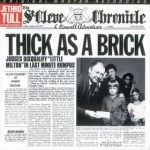
Thick As a Brick on MoFi

Hot Stamper Pressings of the Music of Jethro Tull Available Now

Sonic Grade: D

Here you will find the same problems as the MoFi Meddle, released the previous year, 1984. Here is what we had to say about it back in the day when we were selling this kind of crap.

The MoFi is TRANSPARENT and OPEN, and the top end will be lush and extended. If you prize clarity, this is the one.

But if you prize clarity at the expense of everything else, you are seriously missing the boat on Meddle (and of course Thick As A Brick too).

The MoFi is all mids and highs with almost nothing going on below.

This is a rock record, but without bass and dynamics the MoFi pressing doesn’t rock, so why would anyone want to own it or play it?

The one thing these pressings have going for them is that they tend to be transparent in the midrange.

It sounds like someone messed with the sound, and of course someone did. That’s how they get those audiophile records to sound the way they do.

For some reason, some audiophiles like their records to sound pretty and lifeless with blurry bass.

The whomp factor on this pressing is Zero. Since whomp is critical to the sound of this album, it’s Game Over for us.

That is not our sound here at Better Records. We don’t offer records with shortcomings like these and we don’t think audiophiles should have to put up with records that sound the way this one does.

(more…)

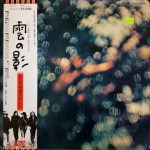
Obscured By Cloudy Japanese Vinyl

Hot Stamper Pressings of the Music of Pink Floyd Available Now

When I was just getting up to speed in audio and exploring the world of music available on vinyl in the 70s, many of the stereo stores I frequented carried Japanese pressings. They were widely believed to have superior sound relative to their domestic counterparts — in this case, the mass-produced pressings I would see at the Tower Records right across from the Sports Arena in my hometown of San Diego. I went there at least once a week, probably more like two or three times.

Tower was far and away the best place to go record shopping in those days. The store was huge and they had dramatically more stock than Licorice Pizza or The Wherehouse.

They also had a separate section for Half-Speed mastered pressings from a number of labels, which of course was the first place in the store I would visit, digging through the bins to see what new remastered titles may have been produced for audiophiles searching for the ultimate in sound quality.

Of course, I identified as just such a person. In terms of sound quality, and with the extremely limited knowledge I had acquired at the time, I believed I set a high standard for the sound of the records I bought. I was willing — eager even, you could even say excited — to pay whatever premium price I had to for a record that was sure to deliver superior sound quality. To me, in the late 70s, that meant two things: direct to disc recordings, and Half-Speed mastered pressings.

(There was a another category of records that did not fall into the above two, best exemplified by American Grammaphone and the Fresh Aire series, but the less said about those schlocky releases the better, other than to point out that some of their titles are TAS list carryovers from HP’s time running the Super Disc list, specifically Fresh Aire 2 and 3, both best avoided.)

And, like any other open-minded individual, when it came to Japanese vinyl I was willing to give a few a spin.

However, the more of them I bought, the more clear it became to me that even the best of them sounded mediocre (veiled, smeary and dubby from second generation tapes) and more often than not they were just plain awful. (Second generation tape issues being the main problem, of course, with the additional insult of poor tonality, the result of being mastered using wacky equalization, typically with added brightness where none was needed.)

Pink Floyd

The notes for the Pink Floyd album you see below, Obscured by Clouds, were written sometime in March of 2025 as part of the shootout we conducted for the album.

If we assume it would be an audiophile who would be attracted to this pressing, perhaps for its quieter playing surfaces, perhaps operating under the assumption that the Japanese engineers mastering the record would be more likely to do a better job as well, then what we have here is a textbook case of an audiophile bullshit pressing.

One that sounds nothing like the album is supposed to, based on having played a number of exceptionally good sounding copies, all British and all on the Green Harvest label, mastered from good tapes, sometimes by the legendary Harry T. Moss. We feel we are more than qualified to make these judgments. If we can’t make them, nobody can.
Discogs allows us to glean some information regarding the desirability of this Japanese reissue with the record buying public currently in the market for Pink Floyd vinyl who register on their site.

(more…)

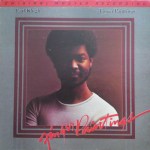
Stan Ricker’s Fingers Are All Over these Paintings

Hot Stamper Pressings of Jazz Guitar Recordings Available Now

We have been planning on doing a shootout for this Earl Klugh’s 1977 Blue Note release, Finger Paintings, for more than a year, and over that time we were fortunate enough to pick up a MoFi pressing of the album locally for the very reasonable price of ten bucks. (The price tag on the jacket is visible at the bottom of this post.)

The notes for our 2025 Shootout Winner included phrases such as “huge, weighty and punchy, ” along with “natural, rich and sweet.” Most copies may not have those qualities, but the best ones sure do.

Contrast that with the Mobile Fidelity pressing that Stan Ricker mastered in 1980. It was one of their biggest early sellers, and one that they no doubt felt had such good sound that it would be sure to sell at triple the price of the regular Mobile Fidelity pressing!

WTF you say? Yes, it would be released in 1981 in a box (not a box set!) as a Numbered, Limited Edition, Ultra High Quality Record (UHQR) at the retail price of $50. $178 in 2026 dollars, if you can believe that records used to cost that kind of dough (cough).

OK, that’s all well and good, but this is supposed to be a blog for audiophiles, so forget all that history stuff and just tell us what the record sounds like.

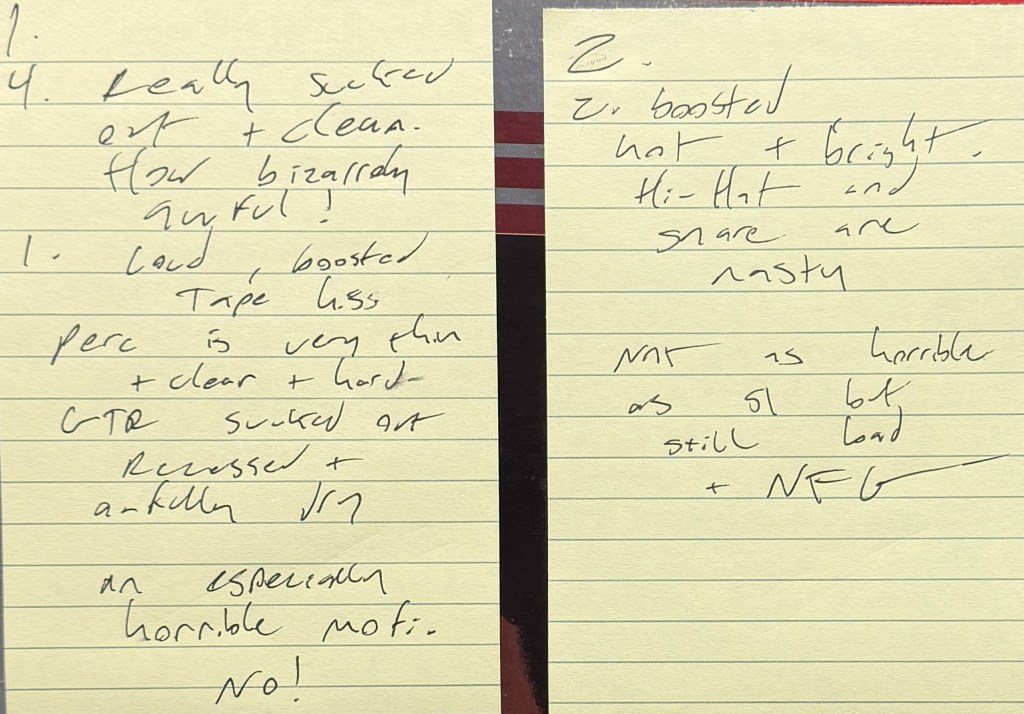
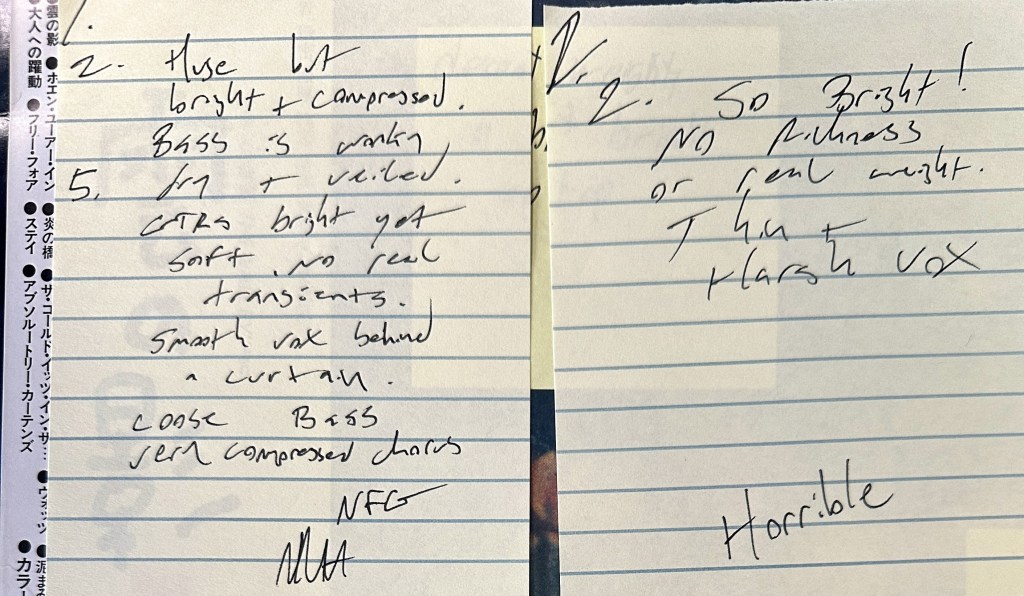
Fair enough. After having played a big batch of standard issue pressings and getting to know the sound of the record well, feast your eyes on the notes we took.

This MoFi may actually set a new standard for screwing up a perfectly good sounding record. (I was going to say tape but I have never heard the tape and have no idea what it sounds like. John Golden (JG) at Kendun cut the originals. Maybe he was able to somehow make a silk purse out of a sow’s ear. The possibility exists.)

Side One

Track Four

  • Really sucked out and clean
  • How bizarrely awful!

(more…)

Does Year of the Cat on Mobile Fidelity Have Audiophile Sound?

Hot Stamper Pressings of the Music of Al Stewart Available Now

Our answer, judging by the copy we played not long ago, would be solidly in the negative. The final grade we awarded both sides was No, our way of saying the record is Not Good.

Below is a description for what a top copy of the album sounds like, based on our most recent shootout:

Incredible sound throughout this vintage Janus pressing of Stewart’s 1976 Masterpiece. With engineering by Alan Parsons, the top pressings are every bit the audiophile Demo Discs you remember. The best sides have sweet vocals, huge amounts of space, breathtaking transparency, and so much more.

Tubey Magical acoustic guitar reproduction is superb on the better copies of this recording. Simply phenomenal amounts of Tubey Magic can be heard on every strum, along with richness, body and harmonic coherency that have all but disappeared from modern recordings (and especially from modern remasterings).

But if you own the wrong Mobile Fidelity pressing — this one was reissued in 1981, the original came out in 1978, so there may be some other pressings that sound better than this one — you would never know how good sounding the album can be. We put a copy we had laying around in a shootout recently and the results were, not to put too fine a point on it, pretty painful.

As the notes make clear, the Mobile Fidelity pressing, with the stampers you see on the sheet above, is:

(more…)

Who on Earth Could Possibly Take the Sound of this Ridiculous Remaster Seriously?

Hot Stamper Pressings on Decca and London Available Now

There actually is such a person who does exactly that, can you imagine?

Only an Audiophile True Believer could be fooled by sound so ridiculously unnatural.

But the world is full of such people. They bought into the audiophile BS of Mobile Fidelity in the 80s and apparently haven’t learned much since.

Now they think Heavy Vinyl is the answer to the world’s problems. The more things change…

If your stereo is any good at all, you should have no trouble hearing the sonic qualities of this album we describe below. If you are on this blog, and you have tried some of our Hot Stamper pressings, there is a good chance you’re hearing pretty much what we’re hearing. Why else why would you pay our prices?

One thing I can tell you: we would never charge money for a record that sounds as weird and wrong as this MoFi.

A well-known reviewer has many kind things to say about this pressing, but we think it sounds like a hi-fi-ish version of a 70s London, which means it’s opaque and the strings are badly lacking in Tubey Magical sheen and richness.

The bass is like jello on the MoFi, unlike the real London, which has fairly decent bass.

If an audiophile reviewer cannot hear the obvious faults of this pressing, I would say there’s a good chance one or both of the following is true:

  1. His equipment is not telling him what the record is really doing, and/or,
  2. His listening skills are not sufficiently developed to notice the shortcomings in the sound.

The result is the worst kind of reviewer malpractice.

But is it really the worst kind? It seems to be the only kind!

MoFi had a bad habit of making bright classical records. I suppose you could say they had a bad habit of making bright records in general. A few are dull, some are just right, but most of them are bright in one way or another.

Dull playback equipment? An attempt to confuse detail with resolution? Whatever the reasons, the better and more accurate your equipment becomes, the more obvious this shortcoming will be. My tolerance for their phony EQ is at an all time low. But hey, that’s me.

(more…)

Led Zeppelin on Prestigious Japanese Limited Edition Vinyl

Hot Stamper Pressings of the Music of Led Zeppelin Available Now

A classic case of live and learn. In 2006 I finally woke up to how ridiculously bad these Japanese pressings I was selling back in the 90s actually were.

It’s what real progress in audio is all about, in this case about ten years’ worth. Those are ten years that really shook my world, and by 2007 we had discovered much better cleaning technologies and given up on Heavy Vinyl and audiophile bullshit pressings such as these, whew!

Our story from 2006:

I used to sell the German Import reissues of the Zep catalog in the 90s. At the time I thought they we’re pretty good, but then the Japanese AMJY Series came out and I thought they were clearly better.

I couldn’t have been more wrong. I now realize those Japanese pressings are bright as bright can be. Now, not-too-surprisingly, the German pressings sound more or less right (on some of their titles).

They tend to be tonally correct, which is more than you can say for most Zep pressings, especially some of the Classics [linked here], which have the same brightness issue (as well as many other problems).


UPDATE 2024

Only one of the German-pressed Zeppelin records is good enough to win shootouts, the only title of theirs on German vinyl that we buy these days. Of course we tried them all, at no small expense I might add, because there were a great many pressings cut by many different engineers over the course of decades that were pressed in Germany, and the only way we could judge them was to buy them and have them shipped over. In the end only one had the big, bold, dynamic sound we were after.

(more…)

Records Like This Make Audiophiles the Laughing Stocks of the Music World

More Reviews and Commentaries for Heavily Processed Recordings

This album has some of the worst sound I have ever heard in my life, worse than The Hunter even, and that’s saying something.

If this kind of crap is what audiophiles choose to play, then they deserve all the derision heaped upon them.

We’re glad we no longer offer embarrassments such as The Well, although we used to, many years ago. In our defense we would simply offer up this old maxim: de gustibus non est disputandum.

Our old slogan was Records for Audiophiles, Not Audiophile Records, but we also followed this business rule: Give the Customer What He Wants.

Now we give the customer what he wants, as long as he wants one of the best sounding pressings of the album ever made. (In this case obviously there is no good sounding pressing.)

How Bad Is It?

If this isn’t the perfect example of a pass/not-yet record, I don’t know what would be.

Some records are so wrong, or are so lacking in qualities that are critically important to their sound — qualities typically found in abundance on the right vintage pressings (although there is no acceptable pressing of this record, vintage or otherwise) — that the defenders of these records are fundamentally failing to judge them properly. We call these records pass/not-yet, implying that the admirers of these kinds of phony-sounding records are not where they need to be in audio yet, but that there is still hope, and if they devote enough time and money to the effort, they can get where they need to be, the same way we did.

(more…)