traffjohnb

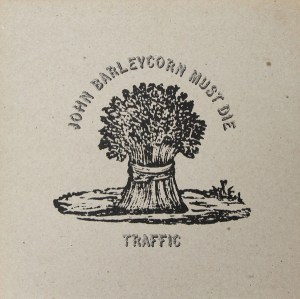
Traffic – John Barleycorn Must Die

More Traffic

  • An outstanding copy (only the second to hit the sit in two years) with solid Double Plus (A++ ) sound from start to finish
  • These sides have the vintage analog sound we love – they’re full-bodied and smooth, with plenty of Tubey Magic, gobs of studio space, and the right balance of richness and the clarity that is the key to getting top quality sound for John Barleycorn
  • Arguably the band’s best album, certainly their most groundbreaking, original and involving – Low Spark would rank a not-especially-close second
  • “…the band sounds utterly grounded. As the grooves percolate effortlessly along, it becomes clear that unity, not any technical skill, is what makes the music levitate.”
  • This is a Must Own title from 1970, a great year for rock and pop music

(more…)

Listening in Depth to John Barleycorn Must Die

The toughest test on side two is the first track, Stranger to Himself.

Getting the voices right is practically impossible. If the voices are full, smooth, yet breathy and clear, you have that rare copy that actually gets the midrange right. Not many do.

Side One

Glad

The last portion of this track has some really interesting percussion and organ effects. Traffic were trying to break out of the standard pop song format by letting this song wander into psychedelic territory for a few minutes at the end. It’s now become my favorite part of the song.

The reason you want to pay close attention to this part is because it helps you to judge the transparency, immediacy, and top end extension for the whole side. It should be amazingly clear and open-sounding. On too many pressings, the percussion instruments are blurred and lost in the mix. On a Hot Stamper copy they’ll be right in front of you, allowing you to appreciate the interplay among the musicians as they contributed their various parts.

Freedom Rider

You’ll need lots of top end extension for this song to sound right. On many copies the double tracked flute solo in the middle of the song will be aggressive and irritating, but on a Hot Stamper pressing, the flutes will sound airy and breathy with a reasonably good sustain.

Empty Pages

The quality of the voice is what really sets the best copies apart. Winwood is much more present on the better copies. He’s recessed on most and that’s just not where he needs to be for the song to work musically. He needs to be right up front, surrounded by the air and ambience of the studio. The transparency found on the better copies will give you precisely that.

Side Two

Stranger to Himself

John Barleycorn

The acoustic guitars that open up this song are absolute perfection on the best copies — this is the sound of Tubey Magical analog at its best.

This is the real test for side two.

The acoustic guitars should sound rich and sweet. You’ll notice at the beginning of the song that they are a little dull. The last thing in the world you want to do, however, is to brighten them up, because when you do that, as some mastering engineers have in the past, the harmony vocals and the percussion and the tambourine become much too bright later on in the song.

You have to strike a balance between all the elements. That means Steve’s voice at the beginning needs to be a little reserved so that the harmony vocals later on will come in right.

(more…)

Listen to Winwood’s Left Hand on “Glad”

More of the Music of Steve Winwood

Many years ago, perhaps in 2015, while playing an especially transparent copy of John Barleycorn, we learned something new about the album. Although it was a title I had been playing since it came out all the way back in 1970, apparently things had changed.

This pressing made it clear — really, for the first time — exactly what Winwood was doing with his left hand on the piano during the song Glad.

There are two musical figures that one can focus on: one involving the lower notes, which tend to be blurry, obscured and murky on most pressings, and two, the right-handed higher notes, which are typically much more clear and audible in the mix.

Only the very best copies let us “see” the bass notes of the piano so clearly and correctly. Next time you’re in the mood to compare different pressings of Barleycorn, pay special attention to the lower notes of the piano on Glad. It is our contention, backed by mountains of evidence, that no two copies of the album will get that piano to sound the same. (It will also help if you have large dynamic speakers with which to do the test.)

Lately we have been writing quite a bit about how pianos are good for testing your system, room, tweaks, electricity and all the rest, not to mention turntable setup and adjustment.

  • We like our pianos to sound natural (however one chooses to define the term).
  • We like them to be solidly weighted.
  • We like them to be free of smear, a quality that is rarely mentioned in the audiophile record reviews we read.

(more…)

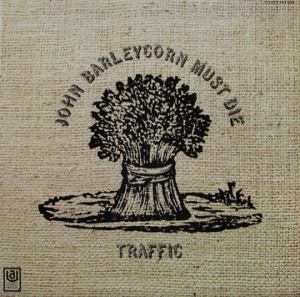
Traffic – John Barleycorn Must Die (Pink Label)

More Traffic

More British Folk Rock

  • John Barleycorn Must Die is back on the site after a two year hiatus, here with solid Double Plus (A++ ) sound or BETTER on this original British Island Pink Label pressing
  • These sides have the vintage analog sound we love – they’re full-bodied and smooth, with plenty of Tubey Magic, gobs of studio space, and the richness and the clarity that are key to getting a good sounding John Barleycorn
  • Arguably the band’s best album, certainly their most groundbreaking, original and involving – Low Spark would rank a not-especially-close second
  • “…the band sounds utterly grounded. As the grooves percolate effortlessly along, it becomes clear that unity, not any technical skill, is what makes the music levitate.”
  • This is a Must Own title from 1970, a great year for rock and pop music

(more…)

Lee Hulko Cut All the Best Sounding Cat Stevens Albums, Regardless of Label

Hot Stamper Pressings of the Music of Cat Stevens Available Now

UPDATE 2020

This commentary was written many years ago, circa 2005 I would guess.

Way back then, doing Hot Stamper shootouts was much more difficult than it is now. We didn’t have the right cleaning machine, and we hadn’t discovered the Prelude Record Cleaning System.


Is the Pink Label Island original pressing THE way to go? That’s what Harry Pearson — not to mention most audiophile record dealers — would have you believe.

But it’s just not true. And that’s good news for you, Dear (Record Loving Audiophile) Reader.

Hot Stamper Commentary for John Barleycorn

Since Barleycorn is a Lee Hulko cutting just like Tea here, the same insights, if you can call them that, apply.

Here’s what we wrote:

Lee Hulko, who cut all the Sterling originals, of which this is one, cut this record many times and most of them are wrong in some way. A very similar situation occurred with the early Cat Stevens stuff that he cut, like Tea & Teaser, where most copies don’t sound right but every once in a while you get a magical one.

Lee Hulko cut all the original versions of this album, on the same cutter, from the same tape, at the same time.

(more…)

Traffic / Three Must Owns

More of the Music of Traffic

For our current take on the sound of the various labels and stampers for Mr. Fantasy and The Best of Traffic, please click here.

Side one of this British Island Sunray pressing BLEW THE DOORS off the competition in our big shootout. It took the music to an entirely new level for us so we awarded it our very special Four Plus A++++ grade, a grade which is strictly limited to pressings (really, individual sides of pressings) that take a given recording to a level we had no idea could even exist.

We estimate that about one per cent of the Hot Stamper pressings we come across in our shootouts earn this grade. You can’t get much more rare than that.

We no longer use this grade for a number of reasons we won’t go into here. Suffice to say, if you buy a White Hot Stamper pressing from us, you are getting the best sounding pressing we know to exist.

You are not going to believe how Tubey Magical this side one is. I guarantee you have never heard this band sound this amazing on record or your money back.

Side two lacks a little extension up top, but it’s still rich, warm, sweet, and above all, NATURAL. It’s open and transparent with three-dimensionality to the soundfield.

Music and Sound — Some Kind of Connection There

We think better sound creates in the mind of the listener a stronger and deeper appreciation of the music itself. This will not come as news to anyone on this site; that’s what it means to be an audiophile. True to form, the amazing sound of the best pressings helped us to really get into this album during our shootout.

Clearly, this is a Classic Traffic album that belongs in any serious collection. (Along with John Barleycorn Must Die, to our minds inarguably their masterpiece. Throw in The Best Of and you have most of the best music with the best sound on record by Traffic.)

For music this important and powerful, you do not want to waste your time listening to a run-of-the-mill pressing or some second-rate Heavy Vinyl reissue. You want a killer Hot Stamper, the kind of record that can really transport you to the world of The Low Spark of High Heeled Boys.

Size and Space

One of the qualities that we don’t talk about nearly enough is the SIZE of the record’s presentation. Some copies of the album just sound small — they don’t extend all the way to the outside edges of the speakers, and they don’t seem to take up all the space from the floor to the ceiling. In addition, the sound can often be recessed, lacking presence and immediacy in the center of the soundfield.

Other copies — my notes for these copies often read “BIG and BOLD” — create a huge soundscape, with the music positively jumping out of the speakers. They’re not brighter, they’re not more aggressive, they’re not hyped-up in any way, they’re just bigger and clearer.

We often have to go back and downgrade the copies that we were initially impressed with in light of such a standout pressing. Who knew the recording could be that huge, spacious and three dimensional? We sure didn’t, not until we played the copy that had those qualities, and that copy might have been number 8 or 9 in the rotation.

Think about it: if you had only seven copies, you might not have ever gotten to hear a copy that sounded as open and clear as that eighth or ninth one. And how many even dedicated audiophiles would have more than one of two clean original (or otherwise) copies with which to do a shootout?

One further point needs to be made: most of the time these very special pressings just plain rock harder. When you hear a copy do what this copy can, it’s an entirely different – and dare I say unforgettable — listening experience.