*Mastering Issues

Led Zeppelin / II – Jimmy Page Remasters a Classic

Hot Stamper Pressings of the Music of Led Zeppelin Available Now

The more appropriate title for this commentary might be The Two Game, in honor of The Blue Game we created way back in 2007.

That year was indeed a watershed in the history of Better Records. It was the year we officially gave up on Heavy Vinyl, having come to the conclusion that the modern remastered LP was a lost cause. One thick slab of vinyl after another was ordered up and placed on our turntable, where it lay half-dead until someone took it off and relieved us of our misery.

Signs of improvement were nowhere to be found. A slough of dubious pressings released in the fifteen years since then have only confirmed the wisdom of our decision. It seems we got out just in time!

Fittingly, it was actually Blue that finally tipped the scales.

Geoff Edgers, the writer for the Washington Post investigating the world of audiophiles, visited me in 2021 to hear what this crazy Hot Stamper thing was all about. [1]

He brought with him a number of records to hear on our reference system, including the 2014 remaster of Led Zeppelin II (excellent), the remaster of Brothers in Arms that Chris Bellman cut, released in 2021 (also excellent, review to come), and last and definitely least, the pricey Craft Recordings remaster by Bernie Grundman of Lush Life (astonishingly bad, review coming).

That last one will cost you a couple of hundred dollars minimum, but you should save your money. It’s not worth a plugged nickel if good sound is what you are after. If you like being the only one on your block with a limited edition pressing, then I suppose you can tell your audiophile friends you own one and that it looks nice on the shelf. Whatever you do, don’t play it.

Retirement Changed My Plans

I’ve been meaning to write about Page’s version of the second Zeppelin album for more than a year. The more times I played the album, and the longer I thought about it, the more remarkable the sound of the record seemed to me, remarkable in the sense that some very interesting things were going on in the sound that would be worth writing about for the benefit of our customers and readers.

But then I retired and had lots of other things to do in order to get out of California. The review would have to wait.

In 2021 and for some time thereafter, I was so impressed with the sound that I considered buying a dozen, cleaning them up and doing a shootout with them. The sound was good enough to qualify as a Hot Stamper, probably in the range of 1.5+, which is what we would typically call good, not great sound.

Still, worlds better than the truly awful sounding audiophile pressings we’ve been reviewing over the last couple of years.

I actually did buy a second copy, had it cleaned and played it against the first one we bought. It sounded virtually identical. Whatever the differences, they were minor, although if I’d bought ten copies, I suspect that the differences between the best and the worst would have been significant, but that’s really only a guess.

(Many years ago, back in 2008 I think, we had done a shootout using a Heavy Vinyl title, Sting’s Mercury Falling. We have not done many since, for the simple reason that we know of no Heavy Vinyl pressings with sound good enough to be considered Hot Stampers.)


UPDATE 2025

Actually we now know of one, which proves it can be done!)


The guys who do the listening now and I all agreed about what the new version was doing, right and wrong. [2]

I wanted to talk about the good and the bad in depth because I thought I knew what was going on with the sound that nobody else would outside of our little group of three. I felt I had unlocked its secrets, secrets no one, to my knowledge, had discussed or examined. (If you know of a good review, please send it my way. I have yet to read a good one.)

The Hot Stamper Remaster

We don’t list albums with One Plus grades anymore, but in this case we could make the argument — and back it up! — that the best pressings of Page’s version are better than any reissue ever made. No audiophile version is any good, that’s for sure. We’ve played them and reviewed them and put them where they belong, in our audiophile hall of shame. [3]

Our latest thinking is that we will give one of the Page remasters to our customers for free when they buy one of our Hot Stamper pressings, so that they can compare the two for themselves. This is currently our policy.

(more…)

Liszt, Ludwig, Grundman and Sax

Hot Stamper Pressings Engineered by Robert Ludwig Available Now

Liszt & Weber / Ballade No. 2, Mephisto Waltz / Bar-Illan

The Liszt side here actually has the best sound, earning a seriously good grade of A++ to A+++.

This is one of the few audiophile-label recordings I have ever played that actually sounds NATURAL and CORRECT. This is a very real sounding piano; there are not many recordings that can capture that instrument’s weight, but this one sure does.

Side One

A++ sound, very open and real. This is a big piano with a solid bottom end playing in a big room. A trace of smear on the transients keeps it from the full Three Plus grade.

Side Two

A++ to A+++, less smeary so we raised the grade a bit. The music is dark and somewhat “out there” but the sound is AMAZING. 

A top quality solo piano recording from an “audiophile” label? I wouldn’t have believed it if I hadn’t heard it for myself.

That’s not really being fair, though. Some of us remember that Robert Ludwig cut another “audiophile” pressing, this one for Athena, and did a great job on it. (The other four records Athena released before they went out of business were awful, including the one mastered by Doug Sax.)

I suspect that if Ludwig hadn’t stopped cutting records years ago, we would not be complaining nearly as much as we do about the sound of the modern Heavy Vinyl pressings currently inundating the market.

Bernie and Doug really started letting the record lovers of the world down beginning as far back as the ’90s.

The muddy messes Doug Sax cut for Analogue Productions and the awful Living Stereo records Bernie cut for Classic Records were sad chapters in both men’s body of work. Here were two of the All Time Greats. Their fall was precipitous and painful for those of us who never gave up on analog. In those dark days they mastered one record after another so unlike the amazing sounding ones they had made in the ’70s and well into the ’80s.

We have nothing personal against either one of them, of course. We just haven’t liked the sound of very many of the records they’ve mastered for the last thirty years, and we have never been shy about saying so.

(more…)

Letter of the Week – “Just curious as to why you never point out a Bob Ludwig “RL” pressing?”

One of our good customers had this to say about some Hot Stampers he purchased recently:

Hey Tom, 

I am an avid vinyl cat and have been all of my life. I am super curious about your vinyl. I have a pretty good ear myself for top-shelf LP’s but I am just curious as to why you never point out a Bob Ludwig “RL” pressing? Or maybe you have and I just have not noticed?

Thanks so much for a response and much respect for what you are doing and selling…

Dana

Dana, we explained it here, in a commentary we called The Book of Hot Stampers.

We give out precious little in the way of stamper numbers, no information about cutting engineers as a rule, although we do break that rule from time to time. Here is an excerpt of a listing for Rock of Ages from way back when:

What We Thought We Knew

In 2006 we put up a copy with with what we implied were Hot Stampers (before we were using the term consistently) on at least one side:

Side One sounds tonally right on the money! This is as good as it gets… Robert Ludwig mastered all of the originals of these albums, but some of them have bad vinyl and don’t sound correct.

I only played side one of the album, so I can’t speak for the other sides, but what I heard was sound about as good as I think this album can have.

There are some truths along with some half-truths in the above comments, and let’s just say we would be quite a bit more careful in our language were we writing about that copy today.

One side is no indication whatsoever as to the quality of the other three, and without the kind of cleaning technologies we have available to us today, I wouldn’t want to make a “definitive” sonic assessment for any of them.

When you play uncleaned or poorly cleaned records, you’re hearing a lot of garbage that has nothing to do with the sound of the actual vinyl. (Note that we are joking above: there is no such thing as a definitive sonic assessment of a record, from us or anybody else.)

Ludwig cut many bad sounding records. Roxy Music’s Avalon original domestic pressings are RL. They’re made from dubs and sound like it.  Same with Dire Straits’ Alchemy.

Some RL Houses of the Holy sound amazing and some only decent. It’s the nature of the beast. (more…)

Past Masters – Digital Remastering at its Worst

Hot Stamper Pressings of The Beatles Available Now

A hall of shame pressing and another album reviewed and found to be better suited to the stone age stereos of the past.

The late-’80s import pressings of this album are bright (the tambourine on Hey Jude will tear your head off, just to cite one example) and aggressive and very digital sounding.

Unfortunately, if you want better sounding versions of these songs, you’re gonna have to buy lots of pressings of the band’s albums and singles and EPs in order to find good sounding versions of them, which is exactly what I did back in the ’80s. It took me years to do it.

In the ’90s, when I was actually selling this awful record (because my system was just too dark and unrevealing to show me how awful it was), I wrote:

These are all the songs that aren’t on the original 13 British albums, so for those of you with the MoFi Beatles box, these 2 LPs give you all the tracks you don’t have.  

This was written so long ago that we actually refer to the MoFi Beatles Box as something an audiophile would own (!)

To be clear, in this day and age, no serious audiophile who loves The Beatles should have the MoFi Box Set or Past Masters in his collection.

(more…)

More Bad Tube Mastering from the Formerly Brilliant Doug Sax

Audiophile Quality Pressings of Orchestral Music Available Now

Sonic Grade: F

The sound is smeary, thick and opaque because, among other things, the record was mastered by Doug Sax on tube equipment from a copy tape, and not all that well either.

It is yet another murky audiophile piece of trash from the mastering lathe of the formerly brilliant Doug Sax. Back in the day he cut some the best sounding records ever made.

Then he started working for Analogue Productions and never cut a good sounding record again as far as I know. (Obviously I cannot have played everything he worked on from the mid-90s on. Who would have the time? Who would even want to?)

On this Offenbach record, in Doug’s defense it’s only fair to point out that he had dub tapes to work with, which is neither here nor there as these pressings are not worth the dime’s worth of vinyl used to make them.

Should you buy a record because it was made this way?

According to the back of the jacket:

Mastering by Doug Sax at The Mastering Lab using an all vacuum tube system.

Single Step processing was used for this “Limited Edition” release. The stamper was made from the first generation master and not more than 500 were pressed from each stamper. This process allows all records to be of “test pressing quality.” Klavier records are used by many manufacturers and audio specialty shops for demonstrating their equipment.

Maybe the notoriously hearing-challenged Chad Kassem wanted this sound — almost all his remastered titles have the same faults — and simply asked that Doug cut it to sound real good like analog spossed ta sound in the mind of this kingpin, which meant smooth, fat, thick and smeary. (Back in the 70s, if you had a fairly typical stereo system — Japanese receiver and three-way box speakers with a 12″ woofer — you surely know the sound I am talking about. Record stores are one of the few places one can go to hear that sound these days. If you’re old like me, it can really take you back.)

This Is Analog?

Apparently, even in our modern era this is what some folks think analog should sound like.

(more…)

“Tour de Force” – Analogue Productions Reviewed

Hot Stamper Pressings of Bossa Nova Recordings Available Now

Sonic Grade: F

Acoustic Sounds had Stan Ricker remaster this record a number of years ago, and of course they (he) ruined it. A twinkly top end and flabby bass were just two of the major shortcomings of their version. Nothing surprising there, as Stan Ricker is famous for his “smile” curve, boosting both ends of the audio spectrum, whether they need boosting or not. (They rarely do).

When you add too much top end to a guitar album and ruin the sound of the guitar, what exactly are you left with?

Please note that not a single title from the Analog Revival series is any good, to the best of my knowledge, and every last one of them should be avoided if high quality sound is important to you.

The same is true for all the 180 gram jazz titles on Analogue Productions that were mastered by Doug Sax, as you may have read elsewhere on the site. Those records received rave reviews in the audiophile press when they came out, but you won’t find too many audiophile reviewers sticking up for them now, as they are, without exception, murky, compressed disasters of the worst kind.

I guess these reviewers eventually acquired equipment accurate enough to notice how bad those pressings are, which goes to show there is hope for practically anyone.

(more…)

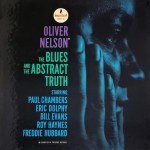
Oliver Nelson and RVG – Mastering Better than the Master?

More Music and Arrangements by Oliver Nelson

The sound of this Shootout Winning reissue is tonally correct, Tubey Magical and above all natural. The timbre of each and every instrument is right and it doesn’t take a pair of golden ears to hear it. So high-resolution too. If you love ’50s and ’60s jazz you cannot go wrong here.

For those record lovers who still cling to the idea that the originals are better, this pressing will hopefully set you straight.

Yes, we can all agree that Rudy Van Gelder recorded it, brilliantly as a matter of fact. Shouldn’t he be the most natural choice to transfer the tape to disc, knowing, as we must assume he does, exactly what to fix and what to leave alone in the mix?

Maybe he should be; it’s a point worth arguing.

But ideas such as this are only of value once they have been tested empirically and found to be true.

We tested this very proposition in our recent shootout, as well as in previous ones of course. It is our contention, based on the experience of hearing quite a number of copies over the years, that Rudy did not cut the original record as well as he should have. For those of you who would like to know who did, we proudly offer this copy to make the case.

Three words say it all: Hearing is believing.

(And if you own any modern Heavy Vinyl reissue we would love for you to be able to appreciate all the musical information that you’ve been missing when playing it. I remember the one from the ’90s on Impulse being nothing special, and the Speakers Corner pressing in the 2000s if memory serves was passable at best.)

(more…)

Hall, Oates and Mobile Fidelity – A Counterfactual Approach to Remastering

Hot Stamper Pressings of the Music of Hall and Oates Available Now

We here present a set of ideas about remastering that Mobile Fidelity could have used to guide them as they went about cutting their version of Hall and Oates’ masterpiece, Abandoned Luncheonette.

This is the approach they could have taken when it came time to produce an audiophile pressing of Abandoned Luncheonette, an album originally released in 1973.

By the time Mobile Fidelity released their version of the album in 1980, the record was already being offered as a Super Saver reissue, of minimal quality at a reduced price, produced solely for the purpose of keeping record store bins stocked with back catalog. (In our experience it is the rare Super Saver pressing that is worth the vinyl it’s pressed on.)

However, there is nothing inherently wrong with such a budget release. And the Super Saver version may even have some merit. But let’s assume for a moment that it does not.

Why Abandoned Luncheonette?

Now imagine that Mobile Fidelity knows, or at least believes, two things.

One, the album is a Masterpiece that belongs in any right-thinking audiophile’s collection, and two, the current version does not sound very good. The wise men at MoFi recognize that an opportunity to do some good for the audiophile community and make a buck at the same time has presented itself.

Audiophiles may not know it, but they are in need of a good sounding copy of this brilliant album, and they deserve one that sounds every bit as good as the shockingly good sounding originals (like the ones we sell).

In addition, we at MoFi can go Atlantic’s original one better.

We can now press the album on quieter vinyl than Atlantic ever could.

Next, Mobile Fidelity greenlights this project and gets a real master tape from Atlantic. (There are many tapes that masquerade as masters and aren’t any such thing, but let’s assume for the moment that Mobile Fidelity did get a real tape.)

They would also need a nice batch of original pressings, which in our opinion are the best, and would easily be recognized as being the best sounding by anyone playing the album on good equipment. The best originals are lively, rich and smooth, befitting an expensive, high quality studio recording from the era.

So instead of Mobile Fidelity trying to create a new sound for this album, they could have taken a different approach. They could’ve just said to themselves: let’s make a copy of the record that sounds as good as the original, and because we can press it on expensive, high-quality Japanese vinyl, we can justify selling it at a premium price to audiophiles looking for the best sound and quiet vinyl.

They could then cut a number of reference lacquers trying to re-create the best qualities of the originals, and then test those lacquers up against the best originals, in something that might be called a “shootout” long before the term was commonly used bu audiophiles of our persuasion.

The Counterfactual Part

This is what they could have done. That’s why we are calling this commentary a counterfactual.

They did something else entirely.

They tried to make the record sound better than any of the copies they had at hand. They tried to fix the sound. In trying to fix the sound, they made it worse because they simply were not capable of recognizing how right the good originals were.

They must have thought them dull, because the Brain Trust at Mobile Fidelity boosted the hell out of the upper midrange and top end. (Using the concept of reverse engineering, I assume their playback equipment was dull, a fairly safe assumption considering how many Mobile Fidelity records are bright enough to peel the paint.)

They Were on a Mission

They of course would never have been able to get the bass right, because half speed mastering always causes problems down low.

But they could have made the record tonally correct, and fairly transparent in the midrange, and then could have pressed that sound onto state-of-the-art Japanese vinyl.

But none of these things interested Mobile Fidelity at the time. They were hell-bent on making everything they touched better. In the process, practically everything they touched got worse, as anyone with good equipment and two working ears who has played a large selection of their records can attest.

(more…)

Love Is the Thing – Remixed, Remastered and Ruined

More Hot Stamper Pressings of Pop and Jazz Vocal Albums

Love Is the Thing on DCC was given a “new sound” and I don’t like it.

I really liked the Nat King Cole albums on DCC when they came out back in the 90s. I thought they were a revelation as a matter of fact.  Now I find them insufferable.

Here are some of my reasons for not liking Hoffman’s remix.

Nat’s voice is much too forward and loud in the mix; consequently the orchestra is too soft. The balance is off. At least on my stereo, at the levels I play the record at, the balance seems off. You surely have a different system, in a different room, and may not feel the way I do.

But without a top pressing to compare, how do you know the mix is right or wrong? Like everything in audio, it’s relative.

The balance problem is bad enough, but what really sets my teeth on edge is the fact that the Nat King Cole record on DCC doesn’t sound remotely like any Nat King Cole record I have ever heard, outside of the ones Hoffman worked on of course.

Where is all the Capitol reverb? Nat’s records all have it, and although the reverb may be a bit excessive or unnatural in some ways, at least to some people, when you take it away you end up with a sound that never existed before, and, to my ears, it’s a sound that’s just wrong for the music.

The more I listened to the DCC the less I liked it.

The first full-length commentary I ever wrote in my record catalog in 1994 took Analogue Productions to task for remastering Way Out West and giving it a “new sound,” a sound I had never heard coming from any Contemporary pressing, from any era.

I didn’t like what Doug Sax did with Way Out West, Jazz Giant, Waltz for Debby and many, many others, and I don’t like what Steve Hoffman and Kevin Gray did to Love Is the Thing, The Very Thought of You and Just One Of Those Things.

I have tried to listen to the Gold CD in my car, but even in the car I found the sound boring and insufferable.

Is this the kind of sound you hear on your DCC Nat King Cole records? If it is, we recommend you try a Hot Stamper. If it doesn’t kill your DCC you get your money back.

At the very least it will show you some of the things your DCC is doing differently, and, we think, wrong.

(more…)

Today’s Heavy Vinyl Mediocrity Is… Fragile

Hot Stamper Pressings of the Music of Yes Available Now

The Analogue Productions 180g reissue shown here is mastered by Steve Hoffman and Kevin Gray, two guys with reputations for doing good work, but the results of their collaboration [can you believe this record came out in 2006!?] leave much to be desired.

The overall sound is too lean.

This is especially noticeable on the too-thin-sounding guitars and vocals.

Believe me, it’s no fun to play a Yes album with thin guitars and vocals.

Also, there’s a noticeable lack of ambience throughout the record. What comes to mind when I hear a record that sounds like this is the dreaded D word: dubby.

I find it hard to believe they had the actual two-track original master tape to work with. The sound is just too anemic to have come from the real tape. If they did have the real tape, then they really botched the job.
(more…)